Congratulations! You’ve just finished writing a new blog post. It’s a great feeling to have your thoughts and ideas on paper, but your work is far from over.
To ensure that your blog post reaches its full potential and gets the attention it deserves, there are several essential steps you should take after hitting that “Publish” button. In this guide, we’ll explore the 12 things you must do after you’ve written a new blog post.
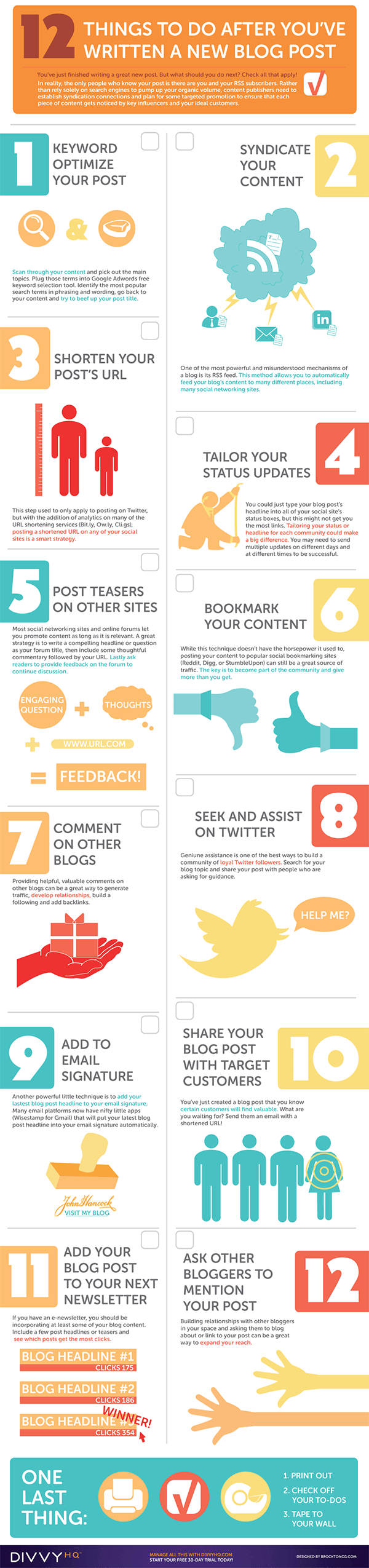
The infographic below from DivvyHQ gives you 12 things you should be doing with every blog post to help ensure it’s seen by as many people as possible.
1. Proofread and Edit
Before you share your blog post with the world, it’s crucial to proofread and edit it carefully. Even the best writers make typos and grammatical errors. Read through your post, check for spelling and grammar mistakes, and make sure the content flows smoothly. Consider using grammar-checking tools like Grammarly or asking a colleague for a fresh pair of eyes.
2. Optimize for SEO
Search engine optimization (SEO) is vital for increasing your blog post’s visibility in search engine results. Start by selecting a focus keyword relevant to your content. Incorporate this keyword naturally throughout your post, including in the title, headers, and body text. Additionally, optimize your meta title and meta description to entice users to click on your post when it appears in search results.
3. Add Visuals
Visual content, such as images, infographics, and videos, can make your blog post more engaging and shareable. Select high-quality visuals that enhance your content and break up long blocks of text. Ensure that you have the necessary rights or permissions to use these visuals and provide proper attribution if required.
4. Format for Readability
A well-formatted blog post is easier for readers to digest. Use headings and subheadings to structure your content logically. Bullet points and numbered lists can help break down complex information. Make sure your text is legible, and avoid using overly small or fancy fonts.
5. Internal Linking
Link to other relevant blog posts or pages on your website within your content. Internal linking not only helps with SEO but also encourages readers to explore more of your content, increasing the time they spend on your site.
6. External Linking
Including external links to reputable sources can add credibility to your blog post. It shows that you’ve done your research and are providing valuable information to your readers. Ensure that the external links are relevant to your topic and open in new tabs or windows.
7. Create a Captivating Meta Description
The meta description is a brief summary of your blog post that appears in search engine results. Craft a compelling meta description that accurately reflects the content of your post and entices users to click through to your website.
8. Share on Social Media
Leverage the power of social media to promote your blog post. Share it across your social media platforms, such as Facebook, Twitter, LinkedIn, and Instagram, to reach a wider audience. Craft engaging captions and use relevant hashtags to increase visibility.
9. Email Newsletter
If you have an email newsletter, include your latest blog post in your next newsletter. This is a great way to keep your subscribers informed and engaged with your content. Write a concise teaser and include a prominent call-to-action button to encourage clicks.
10. Engage with Comments
Once your blog post is live, be proactive in engaging with comments from your readers. Respond to questions, thank readers for their input, and foster a sense of community on your blog. This interaction can lead to valuable discussions and returning visitors.
11. Monitor Analytics
Keep an eye on the performance of your blog post using analytics tools like Google Analytics. Track metrics such as page views, bounce rate, and time on page. This data can help you understand how well your post is resonating with your audience and guide future content strategies.
12. Repurpose and Share
Your blog post is a valuable source of content that can be repurposed in various ways. Consider turning it into a podcast episode, video, infographic, or series of social media posts. Repurposing your content allows you to reach different audiences and extend the lifespan of your blog post.
In conclusion, writing a blog post is just the beginning of your content marketing journey. To maximize its impact and reach, you must undertake these essential post-writing tasks. By proofreading, optimizing for SEO, enhancing readability, promoting on social media, and engaging with your audience, you can ensure that your blog post gets the attention it deserves. Remember, the work doesn’t end when you hit “Publish”—it’s the start of a new phase in your content marketing efforts.

Author:
Mark Ford