
Are you looking for proven ways to make your marketing strategy more effective? Want to discover the timeless principles that consistently deliver real results?
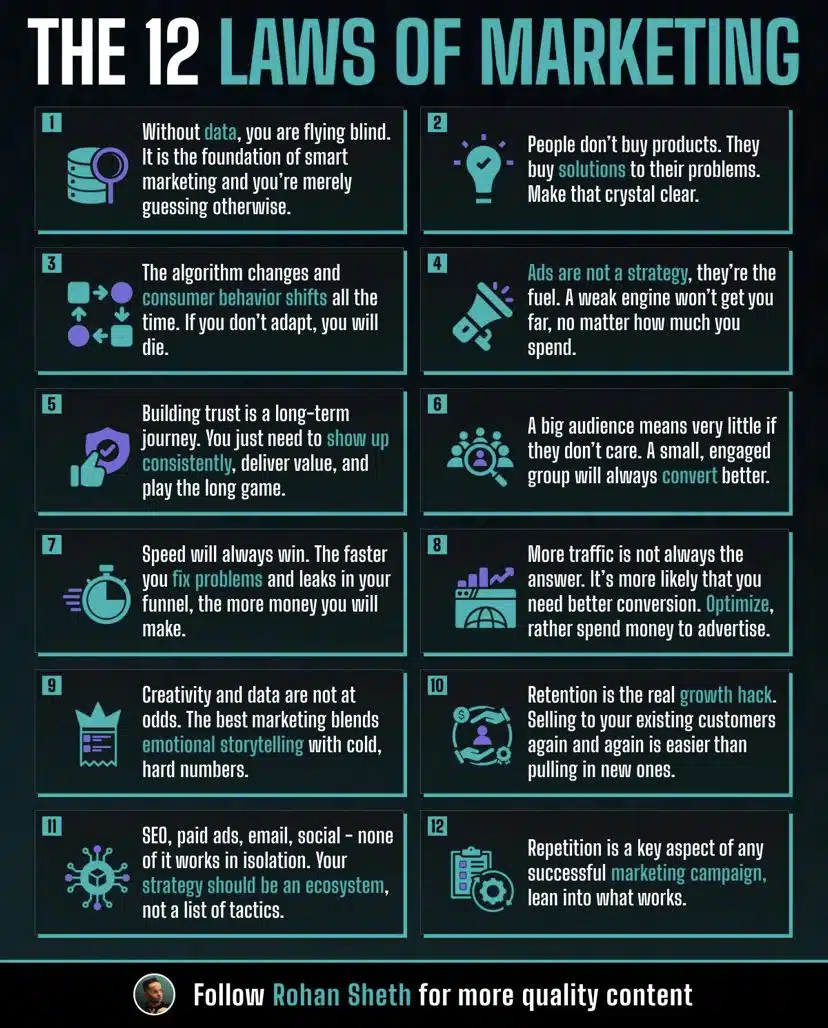
You’ll find some marketing basics in this infographic.
Here’s a summary of what’s covered:
- Data Is Essential
- Sell Solutions, Not Products
- Adapt to Change
- Ads Aren’t a Strategy
- Trust Takes Time
- Engagement Beats Size
- Speed Matters
- Conversion Over Traffic
- Blend Art and Science
- Retention Is Growth
- Think Ecosystem, Not Tactics
- Repetition Works
Check out the post below for more.
Marketing is a fast-moving world, but some principles remain constant no matter how much the landscape changes. Trends come and go, platforms evolve, and consumer behaviour shifts, yet the foundations of effective marketing hold steady.
These principles help businesses build trust, reach the right people, and turn interest into long-term loyalty. In this post, we’ll explore 12 timeless marketing principles that deliver results when applied consistently.
Data Is Essential
Without data, marketing becomes guesswork. Data provides the insights that guide strategy, reveal customer behaviour, and measure success. It helps you see what works, what doesn’t, and where to invest your resources for the best return. Simply put, data turns decisions from assumptions into facts.
- Track customer interactions to understand preferences and buying patterns.
- Use analytics tools to monitor campaign performance in real-time.
- Segment your audience based on behaviours for more precise targeting.
- Regularly review and refine data collection to keep insights accurate.
Sell Solutions, Not Products
Customers don’t care about features as much as they care about solving their problems. People buy outcomes, relief, or transformation—not just items or services. By focusing on solutions, you connect with your audience’s emotions and show why your offer matters.
- Highlight benefits rather than technical features in your messaging.
- Frame products as answers to specific customer challenges.
- Use testimonials to demonstrate real-world problem-solving.
- Position your brand as a guide, not just a seller.
Adapt to Change
Consumer behaviour and algorithms are always evolving. What works today may not work tomorrow, making flexibility vital. Brands that fail to adapt risk becoming irrelevant, while those that evolve stay ahead of the curve. Agility is the key to survival in marketing.
- Monitor industry trends and adjust campaigns accordingly.
- Test new platforms and technologies before competitors do.
- Stay in touch with your audience’s changing needs and values.
- Build adaptable strategies that can pivot without losing direction.
Ads Aren’t a Strategy
Advertising is a powerful tool, but it cannot replace a strong marketing foundation. Ads fuel awareness and reach, but without strategy they become wasted spend. A weak message or poor brand positioning won’t be fixed by throwing money at ads.
- Develop a clear brand strategy before launching ad campaigns.
- Use ads to amplify proven content and offers.
- Focus on customer journeys, not one-off impressions.
- Measure ad success beyond clicks—look at long-term conversion.
Trust Takes Time
Building trust is a marathon, not a sprint. Consumers don’t give loyalty instantly; it’s earned through consistent value and authenticity. By showing up regularly and delivering on promises, brands can create trust that leads to lasting relationships.
- Maintain consistency in your voice, values, and delivery.
- Provide valuable content that educates or entertains.
- Engage transparently and respond to feedback honestly.
- Honour commitments, from delivery times to service quality.
Engagement Beats Size
A large audience means little if they’re not paying attention. What matters more is engagement—people who interact, respond, and ultimately convert. A small, loyal following often delivers better results than a huge, indifferent one.
- Focus on nurturing relationships with your core audience.
- Measure engagement rates instead of chasing follower counts.
- Create content that sparks conversation and interaction.
- Reward loyalty to deepen audience commitment.
Speed Matters
In marketing, speed creates competitive advantage. The quicker you address issues, respond to trends, or fix funnel problems, the more revenue you protect. Delays mean missed opportunities, while speed builds momentum.
- Monitor campaign performance daily to catch problems early.
- Streamline approval processes to launch faster.
- Automate tasks to reduce delays in execution.
- Train teams to act quickly on customer queries and complaints.
Conversion Over Traffic
Chasing more traffic without improving conversion is like pouring water into a leaky bucket. What matters is turning existing visitors into paying customers. Optimisation ensures you make the most of the traffic you already have before scaling up.
- Analyse conversion funnels to identify weak points.
- A/B test landing pages for better performance.
- Simplify checkout or enquiry processes to reduce drop-offs.
- Focus on value propositions that drive action, not just interest.
Blend Art and Science
The best marketing combines creativity with data. Storytelling sparks emotion and connection, while data ensures precision and performance. By blending the two, campaigns resonate with audiences while staying measurable and effective.
- Use stories to humanise your brand and build relatability.
- Back creative ideas with data-driven targeting.
- Measure emotional campaigns against clear business outcomes.
- Balance bold creativity with insights that guide direction.
Retention Is Growth
It’s easier and cheaper to keep an existing customer than to win a new one. Retention isn’t just about repeat sales; it’s about deepening loyalty so customers choose you again and again. Long-term relationships drive sustainable growth.
- Implement loyalty programmes to reward repeat customers.
- Use email campaigns to maintain ongoing communication.
- Provide excellent after-sales support to build trust.
- Personalise offers based on past customer behaviour.
Think Ecosystem, Not Tactics
Marketing is most effective when channels work together. SEO, ads, email, and social media don’t exist in isolation—they form an ecosystem. A cohesive strategy creates consistency and maximises results across every touchpoint.
- Map customer journeys across multiple platforms.
- Ensure brand messaging is unified in every channel.
- Connect data sources for a holistic view of performance.
- Align campaigns so tactics complement each other.
Repetition Works
Success comes from doing more of what works. Repetition builds familiarity, reinforces trust, and strengthens brand recall. Rather than constantly chasing new tactics, double down on proven strategies and refine them over time.
- Identify top-performing campaigns and repeat them strategically.
- Use consistent messaging to reinforce brand values.
- Lean into channels that deliver the strongest ROI.
- Refresh, rather than reinvent, successful approaches.
Conclusion
Marketing will always evolve, but its foundations remain timeless. Data guides decisions, solutions connect with people, and trust turns attention into loyalty. By focusing on engagement, speed, and retention, brands can grow sustainably.
When creativity blends with data and repetition reinforces success, marketing becomes a long-term engine for results. Apply these 12 principles consistently, and you’ll build a strategy that not only keeps up with change but thrives in it.

Author:
Mark Ford

85 Game-Changing Tools for Creators, Marketers, and Entrepreneurs
Are you searching for powerful yet free tools to help you grow your brand, streamline your workflow, and boost your online presence? Want to discover game-changing platforms that every creator, marketer, and entrepreneur should be using right now? […]