
Are you looking for timeless principles that can make your marketing more effective? Want to discover the 12 key marketing rules that every business should live by?
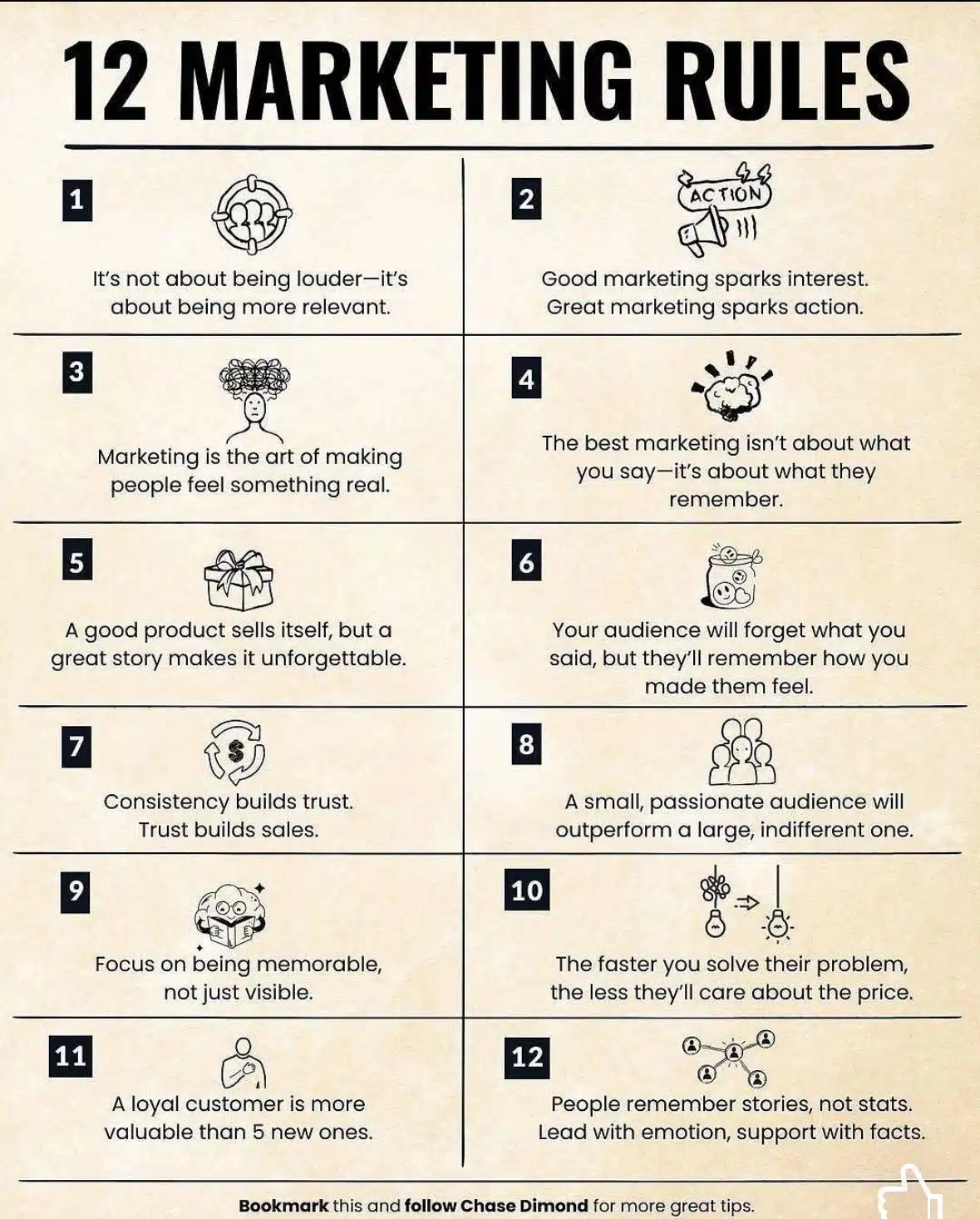
You’ll find some marketing basics in this infographic.
Here’s a summary of what’s covered:
- Relevance Matters More Than Volume
- Good Marketing Creates Interest, Great Marketing Drives Action
- Marketing Should Make People Feel Something Genuine
- It’s Not About What You Say, but What People Remember
- Stories Make Good Products Unforgettable
- People Remember How You Made Them Feel
- Consistency Builds Trust, and Trust Drives Sales
- A Small, Engaged Audience Beats a Large, Indifferent One
- Aim to Be Memorable, Not Just Visible
- Solve Problems Quickly, and Price Becomes Less Important
- Loyal Customers Are More Valuable Than New Ones
- Stories Stick Better Than Stats
Check out the post below for more.
Marketing has never been more competitive, but the principles behind great campaigns remain the same. While platforms, tools, and trends evolve quickly, the fundamentals of how people connect with brands don’t change. The most effective businesses are those that understand timeless marketing rules and apply them consistently. These principles cut through noise, build trust, and create customer relationships that last.
In this post, we’ll explore 12 marketing rules every business should live by. Each rule focuses on connecting with audiences in authentic, memorable, and results-driven ways. Whether you’re a small business or a large organisation, these lessons can shape your marketing strategy into something both sustainable and impactful.
Relevance Matters More Than Volume
Shouting louder doesn’t make your brand stronger. Customers are constantly bombarded with messages, and only those that truly resonate stand out. Relevance means tailoring your message to align with your audience’s needs, values, and circumstances. If your message doesn’t connect, it doesn’t matter how often or how loudly you deliver it.
- Research your target audience’s pain points before creating campaigns.
- Segment your audience to deliver personalised content.
- Use language and visuals that reflect your customer’s world.
- Focus on solving problems, not simply promoting features.
Good Marketing Creates Interest, Great Marketing Drives Action
Interest is only the first step; action is the true measure of success. While it’s valuable to get people curious, it’s even more important to inspire them to take the next step. Great marketing bridges the gap between awareness and decision-making. It turns passive observers into active participants in your brand story.
- Create strong calls-to-action that guide people clearly.
- Use urgency and scarcity to encourage immediate responses.
- Align offers with customer needs at the right moment.
- Track engagement to see which campaigns convert, not just attract.
Marketing Should Make People Feel Something Genuine
At its heart, marketing is emotional. People don’t connect with products as much as they connect with feelings, experiences, and outcomes. Campaigns that stir emotion linger far longer than those built solely on logic. By making people feel something genuine, you create a bond that drives loyalty.
- Craft stories that highlight real human experiences.
- Use visuals, music, and tone to evoke emotion.
- Highlight benefits that improve quality of life, not just technical details.
- Appeal to values like security, belonging, or joy.
It’s Not About What You Say, but What People Remember
Every brand communicates, but only some leave a lasting impression. People don’t retain every word—they remember moments that stick. Effective marketing focuses on simplicity and clarity to make sure messages are remembered, not lost. The most impactful campaigns create mental anchors that people recall later.
- Keep messages short, simple, and easy to repeat.
- Use memorable slogans, imagery, or taglines.
- Repeat key points across different platforms.
- Focus on consistency in tone and voice to aid recall.
Stories Make Good Products Unforgettable
A great product is valuable, but a great story makes it remarkable. Storytelling creates context that helps people connect emotionally with what you sell. When customers can relate to the narrative behind a product, they’re more likely to share it, talk about it, and remember it. Stories add meaning beyond features and functions.
- Share the origin story of your business or product.
- Highlight customer success stories and testimonials.
- Use case studies to show transformation and outcomes.
- Incorporate storytelling into visuals, not just words.
People Remember How You Made Them Feel
Words may fade, but feelings last. Marketing isn’t only about communication—it’s about creating an experience. If your audience walks away feeling valued, understood, or inspired, they’ll carry that memory with them. These emotional connections are what transform first-time buyers into repeat customers.
- Focus on creating positive experiences at every touchpoint.
- Personalise interactions to make customers feel recognised.
- Use empathy when addressing customer concerns.
- Celebrate customer milestones and loyalty publicly.
Consistency Builds Trust, and Trust Drives Sales
Trust doesn’t happen overnight—it’s built through repeated, consistent actions. Customers need to know that your brand delivers what it promises. When your messages, values, and quality stay consistent, you build credibility. That trust then translates into long-term sales and stronger customer relationships.
- Maintain a consistent tone of voice across all platforms.
- Deliver the same level of quality every time.
- Honour commitments and promises made in marketing.
- Create a brand style guide to ensure uniformity.
A Small, Engaged Audience Beats a Large, Indifferent One
Bigger isn’t always better. A passionate, loyal audience will generate more sales and referrals than a large group of disengaged followers. Quality of engagement matters far more than sheer numbers. By focusing on the people who truly care, you maximise your impact.
- Identify and nurture your core group of loyal customers.
- Create exclusive offers for highly engaged followers.
- Prioritise authentic connections over vanity metrics.
- Encourage interaction, feedback, and two-way communication.
Aim to Be Memorable, Not Just Visible
Visibility gets attention, but memorability builds staying power. Being seen is the first step, but if your brand is quickly forgotten, the opportunity is lost. Memorable marketing uses creativity, distinctiveness, and emotional resonance to stay in people’s minds long after the first impression.
- Develop a unique brand voice and personality.
- Use creative campaigns that stand out from competitors.
- Focus on delivering surprise or delight in customer experiences.
- Ensure your visuals and branding are instantly recognisable.
Solve Problems Quickly, and Price Becomes Less Important
When people need help, speed matters more than price. A business that delivers timely solutions demonstrates value beyond cost. Customers are willing to pay more if they know their issues will be resolved efficiently. Quick problem-solving builds loyalty, even in competitive markets.
- Streamline customer service processes for faster responses.
- Offer solutions upfront rather than excuses.
- Train teams to resolve issues on the first interaction.
- Use automation for common queries while keeping a human touch.
Loyal Customers Are More Valuable Than New Ones
While acquiring new customers is important, retaining loyal ones pays greater dividends. Loyal customers buy more often, refer others, and cost less to retain. Building strong relationships with existing clients should be a priority for sustainable growth. A loyal customer is an investment in future stability.
- Create loyalty programmes to reward repeat purchases.
- Nurture relationships through personalised follow-ups.
- Offer exclusive benefits to long-term customers.
- Focus on customer satisfaction to reduce churn.
Stories Stick Better Than Stats
Facts and figures have their place, but stories are what people remember. Data may convince, but stories inspire action. The best marketing leads with emotion, supported by facts for credibility. By framing your message in a narrative, you give people something meaningful to hold onto.
- Use customer journeys to illustrate data points.
- Pair statistics with real-world examples for impact.
- Create case studies that balance numbers with storytelling.
- Position your brand as part of the customer’s ongoing story.
Conclusion
Marketing is often seen as fast-changing, but the truth is that its foundations are timeless. These 12 rules remind us that relevance, emotion, consistency, and storytelling are the pillars of lasting success. Businesses that apply them aren’t just chasing attention—they’re building trust, loyalty, and long-term growth.
Great marketing isn’t about volume, visibility, or even clever campaigns—it’s about connection. When you focus on being remembered, building trust, and solving problems, your business stands apart from the noise. These rules are more than strategies; they’re commitments to creating meaningful relationships that drive results.

Author:
Mark Ford

85 Game-Changing Tools for Creators, Marketers, and Entrepreneurs
Are you searching for powerful yet free tools to help you grow your brand, streamline your workflow, and boost your online presence? Want to discover game-changing platforms that every creator, marketer, and entrepreneur should be using right now? […]