Content marketing has become a cornerstone of modern business strategy. It’s a powerful tool for building brand awareness, engaging with your audience, and ultimately driving revenue.
However, for content marketing to be effective, it’s essential to measure its success accurately. After all, you can’t improve what you can’t measure.
In this blog post, we’ll explore 13 key ways to measure content marketing success.
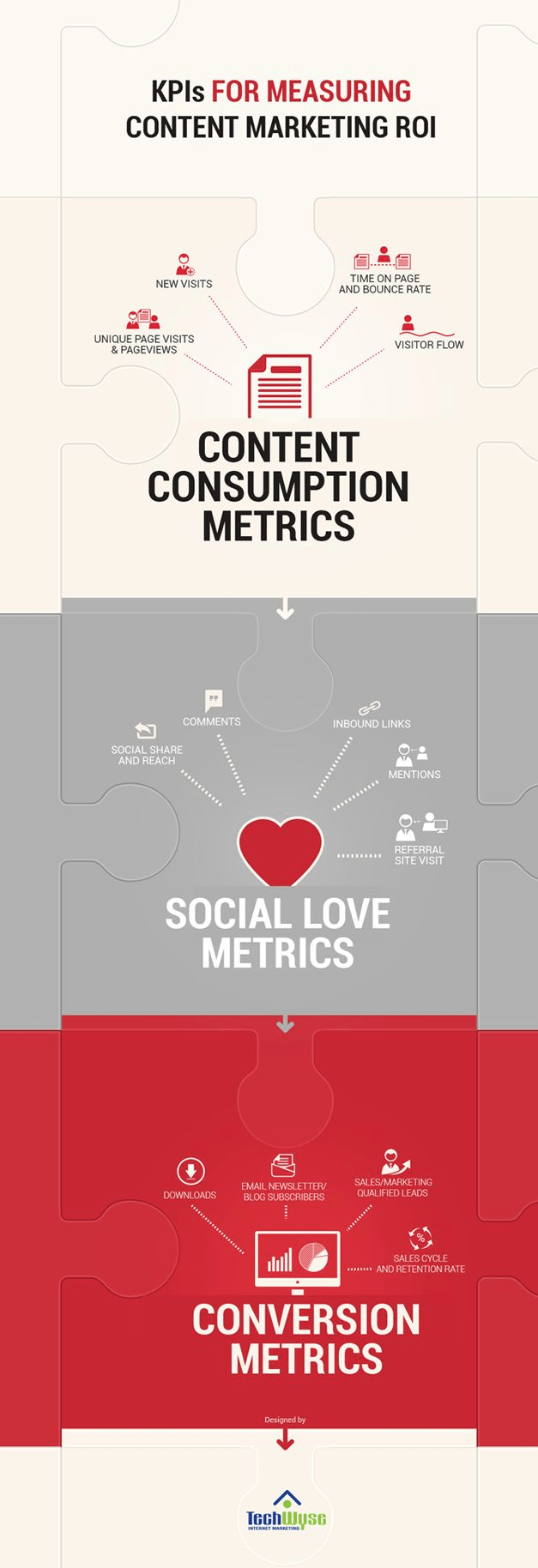
The infographic below from TechWyse gives you 13 KPI’s you can use to measure your content marketing success.
1. Website Traffic
One of the most straightforward metrics for measuring content marketing success is website traffic. Keep an eye on the number of visitors to your site over time. A consistent increase in traffic can indicate that your content is resonating with your audience and driving more people to your website.
However, it’s crucial to dig deeper into your website traffic data. Look at the sources of traffic, such as organic search, social media, email marketing, and referral traffic. This breakdown will help you identify which content marketing channels are the most effective at driving visitors to your site.
2. Engagement Metrics
Engagement metrics provide insights into how well your content is connecting with your audience. These metrics include likes, shares, comments, and social media engagement rates. High levels of engagement suggest that your content is resonating with your audience and sparking conversations.
Additionally, consider using tools like Google Analytics to track user engagement on your website. Metrics like bounce rate, time on page, and pages per session can reveal how deeply your audience is engaging with your content.
3. Conversion Rates
Ultimately, content marketing should drive conversions, whether it’s in the form of product purchases, lead generation, or email sign-ups. Track conversion rates for specific content pieces or campaigns to measure their effectiveness.
Conversion rate optimization (CRO) tools can help you A/B test different content elements to see what resonates best with your audience and drives the highest conversion rates.
4. SEO Performance
Content marketing and search engine optimization (SEO) go hand in hand. Monitor your content’s performance in search engine rankings by tracking keyword rankings, organic traffic, and click-through rates (CTR) from search engine results pages (SERPs).
Regularly optimizing your content for relevant keywords and monitoring your SEO performance can help you maintain and improve your search visibility.
5. Lead Generation
For many businesses, content marketing is a valuable lead generation tool. Track the number of leads generated through content marketing efforts, such as ebook downloads, webinar sign-ups, or contact form submissions. This metric directly ties your content to potential revenue opportunities.
6. Customer Retention
Content marketing isn’t just about acquiring new customers; it’s also about keeping your existing customers engaged. Measure customer retention by analyzing the behavior of repeat customers and their engagement with your content. High retention rates indicate that your content is helping to build customer loyalty.
7. Social Media Reach
Your content’s reach on social media platforms is a crucial metric. Track the number of followers, fans, or subscribers across your social media channels. Analyze the growth rate and engagement levels on these platforms to gauge the impact of your content marketing efforts.
8. Email Marketing Metrics
Email marketing is a powerful content distribution channel. Monitor email open rates, click-through rates, and conversion rates for email campaigns that feature your content. Effective email marketing can significantly amplify the reach and impact of your content.
9. Brand Mentions and Sentiment
Monitoring brand mentions and sentiment can provide valuable insights into your content marketing success. Tools like social media listening platforms can help you track when and how your brand is mentioned online. Additionally, analyze the sentiment of these mentions to gauge whether they are positive, negative, or neutral.
10. Customer Feedback
Direct feedback from your customers is a goldmine of information. Collect and analyze customer feedback related to your content. Use surveys, comments, and reviews to understand how your audience perceives your content and whether it meets their needs and expectations.
11. Content Consumption Metrics
Dive into the details of how your audience consumes your content. Track metrics such as video completion rates, scroll depth on blog posts, and engagement with interactive content like quizzes or calculators. These metrics can help you understand which content formats and delivery methods resonate best with your audience.
12. Cost per Acquisition (CPA)
To measure the cost-effectiveness of your content marketing efforts, calculate the cost per acquisition. This metric compares the total spend on content marketing to the number of new customers or leads generated. A decreasing CPA indicates that your content marketing strategy is becoming more efficient.
13. Return on Investment (ROI)
Ultimately, the success of your content marketing efforts should be reflected in your ROI. Calculate the ROI by comparing the revenue generated from content marketing to the costs associated with creating and promoting the content. Positive ROI indicates that your content marketing strategy is delivering a tangible return on your investment.
Conclusion
Measuring content marketing success is a multifaceted process that involves tracking various metrics across different channels. By regularly monitoring these 13 key metrics, you can gain valuable insights into the effectiveness of your content marketing efforts. Use this data to make informed decisions, refine your content strategy, and drive even greater success in your content marketing endeavors. Remember that the key to continuous improvement lies in analyzing the data and adapting your approach based on what the metrics tell you.

Author:
Mark Ford

The Complete Content Mix: What Every Business Should Be Publishing
Are you struggling to decide what types of content your business should be publishing to attract more traffic and engagement? Want to learn how to build the perfect content mix that keeps your audience interested and your brand growing? […]