Your website’s landing page is like the front door to your online business.
It’s the first thing your visitors see, and it plays a critical role in determining whether they stay, explore, and ultimately convert into customers.
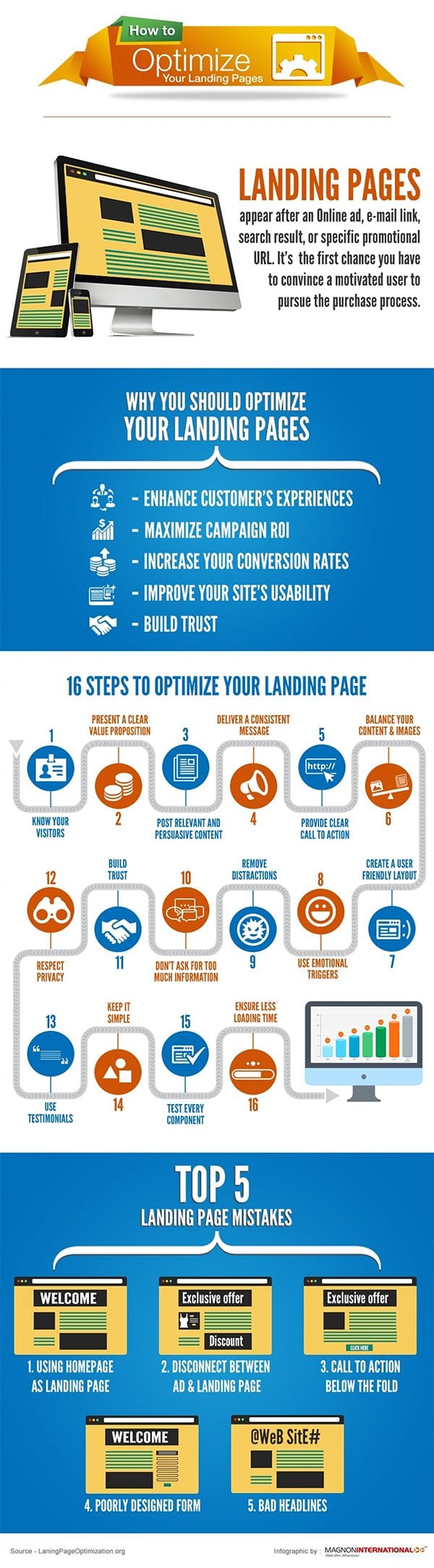
In this blog post, we’ll discuss 16 landing page tips that can help you improve the conversion rate of your website.
Whether you’re an e-commerce store, a SaaS company, or a blogger, these tips are applicable to various industries and can make a significant difference in your online success.
Infographic from Magnon International.
1. Clear and Compelling Headline
Your landing page’s headline should grab your visitors’ attention immediately and convey a clear message about what your offer is. It should be concise, engaging, and relevant to the visitor’s needs or interests. Use persuasive language that encourages them to keep reading.
2. Concise and Persuasive Subheadline
Support your headline with a subheadline that provides more context and persuades visitors to explore further. Use this space to highlight the unique value proposition or benefits of your product or service.
3. Strong Visuals
Incorporate high-quality images, videos, or graphics that are relevant to your product or service. Visual content can quickly convey information and create an emotional connection with your audience. Ensure that visuals align with your brand and message.
4. Clear Call-to-Action (CTA)
Your landing page should have a prominent and visually appealing CTA button. Use action-oriented words such as “Get Started,” “Sign Up,” or “Buy Now.” Make sure the CTA stands out from the rest of the page design.
5. Use A/B Testing
A/B testing allows you to experiment with different elements of your landing page, such as headlines, CTA buttons, and colors, to determine what resonates best with your audience. Continuously optimize your page based on the results of these tests.
6. Mobile Optimization
With a growing number of users accessing websites on mobile devices, it’s crucial to ensure that your landing page is responsive and mobile-friendly. Test your page on various devices to guarantee a seamless experience for all users.
7. Speed Matters
A slow-loading landing page can drive visitors away. Optimize your page’s load time by compressing images, reducing unnecessary scripts, and utilizing content delivery networks (CDNs) to ensure fast loading across different regions.
8. Social Proof
Include testimonials, reviews, and trust badges on your landing page to build trust with potential customers. Positive feedback from previous customers can alleviate doubts and boost your credibility.
9. Benefit-Oriented Copy
Craft persuasive and benefit-focused copy that explains how your product or service solves your audience’s problems or fulfills their needs. Highlight the value and benefits they will receive.
10. Address Objections
Anticipate and address common objections or concerns your visitors may have. This can be done through FAQ sections, live chat support, or by including content that educates and reassures potential customers.
11. Limited Distractions
Keep your landing page focused on the primary goal, whether it’s getting visitors to sign up, make a purchase, or take another specific action. Minimize distractions such as excessive navigation links or unrelated content.
12. Scarcity and Urgency
Create a sense of urgency by incorporating elements like limited-time offers, countdown timers, or low-stock alerts. These tactics can encourage visitors to take action quickly.
13. Personalization
Tailor your landing page content to different audience segments. Use dynamic content based on factors like location, behavior, or referral source to make visitors feel that the page was designed specifically for them.
14. Trust Signals
Build trust by showcasing recognizable logos of companies you’ve worked with, security certifications, or industry awards you’ve received. Trust signals can reassure visitors that they are making a safe and informed decision.
15. User-Friendly Forms
If your landing page includes a form, make it as user-friendly as possible. Only request essential information, use auto-fill features, and provide clear instructions. The easier it is to complete the form, the higher the conversion rate.
16. Analytics and Tracking
Implement robust analytics tools like Google Analytics to monitor and measure the performance of your landing page. Track key metrics such as conversion rate, bounce rate, and user behavior to identify areas for improvement.
In conclusion, your landing page is a critical component of your online marketing strategy. By implementing these 16 landing page tips, you can create a more compelling and effective landing page that converts visitors into customers. Remember that optimization is an ongoing process, and regularly testing and refining your landing page is key to long-term success in improving your website’s conversion rate.

Author:
Mark Ford