
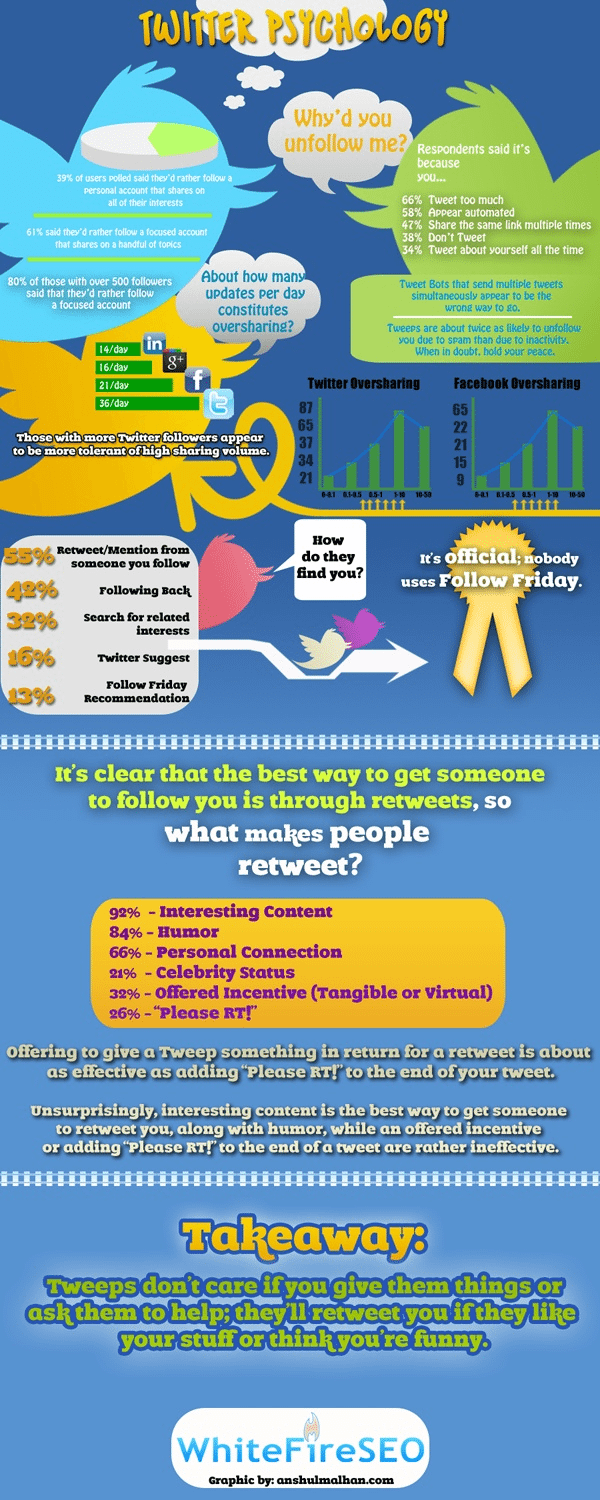
Have you ever wondered why people decide to follow you, what makes them retweet you, or what you do that makes others unfollow you?
The infographic below from Whitefire SEO gives you answers to all the questions above.
Use the results to do more of the good stuff and less of the bad stuff and improve your overall Twitter strategy.
Social media has revolutionized the way we connect with the world. Platforms like Twitter have become indispensable tools for individuals, businesses, and influencers alike. Whether you’re using Twitter for personal expression or to promote your brand, understanding your followers is essential for success. In this blog post, we’ll delve into 20 intriguing facts about your Twitter followers that will undoubtedly make you rethink your Twitter strategy.
1. Demographics Matter
Your Twitter followers are not a homogenous group. They come from diverse backgrounds, and their demographics can vary significantly. Understanding the age, gender, location, and interests of your followers can help tailor your content to their preferences.
2. Engagement Is Key
Engagement is the lifeblood of Twitter. While the number of followers you have is important, it’s the engagement rate that truly matters. High engagement indicates that your content resonates with your audience, which can lead to increased reach and influence.
3. Active vs. Passive Followers
Not all followers are created equal. Some are active and regularly interact with your tweets, while others are passive observers who rarely engage. Identifying your active followers can help you build a more dedicated community.
4. Follower Growth Rate
Tracking your follower growth rate over time can provide insights into the success of your Twitter strategy. A steady increase in followers suggests that your content is attracting new audiences and retaining existing ones.
5. Follower Churn
On the flip side, it’s essential to monitor follower churn, which represents the rate at which people unfollow you. High churn may signal that your content is not meeting expectations or that your strategy needs adjustment.
6. Time Zones Matter
Twitter is a global platform, and your followers may span multiple time zones. Posting at strategic times can maximize your reach and engagement. Tools like Twitter Analytics can help identify the best times to tweet.
7. Hashtags Are Powerful
Using relevant hashtags can significantly increase the visibility of your tweets. Research popular hashtags in your niche and incorporate them into your content to reach a broader audience.
8. Retweets Are Gold
Retweets amplify your message and introduce your content to new audiences. Encourage retweets by sharing valuable and shareable content that resonates with your followers.
9. Quality Over Quantity
It’s tempting to focus solely on increasing your follower count, but quality always trumps quantity. Having a smaller, engaged following is more valuable than a large, disinterested one.
10. Influencers Can Boost Your Profile
Engaging with influencers in your niche can help you gain credibility and access their followers. Retweeting, commenting on their content, or collaborating on projects can all be effective strategies.
11. Visual Content Matters
Tweets with images or videos tend to perform better than text-only tweets. Incorporating visual content into your Twitter strategy can lead to higher engagement and shares.
12. Consistency Is Key
Consistency in posting is crucial for maintaining and growing your Twitter following. Create a content calendar to ensure regular updates and to keep your followers engaged.
13. Analytics Are Your Friend
Twitter offers robust analytics tools that can provide valuable insights into your audience’s behavior. Use these tools to track engagement, follower demographics, and the performance of your tweets.
14. Twitter Lists for Organization
Creating Twitter lists can help you categorize your followers and stay organized. You can have lists for influencers, customers, prospects, and more, making it easier to engage with specific groups.
15. Personalization Wins Hearts
Engage with your followers on a personal level. Respond to comments and messages, acknowledge their contributions, and make them feel valued as part of your community.
16. Twitter Polls for Engagement
Twitter polls are a great way to boost engagement and gather valuable insights from your followers. Use polls to ask questions, seek opinions, or conduct market research.
17. Use Analytics to Refine Your Strategy
Regularly review your Twitter analytics to identify what’s working and what’s not. Adjust your strategy based on the data to optimize your results.
18. Embrace Twitter Threads
Twitter threads allow you to tell longer, more detailed stories or convey complex information. They can be a powerful tool for engaging your followers and keeping them interested.
19. Monitor Your Competitors
Don’t forget to keep an eye on what your competitors are doing on Twitter. You can gain inspiration and insights from their successful strategies and adapt them to your own brand.
20. Test and Iterate
Finally, remember that your Twitter strategy is not set in stone. Continuously test different approaches, content types, and posting times to discover what resonates best with your unique audience.
In conclusion, understanding your Twitter followers is essential for building a successful presence on the platform. These 20 facts highlight the importance of demographics, engagement, content quality, and ongoing analysis in shaping your Twitter strategy. By staying informed and adapting to your audience’s preferences, you can build a strong and engaged Twitter following that will benefit both your personal and professional goals. So, go ahead, analyze your Twitter data, and start making meaningful changes to your Twitter strategy today!

Author:
Mark Ford