Are you struggling to turn your social media followers into paying customers? Want to understand how a social media funnel can guide your audience smoothly from first click to final conversion?
You’ll find some social media basics in this infographic.
Here’s a summary of what’s covered:
- Awareness
- Interest
- Consideration
- Intent
- Conversion
Check out the post below for more.
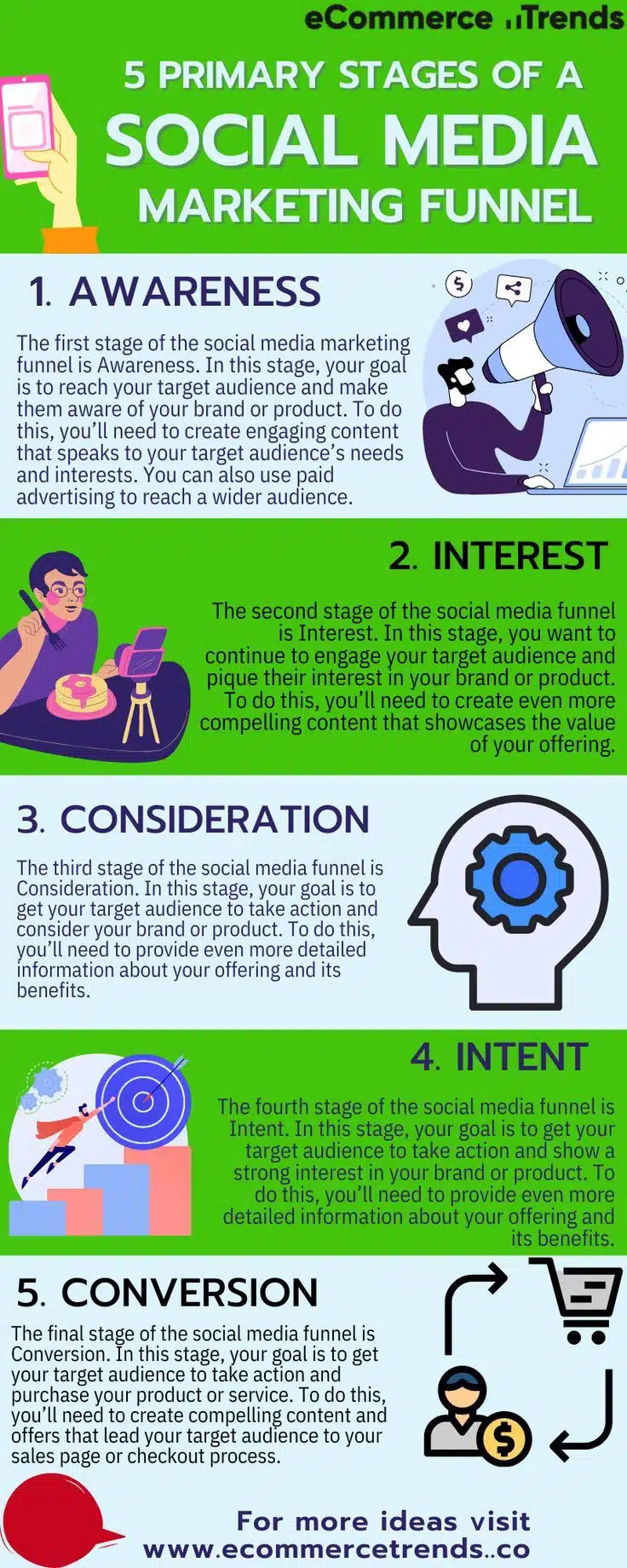
Building a loyal customer base through social media isn’t just about posting consistently—it’s about guiding people through a structured journey. The social media marketing funnel helps businesses understand how to turn casual scrollers into loyal buyers. By nurturing each stage, from awareness to conversion, you can move your audience closer to taking action.
Below, we’ll break down the five key stages of the funnel and show you how to optimise each one to drive meaningful results.
Awareness
The awareness stage is where your brand first enters the spotlight. Your goal here is to capture the attention of potential customers who may have never heard of you before. The focus should be on creating memorable, relatable, and eye-catching content that introduces your brand in a way that sticks. Paid ads and organic reach both play a vital role in ensuring your brand gets noticed by the right audience.
- Develop content that speaks directly to your target audience’s interests, pain points, and aspirations.
- Use a mix of media types such as videos, infographics, and stories to increase visibility across different platforms.
- Leverage paid advertising to reach new audiences who match your ideal customer profile.
- Maintain consistent branding across all social channels to build familiarity and trust from the start.
Interest
Once people know your name, the next challenge is keeping their attention. The interest stage is all about transforming initial curiosity into genuine engagement. Here, your audience wants to understand more about what you do and why it matters. High-quality content that entertains, informs, or inspires will help you maintain momentum and deepen their connection with your brand.
- Share behind-the-scenes content that humanises your brand and builds relatability.
- Use polls, Q&As, and interactive posts to spark conversation and encourage participation.
- Offer valuable insights or quick tips related to your niche to position yourself as an expert.
- Optimise your post captions with storytelling that draws readers in and leaves them wanting more.
Consideration
At this stage, potential customers are actively weighing up their options. They know what you offer, but they’re also comparing it to other solutions in the market. Your aim here is to provide detailed, persuasive content that clarifies your value and answers any doubts they might have. Education, reassurance, and social proof are your strongest tools for moving them forward.
- Create comparison posts or guides that demonstrate how your offering stands out from competitors.
- Publish testimonials, reviews, or user-generated content that shows real-world satisfaction.
- Offer free resources like eBooks, webinars, or checklists that highlight your expertise.
- Address common objections or questions directly in your content to build credibility and confidence.
Intent
The intent stage is where interest starts turning into a desire to act. Your audience has been nurtured enough to consider making a purchase or enquiry, but they may still need a final nudge. This is the perfect time to reinforce your value, showcase results, and remove any last barriers to conversion. Clarity and reassurance are key to solidifying their decision.
- Share success stories or case studies that demonstrate measurable outcomes.
- Use limited-time offers or exclusive deals to create a sense of urgency and drive action.
- Ensure your call-to-action (CTA) is clear, direct, and easy to follow across all platforms.
- Highlight guarantees, after-sales support, or risk-free trial options to minimise hesitation.
Conversion
Conversion is where all your efforts pay off. This is the moment when a follower takes the desired action—whether that’s making a purchase, signing up, or booking a consultation. The focus here should be on creating a seamless experience that makes it easy for users to complete their journey. Everything from your landing page design to your payment process should support this goal.
- Optimise your website or sales page for speed, simplicity, and mobile usability.
- Keep your messaging consistent between social media posts and landing pages to avoid confusion.
- Use retargeting ads to remind warm leads to complete their purchase or sign-up.
- Celebrate new customers publicly to create social proof and encourage others to follow suit.
Nurturing the Post-Conversion Relationship
The funnel doesn’t end once a customer converts. In fact, this stage opens the door to brand loyalty and advocacy. By nurturing your relationship with existing customers, you can turn one-time buyers into long-term supporters who help spread your message. Effective post-purchase engagement strengthens retention and can significantly lower future marketing costs.
- Send follow-up emails or direct messages thanking customers for their purchase.
- Offer loyalty discounts, referral bonuses, or exclusive access to new products.
- Encourage customers to share their experiences on social media to amplify word-of-mouth marketing.
- Continue providing value through useful content, even after the sale, to keep them engaged.
Measuring Funnel Performance
A social media funnel is only as strong as the insights you gain from it. Tracking data helps you see which parts of your funnel are performing well and which need refining. By measuring engagement, conversions, and retention, you can make smarter decisions about where to invest your time and budget. Analytics also reveal patterns that inform future strategy.
- Track reach, impressions, and engagement metrics to evaluate awareness and interest stages.
- Use click-through and conversion rates to measure the success of intent and conversion efforts.
- Implement UTM codes or tracking links to see which campaigns drive the most conversions.
- Regularly review funnel data to identify drop-off points and test new approaches for improvement.
Aligning Content with Funnel Stages
Different content types suit different stages of the funnel. To maximise impact, match your messaging to your audience’s mindset at each stage. Awareness content should attract, interest content should educate, and conversion content should persuade. Strategic alignment ensures that every piece of content moves your followers one step closer to becoming customers.
- Use storytelling and entertaining visuals to attract attention during the awareness stage.
- Publish thought leadership posts and how-to guides during the consideration phase.
- Create detailed case studies, testimonials, or webinars to boost intent and conversion.
- Recycle top-performing content in multiple formats to maintain consistency and reach.
Common Mistakes in Funnel Management
Even well-designed funnels can fail if mismanaged. Many brands struggle with unclear messaging, inconsistent posting, or a lack of nurturing between stages. Recognising these pitfalls helps ensure your funnel performs smoothly. Avoiding these errors allows you to maintain momentum and retain the trust of your audience.
- Don’t skip nurturing stages—jumping straight from awareness to sales can alienate followers.
- Avoid inconsistent branding that confuses users and weakens recognition.
- Make sure your CTAs are visible and appropriate for each stage of the funnel.
- Review your funnel regularly to prevent outdated content or broken links from hurting conversions.
Integrating Paid and Organic Strategies
A strong social media funnel blends both paid and organic methods. Paid ads provide reach and visibility, while organic content builds long-term engagement and authenticity. When used together, they create a balanced ecosystem that supports every funnel stage. The goal is to ensure consistency between what people see in ads and what they experience on your profiles.
- Use paid campaigns to boost visibility of high-performing organic posts.
- Retarget users who have engaged with your organic content but haven’t yet converted.
- Invest in lookalike audiences to expand your reach to similar, high-quality prospects.
- Analyse paid campaign results to refine organic strategies and messaging.
Maintaining Momentum Over Time
Social media funnels are not one-time projects—they require constant optimisation. Algorithms change, audiences evolve, and new platforms emerge. Regularly reviewing your funnel keeps it fresh, relevant, and aligned with your goals. Continuous improvement ensures your followers stay engaged and your conversions keep growing.
- Conduct quarterly audits to assess which funnel stages need refinement.
- Refresh visuals, messaging, and CTAs to match changing audience preferences.
- Stay up to date with platform updates and adapt your strategy accordingly.
- Keep experimenting with new content formats to maintain interest and engagement.
Conclusion
A well-built social media funnel is the foundation of sustainable online growth. It allows you to guide followers naturally from discovery to decision, ensuring every post serves a strategic purpose. By understanding and optimising each stage—awareness, interest, consideration, intent, and conversion—you’ll create a journey that feels effortless for your audience and profitable for your business.
When your funnel works seamlessly, every click becomes a potential customer, and every interaction moves you closer to your goals. The path from follower to buyer isn’t random—it’s intentional, structured, and entirely within your control.

Author:
Mark Ford

The Best AI-Powered Tools to Streamline Your Social Media Management
Are you searching for smarter ways to manage your social media without spending hours scheduling and analysing posts? Want to discover the best AI-powered tools that can streamline your workflow and boost engagement effortlessly? […]