
In today’s digital age, social media has become an integral part of our daily lives. From staying connected with friends and family to discovering new products and services, social media platforms have transformed the way we interact with the world.
As a result, businesses of all sizes are leveraging the power of social media marketing to reach their target audiences, build brand awareness, and drive sales.
However, effective social media marketing isn’t just about posting a few updates and hoping for the best. It requires a well-thought-out strategy that takes into account the do’s and don’ts of the social media landscape.
In this blog post, we’ll explore 32 essential do’s and don’ts that will help you create an awesome social media marketing strategy.
Infographic by The Core.
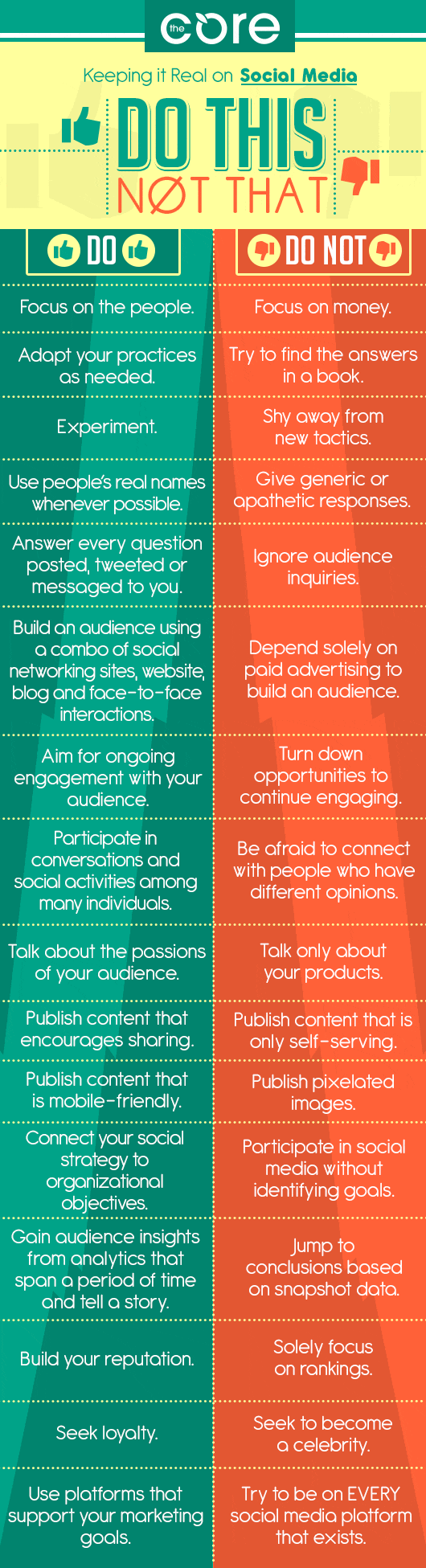
The Do’s:
- Define Your Goals: Before diving into social media, define clear, measurable goals. Whether it’s increasing brand awareness, driving website traffic, or boosting sales, having specific objectives will guide your strategy.
- Know Your Audience: Understand your target audience’s demographics, interests, and pain points. Tailor your content to resonate with them.
- Choose the Right Platforms: Not all social media platforms are created equal. Select the ones that align with your target audience. For example, LinkedIn is ideal for B2B marketing, while Instagram may be better for lifestyle brands.
- Create a Content Calendar: Plan your content in advance to maintain a consistent posting schedule. A content calendar helps you stay organized and ensures your content aligns with your goals.
- Engage with Your Audience: Social media is a two-way street. Respond to comments, messages, and mentions promptly. Engaging with your audience builds trust and loyalty.
- Use Visual Content: Visuals, such as images and videos, grab attention and generate more engagement. Incorporate them into your content strategy.
- Tell Your Brand Story: Share your brand’s story and values. Authenticity resonates with audiences and fosters a sense of connection.
- Monitor Analytics: Regularly analyze your social media metrics to track your progress. Adjust your strategy based on what’s working and what’s not.
- Collaborate with Influencers: Partner with influencers who align with your brand to expand your reach and credibility.
- Run Paid Advertising Campaigns: Invest in paid social media advertising to reach a larger, highly targeted audience.
- A/B Test Your Content: Experiment with different content formats, headlines, and posting times to identify what resonates best with your audience.
- Use Hashtags Wisely: Research and use relevant hashtags to increase the discoverability of your content. But avoid overloading your posts with too many hashtags.
- Humanize Your Brand: Show the human side of your business. Share behind-the-scenes content, employee stories, and customer testimonials.
- Cross-Promote: Promote your social media profiles across all your marketing channels, including your website, email signatures, and offline materials.
- Stay Consistent with Branding: Maintain a consistent visual and voice identity across all your social media profiles. This helps reinforce your brand image.
- Encourage User-Generated Content: Encourage your customers to create content related to your brand. User-generated content can be highly authentic and trustworthy.
- Learn from Competitors: Keep an eye on your competitors’ social media strategies. Analyze what’s working for them and adapt it to your needs.
- Educate and Inform: Share valuable content that educates and informs your audience about your industry, products, or services.
- Test Different Content Types: Mix up your content with a variety of formats, including blog posts, infographics, webinars, and live videos.
- Monitor Trends: Stay up-to-date with social media trends and incorporate relevant ones into your strategy.
- Optimize for Mobile: Ensure that your content is mobile-friendly, as a significant portion of social media users access platforms via mobile devices.
- Network with Peers: Connect and engage with others in your industry. Building relationships can lead to partnerships and collaborations.
- Establish Crisis Management Procedures: Have a plan in place for handling negative feedback or crises on social media. Respond professionally and empathetically.
- Use Social Proof: Showcase positive reviews, testimonials, and endorsements to build trust with your audience.
- Experiment with Stories: Utilize Stories features on platforms like Instagram and Facebook to provide ephemeral content that captures attention.
The Don’ts:
- Don’t Over-Promote: Avoid bombarding your audience with constant promotional content. Balance promotional posts with informative and entertaining ones.
- Don’t Neglect Customer Service: Social media is a customer service channel. Don’t ignore customer complaints or inquiries.
- Don’t Ignore Negative Feedback: Address negative feedback publicly and professionally. Ignoring it can harm your brand’s reputation.
- Don’t Buy Fake Followers: Avoid purchasing fake followers. It’s better to have a smaller, engaged audience than a large, inactive one.
- Don’t Neglect Privacy: Respect user privacy and comply with data protection regulations like GDPR.
- Don’t Use Irrelevant Hashtags: Don’t use hashtags that have no relevance to your content. It can come off as spammy.
- Don’t Over-Automate: While automation tools are useful, don’t rely on them entirely. Personalized, real-time interactions are crucial for building relationships.
Conclusion
A successful social media marketing strategy requires a careful balance of do’s and don’ts. By setting clear goals, knowing your audience, and following these guidelines, you can create an awesome social media presence that drives results for your business. Keep in mind that the social media landscape is constantly evolving, so staying adaptable and open to change is essential for long-term success. Remember, it’s not just about being present on social media; it’s about engaging and providing value to your audience.

Author:
Mark Ford