In today’s digital age, having a strong online presence is essential for any business to thrive.
One of the most effective ways to establish your brand, connect with your audience, and showcase your expertise is by starting a business blog. A well-maintained blog can drive traffic to your website, improve your search engine ranking, and ultimately boost your bottom line.
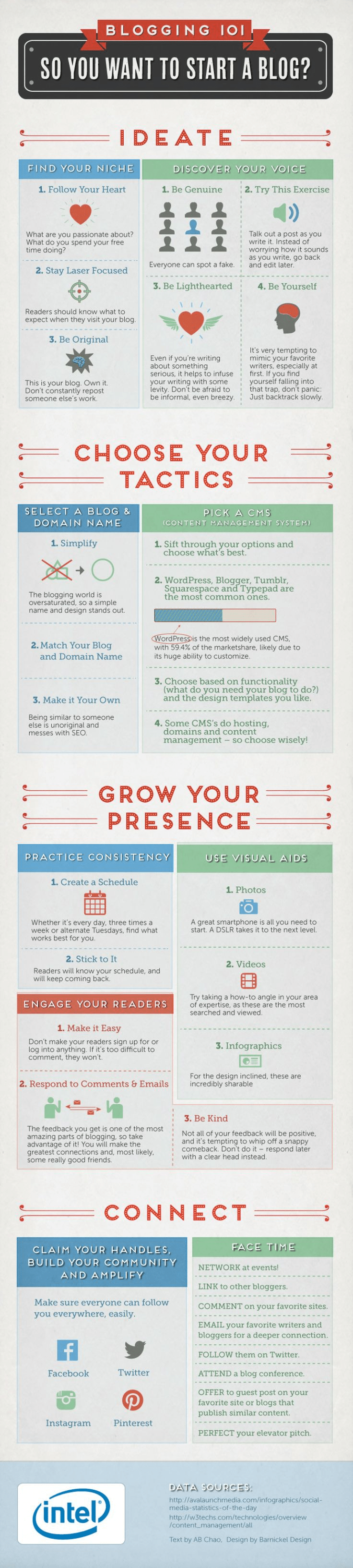
In this guide, we’ll walk you through four simple steps to start your first business blog.
Infographic by Intel.
Step 1: Define Your Blog’s Purpose and Audience
Before you start writing a single blog post, it’s crucial to define the purpose of your blog and identify your target audience. This step is the foundation of your blogging strategy, as it will guide your content creation and help you achieve your business goals.
Determine Your Blog’s Purpose
Ask yourself why you want to start a business blog. Are you looking to:
- Educate Your Audience: Share industry insights, tips, and tutorials to help your audience solve problems or make informed decisions.
- Showcase Your Expertise: Demonstrate your expertise in your niche to build trust and authority.
- Promote Your Products or Services: Use your blog to promote and sell your products or services.
- Connect with Your Audience: Foster a sense of community and engage with your customers and prospects.
- Drive Traffic and Generate Leads: Increase website traffic and capture leads for future marketing efforts.
Once you’ve identified your primary purpose, you can move on to defining your target audience.
Identify Your Target Audience
Your blog won’t be successful if it doesn’t resonate with your target audience. To create content that speaks to their needs and interests, you should:
- Create Buyer Personas: Develop detailed profiles of your ideal customers, including demographics, pain points, and interests.
- Research Your Competitors: Analyze what your competitors are doing and identify gaps in their content strategy that you can fill.
- Survey Your Existing Customers: Ask your current customers for feedback and insights to understand their preferences and challenges better.
By defining your blog’s purpose and audience, you’ll have a clear direction for your content and a higher chance of achieving your business goals.
Step 2: Choose the Right Blogging Platform
Now that you’ve established your blog’s purpose and audience, it’s time to choose the right platform to host your blog. There are several blogging platforms available, but the two most popular options for business bloggers are WordPress and Medium. Let’s explore both:
WordPress:
WordPress is a versatile and highly customizable content management system (CMS) that powers over 40% of all websites on the internet. Here are some reasons why you might choose WordPress for your business blog:
- Full Control: WordPress gives you complete control over your blog’s design, functionality, and content. You can customize it to match your brand and business needs.
- Plugins: There are thousands of plugins available that extend WordPress’s functionality. You can add SEO tools, e-commerce capabilities, social media integration, and more.
- SEO-Friendly: WordPress is well-known for its SEO capabilities, making it easier to optimize your blog for search engines.
- Scalability: It’s suitable for both small blogs and large websites, allowing you to grow your online presence.
- Ownership: You own your website and all its content, ensuring full control and ownership of your digital assets.
Medium:
Medium is a user-friendly blogging platform that focuses on content creation and discovery. It’s a good choice if you want a straightforward way to publish your blog without worrying about technical aspects. Here’s why you might opt for Medium:
- Simplicity: Medium offers a clean and minimalist writing interface, making it easy to focus on your content.
- Built-in Audience: Medium has a built-in readership and a chance to get featured in its curated collections, increasing your content’s visibility.
- No Technical Hassles: You don’t need to worry about hosting, security, or maintenance. Medium handles all that for you.
- Engagement Features: Medium provides features like comments, highlights, and claps, which encourage reader engagement.
Ultimately, the choice between WordPress and Medium depends on your specific needs and preferences. If you want more control and customization options, WordPress is the way to go. On the other hand, if you prefer a hassle-free, user-friendly platform, Medium might be the better choice.
Step 3: Create High-Quality, Relevant Content
With your blog platform chosen and your audience defined, it’s time to start creating content. High-quality, relevant content is the lifeblood of a successful business blog. Here are some tips for creating compelling blog posts:
Conduct Keyword Research:
Keyword research helps you identify the terms and phrases your target audience is searching for. Use tools like Google Keyword Planner or SEMrush to discover relevant keywords in your niche. Incorporate these keywords naturally into your blog posts to improve your search engine rankings and attract organic traffic.
Plan Your Content:
Create an editorial calendar to plan your blog posts in advance. This ensures a consistent posting schedule and helps you cover a variety of topics that resonate with your audience. Your content plan should align with your blog’s purpose and the needs of your target audience.
Write Engaging Headlines:
Your headlines should grab readers’ attention and give them a reason to click and read your blog posts. Use action words, numbers, and emotional triggers to create compelling headlines. Tools like CoSchedule’s Headline Analyzer can help you optimize your titles.
Provide Value:
Every blog post should provide value to your readers. Whether it’s actionable tips, in-depth analysis, or thought-provoking insights, your content should address the needs and interests of your target audience. Solve their problems, answer their questions, and educate them on relevant topics.
Use Visuals:
Visual elements, such as images, infographics, and videos, can enhance your blog posts and make them more engaging. Visual content helps break up text, illustrate your points, and keep readers’ attention. Be sure to use high-quality visuals that align with your brand.
Optimize for SEO:
Search engine optimization (SEO) is essential for increasing your blog’s visibility in search engine results. Optimize your blog posts by including relevant keywords, meta descriptions, and alt tags for images. Ensure your content is well-structured with headers and subheadings.
Promote Your Content:
Creating great content is only half the battle. You also need to promote it to reach a wider audience. Share your blog posts on social media, email newsletters, and relevant online communities. Collaborate with influencers in your industry to amplify your reach.
Monitor and Analyze:
Use web analytics tools like Google Analytics to track the performance of your blog posts. Monitor key metrics such as traffic, engagement, and conversion rates. Analyze the data to understand what’s working and what needs improvement, and adjust your content strategy accordingly.
Step 4: Engage with Your Audience
Building a thriving business blog isn’t just about publishing content—it’s also about building a community and fostering engagement with your audience. Here are some strategies to help you engage with your readers effectively:
Respond to Comments:
Encourage readers to leave comments on your blog posts, and make an effort to respond to each comment. Engaging with your audience in the comments section builds a sense of community and shows that you value their input.
Use Social Media:
Share your blog posts on your social media profiles and engage with your followers. Respond to comments, answer questions, and participate in relevant discussions. Social media is an excellent way to promote your content and connect with your audience.
Email Marketing:
Build an email list and send regular newsletters to your subscribers. Use email marketing to share your latest blog posts, offer exclusive content or promotions, and keep your audience informed and engaged.
Collaborate with Influencers:
Partner with influencers or experts in your industry to co-create content or participate in interviews. This can help you tap into their audience and establish your authority.
Conduct Surveys and Polls:
Gather feedback from your audience through surveys and polls. Use the insights to tailor your content and improve your blog’s user experience.
Analyze User Behavior:
Study user behavior on your website to understand how visitors interact with your blog. Identify popular content and areas where users may drop off. This information can guide your content strategy and site optimization efforts.
Host Webinars or Live Q&A Sessions:
Engage with your audience in real-time by hosting webinars or live Q&A sessions. This allows you to address their questions and provide valuable insights while building a personal connection.
Remember that building an engaged audience takes time and consistency. Be patient, listen to your readers, and adapt your approach based on their feedback and preferences.
Conclusion
Starting your first business blog can be a rewarding endeavor that strengthens your brand, attracts new customers, and establishes your authority in your niche. By following these four simple steps—defining your blog’s purpose and audience, choosing the right platform, creating high-quality content, and engaging with your audience—you can set yourself on the path to blogging success. Remember that building a successful blog is an ongoing process, so stay committed, adapt to changing trends, and always strive to provide value to your readers. Happy blogging!

Author:
Mark Ford

The Complete Content Mix: What Every Business Should Be Publishing
Are you struggling to decide what types of content your business should be publishing to attract more traffic and engagement? Want to learn how to build the perfect content mix that keeps your audience interested and your brand growing? […]