In the ever-evolving landscape of digital marketing, content marketing remains a cornerstone of success. Creating valuable, relevant, and engaging content is crucial for attracting and retaining customers.
However, to truly harness the power of content marketing, you need to know whether your efforts are paying off. That’s where measurement comes in. Measuring the effectiveness of your content marketing strategy is not only essential for gauging its impact but also for optimizing your future efforts.
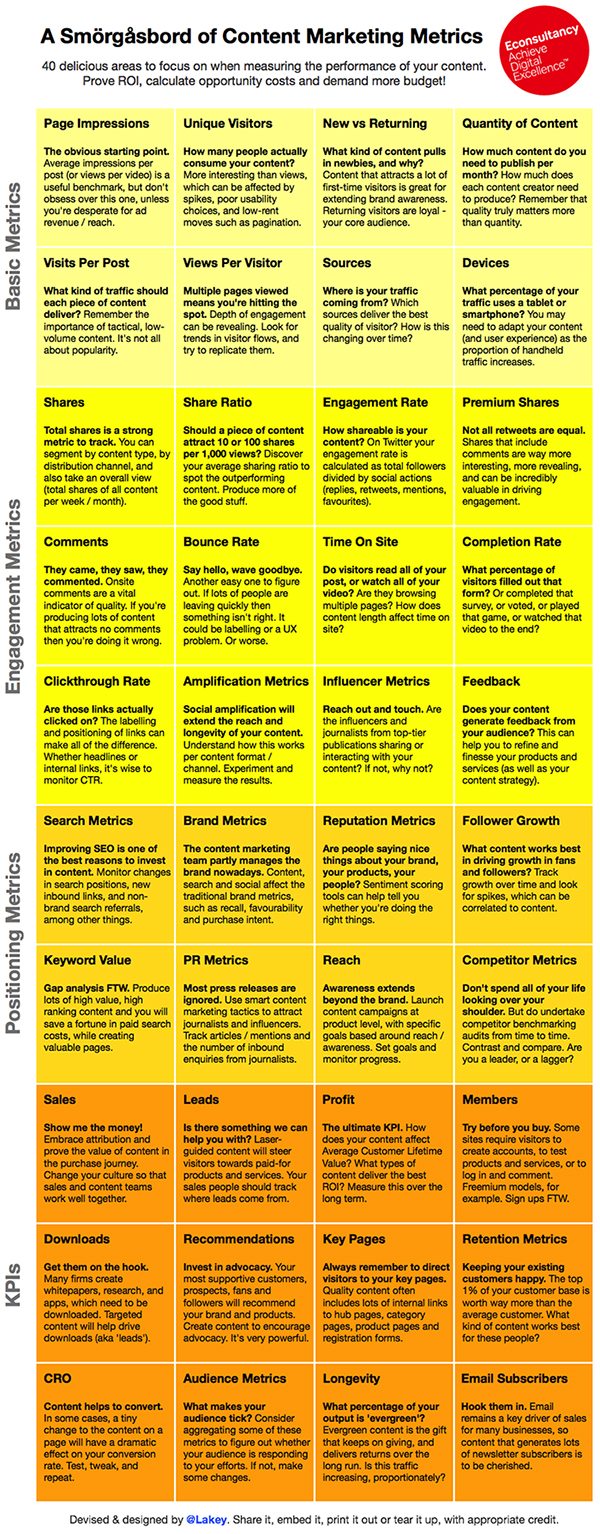
In this comprehensive guide, we’ll explore 40 clever ways to measure the effectiveness of your content marketing strategy. These metrics and methods will help you gain valuable insights and make data-driven decisions to improve your content marketing ROI.
Infographic from Econsultancy.
1. Website Traffic
- Total Visits: Monitor the overall number of visitors to your website to see if your content is driving traffic.
- Unique Visitors: Analyze how many individuals are visiting your site to understand your reach.
- Page Views: Track the number of pages viewed per session to gauge content engagement.
- Bounce Rate: A high bounce rate indicates visitors leaving quickly; lower it with better content.
- Time on Page: Measure how long users stay on your content to assess its quality and relevance.
2. SEO Metrics
- Organic Search Traffic: Assess the percentage of traffic coming from search engines to evaluate your SEO efforts.
- Keyword Rankings: Monitor your content’s ranking for target keywords to measure its visibility.
- Click-Through Rate (CTR): Analyze CTR for your content in search results and emails to gauge its appeal.
- Backlinks: Track the number and quality of backlinks to your content; more is usually better.
- Keyword Diversity: Ensure your content ranks for a variety of relevant keywords to expand your reach.
3. Social Media Engagement
- Shares: Count social shares to determine how well your content resonates with your audience.
- Likes and Reactions: Measure the number of likes, reactions, or emojis to gauge sentiment.
- Comments: Engage with your audience by responding to comments and tracking their volume.
- Followers and Subscribers: Monitor growth in your social media following, as it can correlate with content success.
- Clicks: Track the number of clicks on links within your social media posts to measure interest.
4. Email Marketing
- Open Rate: Measure how many recipients open your emails to assess subject line effectiveness.
- Click-Through Rate (CTR): Analyze CTR to see how well your content within emails engages your audience.
- Conversion Rate: Track the percentage of email recipients who take the desired action, such as making a purchase.
- Unsubscribe Rate: Keep an eye on this metric to ensure your content isn’t causing audience attrition.
- Forward Rate: Measure how often your email content is shared with others.
5. Content Engagement
- Content Downloads: If you offer downloadable content, track downloads to measure interest.
- Video Views: For video content, measure the number of views and completion rates.
- Interactive Content Engagement: Analyze interactions with quizzes, polls, and other interactive content.
- Scroll Depth: Use scroll tracking to see how far users read through your articles.
- Content Feedback: Collect feedback through surveys or comments to gauge content quality.
6. Lead Generation
- Lead Conversion Rate: Track the percentage of leads generated from your content.
- Cost per Lead (CPL): Measure how much you spend to acquire each lead through content marketing.
- Lead Quality: Assess the quality of leads generated; not all leads are equal.
- Lead-to-Customer Conversion Rate: Measure how many leads eventually become paying customers.
- Customer Lifetime Value (CLV): Evaluate the long-term value of customers acquired through content.
7. Content Sharing
- Dark Social Shares: Analyze shares that occur through private messages or email, often missed by traditional tracking.
- Social Sharing Buttons: Optimize the placement and design of sharing buttons to encourage sharing.
- Influencer Shares: Track shares by industry influencers to assess your content’s credibility.
- Employee Advocacy: Encourage employees to share your content to expand its reach.
- Community Engagement: Monitor shares and discussions within niche communities relevant to your content.
8. Customer Journey Analysis
- Multi-Touch Attribution: Use attribution models to understand how content fits into the customer journey.
- First-Touch Attribution: Measure the content that first brought users to your site.
- Last-Touch Attribution: Determine the content that led to conversions or sales.
- Assisted Conversions: Analyze content that played a supporting role in conversions.
- Customer Surveys: Gather feedback from customers to understand how content influenced their decisions.
Conclusion
Effectively measuring your content marketing strategy is a complex but essential endeavor. By implementing these 40 clever measurement techniques, you can gain valuable insights into your content’s performance and make informed decisions to optimize your strategy.
Remember that no single metric can provide a complete picture of your content’s effectiveness. It’s crucial to analyze a combination of metrics and continuously refine your approach based on the data you collect. Over time, your content marketing strategy will become more efficient and aligned with your business goals.
Keep in mind that the digital marketing landscape is constantly evolving, so stay updated with industry trends and adapt your measurement techniques accordingly. With a robust measurement strategy in place, you’ll be better equipped to create content that resonates with your audience and drives meaningful results for your business.

Author:
Mark Ford