In the ever-evolving world of digital marketing, staying up-to-date with the latest trends, strategies, and tools is essential for website owners.
One aspect of marketing that can often seem like a different language is the extensive use of acronyms. These abbreviations are commonly used in discussions, reports, and marketing plans to convey complex ideas succinctly.
To help you navigate the marketing landscape, here are 40 marketing acronyms every website owner should know.
Infographic by from B Squared.
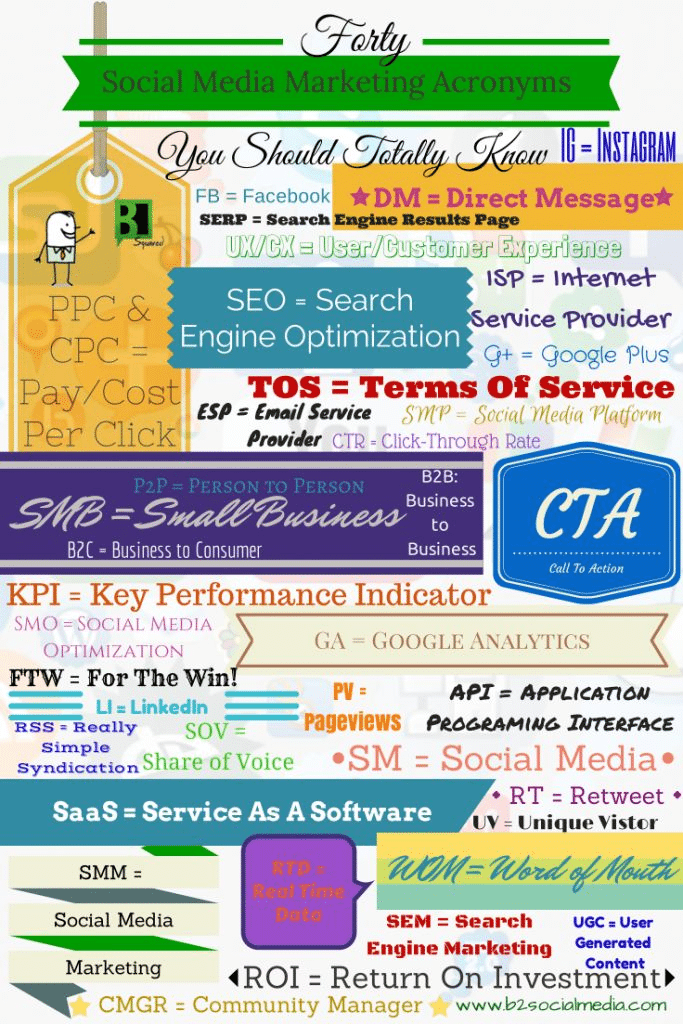
1. SEO: Search Engine Optimization
Search Engine Optimization is the practice of optimizing your website’s content and structure to improve its visibility on search engine results pages (SERPs). Effective SEO strategies can help your website rank higher and attract more organic traffic.
2. SEM: Search Engine Marketing
Search Engine Marketing involves paid advertising on search engines like Google. It includes activities such as pay-per-click (PPC) advertising, where you bid on keywords to display your ads prominently in search results.
3. SERP: Search Engine Results Page
The Search Engine Results Page is the page displayed by search engines when users enter a query. It shows a list of relevant websites, typically consisting of both organic and paid results.
4. CTR: Click-Through Rate
Click-Through Rate is a metric that measures the percentage of people who click on a specific link or ad after seeing it. It’s an important indicator of the effectiveness of your marketing efforts.
5. ROI: Return on Investment
Return on Investment measures the profitability of your marketing campaigns. It’s calculated by comparing the revenue generated to the cost of the campaign.
6. KPI: Key Performance Indicator
Key Performance Indicators are metrics used to evaluate the performance of marketing efforts. They can include CTR, conversion rate, and revenue per visitor, among others.
7. CRM: Customer Relationship Management
Customer Relationship Management is a system or software used to manage interactions with customers. It helps in building and maintaining strong customer relationships.
8. PPC: Pay-Per-Click
Pay-Per-Click is an online advertising model where advertisers pay a fee each time their ad is clicked. It’s commonly used in search engine marketing.
9. CTA: Call to Action
A Call to Action is a prompt that encourages users to take a specific action, such as signing up for a newsletter or making a purchase. CTAs are crucial for converting website visitors into customers.
10. CMS: Content Management System
A Content Management System is software that allows you to create, edit, and manage the content on your website without needing advanced technical skills. Examples include WordPress and Joomla.
11. B2B: Business-to-Business
B2B refers to businesses that primarily sell products or services to other businesses rather than to consumers (B2C). Understanding this distinction is crucial when tailoring your marketing strategies.
12. B2C: Business-to-Consumer
B2C, on the other hand, involves businesses selling directly to individual consumers. Marketing approaches can differ significantly between B2B and B2C markets.
13. ROI: Return on Investment
Return on Investment measures the profitability of your marketing campaigns. It’s calculated by comparing the revenue generated to the cost of the campaign.
14. UX: User Experience
User Experience focuses on creating a positive experience for website visitors. It encompasses design, ease of navigation, and overall satisfaction with the website.
15. UI: User Interface
User Interface refers to the visual and interactive elements of a website or application. It’s critical for creating an intuitive and user-friendly online presence.
16. A/B Testing
A/B Testing involves comparing two versions of a webpage or an element (A and B) to determine which one performs better in terms of user engagement or conversions.
17. CRO: Conversion Rate Optimization
Conversion Rate Optimization is the process of improving the percentage of website visitors who take a desired action, such as making a purchase or filling out a contact form.
18. CPM: Cost Per Mille (Cost Per Thousand Impressions)
Cost Per Mille is a pricing model in which advertisers pay a fee for every one thousand impressions (views) of their ad, regardless of whether it results in clicks.
19. CPA: Cost Per Acquisition
Cost Per Acquisition is a metric that calculates the cost of acquiring a new customer or lead through a specific marketing campaign.
20. CPC: Cost Per Click
Cost Per Click is the price you pay for each click on your ad in a pay-per-click (PPC) advertising campaign.
21. CPL: Cost Per Lead
Cost Per Lead measures the cost of acquiring a new lead or potential customer through marketing efforts.
22. CRM: Customer Relationship Management
Customer Relationship Management is a system or software used to manage interactions with customers. It helps in building and maintaining strong customer relationships.
23. KPI: Key Performance Indicator
Key Performance Indicators are metrics used to evaluate the performance of marketing efforts. They can include CTR, conversion rate, and revenue per visitor, among others.
24. CTRO: Customer Lifetime Value (CLV)
Customer Lifetime Value represents the total revenue a business can expect to generate from a customer throughout their entire relationship. Understanding CLV is crucial for long-term marketing strategies.
25. CMS: Content Management System
A Content Management System is software that allows you to create, edit, and manage the content on your website without needing advanced technical skills. Examples include WordPress and Joomla.
26. ROI: Return on Investment
Return on Investment measures the profitability of your marketing campaigns. It’s calculated by comparing the revenue generated to the cost of the campaign.
27. PPC: Pay-Per-Click
Pay-Per-Click is an online advertising model where advertisers pay a fee each time their ad is clicked. It’s commonly used in search engine marketing.
28. CTA: Call to Action
A Call to Action is a prompt that encourages users to take a specific action, such as signing up for a newsletter or making a purchase. CTAs are crucial for converting website visitors into customers.
29. CMS: Content Management System
A Content Management System is software that allows you to create, edit, and manage the content on your website without needing advanced technical skills. Examples include WordPress and Joomla.
30. B2B: Business-to-Business
B2B refers to businesses that primarily sell products or services to other businesses rather than to consumers (B2C). Understanding this distinction is crucial when tailoring your marketing strategies.
31. B2C: Business-to-Consumer
B2C, on the other hand, involves businesses selling directly to individual consumers. Marketing approaches can differ significantly between B2B and B2C markets.
32. UX: User Experience
User Experience focuses on creating a positive experience for website visitors. It encompasses design, ease of navigation, and overall satisfaction with the website.
33. UI: User Interface
User Interface refers to the visual and interactive elements of a website or application. It’s critical for creating an intuitive and user-friendly online presence.
34. A/B Testing
A/B Testing involves comparing two versions of a webpage or an element (A and B) to determine which one performs better in terms of user engagement or conversions.
35. CRO: Conversion Rate Optimization
Conversion Rate Optimization is the process of improving the percentage of website visitors who take a desired action, such as making a purchase or filling out a contact form.
36. CPM: Cost Per Mille (Cost Per Thousand Impressions)
Cost Per Mille is a pricing model in which advertisers pay a fee for every one thousand impressions (views) of their ad, regardless of whether it results in clicks.
37. CPA: Cost Per Acquisition
Cost Per Acquisition is a metric that calculates the cost of acquiring a new customer or lead through a specific marketing campaign.
38. CPC: Cost Per Click
Cost Per Click is the price you pay for each click on your ad in a pay-per-click (PPC) advertising campaign.
39. CPL: Cost Per Lead
Cost Per Lead measures the cost of acquiring a new lead or potential customer through marketing efforts.
40. CLV: Customer Lifetime Value
Customer Lifetime Value represents the total revenue a business can expect to generate from a customer throughout their entire relationship. Understanding CLV is crucial for long-term marketing strategies.
Conclusion
As a website owner, understanding these marketing acronyms is essential for effectively planning, executing, and measuring your marketing campaigns. Whether you’re focused on SEO, SEM, or improving your website’s UX and UI, these acronyms will help you communicate with marketing professionals, track your progress, and make informed decisions to achieve your online goals. Keep this list handy, and you’ll be well-equipped to navigate the dynamic world of digital marketing.

Author:
Mark Ford

10 New Year’s Marketing Resolutions to Grow a Small Business Sustainably
Are you struggling to make your marketing efforts deliver steady growth instead of short bursts of activity? Wondering how to build a marketing approach that supports your small business over the long term without constant trial and error? […]
10 Marketing Trends for 2026: What Smart Businesses Will Focus On Next
Are you looking to understand how marketing is shifting in 2026 and what today’s smartest brands are prioritising? Want to know which strategic trends will shape how businesses attract, convert, and retain customers over the next year? […]
How to Build a Marketing Technology Stack That Actually Works Together
Are you trying to figure out how to connect your marketing tools so they actually support each other instead of working in isolation? Want to understand the key steps to building a marketing technology stack that runs smoothly across your entire customer journey? […]