Are you trying to figure out how to connect your marketing tools so they actually support each other instead of working in isolation? Want to understand the key steps to building a marketing technology stack that runs smoothly across your entire customer journey?
You’ll find a clear breakdown of every component in this infographic.
Here’s a summary of what’s covered:
- Website
- Advertising
- Social Media
- SEO
- Mobile and Web Apps
- Experience Tools
- Discussion and Chat
- Data Analytics
- Dashboards
- Video Tools
- Proposals
- Client Feedback
- Content Aggregators
- CRM
- Webinar Tools
Check out the post below for more.
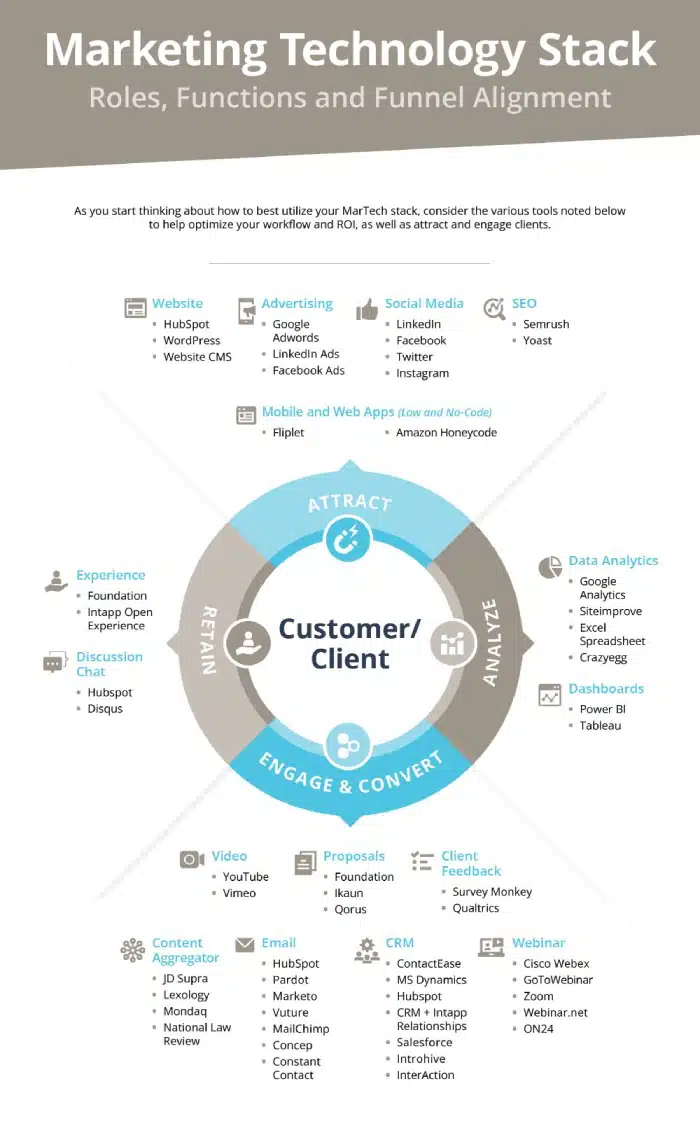
Building a marketing technology stack that genuinely works together is one of the most powerful ways to improve your efficiency, strengthen your customer experience, and increase your marketing ROI. With so many tools available, it’s easy to create a scattered collection of disconnected apps that don’t communicate well.
A successful stack isn’t about how many tools you use, but how effectively they integrate to support the customer journey. This guide walks you through the core components of a modern MarTech stack and how to make them work in harmony.
Website
Your website is the central foundation of your marketing technology stack, acting as the digital home that connects every other tool. It influences how you attract new customers, how you educate them, and how you turn interest into action. A strong website platform becomes even more effective when integrated with analytics, automation, and CRM systems. The following tips help you turn your website from an isolated asset into a well-connected strategic hub.
- Use a CMS that integrates easily with your CRM and email tools.
- Connect your site to analytics platforms for full performance visibility.
- Ensure your website integrates with SEO tools for ongoing optimisation.
- Use plugins and APIs to link your site to advertising and social platforms.
Advertising
Advertising platforms are essential for generating awareness and driving traffic into your funnel. However, they work best when connected to your landing pages, analytics dashboards, and CRM systems. When your ads, audiences, and customer insights are continually shared across tools, you save time and gain clearer visibility into campaign performance. Building these connections turns paid traffic into a more predictable and measurable growth channel.
- Sync advertising data with your CRM to track conversions accurately.
- Ensure landing pages are linked to automation tools for follow-up sequences.
- Use shared audiences across platforms for more consistent targeting.
- Integrate spend tracking with dashboards to monitor ROI in real time.
Social Media
Social media channels play a key role in both awareness and engagement, making them crucial for a connected marketing stack. When your social tools integrate with your content systems and analytics, you get a clearer understanding of how each interaction influences the customer journey. Social platforms are most effective when they share insight with your wider stack instead of sitting in isolation. These tips help you create smooth alignment across campaigns and channels.
- Connect social platforms to your scheduling or content hub for consistency.
- Link social performance metrics to your analytics dashboard for clarity.
- Use integrations to funnel leads from social into your CRM instantly.
- Align your social strategy with your email and website content plans.
SEO
SEO tools help ensure that everything you create is discoverable, relevant, and technically sound. When connected properly, SEO tools can inform your content strategy, guide updates to your website, and validate your overall marketing approach. A well-integrated SEO setup improves both visibility and performance across your entire digital ecosystem. The following tips help you unify SEO with the rest of your stack.
- Connect your SEO tools to your CMS for real-time optimisation suggestions.
- Use analytics integrations to measure organic performance alongside other channels.
- Link keyword insights with content planning tools for aligned output.
- Share SEO reports with dashboards to track improvements visually.
Mobile and Web Apps (Low and No-Code)
Low and no-code tools make it easier to create digital experiences without full development resources. When these apps integrate with your CRM, email, and analytics systems, they expand your capabilities without adding complexity. These platforms help you build forms, portals, tools, or workflows that support your wider marketing motion. Integrating them carefully ensures your data remains consistent across every touchpoint.
- Connect app submissions directly to your CRM for automatic data flow.
- Use API integrations to share user activity with your analytics tools.
- Ensure any mobile or web app supports your wider segmentation strategy.
- Sync app notifications with your email or automation platform.
Experience Tools
Experience platforms help personalise interactions and streamline client journeys. They become even more effective when they share data with your CRM, website, and analytics stack. A strong experience layer doesn’t sit separately but supports every stage of engagement and retention. These tips ensure your experience tools strengthen your entire stack rather than operating alone.
- Integrate experience tools with CRM profiles for personalised delivery.
- Connect user behaviour insights to analytics dashboards for visibility.
- Use cross-tool triggers to keep experiences consistent across channels.
- Sync experience tools with automation systems for responsive follow-ups.
Discussion and Chat
Discussion tools and real-time chat platforms play a vital role in customer support and engagement. When linked properly, they feed valuable insights back into your CRM and analytics setup. Chat platforms should not be standalone widgets but a connected part of your lead-capture and service processes. These best practices help position chat tools as a meaningful piece of your MarTech ecosystem.
- Connect chat transcripts directly to CRM records for context.
- Use integrations to trigger automated follow-up messages after chats.
- Sync chat tools with analytics to measure engagement and satisfaction.
- Ensure discussions feed into content planning for improved resources.
Data Analytics
Data analytics platforms are the analytical core of your marketing stack. They collect information from every tool, transforming raw behaviour into actionable insights. When analytics tools connect fully to websites, CRM systems, social platforms, and advertising channels, you gain true visibility into what works and what does not. These recommendations help you build a strong analytical layer within your stack.
- Ensure all major tools feed their data into one analytics solution.
- Use tagging and event tracking consistently across platforms.
- Integrate analytics with dashboards for easier reporting.
- Connect analytics insights to optimisation tools for continuous improvement.
Dashboards
Dashboards bring clarity to your marketing performance by centralising data from all your tools. When built correctly, they offer a unified view of your funnel, customer behaviour, and revenue contribution. A strong dashboard layer eliminates the guesswork that occurs when every tool reports in its own format. Use the following tips to align your dashboards with your wider MarTech stack.
- Connect your dashboard tool to analytics, CRM, and advertising platforms.
- Use unified metrics to reduce data discrepancies across tools.
- Set up automated report refreshes to keep insights current.
- Integrate dashboards into team workflows to support decision-making.
Video Tools
Video platforms are a core part of content delivery and customer engagement. When integrated with your website, analytics systems, and automation tools, video becomes a powerful contributor to your marketing funnel. A connected video strategy allows you to track engagement, personalise follow-ups, and measure impact more accurately. These tips help you embed video tools into your wider stack.
- Connect video tools to analytics platforms for engagement insights.
- Sync video forms or lead gates with CRM records automatically.
- Use integrations to trigger nurture emails based on viewer behaviour.
- Connect video hosting platforms with your CMS for smoother publishing.
Proposals
Proposal tools help convert leads into clients by providing structured, branded, and trackable documents. When connected to your CRM and automation tools, proposal systems streamline sales workflows and improve close rates. Integrating proposal tools removes duplicate data entry and ensures every proposal is based on the latest information. These practices strengthen the proposal stage within your stack.
- Sync proposal tools directly with CRM opportunity records.
- Connect proposal activity to dashboards to track conversion metrics.
- Use content libraries shared across CRM and proposal platforms.
- Link proposal tools with email platforms for structured follow-ups.
Client Feedback
Client feedback platforms help you measure satisfaction, gather insights, and identify opportunities for improvement. When connected to your CRM, analytics, and email systems, these tools add significant value to your retention strategy. A fully integrated feedback process helps you make decisions based on real customer sentiment rather than assumptions. These tips support a connected approach to client feedback.
- Connect survey responses to CRM profiles for richer insights.
- Use automation tools to trigger surveys after key touchpoints.
- Sync feedback data with your analytics stack for trend tracking.
- Share feedback insights with dashboards for organisation-wide visibility.
Content Aggregators
Content aggregation tools help you stay informed, spot trends, and identify topics your audience cares about. When integrated with your content planning system, these insights become actionable rather than passive. A connected approach ensures aggregated information directly influences your marketing strategy. These tips help make your content aggregation tools more effective.
- Integrate aggregated content with your content calendar system.
- Feed insights from aggregators into your SEO tools.
- Share findings with your social and email planning workflows.
- Use integrations to store useful content in shared libraries.
Email remains one of the most powerful channels in the marketing funnel, especially when integrated properly. By connecting your email platform to your CRM, website, and analytics systems, you create a seamless flow of communication and data. An integrated email setup improves segmentation, personalisation, and performance measurement. The following tips help ensure email tools sit at the centre of your stack.
- Sync subscriber data between email tools and your CRM.
- Connect email performance metrics to analytics dashboards.
- Integrate email automation with website activity triggers.
- Use shared content libraries to keep brand messaging consistent.
CRM
Your CRM is the backbone of your marketing technology stack, holding the data that powers personalisation, segmentation, and reporting. When connected properly, the CRM becomes the source of truth that every other tool relies on. A fully integrated CRM ensures your marketing, sales, and client experience processes stay aligned. These tips help maximise its impact.
- Ensure all tools send data back to your CRM for complete visibility.
- Use CRM workflows to trigger actions across other platforms.
- Sync CRM dashboards with analytics tools for deeper reporting.
- Connect your CRM to email, proposals, and feedback tools for cohesion.
Webinar Tools
Webinar platforms support education, lead generation, and client engagement. When integrated with your CRM, email platform, and analytics system, webinars become a measurable part of your funnel rather than a standalone event. A connected webinar strategy improves attendance and follow-up effectiveness. These practices help embed webinars into your MarTech ecosystem.
- Sync webinar registrations and attendance data with your CRM.
- Connect webinar tools to email platforms for reminders and follow-ups.
- Track event engagement in your analytics system.
- Use webinar insights to support content creation across other channels.
Conclusion
A marketing technology stack works best when each tool supports the others rather than operating in isolation. By connecting your website, CRM, analytics layers, content systems, and engagement tools, you create a seamless and efficient engine that powers every stage of the customer journey.
The real value of a MarTech stack comes not from the number of tools you use, but from how effectively they communicate. When your stack works together, your marketing becomes more strategic, more scalable, and far more impactful.

Author:
Mark Ford