In the ever-evolving digital landscape, having a strong online presence is crucial for businesses and individuals alike. Whether you run a small blog, an e-commerce site, or a corporate website, one thing remains constant: the desire to rank higher on Google.
A higher Google ranking means more visibility, more traffic, and potentially more conversions. But, achieving a top spot on Google’s search results page isn’t as elusive as it may seem.
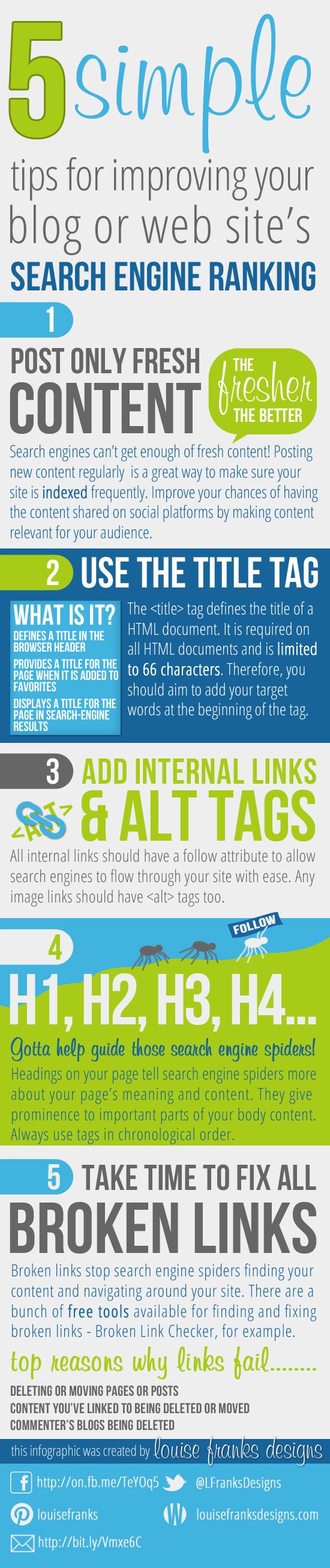
In this blog post, we’ll explore five simple yet effective strategies to improve your website’s Google ranking starting today.
Infographic from Louise Franks Designs.
1. Optimize Your Website’s On-Page SEO
On-page SEO, also known as on-site SEO, involves optimizing individual web pages to rank higher and earn more relevant traffic from search engines. It’s a foundational step in improving your website’s Google ranking. Here are some key aspects to focus on:
- Keyword Research: Start by identifying the keywords and phrases relevant to your content. Use tools like Google Keyword Planner or Ubersuggest to find high-volume, low-competition keywords. Incorporate these keywords naturally into your content.
- Title Tags: Craft compelling and keyword-rich title tags for each page. Keep them concise (around 60 characters) and make sure they accurately reflect the content.
- Meta Descriptions: Write engaging meta descriptions (around 150-160 characters) that encourage users to click on your link. Include relevant keywords to improve click-through rates.
- Header Tags: Use header tags (H1, H2, H3, etc.) to structure your content. Your main headline should be in the H1 tag, followed by subheadings in H2 and H3 tags. This not only helps with SEO but also improves readability.
- Internal and External Links: Incorporate both internal links (links to other pages on your website) and external links (links to authoritative websites) within your content. This can enhance the user experience and improve your site’s credibility.
- Image Optimization: Compress images to reduce load times and use descriptive alt text for images. Search engines consider page speed and accessibility when ranking websites.
- Mobile-Friendliness: Ensure your website is responsive and mobile-friendly. Google uses mobile-first indexing, meaning it primarily considers the mobile version of your site for ranking.
- Page Speed: Improve your website’s loading speed. Google favors faster websites, so optimize images, use browser caching, and minimize HTTP requests.
By paying attention to these on-page SEO factors, you’ll not only make your website more search-engine friendly but also enhance the overall user experience.
2. Create High-Quality, Relevant Content
Content is king in the world of SEO. Google’s algorithms are designed to reward websites that provide valuable and relevant content to users. To improve your website’s Google ranking, focus on these content-related strategies:
- Keyword-Optimized Content: As mentioned earlier, incorporate relevant keywords naturally into your content. Avoid keyword stuffing, which can lead to penalties from search engines.
- Fresh and Updated Content: Regularly update and add new content to your website. Google prefers websites that are active and regularly provide fresh information.
- Long-Form Content: Consider creating in-depth, long-form content that thoroughly addresses topics within your niche. Such content tends to rank better and attract more backlinks.
- Quality Over Quantity: It’s better to have a few well-researched, high-quality articles than numerous low-quality ones. Google values content that provides value to users.
- Useful Multimedia: Incorporate images, videos, infographics, and other multimedia elements into your content. These can enhance engagement and make your content more shareable.
- Optimize for Featured Snippets: Identify commonly asked questions in your niche and create content that answers them concisely. Google often displays featured snippets, which can drive more traffic to your site.
Remember that while keywords are essential, user intent should always be your top priority. Craft content that genuinely addresses your audience’s needs and interests.
3. Build High-Quality Backlinks
Backlinks, also known as inbound links, are links from other websites to yours. They play a significant role in determining your website’s authority and, consequently, its Google ranking. However, not all backlinks are equal. Here’s how to build high-quality backlinks:
- Guest Blogging: Write guest posts for reputable websites within your niche. Ensure that the content you provide is valuable and unique. In return, you can usually include a link back to your website in your author bio.
- Broken Link Building: Find broken links on other websites, reach out to the site owners, and suggest replacing them with links to relevant content on your website.
- Content Promotion: Share your content on social media, industry forums, and other online communities. When people find your content valuable, they’re more likely to link to it.
- Collaborate with Influencers: Partner with influencers in your industry for co-authored content or interviews. Influencers often have large audiences, and their endorsements can lead to more backlinks.
- Build Resource Pages: Create valuable resource pages on your website that others in your niche may find useful. Other websites may link to these pages as references.
- Monitor and Disavow Bad Backlinks: Regularly check your backlink profile using tools like Google Search Console or Ahrefs. Disavow toxic or spammy backlinks that could harm your website’s reputation.
Quality matters more than quantity when it comes to backlinks. A few high-authority backlinks from reputable sources can have a more significant impact on your Google ranking than a large number of low-quality links.
4. Improve User Experience
Google values websites that provide a positive user experience. When users have a pleasant and hassle-free experience on your site, they’re more likely to stay longer and engage with your content. Here are some ways to enhance user experience:
- Mobile Optimization: Ensure that your website is fully responsive and functional on mobile devices. Google’s mobile-first indexing means that mobile-friendliness is crucial for ranking.
- Intuitive Navigation: Make it easy for users to find what they’re looking for by organizing your content with clear navigation menus and site structure.
- Page Layout and Design: Choose a clean and visually appealing design for your website. Avoid cluttered layouts and excessive ads, which can detract from the user experience.
- Page Speed: As mentioned earlier, optimize your website’s loading speed. Use tools like Google’s PageSpeed Insights to identify areas for improvement.
- Secure Website: Implement HTTPS on your website to provide a secure browsing experience. Google gives preference to secure websites in its rankings.
- Reduce Bounce Rate: Create engaging and relevant content that encourages users to explore multiple pages on your site. High bounce rates can negatively impact your ranking.
- User-Friendly URLs: Use descriptive and user-friendly URLs that convey the content of the page. Avoid long and cryptic URLs.
By focusing on these aspects of user experience, you can improve your website’s overall quality and increase the likelihood of retaining visitors.
5. Leverage Social Signals
While the direct impact of social signals on Google ranking is a topic of debate, there’s no denying the influence of social media on online visibility. Social signals refer to the activity and engagement your website receives on social media platforms. Here’s how you can leverage social signals to improve your Google ranking:
- Shareable Content: Create content that is highly shareable on social media. This can include informative articles, entertaining videos, or engaging infographics.
- Social Sharing Buttons: Make it easy for visitors to share your content by including social sharing buttons on your website.
- Engage on Social Media: Actively participate in social media discussions within your niche. Share your content and engage with your audience to increase your online presence.
- Social Proof: Display social proof elements, such as the number of social media followers, shares, and testimonials, to build trust with your audience.
- Google My Business: If you have a physical business location, optimize your Google My Business profile. This can improve your visibility in local search results.
While social signals may not be a direct ranking factor, they can indirectly contribute to your website’s success by increasing brand awareness and driving more organic traffic.
Conclusion
Improving your website’s Google ranking doesn’t require complex strategies or overnight success. By focusing on the fundamental principles of on-page SEO, quality content creation, backlink building, user experience, and social signals, you can make meaningful progress in your search engine rankings. Remember that SEO is an ongoing process, and consistent efforts will yield the best results over time. So, start implementing these simple yet effective strategies today, and watch your website climb the Google search results ladder. With dedication and patience, you’ll see the fruits of your labor in the form of increased visibility, traffic, and online success.

Author:
Mark Ford