
Are you trying to make your marketing feel more personal without crossing any privacy lines? Want to learn how to tailor your messages in a way that builds trust instead of suspicion?
You’ll find some marketing basics in this infographic.
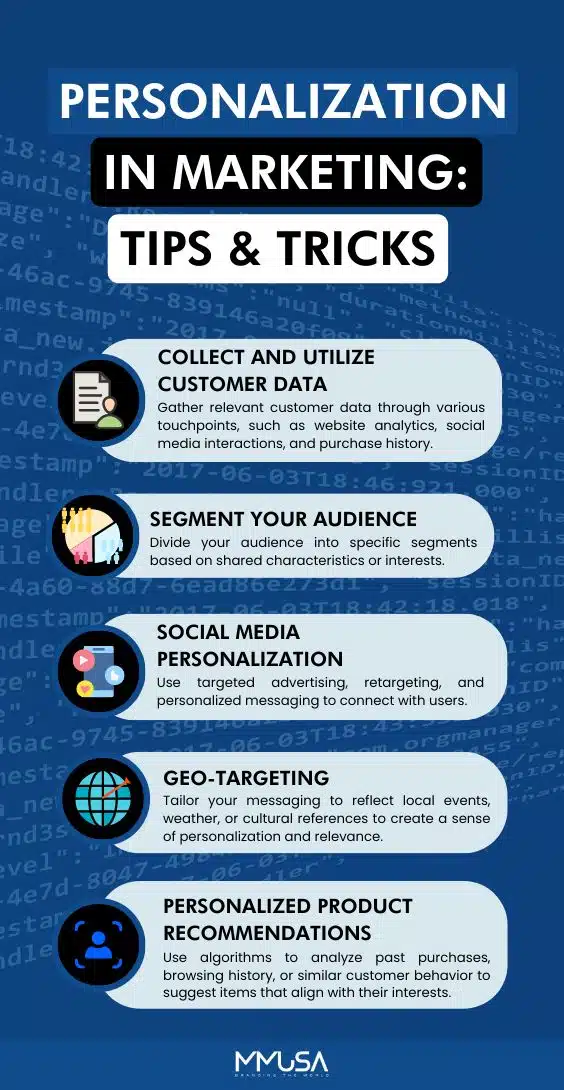
Here’s a summary of what’s covered:
- Collect and Use Customer Data (The Right Way)
- Segment Your Audience for Relevance, Not Intrusion
- Personalise Social Media Without Overstepping
- Use Geo-Targeting to Create Relevance, Not Surveillance
- Suggest Products Based on Broader Behaviour Patterns
Check out the post below for more.
Personalisation has become a vital part of modern marketing, helping brands connect with audiences in more meaningful and effective ways. But there’s a fine line between relevance and intrusion, and many businesses risk crossing it by being too aggressive with customer data.
The key to successful personalisation is creating value for the user without making them feel like they’re being watched. In this post, we’ll explore five smart, ethical ways to personalise your marketing without creeping out your customers.
Collect and Use Customer Data (The Right Way)
Effective personalisation starts with good data—but how you collect and use that data matters just as much as the data itself. Customers are willing to share information, but only if they trust your intentions and know their data is being handled securely. Transparency, consent, and purpose should be the foundation of your data strategy. Focus on gathering insights from channels your customers willingly engage with.
- Be transparent about what data you collect and how it will be used.
- Offer clear privacy settings and let users control their preferences.
- Gather data from first-party sources like website forms and email interactions.
- Regularly audit your data collection to ensure compliance with GDPR and similar laws.
Segment Your Audience for Relevance, Not Intrusion
Segmentation helps you tailor your messaging based on shared behaviours or interests without targeting individuals too closely. It allows you to personalise your campaigns while maintaining a respectful distance. When done well, segmentation improves engagement by making content more relevant and timely. The key is to group by needs or behaviours—not overly specific identifiers.
- Segment by buying behaviour, such as frequent buyers vs. first-time visitors.
- Use lifecycle stages like leads, prospects, and repeat customers to guide messaging.
- Group by content preferences or product interests based on past interactions.
- Avoid hyper-specific traits that could make users feel singled out or surveilled.
Personalise Social Media Without Overstepping
Social media platforms offer advanced targeting tools that make personalisation easy—but they also carry a risk of over-personalising. Users may feel uncomfortable if your messaging appears to know too much about them. Stick to interests, behaviours, and platform-specific engagement to keep things respectful. Social media personalisation works best when it feels helpful, not invasive.
- Use lookalike audiences to reach people with similar interests, not personal histories.
- Create multiple ad versions tailored to different user personas.
- Personalise call-to-actions based on how the user last interacted with your brand.
- Retarget based on product categories, not individual products or search terms.
Use Geo-Targeting to Create Relevance, Not Surveillance
Geo-targeting is a powerful tool that allows you to customise your content based on a user’s location. But overly precise or unexpected use of location data can feel intrusive. Instead of pinpointing exact coordinates, opt for broader regional or city-based targeting. Make your messaging feel naturally local without revealing how much you know.
- Reference general local events, weather, or culture in your content.
- Avoid referencing specific locations unless the user has opted in (e.g., store locator).
- Tailor language and offers to regional preferences or holidays.
- Use IP-based location targeting rather than GPS or mobile tracking when possible.
Suggest Products Based on Broader Behaviour Patterns
Product recommendations are a tried-and-tested way to personalise the user experience, but over-personalisation can backfire. Customers don’t want to be reminded of every click or item they browsed. Instead, use broader trends and past purchase categories to shape your suggestions. When your recommendations feel insightful—not stalker-like—they’re more likely to convert.
- Recommend based on category or brand rather than exact products viewed.
- Highlight popular items among similar users, not just their own history.
- Use purchase frequency or refill patterns for practical reminders.
- Let users rate or customise what types of suggestions they receive in future.
Conclusion
Personalisation is a powerful strategy—but only when it respects the customer’s comfort zone. The smartest brands understand that trust is as important as relevance. By using data ethically, segmenting appropriately, and keeping personalisation broad yet helpful, you can build stronger connections without pushing people away.
The goal is to create experiences that feel thoughtful, not invasive—because when customers feel respected, they’re far more likely to engage.

Author:
Mark Ford