In the fast-paced world of digital marketing, staying ahead of the curve is crucial to maintaining a strong online presence.
Search engine optimization (SEO) has been a cornerstone of online success for years, but in recent times, its landscape has evolved significantly. Today, SEO is not just about optimizing your website for search engines; it’s also about creating high-quality content and engaging with your audience through social media.
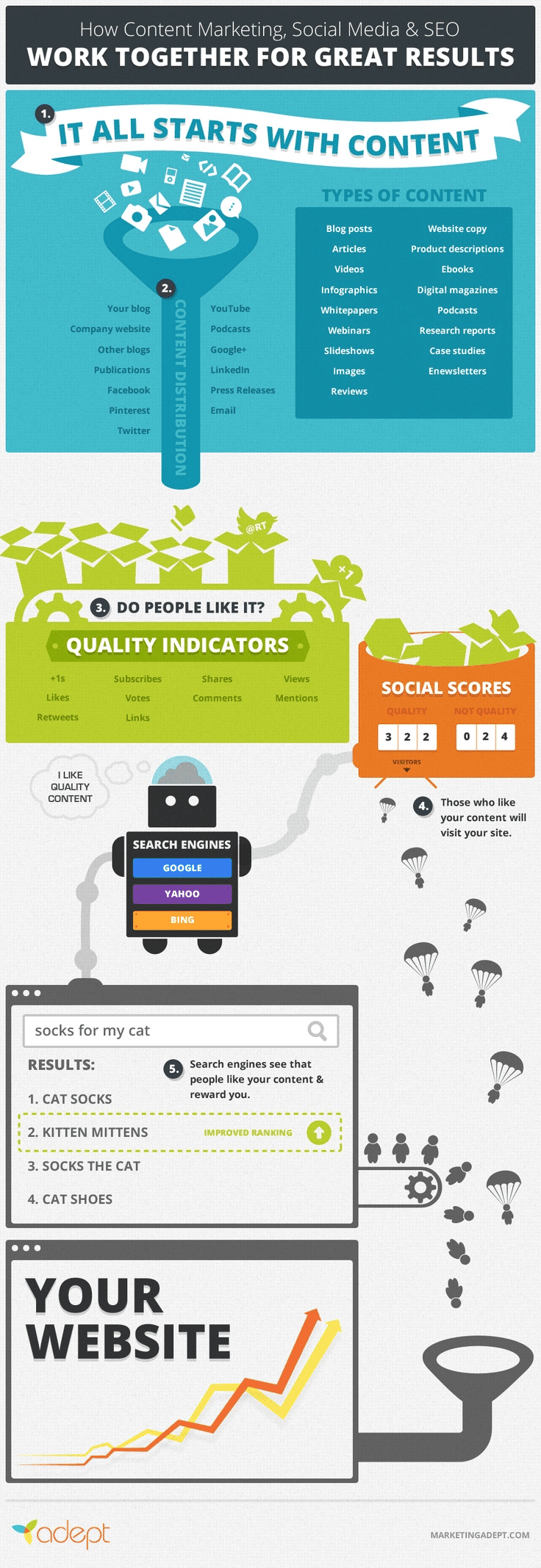
In this blog post, we will explore five steps to effectively use content marketing and social media to improve your SEO.
Infographic by Adept.
Step 1: Keyword Research and Content Creation
The foundation of any successful SEO strategy starts with thorough keyword research. Keywords are the words and phrases that potential customers use to search for information online. Identifying the right keywords is essential because it helps you understand what your target audience is looking for.
- Keyword Research: Start by using keyword research tools like Google Keyword Planner, SEMrush, or Ahrefs to discover relevant keywords in your niche. Look for keywords with a reasonable search volume and relatively low competition.
- Content Planning: Once you have a list of keywords, create a content plan. Determine what type of content you want to create (blog posts, videos, infographics, etc.) and how these pieces will align with your target keywords.
- High-Quality Content: Craft high-quality, informative, and engaging content that provides value to your audience. Ensure that your content is well-researched, easy to read, and includes your target keywords naturally.
- Optimize On-Page SEO: Implement on-page SEO best practices, including optimizing title tags, meta descriptions, headers, and image alt tags with your target keywords. Use keyword-rich URLs for your content.
- Internal Linking: Incorporate internal links within your content to connect related articles and pages on your website. This helps search engines understand the structure of your site and improves user experience.
Step 2: Content Promotion through Social Media
Once you’ve created valuable content, it’s time to leverage social media platforms to promote it. Social media not only helps you reach a broader audience but also drives traffic back to your website, which can positively impact your SEO efforts.
- Select the Right Platforms: Identify the social media platforms that align with your target audience. For example, if you’re in the B2B space, LinkedIn might be more effective than Instagram.
- Engage with Your Audience: Build a community by responding to comments, messages, and mentions. Engaging with your audience on social media not only fosters trust but can also encourage user-generated content, which can boost your SEO.
- Share Your Content: Share your blog posts, videos, and other content on your social media profiles. Craft compelling captions that encourage users to click through to your website.
- Utilize Hashtags: Research and use relevant hashtags to increase the discoverability of your content. Be mindful not to overuse them; quality always trumps quantity.
- Schedule Posts: Consistency is key in social media marketing. Use scheduling tools like Buffer or Hootsuite to plan and automate your posts, ensuring a consistent online presence.
Step 3: Build Quality Backlinks
Backlinks, also known as inbound links, are links from other websites to your site. They are a vital component of SEO, as search engines view them as votes of confidence in your content. The more high-quality backlinks you have, the better your website’s authority and search engine ranking.
- Create Link-Worthy Content: Focus on creating exceptional content that naturally attracts backlinks. This can be in-depth guides, original research, or unique insights in your industry.
- Outreach and Guest Posting: Identify websites and blogs in your niche and reach out to them for guest posting opportunities. Guest posting not only helps you acquire backlinks but also establishes you as an authority in your field.
- Content Promotion: Promote your content on social media and through email marketing. The more people see your content, the more likely it is to be linked to.
- Broken Link Building: Find broken links on other websites in your industry, and offer your content as a replacement. This strategy can be highly effective for earning backlinks.
- Monitor Your Backlinks: Use tools like Ahrefs or Moz to monitor your backlinks and disavow any toxic or spammy links that could harm your SEO efforts.
Step 4: Social Signals and SEO
Social signals refer to the impact of social media engagement (likes, shares, comments, etc.) on your website’s search engine ranking. While the exact correlation between social signals and SEO is still debated, there is evidence to suggest that a strong social media presence can indirectly influence your search rankings.
- Encourage Social Sharing: Make it easy for users to share your content by adding social sharing buttons to your website. When your content is shared, it can reach a wider audience and potentially earn more backlinks.
- Increase Brand Visibility: A strong social media presence can increase brand visibility and awareness. When users are familiar with your brand, they are more likely to search for it specifically, which can improve your organic search rankings.
- Boost Click-Through Rates: Engaging and enticing social media posts can increase click-through rates (CTR) when your content appears in search results. Higher CTRs can signal to search engines that your content is relevant and valuable.
- Local SEO: If your business has a physical location, social media can play a significant role in local SEO. Encourage customers to leave reviews on platforms like Google My Business and Yelp, which can positively impact your local search rankings.
- Consistency Matters: Maintain a consistent posting schedule on social media. Regular updates show that your brand is active and engaged, which can help improve your SEO over time.
Step 5: Monitor and Adapt
The digital landscape is ever-changing, and what works today may not work as effectively tomorrow. Therefore, it’s essential to continuously monitor your SEO and social media efforts and adapt your strategy accordingly.
- Track Your Metrics: Use analytics tools like Google Analytics, Google Search Console, and social media insights to monitor the performance of your content and social media efforts. Pay attention to metrics such as organic traffic, click-through rates, social shares, and engagement.
- A/B Testing: Experiment with different types of content, posting schedules, and social media platforms. A/B testing can help you identify what works best for your audience and fine-tune your strategy.
- Stay Informed: Keep up-to-date with the latest trends and algorithm updates in SEO and social media marketing. Join industry forums, attend webinars, and follow reputable blogs to stay informed.
- Competitor Analysis: Analyze the strategies of your competitors. What keywords are they targeting? How are they engaging on social media? Learning from your competitors’ successes and failures can inform your own strategy.
- Adapt and Evolve: Based on your monitoring and analysis, be prepared to adapt your content and social media strategy. SEO and social media are dynamic fields, and staying flexible is key to long-term success.
In conclusion, integrating content marketing and social media into your SEO strategy is essential for modern digital marketing success. By conducting thorough keyword research, creating high-quality content, promoting it through social media, building quality backlinks, and continually monitoring and adapting your strategy, you can improve your website’s search engine rankings, increase brand visibility, and drive organic traffic. Remember that SEO is a long-term game, and patience and persistence are key to achieving lasting results in the ever-evolving online landscape.

Author:
Mark Ford