So you’ve written a masterpiece and you cant wait for the world to see it? This one is definitely going viral right?
Writing a blog post can be an exciting and rewarding experience. Whether you’re a seasoned blogger or just starting, the prospect of sharing your thoughts and insights with the world is always something to look forward to.
However, before you hit that “publish” button, there are several important steps you should take to ensure your blog post is the best it can be. In this article, we’ll explore five crucial things you must do before publishing your blog posts to maximize their impact and effectiveness.
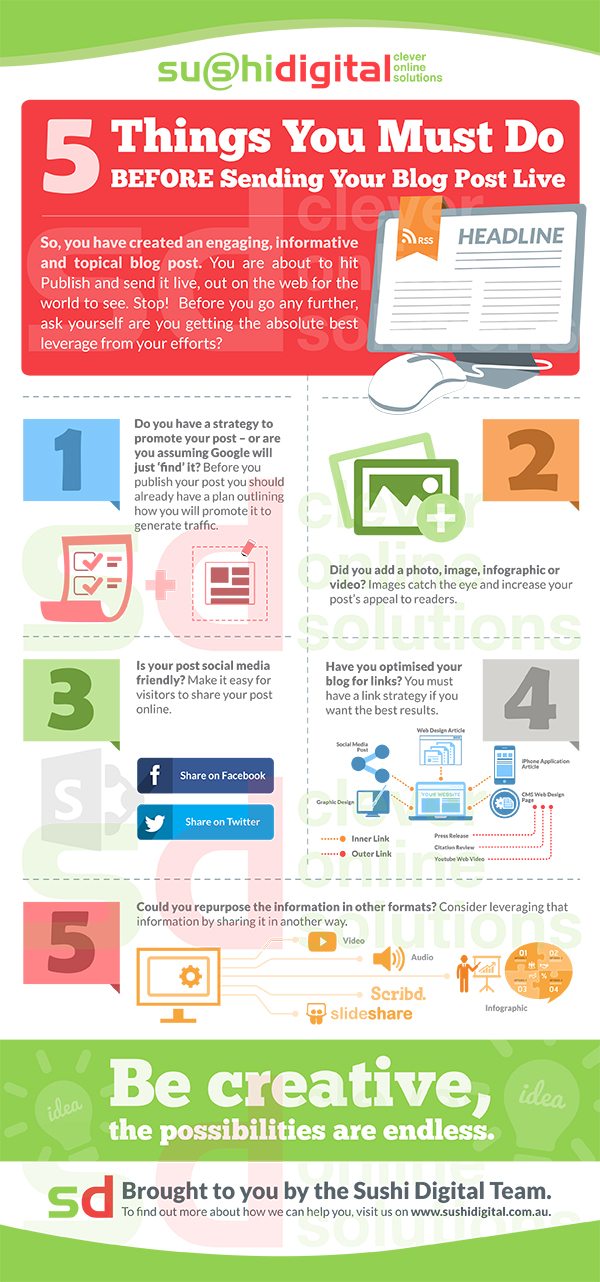
The infographic below from Sushi Digital gives you 5 things you should be doing before you publish your blog posts.
1. Thoroughly Research Your Topic
One of the most critical steps in creating a successful blog post is conducting thorough research on your chosen topic. Even if you’re well-versed in the subject matter, taking the time to research and gather the latest information can add depth and credibility to your post.
Why research is essential:
- Accuracy: Providing accurate and up-to-date information is crucial to establishing trust with your readers. Outdated or incorrect information can damage your reputation as a blogger.
- Uniqueness: Research helps you identify what’s already been written about your topic. It allows you to find gaps in the existing content and offer a unique perspective or new insights.
- Credibility: Citing authoritative sources and studies in your blog post adds credibility to your arguments and enhances your reputation as a knowledgeable writer.
- SEO Optimization: Research can also help you identify relevant keywords and phrases that can improve your blog’s search engine optimization (SEO) and attract more organic traffic.
To conduct effective research:
- Use reputable sources such as academic journals, government websites, industry publications, and well-known blogs.
- Take notes and organize your research materials for easy reference.
- Properly attribute and cite your sources to give credit where it’s due and avoid plagiarism.
2. Create a Compelling Headline
Your blog post’s headline is the first thing readers see, and it plays a crucial role in whether they decide to click and read the full article. A compelling headline should be attention-grabbing, relevant, and pique the reader’s curiosity.
Tips for creating a compelling headline:
- Use Action Words: Incorporate action verbs that convey a sense of urgency or excitement. For example, “Unlock the Secrets to…” or “Master the Art of…”
- Be Specific: A specific headline is more enticing than a vague one. Instead of “Ways to Improve Your Cooking,” try “7 Proven Techniques to Elevate Your Culinary Skills.”
- Invoke Emotion: Use emotional triggers that resonate with your target audience. For example, “Discover the Joy of…” or “Overcome Your Biggest Challenges with…”
- Include Keywords: Incorporate relevant keywords to improve SEO. However, ensure that the headline remains natural and not forced.
- Keep it Concise: Aim for a headline that’s between 50-70 characters long to ensure it displays correctly in search results and on social media.
Remember that your headline should accurately reflect the content of your blog post. Clickbait headlines that promise more than they deliver can lead to reader frustration and a loss of trust.
3. Craft High-Quality Content
Once you have your topic researched and your headline in place, it’s time to create the meat of your blog post: the content itself. High-quality content is the cornerstone of a successful blog. It’s what keeps readers engaged, encourages them to return for more, and promotes sharing.
Tips for crafting high-quality content:
- Start Strong: Your introduction should capture the reader’s attention and provide a clear preview of what your post is about. Pose a question, share a surprising fact, or tell a relevant anecdote.
- Organize Thoughtfully: Use clear headings and subheadings to break up the text and make it easy for readers to scan and find the information they need.
- Provide Value: Ensure that your content offers something valuable to the reader. Whether it’s information, entertainment, inspiration, or a solution to a problem, your content should fulfill a need or desire.
- Engage with the Audience: Encourage reader engagement by asking questions, inviting comments, and providing opportunities for sharing on social media.
- Edit and Proofread: Carefully proofread your blog post for spelling and grammar errors. Editing is a crucial step in ensuring your content is polished and professional.
- Use Visuals: Incorporate images, infographics, videos, and other multimedia elements to enhance the reader’s experience and illustrate your points.
- Be Concise: While in-depth content is valuable, be mindful of the reader’s time. Avoid unnecessary verbosity and get straight to the point.
4. Optimize for SEO
Search engine optimization (SEO) is essential for increasing the visibility of your blog posts in search engine results pages (SERPs). Proper SEO techniques can help your content reach a broader audience and attract organic traffic.
Key SEO practices to implement:
- Keyword Research: Identify relevant keywords and phrases related to your topic. Use tools like Google Keyword Planner or SEMrush to find high-value keywords with moderate competition.
- On-Page SEO: Optimize your content for on-page SEO by incorporating keywords into your title, headings, subheadings, and throughout the body of your text. Ensure that your content is well-structured and easy to read.
- Meta Tags: Write compelling meta titles and meta descriptions that encourage clicks from search engine users. Include your target keyword in these tags.
- Internal and External Links: Include internal links to other relevant pages on your blog, as well as external links to authoritative sources. This improves the user experience and enhances your content’s credibility.
- Image Optimization: Compress and properly label images to reduce page load times and make them more discoverable in image search results.
- Mobile Optimization: Ensure your blog post is mobile-friendly, as Google prioritizes mobile-responsive websites in its rankings.
- Page Speed: Optimize your blog’s loading speed by minimizing image sizes, leveraging browser caching, and using a content delivery network (CDN) if necessary.
- Sitemap and Submit to Search Engines: Create an XML sitemap for your blog and submit it to search engines like Google and Bing to facilitate indexing.
- User Experience: Focus on delivering an excellent user experience by having a clean and responsive design, easy navigation, and fast-loading pages.
- Monitor and Adapt: Use SEO tools to track your blog’s performance in search results and make necessary adjustments to improve rankings.
5. Proofread and Edit
Before you hit that “publish” button, take the time to carefully proofread and edit your blog post. Even the most well-researched and thought-out content can be undermined by typos, grammatical errors, and inconsistencies.
Tips for effective proofreading and editing:
- Take a Break: Step away from your draft for a while before proofreading. This will help you approach it with fresh eyes.
- Read Aloud: Reading your content aloud can help you catch awkward phrasing and errors you might otherwise miss.
- Check Grammar and Spelling: Use grammar and spell-checking tools like Grammarly or ProWritingAid. However, don’t rely solely on these tools; manual proofreading is essential.
- Consistency: Ensure consistency in formatting, style, and tone throughout your blog post. Use a style guide if you have one.
- Clarity and Flow: Confirm that your content flows logically and that your ideas are presented in a clear and coherent manner.
- Fact-Checking: Verify the accuracy of any statistics, facts, or quotes you include in your post.
- Peer Review: If possible, have a colleague or fellow blogger review your post for feedback and suggestions.
- Final Readthrough: Do a final readthrough after making edits to ensure that everything is in order.
By meticulously proofreading and editing your blog post, you not only improve its quality but also demonstrate professionalism and attention to detail to your readers.
Conclusion
Publishing a blog post is a rewarding experience, but it should not be rushed. Taking the time to research, craft, optimize, and polish your content can make a significant difference in its impact and effectiveness. By following the five essential steps outlined in this article, you’ll be well-prepared to publish high-quality blog posts that engage your audience, enhance your online presence, and establish you as a trusted voice in your niche. So, before you hit that “publish” button, remember to research, create a compelling headline, craft high-quality content, optimize for SEO, and proofread and edit. Your blog and your readers will thank you for it.

Author:
Mark Ford