In today’s digital age, having a strong online presence is essential for businesses and individuals alike. Whether you’re running a small blog or managing a corporate website, the quality of your content can make or break your success.
However, not everyone is a natural-born writer, and the thought of creating engaging website content can be intimidating for those who haven’t got a clue where to start.
Fear not! This blog post is here to help. We’ll explore five practical tips that can make website content writing easier and more accessible, even if you’re a complete novice.
Infographic from Media is Power.
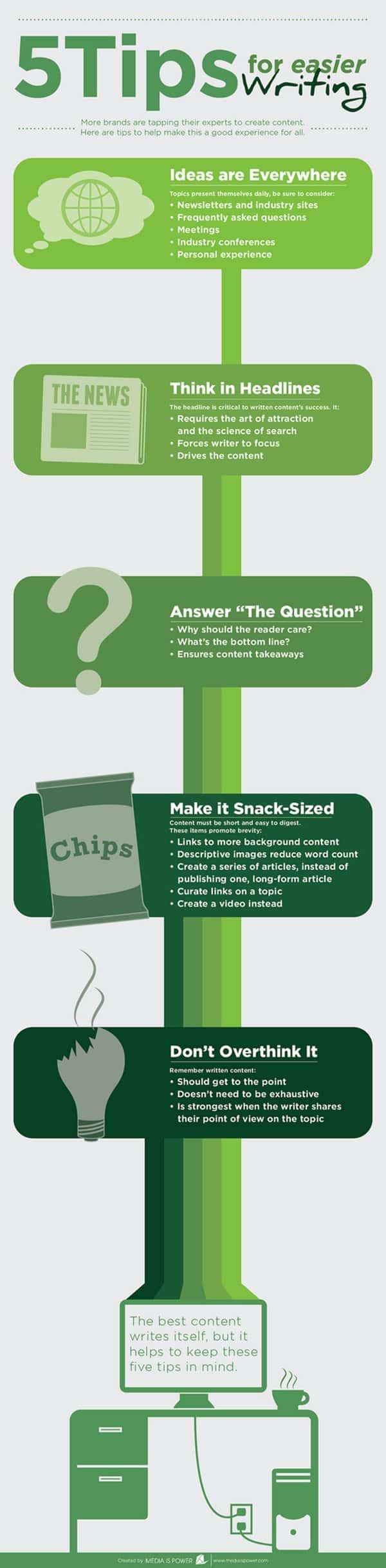
Tip 1: Understand Your Audience
The first and most crucial step in writing effective website content is understanding your audience. Your content should speak directly to the people you want to reach, addressing their needs, interests, and pain points. To do this effectively:
a. Create Buyer Personas
Buyer personas are fictional representations of your ideal customers. They help you visualize and understand your audience better. Consider demographics, interests, problems, and goals when creating these personas. For example, if you’re running a fitness blog, one of your buyer personas might be “Fitness Enthusiast Emily,” who is in her 30s, loves yoga, and struggles with time management.
b. Conduct Audience Research
Once you have your buyer personas, conduct research to learn more about your target audience. Use tools like surveys, social media analytics, and Google Analytics to gather data about their preferences, questions, and pain points. This data will provide valuable insights into what topics and content formats resonate with your audience.
Tip 2: Plan Your Content
Now that you know your audience, it’s time to plan your content strategy. Having a well-thought-out plan will save you time and help you stay organized. Here’s how to do it:
a. Set Clear Goals
Determine the goals of your website content. Are you trying to educate, entertain, persuade, or sell? Knowing your goals will guide your content creation process.
b. Create an Editorial Calendar
An editorial calendar is a schedule that outlines when and what you’ll publish. It ensures consistency and helps you manage your content effectively. Consider factors like seasonality and trending topics when planning your calendar.
c. Choose Relevant Topics
Based on your audience research, select topics that align with your audience’s interests and needs. Use keyword research tools to identify popular and relevant topics in your niche.
Tip 3: Structure Your Content
Well-structured content is easier to read and understand. Use the following techniques to structure your website content effectively:
a. Start with a Compelling Headline
Your headline is the first thing readers see, so make it attention-grabbing and relevant to the content. Use power words, numbers, and questions to pique interest.
b. Use Subheadings
Break your content into sections with descriptive subheadings. Subheadings make it easier for readers to skim and find the information they’re looking for.
c. Keep Paragraphs Short
Long paragraphs can be daunting to readers. Aim for 2-3 sentences per paragraph to improve readability.
d. Use Bullet Points and Lists
Bullet points and numbered lists help organize information and make it more digestible.
e. Incorporate Visuals
Images, infographics, and videos can enhance your content and provide visual appeal. Make sure visuals are relevant and high-quality.
Tip 4: Write Clearly and Concisely
Effective website content should be clear, concise, and easy to understand. Here are some writing tips to achieve this:
a. Avoid Jargon
Unless your audience is well-versed in industry-specific terminology, avoid jargon that might confuse readers. Use plain language to communicate your ideas.
b. Write in the Active Voice
Active voice makes sentences shorter and more direct. Instead of saying, “The report was read by John,” say, “John read the report.”
c. Proofread and Edit
Typos and grammatical errors can undermine your credibility. Proofread your content carefully or consider using grammar-checking tools like Grammarly.
d. Be Conversational
Write as if you’re having a conversation with your audience. Avoid overly formal or complex language that can alienate readers.
Tip 5: Optimize for SEO
Search engine optimization (SEO) is crucial for driving organic traffic to your website. While you don’t need to be an SEO expert, understanding the basics can significantly improve your content’s visibility. Here’s what you should know:
a. Use Keywords Wisely
Identify relevant keywords related to your content’s topic. Use them naturally in your content, including the title, headings, and throughout the body text.
b. Create Quality Backlinks
Include links to authoritative sources when appropriate. This not only adds credibility to your content but also improves SEO.
c. Optimize Images
Use descriptive file names and alt tags for your images to help search engines understand their content.
d. Mobile-Friendly Design
Ensure your website is mobile-friendly, as Google prioritizes mobile-responsive websites in search rankings.
Bonus Tip: Practice, Practice, Practice
Like any skill, writing gets easier with practice. Don’t be discouraged if your first few attempts don’t meet your expectations. Keep writing regularly, seek feedback, and learn from your mistakes. Over time, you’ll become a more confident and skilled writer.
In conclusion, website content writing doesn’t have to be a daunting task, even if you haven’t got a clue where to start. By understanding your audience, planning your content, structuring it effectively, writing clearly and concisely, and optimizing for SEO, you can create compelling and engaging website content that resonates with your target audience. Remember that practice makes perfect, so keep honing your writing skills, and your content will improve with time. Happy writing!

Author:
Mark Ford