Are you just getting started with a new business venture? Need some help in marketing your services to bring in more clients?
A solid marketing strategy is essential for any new business, simply knowing how to provide your products or services isn’t enough to achieve success. Whether you gain new business by word of mouth, social media or being found on Google, you just have to get your business noticed.
To help get your small business marketing strategy off the ground the guys at Marketing Solved have put together 50 quick tips in the infographic below.
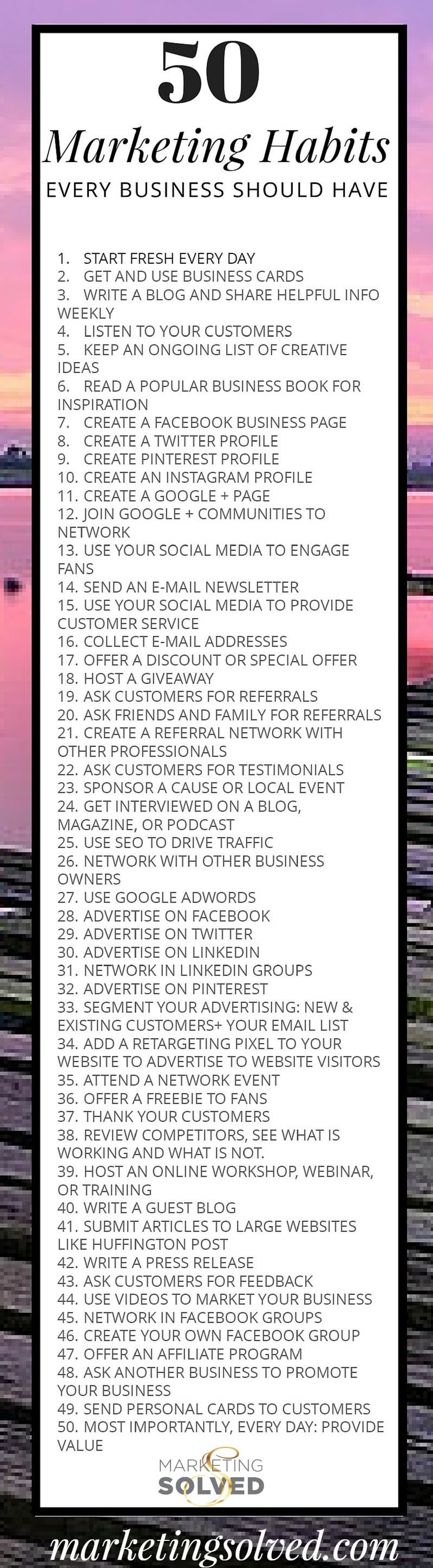
Marketing is the lifeblood of any small business. Whether you’re just starting out or looking to grow your existing venture, developing effective marketing habits is crucial for success. In today’s fast-paced and digital-centric world, the marketing landscape is constantly evolving, making it essential for small business owners to stay adaptable and focused. In this blog post, we will explore 50 marketing habits that are essential for small business success. These habits encompass various aspects of marketing, from strategy and planning to execution and analysis. By adopting and consistently practicing these habits, you can create a strong foundation for your business’s growth and long-term success.
Part I: Strategic Marketing Habits
- Define Your Unique Selling Proposition (USP): Before diving into marketing activities, identify what sets your business apart from competitors. Your USP is the key to attracting and retaining customers.
- Set Clear Marketing Goals: Establish specific, measurable, achievable, relevant, and time-bound (SMART) goals for your marketing efforts. This helps you stay focused and track your progress.
- Know Your Target Audience: Understand your ideal customers’ demographics, interests, and pain points. Tailor your marketing messages to resonate with them effectively.
- Competitor Analysis: Regularly research and analyze your competitors’ marketing strategies to identify opportunities and threats in your market.
- Create a Marketing Plan: Develop a comprehensive marketing plan that outlines your strategies, tactics, budgets, and timelines. Update it regularly to adapt to changing circumstances.
- Invest in Market Research: Stay informed about industry trends, customer preferences, and emerging technologies to make informed marketing decisions.
- Brand Consistency: Maintain consistent branding across all marketing channels, including your website, social media profiles, and offline materials.
- SWOT Analysis: Conduct regular Strengths, Weaknesses, Opportunities, and Threats (SWOT) analyses to assess your marketing efforts’ effectiveness.
- Content Strategy: Develop a content marketing strategy that provides value to your audience. Regularly create and share high-quality content that aligns with your brand and resonates with your target audience.
- Marketing Budget: Allocate a specific budget for your marketing activities and stick to it. Monitor your spending and adjust as needed.
Part II: Digital Marketing Habits
- Website Optimization: Ensure your website is user-friendly, mobile-responsive, and optimized for search engines (SEO). Regularly update it with fresh content.
- Email Marketing: Build and segment your email list. Send personalized and relevant email campaigns to nurture leads and engage customers.
- Social Media Engagement: Establish a strong presence on relevant social media platforms. Engage with your audience through regular posts, comments, and messages.
- Paid Advertising: Use pay-per-click (PPC) advertising platforms like Google Ads and Facebook Ads to reach a broader audience and track your ROI.
- Content Calendar: Maintain a content calendar to plan and schedule your blog posts, social media updates, and email campaigns in advance.
- Analytics Tracking: Utilize tools like Google Analytics to monitor website traffic, conversion rates, and user behavior. Use data-driven insights to optimize your marketing strategies.
- Search Engine Marketing (SEM): Invest in both organic (SEO) and paid (PPC) search engine marketing to improve your online visibility.
- Video Marketing: Leverage the power of video content on platforms like YouTube and social media to engage with your audience and convey your brand’s message effectively.
- A/B Testing: Continuously test different elements of your digital marketing campaigns, such as headlines, images, and calls-to-action, to discover what resonates best with your audience.
- Customer Reviews: Encourage satisfied customers to leave reviews on platforms like Google My Business and Yelp. Address negative reviews professionally and promptly.
Part III: Content Creation Habits
- Quality Over Quantity: Focus on creating high-quality content that genuinely helps your audience, rather than churning out mass quantities of mediocre content.
- Storytelling: Use storytelling techniques to make your brand more relatable and memorable to your audience.
- Visual Content: Incorporate visuals like images, infographics, and videos into your content to increase engagement and understanding.
- Guest Blogging: Collaborate with industry influencers or related businesses to guest post on their blogs, expanding your reach and authority.
- Repurpose Content: Extend the life of your content by repurposing it into different formats, such as turning blog posts into podcasts or infographics.
Part IV: Social Media Habits
- Consistent Posting: Maintain a regular posting schedule on your social media channels to keep your audience engaged.
- Engagement: Respond promptly to comments, messages, and mentions on social media to build a strong online community.
- Hashtag Usage: Research and use relevant hashtags to expand the reach of your social media posts.
- Social Advertising: Invest in social media advertising to reach a wider audience and promote specific products or services.
- Monitoring Tools: Use social media management tools like Hootsuite or Buffer to streamline your posting and track performance.
Part V: Customer Relationship Management (CRM) Habits
- CRM Software: Implement a CRM system to track customer interactions, manage leads, and personalize marketing efforts.
- Personalization: Use customer data to personalize your marketing messages and offers. Customers appreciate feeling understood and valued.
- Customer Feedback: Actively seek and collect feedback from your customers to improve your products or services and enhance their experience.
- Loyalty Programs: Create loyalty programs or incentives to reward and retain loyal customers.
- Follow-Up: After a purchase, follow up with customers to ensure satisfaction and gather insights for future marketing efforts.
Part VI: Networking and Outreach Habits
- Networking Events: Attend industry-specific events, conferences, and trade shows to expand your network and gain exposure.
- Collaborations: Partner with complementary businesses for joint marketing efforts or promotions.
- Influencer Partnerships: Identify and collaborate with influencers or micro-influencers who align with your brand.
- Community Involvement: Get involved in your local community through sponsorships, charity events, or volunteer work.
- Online Forums: Participate in relevant online forums and communities to establish yourself as an industry expert and connect with potential customers.
Part VII: Customer Service and Reputation Management Habits
- Exceptional Customer Service: Provide excellent customer service to create loyal advocates for your brand.
- Online Reputation Management: Regularly monitor online mentions and reviews of your business. Address any negative comments or concerns professionally.
- Transparency: Be honest and transparent in your marketing messages and business operations.
- Feedback Implementation: Act on customer feedback to improve your products, services, and overall customer experience.
- Crisis Preparedness: Develop a crisis management plan to address unexpected challenges or negative publicity.
Part VIII: Continuous Learning Habits
- Stay Updated: Stay informed about the latest marketing trends and technologies by reading industry blogs, attending webinars, and taking courses.
- Experimentation: Don’t be afraid to try new marketing tactics and strategies. Experimentation can lead to innovative breakthroughs.
- Networking Groups: Join marketing or business networking groups to learn from peers and share insights.
- Book Reading: Read books on marketing, entrepreneurship, and personal development to gain new perspectives and ideas.
- Mentorship: Seek out mentors or advisors who can provide guidance and support on your marketing journey.
Conclusion
In the ever-changing world of marketing, developing and maintaining effective habits is essential for small business success. These 50 marketing habits encompass strategic planning, digital marketing, content creation, social media management, CRM, networking, customer service, reputation management, and continuous learning. By incorporating these habits into your daily routine, you can build a strong foundation for your business, connect with your target audience, and achieve long-term growth and success. Remember that success in marketing is not a sprint but a marathon, and consistency is key. Start implementing these habits today, and watch your small business thrive in the competitive marketplace.

Author:
Mark Ford

From Confusion to Clarity: How to Steer Your Marketing Away from These Frequent Errors
Are you struggling to make sense of your marketing strategy and wondering why your results aren’t matching your effort? Want to learn how to avoid the most common marketing mistakes and create a clear, focused plan that actually delivers results? […]

85 Game-Changing Tools for Creators, Marketers, and Entrepreneurs
Are you searching for powerful yet free tools to help you grow your brand, streamline your workflow, and boost your online presence? Want to discover game-changing platforms that every creator, marketer, and entrepreneur should be using right now? […]