In today’s digital age, your website is often the first point of contact between your business and potential customers. It’s your virtual storefront, and its design plays a critical role in shaping the perception of your brand. A well-designed website can be a powerful tool for attracting and retaining customers, while a poorly designed one can drive them away, costing your business both customers and revenue.
In this blog post, we’ll explore seven deadly web design sins that could be costing your business money. These are common mistakes that many businesses make, often without even realizing the impact they have on their bottom line. By identifying and rectifying these design sins, you can create a website that not only looks good but also drives results and maximizes your online presence.
This infographic from LogoSnap gives you 7 examples of poor design that could be costing you money.
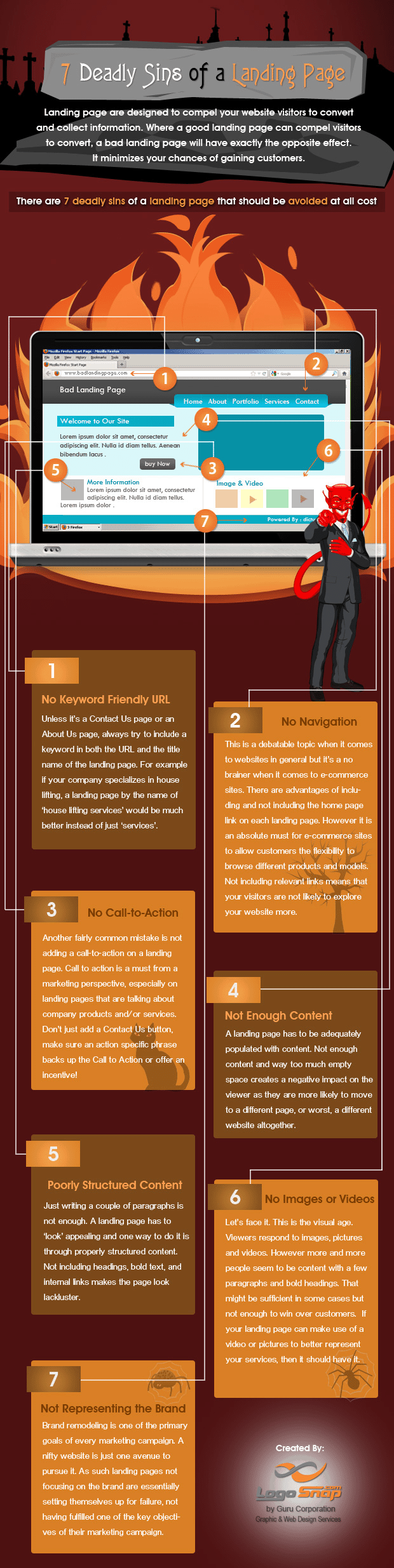
1. Neglecting Mobile Responsiveness
With the majority of internet traffic coming from mobile devices, having a website that is not mobile-responsive is a serious sin in web design. When your website is not optimized for various screen sizes and devices, you risk alienating a significant portion of your audience. Visitors who have a poor experience on mobile are more likely to bounce and look for alternatives.
The cost of neglecting mobile responsiveness includes potential loss of customers and revenue. Google also penalizes non-responsive websites in its search rankings, making it harder for potential customers to find you. To avoid this deadly sin, invest in responsive web design from the start or update your existing site to be mobile-friendly.
2. Slow Page Loading Speed
In today’s fast-paced digital world, users have little patience for slow-loading websites. If your web pages take too long to load, visitors are likely to abandon them and seek faster alternatives. Research has shown that even a one-second delay in page load time can result in a significant drop in conversions.
A slow website can directly impact your bottom line by reducing conversion rates and sales. Users are less likely to complete transactions or engage with your content if they have to wait. To remedy this sin, optimize your website for speed by compressing images, minimizing HTTP requests, and utilizing content delivery networks (CDNs).
3. Cluttered and Unintuitive Navigation
A cluttered and confusing website navigation can frustrate visitors and lead them to abandon your site. If users can’t find what they’re looking for easily, they are more likely to leave and look for a competitor’s site that offers a smoother user experience.
The cost of a cluttered navigation system is a higher bounce rate and lower engagement. To avoid this sin, prioritize clear and intuitive navigation. Use organized menus, logical page hierarchies, and descriptive labels to guide users to the information or products they seek. Conduct usability testing to ensure that your navigation is user-friendly.
4. Poorly Designed Call to Actions (CTAs)
Effective call-to-action buttons are crucial for driving user engagement and conversions. If your CTAs are poorly designed or hard to locate, you’re missing out on opportunities to convert visitors into customers. Common CTA design mistakes include using generic text, low-contrast colors, and inadequate button size.
The cost of poor CTA design is a missed chance to capture leads or make sales. To address this sin, design CTAs that stand out, use compelling and action-oriented language, and place them strategically on your website. Make sure they are visually appealing and easy to spot.
5. Overwhelming Visuals and Text
While eye-catching visuals and informative content are essential for a successful website, overloading your pages with too much of both can be a deadly sin. A cluttered layout with excessive text and graphics can overwhelm visitors and make it difficult for them to focus on your core message or products.
The cost of overwhelming visuals and text is a higher bounce rate and lower engagement. To avoid this sin, prioritize a clean and organized design. Use whitespace effectively to create a sense of balance and guide the user’s eye. Break up lengthy text with headings, bullet points, and images to improve readability.
6. Ignoring SEO Best Practices
Your website may look great, but if it’s not optimized for search engines, it won’t reach its full potential. Ignoring SEO (Search Engine Optimization) best practices is a common sin in web design. Without proper SEO, your website may not rank well in search engine results, making it difficult for potential customers to find you.
The cost of ignoring SEO best practices is missed organic traffic and reduced visibility. To rectify this sin, conduct keyword research, optimize your content, use relevant meta tags, and ensure your site has a sitemap and is mobile-friendly. Regularly monitor and update your SEO strategy to stay competitive in search rankings.
7. Neglecting User Experience (UX)
User experience (UX) is at the core of web design. Neglecting UX is a deadly sin that can have a significant impact on your business’s bottom line. If visitors have a poor experience on your website, they are unlikely to return or recommend your site to others.
The cost of neglecting UX includes lower customer retention rates and a damaged reputation. To avoid this sin, invest in user research and testing to understand your audience’s needs and preferences. Ensure that your website is easy to navigate, loads quickly, and provides a seamless and enjoyable experience across all devices.
Conclusion
Your website is a critical asset for your business, and its design can either attract or repel potential customers. Avoiding the seven deadly web design sins mentioned in this article is crucial for maximizing your online presence and revenue. Invest in responsive design, optimize page loading speed, streamline navigation, design effective CTAs, maintain a balanced visual and textual content, implement SEO best practices, and prioritize user experience.
By doing so, you can create a website that not only looks great but also drives results and helps your business thrive in the digital age. Remember, the cost of poor web design can be substantial, but the benefits of getting it right are even greater.

Author:
Mark Ford