
Are you trying to save time managing your social media without losing that personal connection with your audience? Want to learn the golden rules of social media automation that keep your brand consistent, engaging, and human?
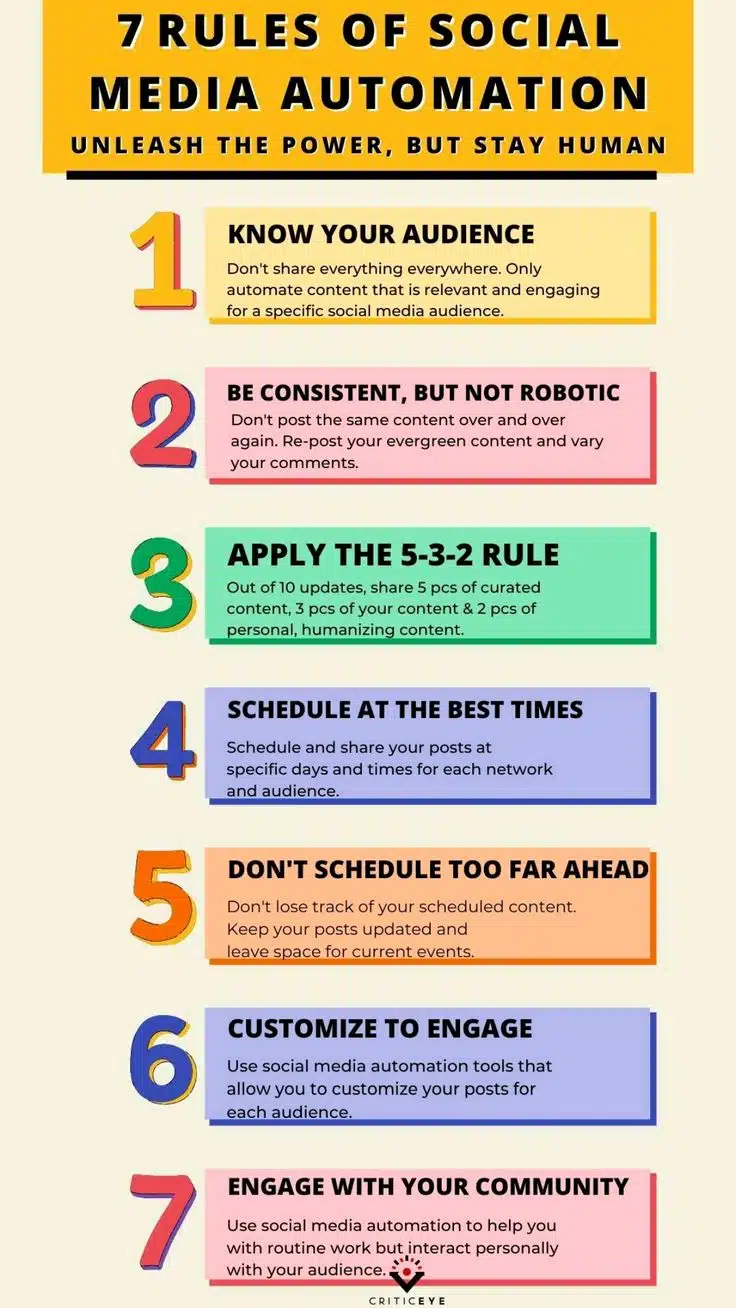
You’ll find some social media basics in this infographic.
- Know Your Audience
- Be Consistent, But Not Robotic
- Apply the 5-3-2 Rule
- Schedule at the Best Times
- Don’t Schedule Too Far Ahead
- Customise to Engage
- Engage with Your Community
Check out the post below for more.
Social media automation can transform the way brands manage their online presence. When used wisely, it saves time, boosts consistency, and strengthens audience engagement. But too much automation—or the wrong kind—can make your brand sound impersonal.
These seven golden rules will help you find the perfect balance between efficiency and authenticity.
Know Your Audience
Automation only works when it’s tailored to the people you’re speaking to. Understanding your audience ensures that every post feels intentional, not generic. Instead of broadcasting the same message everywhere, focus on matching tone, timing, and content to what your followers actually want to see.
- Research your audience demographics on each social platform before setting up automated posts.
- Segment your followers by interests or behaviours to deliver content that feels personal.
- Use analytics tools to identify what type of content performs best for each audience.
- Avoid a blanket approach—customise messaging for different platforms like LinkedIn, Instagram, and X.
Be Consistent, But Not Robotic
Consistency is key in social media, but your followers can tell when posts feel machine-made. Automation should help maintain a regular presence without turning your feed into a repetitive loop. The goal is to sound human, even when the process is automated behind the scenes.
- Schedule evergreen posts, but rewrite captions or rotate images to keep content fresh.
- Monitor engagement and tweak automated content to reflect trending conversations.
- Mix in spontaneous posts between scheduled ones to maintain authenticity.
- Add personalised comments or responses to show there’s a real person behind the account.
Apply the 5-3-2 Rule
The 5-3-2 rule is a simple but powerful formula for balanced content automation. For every 10 posts, share five pieces of curated content, three original posts, and two personal or humanising updates. This approach ensures your feed stays varied, valuable, and genuine.
- Curate quality third-party content from trusted sources to educate your audience.
- Create your own posts that showcase expertise, case studies, or updates about your brand.
- Add two personal posts that reveal your team culture, values, or behind-the-scenes moments.
- Review engagement levels regularly to refine the balance between curated, original, and personal content.
Schedule at the Best Times
Even the best content can fall flat if posted at the wrong moment. Automation tools make it easy to plan ahead, but timing still matters. Posting when your audience is most active increases visibility and engagement, helping your content reach more people organically.
- Use social platform insights to identify your audience’s peak activity hours.
- Test different posting times to find what generates the highest engagement rates.
- Schedule posts for each network individually rather than using a one-size-fits-all time slot.
- Adjust your schedule periodically to account for algorithm changes and audience behaviour shifts.
Don’t Schedule Too Far Ahead
While automation can save time, scheduling too far in advance can make your brand appear disconnected from current events. Leaving space for spontaneity keeps your content relevant. Balance planned posts with real-time updates to maintain a fresh, reactive social presence.
- Review scheduled posts weekly to ensure all content is still accurate and timely.
- Incorporate trending topics or seasonal updates into your ongoing schedule.
- Stay flexible—pause or reschedule posts if major events make them inappropriate or outdated.
- Use automation as a foundation, not a replacement for day-to-day social listening.
Customise to Engage
Different platforms attract different audiences, so your automation should reflect that. Customisation is about more than just adjusting image sizes—it’s about tone, message, and relevance. A customised approach ensures your posts feel native to each platform and resonate more deeply with users.
- Write platform-specific captions that match the style and expectations of each audience.
- Optimise images, hashtags, and calls to action for every social channel you use.
- Test multiple post variations to learn which style performs best per platform.
- Use automation tools that allow per-platform editing rather than auto-sharing identical posts.
Engage with Your Community
Automation should never replace genuine human connection. The best brands use automated tools to handle the repetitive tasks, freeing up time to engage personally with followers. Conversations, comments, and community building are what make social media truly effective.
- Set aside time each day to reply to messages and comments manually.
- Use automation only for scheduling, not for direct interactions with users.
- Acknowledge loyal followers or frequent engagers with personalised responses.
- Encourage two-way conversations—ask questions, run polls, and invite feedback.
Conclusion
Social media automation can elevate your marketing strategy when applied thoughtfully. By following these seven golden rules, you can maintain consistency, save valuable time, and still sound authentically human.
Remember that automation should enhance, not replace, your brand’s voice and personality. With the right balance of planning and presence, your social media channels can feel both efficient and alive—helping your brand connect, grow, and thrive in a digital world.

Author:
Mark Ford