In the fast-paced world of digital marketing, staying ahead of the curve is essential. The strategies that worked yesterday may not yield the same results today, and this constant evolution is particularly evident in the year 2015.
This blog post explores seven compelling reasons why businesses needed to rethink and adapt their marketing strategies to thrive in the digital landscape of 2015.
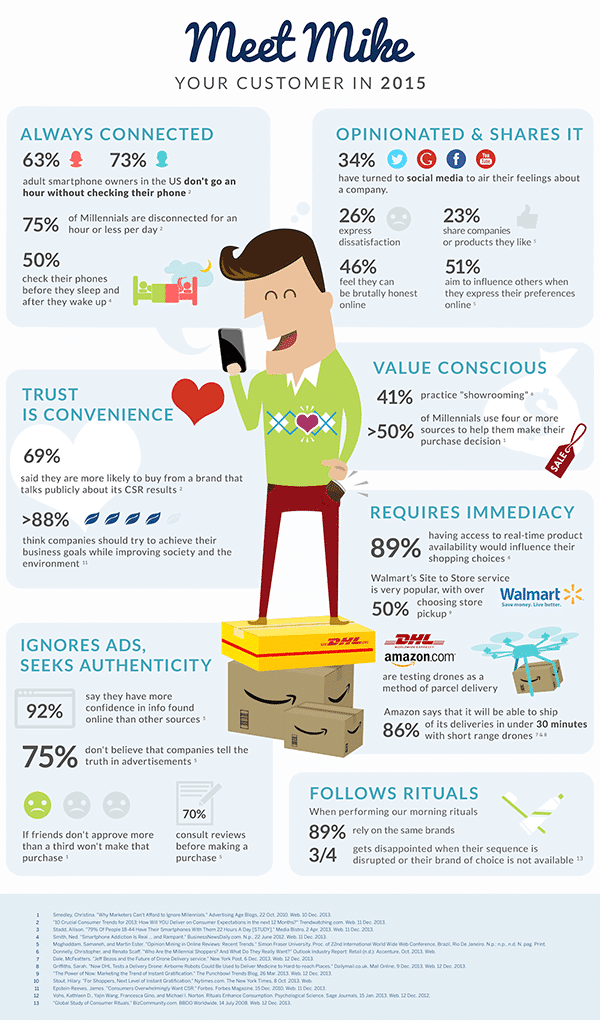
The infographic below from Reuven Gorsht introduces you to a chap called Mike who represents your customer in 2015 and shows why your marketing strategy will have to change.
- The Rise of Mobile Marketing
One of the most significant shifts in marketing during 2015 was the growing importance of mobile devices. With the proliferation of smartphones and tablets, consumers were spending more time on these devices than ever before. As a result, businesses needed to adapt their marketing strategies to cater to mobile users.
Responsive web design became a necessity to ensure that websites were mobile-friendly. Additionally, businesses started to invest heavily in mobile apps to engage customers more effectively. Social media platforms like Facebook and Twitter also optimized their advertising options for mobile, allowing businesses to reach their target audience on the go.
- The Power of Content Marketing
Content marketing was not a new concept in 2015, but it gained even more traction during this year. Consumers were becoming increasingly selective about the content they consumed, and businesses needed to provide valuable and relevant content to capture their attention.
Blogs, videos, infographics, and social media updates were some of the key content types that businesses leveraged. High-quality, informative, and shareable content became a cornerstone of successful marketing strategies. Search engine optimization (SEO) also played a crucial role in content marketing, as businesses aimed to rank higher in search engine results pages (SERPs) to attract organic traffic.
- The Dominance of Social Media
Social media platforms continued to dominate the marketing landscape in 2015. With billions of users on platforms like Facebook, Twitter, Instagram, and LinkedIn, businesses couldn’t afford to ignore these channels. Social media provided an excellent opportunity for businesses to connect with their audience on a personal level.
Paid social advertising gained momentum in 2015, allowing businesses to target specific demographics with precision. Moreover, the importance of engaging and responsive social media management became evident. Companies that actively interacted with their followers and addressed their concerns built stronger brand loyalty.
- Video Marketing Takes Center Stage
In 2015, video marketing emerged as a potent tool for businesses to connect with their audience. Platforms like YouTube were already popular, but the rise of short-form video content on platforms like Vine and the introduction of autoplay videos on Facebook and Twitter changed the game.
Businesses started creating more video content to capture the attention of their target audience. Explainer videos, product demonstrations, and behind-the-scenes footage helped companies showcase their products and services effectively. The visual and auditory appeal of videos made them a preferred choice for storytelling and engagement.
- Personalization and Data-Driven Marketing
The availability of data and advancements in analytics technology allowed businesses to personalize their marketing efforts like never before. Personalization became a buzzword in 2015, as consumers responded positively to content and offers tailored to their preferences and behaviors.
Businesses leveraged customer data to segment their audience and deliver targeted messages. Email marketing, in particular, saw a resurgence as companies used data to send personalized and relevant content to their subscribers. This data-driven approach not only improved engagement but also increased conversion rates.
- The Importance of User Experience (UX)
As competition in the digital space intensified, user experience became a critical factor in retaining and converting website visitors. In 2015, businesses realized the importance of creating websites and apps that were not only visually appealing but also easy to navigate and user-friendly.
A seamless user experience, from website loading speed to intuitive navigation, was essential. Google even started factoring in mobile-friendliness and page speed into its search ranking algorithm, making UX optimization crucial for SEO. Companies that invested in improving UX saw lower bounce rates and higher conversion rates.
- Native Advertising and Influencer Marketing
Traditional banner ads were losing their effectiveness, leading to the rise of native advertising and influencer marketing in 2015. Native ads seamlessly blended with the content of the platform they appeared on, providing a less intrusive way to reach the audience.
Influencer marketing also gained prominence as businesses collaborated with social media personalities and bloggers to promote their products and services. These influencers had established trust and credibility with their followers, making their endorsements highly influential.
Conclusion
In 2015, the marketing landscape underwent significant changes driven by technological advancements and evolving consumer preferences. Mobile marketing, content marketing, social media dominance, video marketing, personalization, user experience, native advertising, and influencer marketing were the key trends that shaped the marketing strategies of successful businesses.
To thrive in this dynamic environment, companies needed to adapt, embrace these trends, and stay ahead of the competition. While the marketing landscape continues to evolve, the lessons learned in 2015 remain valuable for businesses looking to build a strong digital presence and connect with their audience effectively. Adapting to these trends was not an option; it was a necessity for success in the ever-changing world of digital marketing.

Author:
Mark Ford