Are people unsubscribing from your marketing emails? Do you want to know what causes this?
Having clients sign up to receive your emails is great for your business, it gives you an easy way to distribute your content and keep your customers up to date with the latest news. People unsubscribing means they no longer want that information which can really affect your bottom line.
The guys over at TwelveSkip have provided us with this useful infographic on what causes people to unsubscribe to help you prevent it in future.
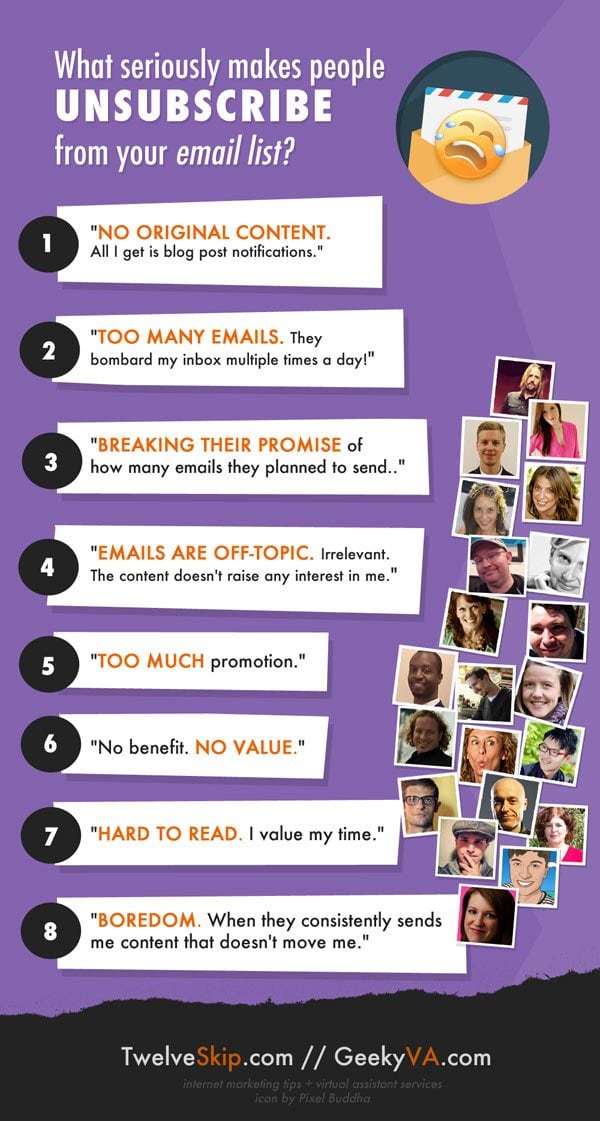
Email marketing is a powerful tool for businesses to connect with their audience, promote products or services, and build lasting relationships. However, it’s essential to tread carefully when sending emails to your subscribers. The last thing you want is for your emails to become a source of annoyance, leading people to hit the dreaded “unsubscribe” button. In this blog post, we’ll explore eight common annoying things that make people unsubscribe from your emails and offer tips on how to avoid them.
- Excessive Email Frequency
One of the quickest ways to annoy your email subscribers is by bombarding them with emails. Sending too many messages within a short period can overwhelm your audience and lead to a high unsubscribe rate. It’s crucial to find the right balance between staying in touch and not becoming a nuisance.
Solution: Implement a consistent email schedule. Understand your audience’s preferences and tailor your sending frequency accordingly. You can also give subscribers the option to choose how often they receive emails when they sign up.
- Irrelevant Content
Relevance is the key to keeping your subscribers engaged. If your emails consistently contain content that doesn’t interest or resonate with them, they’ll quickly lose interest and unsubscribe.
Solution: Segment your email list based on subscribers’ preferences, behaviors, or demographics. This allows you to send personalized content that is more likely to be relevant to each group. Regularly ask for feedback to understand your audience’s changing interests.
- Misleading Subject Lines
Using clickbait or deceptive subject lines may get people to open your emails initially, but it will ultimately lead to disappointment and distrust. Subscribers are more likely to unsubscribe when they feel they’ve been tricked.
Solution: Craft subject lines that accurately reflect the content of your emails. Honesty and transparency go a long way in building trust with your subscribers. Make sure your subject lines align with the email’s actual content.
- Neglecting Mobile Optimization
With the majority of emails being opened on mobile devices, neglecting mobile optimization is a big mistake. If your emails don’t display properly on smartphones or tablets, subscribers are likely to get frustrated and unsubscribe.
Solution: Use responsive email design to ensure your emails look great on all devices. Test your emails on various screens and email clients to ensure compatibility. Keep your email templates simple and easy to read on smaller screens.
- Overwhelming Design and Clutter
Busy, cluttered email designs can be overwhelming and distracting. If subscribers have to search for the information they want, they’re more likely to hit the unsubscribe button.
Solution: Opt for clean, minimalistic email designs. Use a clear hierarchy with a single, prominent call to action (CTA). Make sure your email is scannable, with concise and well-structured content.
- Ignoring Unsubscribe Requests
Ignoring or making it difficult for subscribers to unsubscribe is a surefire way to annoy them. It can also land you in legal trouble if you violate email marketing regulations like the CAN-SPAM Act.
Solution: Make it easy for subscribers to unsubscribe by including a visible and straightforward unsubscribe link in every email. When someone decides to unsubscribe, honor their request promptly. Use the opportunity to gather feedback and learn why they’re leaving.
- Sending Without Permission
Sending emails to people who haven’t explicitly opted in is not only annoying but can also harm your sender reputation. Unsolicited emails, also known as spam, can lead to high unsubscribe rates and even legal consequences.
Solution: Always obtain explicit consent from individuals before adding them to your email list. Implement a double opt-in process to ensure subscribers genuinely want to receive emails from you. Respect unsubscribe requests promptly.
- Lack of Personalization
Generic, one-size-fits-all emails are unlikely to engage your subscribers. If they feel like just another name on a long list, they’re more inclined to unsubscribe.
Solution: Personalize your emails by using the subscriber’s name and tailoring content to their interests and past interactions. Segment your email list to send targeted content that resonates with each group. Personalization can significantly improve engagement and reduce unsubscribe rates.
Conclusion
Email marketing is a valuable tool for connecting with your audience, but it’s essential to use it wisely. Avoiding these eight annoying practices will help you maintain a healthy email list and keep your subscribers engaged. Remember that building a strong relationship with your audience is the foundation of successful email marketing. By respecting their preferences, delivering relevant content, and being transparent and honest, you can reduce unsubscribe rates and build lasting connections with your subscribers.

Author:
Mark Ford