Are you looking for practical ways to improve the performance of your email marketing campaigns? Want to learn the best strategies to optimise everything from subject lines to calls-to-action?
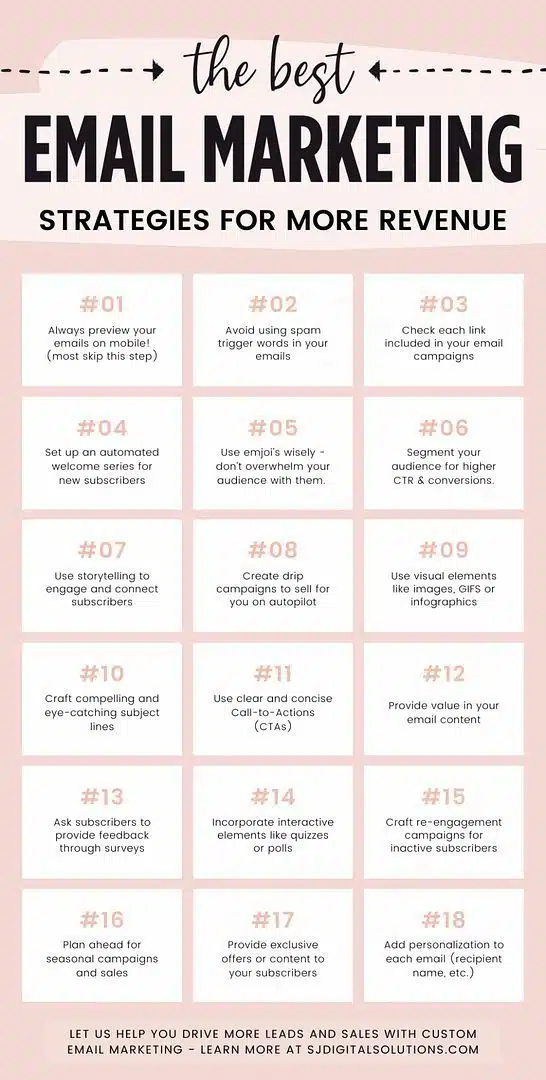
You’ll find some email marketing basics in this infographic.
Here’s a summary of what’s covered:
- Always Preview Your Emails on Mobile
- Avoid Spam Trigger Words
- Check Each Link in Your Campaigns
- Set Up an Automated Welcome Series
- Use Emojis Wisely
- Segment Your Audience
- Use Storytelling to Engage Subscribers
- Create Drip Campaigns to Sell on Autopilot
Check out the post below for more.
Email marketing remains one of the most powerful tools to connect with your audience, drive engagement, and increase revenue. But with inboxes more crowded than ever, your emails must stand out, deliver value, and encourage action. The difference between a campaign that works and one that fails often comes down to the details.
In this post, we’ll explore 18 proven strategies to optimise your emails—from subject lines to calls-to-action (CTAs). Each technique is simple, practical, and designed to help you achieve stronger results. Whether you’re looking to boost open rates, click-throughs, or conversions, these tips will give you a solid framework for email marketing success.
Always Preview Your Emails on Mobile
More than half of all emails are opened on mobile devices, yet many businesses forget to optimise for smaller screens. An email that looks great on desktop may break or appear unreadable on a phone, which quickly leads to lost subscribers. Mobile-friendly formatting ensures your message is accessible to everyone.
- Use responsive design templates that adapt to screen size.
- Keep subject lines short enough to display on mobile.
- Break text into short paragraphs for easy scanning.
- Test on multiple devices before sending.
Avoid Spam Trigger Words
Spam filters can block your emails before they even reach the inbox, wasting your effort and reducing your ROI. Certain words and phrases are known to raise red flags with email providers. By avoiding these, you improve your chances of landing in the primary inbox.
- Steer clear of phrases like “Buy now,” “Free money,” or “Act fast.”
- Avoid excessive use of capital letters or exclamation marks.
- Balance promotional language with helpful, value-driven content.
- Test subject lines through a spam checker tool before sending.
Check Each Link in Your Campaigns
Broken or incorrect links can destroy the effectiveness of your email campaign. Subscribers may lose trust if they click and end up on an error page. Checking links not only ensures usability but also avoids missed sales opportunities.
- Test all links before launching your email.
- Use UTM codes to track performance in analytics.
- Shorten long URLs for a cleaner look.
- Make sure links direct to relevant and engaging landing pages.
Set Up an Automated Welcome Series
The welcome series is your chance to make a strong first impression. Automated emails help nurture new subscribers by introducing your brand, offering value, and setting expectations. A well-crafted welcome journey often leads to higher long-term engagement.
- Send the first welcome email immediately after sign-up.
- Introduce your brand story and values in a personal way.
- Include a clear incentive, such as a discount or free resource.
- Guide subscribers to explore your website or social media.
Use Emojis Wisely
Emojis can add personality and increase engagement, but too many may look unprofessional or distract from your message. The key is moderation and relevance. Used carefully, they can help your subject lines stand out in crowded inboxes.
- Limit use to one or two per subject line or email.
- Choose emojis that align with your brand tone and audience.
- Test subject line versions with and without emojis.
- Avoid using emojis that may display differently across devices.
Segment Your Audience
Not all subscribers are the same, so sending generic messages often leads to low engagement. Segmentation allows you to tailor content based on demographics, behaviour, or purchase history. This personalisation leads to higher open rates, CTR, and conversions.
- Segment by age, gender, or location for relevance.
- Use behaviour data such as browsing or purchase activity.
- Create campaigns for new vs. loyal customers.
- Test messages with different audience segments to refine targeting.
Use Storytelling to Engage Subscribers
Storytelling transforms plain marketing emails into memorable experiences. People respond to stories because they build emotional connections and make your brand relatable. A good story keeps readers interested and encourages them to act.
- Share customer success stories or testimonials.
- Describe your brand journey or behind-the-scenes insights.
- Create narratives that highlight problem-solving.
- Keep stories concise but emotionally engaging.
Create Drip Campaigns to Sell on Autopilot
Drip campaigns deliver content over time, guiding subscribers through the customer journey. They keep your audience engaged without overwhelming them, and they work even when you’re not actively sending emails. Automation saves time while driving consistent results.
- Map out a series of emails that nurture towards a goal.
- Space out emails to avoid overwhelming subscribers.
- Provide value in each message, not just sales pitches.
- Use analytics to refine and improve sequences.
Use Visual Elements Like Images, GIFs, or Infographics
Visuals grab attention and make emails easier to digest. A well-placed image or GIF can highlight your message, explain a product, or encourage clicks. Infographics are particularly effective for sharing complex information simply.
- Use high-quality, mobile-friendly images.
- Keep file sizes small to avoid slow loading.
- Ensure visuals support the main message, not replace it.
- Add alt text so images are still meaningful if they don’t load.
Craft Compelling and Eye-Catching Subject Lines
Your subject line determines whether an email gets opened or ignored. It must spark curiosity, convey value, and stay concise. Great subject lines set the stage for higher engagement.
- Keep subject lines under 50 characters.
- Personalise with the recipient’s name or interests.
- Use action-oriented words to encourage clicks.
- Test different variations with A/B testing.
Use Clear and Concise Calls-to-Action (CTAs)
A strong CTA tells your reader exactly what to do next. Whether it’s buying a product or downloading a resource, your CTA should stand out and be easy to follow. Without it, even great content can fail to convert.
- Use bold buttons rather than text links where possible.
- Keep CTA wording simple and action-driven.
- Limit each email to one primary CTA.
- Test colours, sizes, and placement for maximum impact.
Provide Value in Your Content
Subscribers won’t stay engaged if your emails only push sales. By offering useful insights, resources, or entertainment, you build trust and loyalty. Valuable content encourages readers to look forward to your emails.
- Share tips, guides, or industry insights.
- Offer exclusive deals or promotions.
- Create content that solves real customer problems.
- Focus on long-term relationships rather than one-off sales.
Ask Subscribers for Feedback Through Surveys
Feedback is a goldmine for improving your email strategy. Surveys help you understand your audience’s needs, preferences, and pain points. This information allows you to tailor your campaigns more effectively.
- Keep surveys short and easy to complete.
- Offer incentives such as discounts for participation.
- Use survey results to shape future campaigns.
- Share the outcomes with your audience to build trust.
Incorporate Interactive Elements Like Quizzes or Polls
Interactivity makes your emails more engaging and memorable. Quizzes and polls invite subscribers to participate rather than passively consume content. This approach boosts click-through rates and builds stronger connections.
- Use polls to collect quick opinions on a topic.
- Create fun quizzes related to your products or services.
- Highlight results or insights in follow-up emails.
- Test different formats to see what resonates with your audience.
Craft Re-Engagement Campaigns for Inactive Subscribers
Not every subscriber will stay active forever, but re-engagement campaigns give you a chance to win them back. These targeted emails remind subscribers of your value and encourage them to interact again.
- Send a special offer or discount as an incentive.
- Remind them of what they’re missing out on.
- Use subject lines that reignite curiosity.
- Give an option to update preferences or re-confirm interest.
Plan Ahead for Seasonal Campaigns and Sales
Seasonal events and holidays offer powerful opportunities to connect with subscribers. Planning campaigns in advance allows you to align with key dates and deliver relevant offers. This preparation ensures you’re ready to capture demand when it peaks.
- Build a calendar of seasonal events relevant to your audience.
- Create themed templates for consistency and impact.
- Highlight limited-time offers to build urgency.
- Analyse previous seasonal campaigns for insights.
Provide Exclusive Offers or Content
Subscribers are more likely to stay engaged when they feel they’re getting something unique. Exclusive content or offers make them feel valued and encourage loyalty. It also increases the likelihood of conversions.
- Offer discounts only available to subscribers.
- Share behind-the-scenes content or early access.
- Provide downloadable resources like guides or checklists.
- Highlight exclusivity in your subject lines and CTAs.
Add Personalisation to Each Email
Personalisation goes far beyond adding a first name. Customising emails based on subscriber behaviour, interests, and demographics creates a more relevant and engaging experience. Done well, it can significantly increase response rates.
- Use dynamic fields to personalise content.
- Recommend products based on past purchases.
- Send emails triggered by behaviour, such as abandoned carts.
- Segment personalisation to avoid being generic or repetitive.
Conclusion
Email marketing is not just about sending messages—it’s about creating experiences that resonate with your audience. By focusing on optimisation, you can transform every email into a powerful tool for engagement and revenue. From subject lines to CTAs, each element plays a vital role in success.
These 18 strategies give you a roadmap to refine your email campaigns, build stronger relationships, and achieve better results. Start by implementing a few key changes and expand as you see improvements. With consistency, testing, and creativity, your emails will become a central driver of your business growth.

Author:
Mark Ford