Are you struggling to get more people to open your marketing emails? Want to discover the proven techniques that make subscribers click and engage with your content every time?
You’ll find the most effective email engagement strategies in this guide.
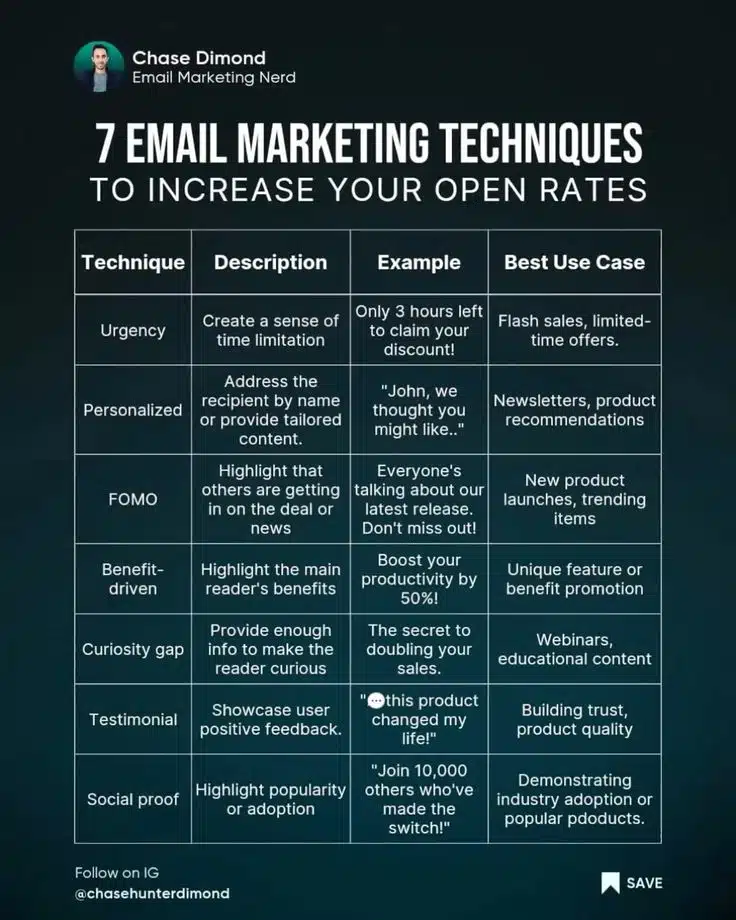
Here’s a summary of what’s covered:
- Urgency
- Personalised
- FOMO (Fear of Missing Out)
- Benefit-Driven
- Curiosity Gap
- Testimonial
- Social Proof
Check out the post below for more.
Email marketing remains one of the most effective tools in digital marketing, but success depends on one key metric — your open rate. If subscribers aren’t opening your emails, your message, offer, or story never even has a chance to be seen. To change that, you need to understand what drives engagement and how to craft emails that instantly grab attention.
In this guide, we’ll explore seven proven techniques that encourage subscribers to open your emails — from using urgency and personalisation to leveraging social proof. Each method taps into powerful psychological triggers and marketing best practices designed to make your audience stop scrolling and start clicking.
Urgency
Creating urgency is one of the oldest and most effective marketing techniques. It pushes people to take action now rather than later by introducing a sense of time limitation or scarcity. When people feel they might miss out on something valuable, they’re far more likely to open your email and act quickly.
- Use countdown phrases like “Ends in 24 hours” or “Today only” to trigger immediate attention.
- Pair urgency with real deadlines — ensure your offer genuinely expires when you say it will.
- Include urgent keywords in subject lines, such as “final chance” or “last call.”
- Avoid overusing this tactic, as constant false urgency can lead to subscriber fatigue or distrust.
Personalised
Personalised emails show subscribers that you recognise them as individuals, not just another name on your list. Using personalisation can include addressing recipients by name, tailoring recommendations, or referencing their past interactions with your brand. It builds a connection and encourages readers to open because the content feels relevant to them.
- Use the subscriber’s name in the subject line or greeting to make the message feel direct.
- Segment your list based on interests, location, or purchase history for more targeted emails.
- Reference previous actions such as downloads, purchases, or preferences to increase engagement.
- Test personalised elements to find what resonates most with your specific audience segments.
FOMO (Fear of Missing Out)
FOMO taps into the powerful human instinct to avoid missing out on experiences, deals, or exclusive opportunities that others are enjoying. When you highlight that other people are already taking advantage of an offer or event, it encourages subscribers to act quickly so they’re not left behind.
- Showcase how many people have already joined, purchased, or registered for your offer.
- Use phrases like “Don’t miss out” or “Everyone’s talking about this” to heighten urgency.
- Include social or visual proof, such as user counts or testimonials, within your content.
- Focus on exclusivity — make subscribers feel they’re joining something special or time-limited.
Benefit-Driven
A benefit-driven approach focuses on what the reader gains by opening and engaging with your email. Instead of leading with features, this strategy puts the spotlight on the results, improvements, or advantages the subscriber will experience. When the benefits are clear and compelling, readers feel more motivated to click.
- Write subject lines that highlight tangible outcomes, such as “Boost your productivity by 50%.”
- Keep the focus on the subscriber, using words like “you” and “your” to emphasise relevance.
- Link the benefit directly to a common problem your audience wants to solve.
- Avoid vague claims — make your benefits measurable, believable, and backed by results.
Curiosity Gap
The curiosity gap strategy works by teasing information that intrigues the reader without revealing everything upfront. It’s about sparking interest and leaving enough mystery to make subscribers want to click through for more details. Done right, it keeps your audience engaged and eager to find out what’s inside.
- Use open-ended subject lines such as “The secret to doubling your sales…” to build suspense.
- Offer partial information in the preview text that makes the reader want to know the full story.
- Align curiosity with genuine value — ensure the email delivers on its promise.
- Avoid misleading “clickbait” tactics that may boost opens temporarily but harm long-term trust.
Testimonial
Testimonials are powerful because they provide authentic validation from real users. When people see others sharing positive experiences, it reassures them that your product or service delivers on its claims. Including social proof from happy customers can increase credibility, trust, and ultimately open rates.
- Feature short, punchy quotes from satisfied customers in your email preview or subject line.
- Include metrics or before-and-after results to add weight to customer stories.
- Use visuals such as profile photos or brand logos (with permission) to enhance authenticity.
- Keep testimonials varied — showcase different types of success stories to appeal to a broad audience.
Social Proof
Social proof demonstrates that your product, service, or content is trusted and adopted by others. When subscribers see that many people have made the same choice, it reassures them that they’re making a smart decision. Highlighting your popularity or credibility encourages more people to open and engage with your emails.
- Mention milestones like “Join 10,000 others who’ve made the switch” to showcase growth.
- Use stats or achievements that signal reliability and scale, such as customer counts or awards.
- Highlight collaborations or endorsements from recognised brands or industry experts.
- Integrate user-generated content, such as photos or testimonials, to show real-world adoption.
Bringing It All Together
Improving your email open rates isn’t about luck or guesswork — it’s about psychology, strategy, and consistency. Each of these techniques — urgency, personalisation, FOMO, benefit-driven messaging, curiosity, testimonials, and social proof — addresses a different aspect of human motivation. Together, they form a framework for building stronger relationships and more impactful communication.
By blending these tactics and testing variations, you can discover what resonates most with your audience. Small adjustments to your subject lines, timing, and tone can lead to significant improvements in engagement. Remember that the goal isn’t just to increase opens, but to start meaningful conversations with your subscribers — and that begins with an irresistible reason to click.

Author:
Mark Ford