Are you struggling to keep your email marketing consistent, professional, and effective? Want a simple checklist to help you create emails that get opened, read, and acted on every time?
You’ll find some email marketing basics in this infographic.
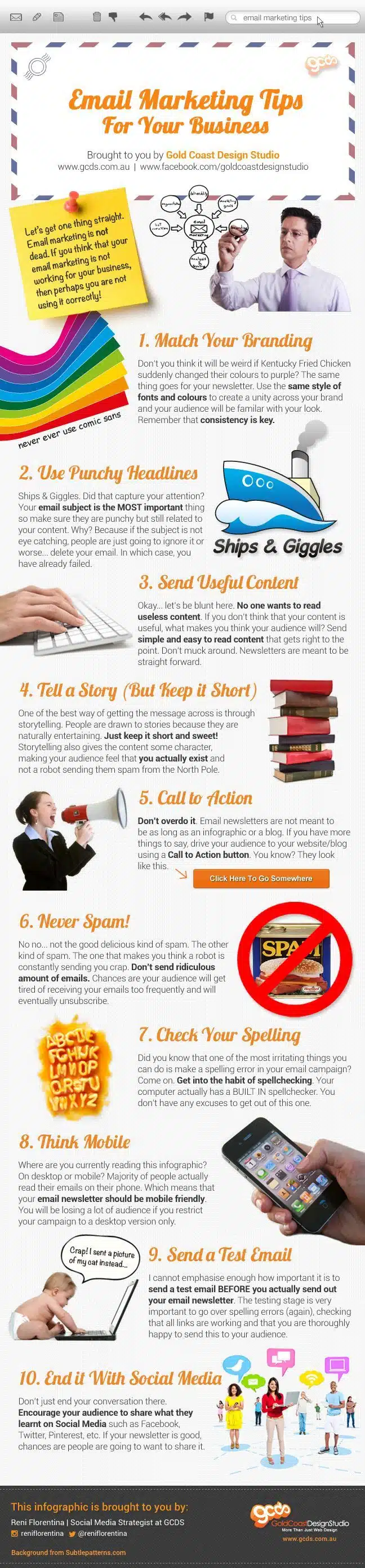
Here’s a summary of what’s covered:
- Match Your Branding
- Use Punchy Headlines
- Send Useful Content
- Tell a Story (But Keep It Short)
- Include a Call to Action
- Never Spam
- Check Your Spelling
- Think Mobile
- Send a Test Email
- End It with Social Media
Check out the post below for more.
Email marketing remains one of the most cost-effective and reliable ways to reach your audience, nurture relationships, and increase sales. But with so many moving parts to consider, it’s easy for important details to slip through the cracks. This checklist is designed to help busy business owners stay on track — ensuring every email campaign is professional, engaging, and effective from start to finish.
Whether you’re new to email marketing or looking to refine your current strategy, this guide covers all the essentials — from branding and design to content, testing, and follow-up. By following these ten steps, you’ll save time, avoid common mistakes, and maximise the impact of your campaigns.
Match Your Branding
Your email marketing should feel like a natural extension of your brand. Consistency in colour, font, tone, and layout helps readers instantly recognise your business. It builds familiarity, trust, and professionalism while reinforcing your brand identity with every message you send.
- Use your brand’s official colours, fonts, and logo throughout your email template.
- Maintain the same tone of voice as your website and social channels.
- Avoid unprofessional fonts such as Comic Sans or overly decorative styles.
- Keep your layout clean and consistent to improve readability and recognition.
Use Punchy Headlines
Your subject line determines whether your email gets opened or ignored. It needs to grab attention quickly while giving readers a reason to click. Think of it as the headline of your email — short, intriguing, and relevant to your audience’s needs or interests.
- Keep subject lines under 50 characters for maximum impact on mobile devices.
- Use active, benefit-driven language that promises value or curiosity.
- Avoid clickbait or misleading phrases that damage trust.
- Test different subject lines to see which styles generate the highest open rates.
Send Useful Content
Once your email is opened, your content must deliver value. Every email should have a clear purpose — whether that’s to inform, educate, entertain, or persuade. Sending irrelevant or self-serving messages will only lead to unsubscribes and lost trust.
- Focus on solving a problem or answering a question your readers care about.
- Keep paragraphs short and scannable for busy readers.
- Add clear subheadings or bullet points to break up long blocks of text.
- Include links to helpful resources, blogs, or products that add value.
Tell a Story (But Keep It Short)
Storytelling brings your brand to life and makes your emails more memorable. People connect emotionally to stories far more than sales pitches. The key is to tell short, engaging stories that illustrate a point or inspire action without losing your audience’s attention.
- Share a brief customer success story that highlights real-world results.
- Use relatable anecdotes to make complex ideas feel personal and human.
- End your story with a clear takeaway that ties back to your message.
- Keep your stories concise — aim for 150 words or less per narrative.
Include a Call to Action
Every great marketing email needs a next step. A clear call to action (CTA) directs your readers toward what you want them to do next — whether that’s visiting your website, booking a call, or purchasing a product. Without it, even the best email risks ending in inaction.
- Use clear, action-oriented phrases like “Shop Now,” “Learn More,” or “Get Started.”
- Make your CTA stand out visually with buttons or contrasting colours.
- Place your CTA both midway through and at the end of longer emails.
- Limit each email to one primary CTA to avoid confusing your audience.
Never Spam
Sending too many emails or irrelevant content can quickly turn your subscribers off. Respecting your audience’s inbox is vital to maintaining trust and keeping engagement high. Quality and timing matter far more than quantity when it comes to successful email marketing.
- Stick to a consistent schedule, such as weekly or biweekly sends.
- Only send content that your subscribers have opted in to receive.
- Avoid excessive sales language or repetitive promotions.
- Use a reliable email marketing platform that complies with GDPR regulations.
Check Your Spelling
Nothing undermines credibility faster than spelling or grammatical mistakes. Even small errors can make your emails appear rushed or unprofessional. Proofreading every message before sending ensures your communication reflects the quality and care of your brand.
- Always run a spellcheck before sending your email.
- Read your message aloud to catch awkward phrasing or tone issues.
- Have a colleague review important emails for a second opinion.
- Use tools like Grammarly or your email platform’s built-in checker.
Think Mobile
A growing majority of people read emails on their smartphones. If your design doesn’t display properly on mobile, you risk losing readers before they’ve even begun. Mobile-friendly emails improve readability, engagement, and conversions by ensuring every element looks great on smaller screens.
- Use responsive templates that adjust automatically for mobile users.
- Keep text concise and avoid large paragraphs that require scrolling.
- Make buttons and links large enough to tap easily with a finger.
- Test your email on multiple devices before sending to ensure proper formatting.
Send a Test Email
Before sending to your full mailing list, a test email is essential. It allows you to spot broken links, layout problems, and last-minute typos. This extra step can prevent embarrassing mistakes and ensure your message arrives exactly how you intended it to.
- Send a test version to yourself and a colleague for review.
- Check how your email looks in both desktop and mobile inboxes.
- Click all links and buttons to confirm they lead to the correct pages.
- Pay attention to load times and image display quality before finalising.
End It with Social Media
Email is powerful, but it shouldn’t exist in isolation. Encouraging readers to connect on social media extends engagement beyond the inbox. It helps nurture relationships, builds brand visibility, and allows your audience to share your content more easily.
- Add social media icons with links to your active platforms.
- Encourage subscribers to share your email or content with friends.
- Repurpose snippets of your email content for posts or stories.
- Include an incentive, like a discount or giveaway, to drive followers to your profiles.
Conclusion
Email marketing remains one of the most effective tools in any business owner’s digital arsenal — but only when it’s done with care, strategy, and consistency. This checklist ensures your campaigns look professional, read well, and resonate with your audience every time. From branding and storytelling to testing and follow-up, every detail counts toward creating emails that engage, convert, and build loyalty.
By taking a few extra minutes to follow these ten steps, you’ll not only improve the quality of your communication but also strengthen the connection between your business and your customers. In a crowded inbox, attention is everything — and the right email can make all the difference.

Author:
Mark Ford