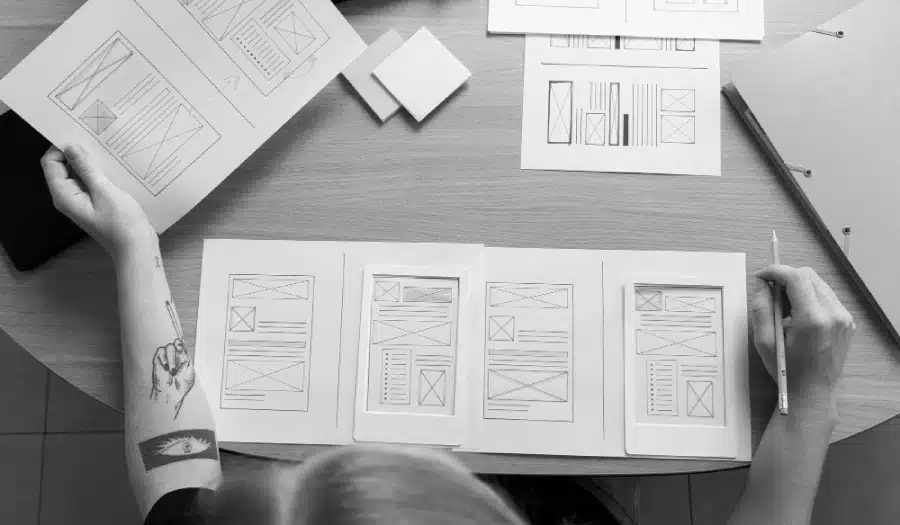
Landing pages are the unsung heroes of digital marketing.
They play a pivotal role in converting website visitors into leads and customers. When done right, landing pages can generate massive results, driving your business forward.
In this comprehensive guide, we’ll walk you through the nine essential steps to create perfect landing pages that yield exceptional results.
Infographic by QuickSprout.

1. Define Your Goal
Before diving into the nitty-gritty of landing page design, it’s crucial to clarify your objective. What action do you want your visitors to take? Common landing page goals include:
- Lead Generation: Collecting email addresses or contact information.
- Sales: Convincing visitors to make a purchase.
- Event Registration: Encouraging sign-ups for webinars, seminars, or events.
- Content Downloads: Providing valuable resources in exchange for user data.
Identify your primary goal, as this will shape the rest of your landing page strategy.
2. Know Your Audience
Understanding your target audience is fundamental to crafting a compelling landing page. Consider the following aspects:
- Demographics: Age, gender, location, job title, and income.
- Psychographics: Interests, values, pain points, and motivations.
- Behavior: Online behavior, preferred communication channels, and buying habits.
Tailor your landing page content, language, and design to resonate with your audience’s needs and preferences.
3. Craft a Captivating Headline
Your headline is the first thing visitors see, and it must instantly grab their attention. A compelling headline should be:
- Clear: Communicate the value proposition or offer concisely.
- Benefit-Oriented: Highlight the benefits users will gain.
- Actionable: Encourage action or intrigue.
Remember, your headline should be in sync with your goal and audience. Test different variations to find the most effective one.
4. Create an Irresistible Offer
To entice visitors, your landing page must present an offer they can’t refuse. This offer should provide value and align with your goal. Some effective offers include:
- Ebooks and Guides: In-depth resources that educate and inform.
- Webinars and Workshops: Live events that offer expertise.
- Free Trials or Demos: A chance to try before committing.
- Discounts and Coupons: Attractive deals for product or service purchases.
Make sure your offer is prominently displayed and includes a clear call-to-action (CTA) for users to take the desired action.
5. Craft Compelling Content
The content on your landing page should support your offer and persuade visitors to convert. Consider these tips:
- Use Bullet Points: Break down information into digestible chunks.
- Highlight Benefits: Explain how your offer solves users’ problems.
- Visuals: Use images, videos, or infographics to engage users.
- Social Proof: Include testimonials, reviews, or trust badges.
- Scarcity and Urgency: Create a sense of FOMO (fear of missing out) with limited-time offers.
Ensure that your content is concise, relevant, and easy to skim. Users should quickly grasp the value of your offer.
6. Design for Clarity and Conversion
A well-designed landing page should guide users toward your CTA. Here’s how to achieve that:
- Clean Layout: Avoid clutter and distractions. Keep the focus on the offer.
- Mobile Responsiveness: Ensure your landing page looks great on all devices.
- Color Psychology: Use colors that evoke the right emotions and actions.
- Whitespace: Give elements room to breathe, enhancing readability.
- Form Optimization: If collecting information, keep forms short and sweet.
Test your landing page’s design across various devices and browsers to guarantee a seamless user experience.
7. Implement Strong CTAs
Your call-to-action (CTA) is the gateway to conversions. It should be:
- Clear: Use actionable language like “Get Started” or “Download Now.”
- Contrasting: Make the CTA button stand out with color and size.
- Above the Fold: Place the CTA where users can see it without scrolling.
- Relevant: Ensure the CTA matches the user’s intention and the offer.
A/B test different CTA variations to determine which one drives the most conversions.
8. Optimize for Speed and Performance
A slow-loading landing page can deter users and harm your conversion rate. To ensure a fast and reliable experience:
- Compress Images: Reduce image file sizes without compromising quality.
- Minimize Code: Eliminate unnecessary code and scripts.
- Use a Content Delivery Network (CDN): Distribute content across multiple servers.
- Browser Caching: Enable caching to reduce load times for repeat visitors.
- Mobile Optimization: Prioritize mobile users with responsive design and mobile-specific optimization.
Regularly monitor your landing page’s performance using tools like Google PageSpeed Insights or GTmetrix.
9. Test and Iterate
Continuous improvement is key to landing page success. Regularly conduct A/B tests to refine your page for better results. Test various elements like headlines, images, CTA buttons, and forms. Analyze the data to identify what works best for your audience.
Additionally, gather user feedback and monitor analytics to gain insights into visitor behavior. Make data-driven decisions to enhance your landing page’s performance over time.
Conclusion
Creating perfect landing pages that generate massive results requires careful planning and execution. By defining your goals, understanding your audience, and following these nine steps, you can craft landing pages that convert visitors into leads and customers. Remember, the key is to continuously test and refine your approach based on data and user feedback. With dedication and strategic optimization, your landing pages will become powerful tools for driving business growth and achieving remarkable results.

Author:
Mark Ford