Every blogger has experienced it at some point—the dreaded writer’s block. You sit down to write a new blog post, but your mind draws a blank, and you can’t seem to come up with any fresh ideas. Don’t worry; it happens to the best of us.
The good news is that there are numerous creative ways to reignite your blogging inspiration. In this post, we’ll explore nine types of blog content that you can create when you’ve run out of ideas. These approaches will help you break free from the writer’s block and produce engaging content that keeps your readers coming back for more.
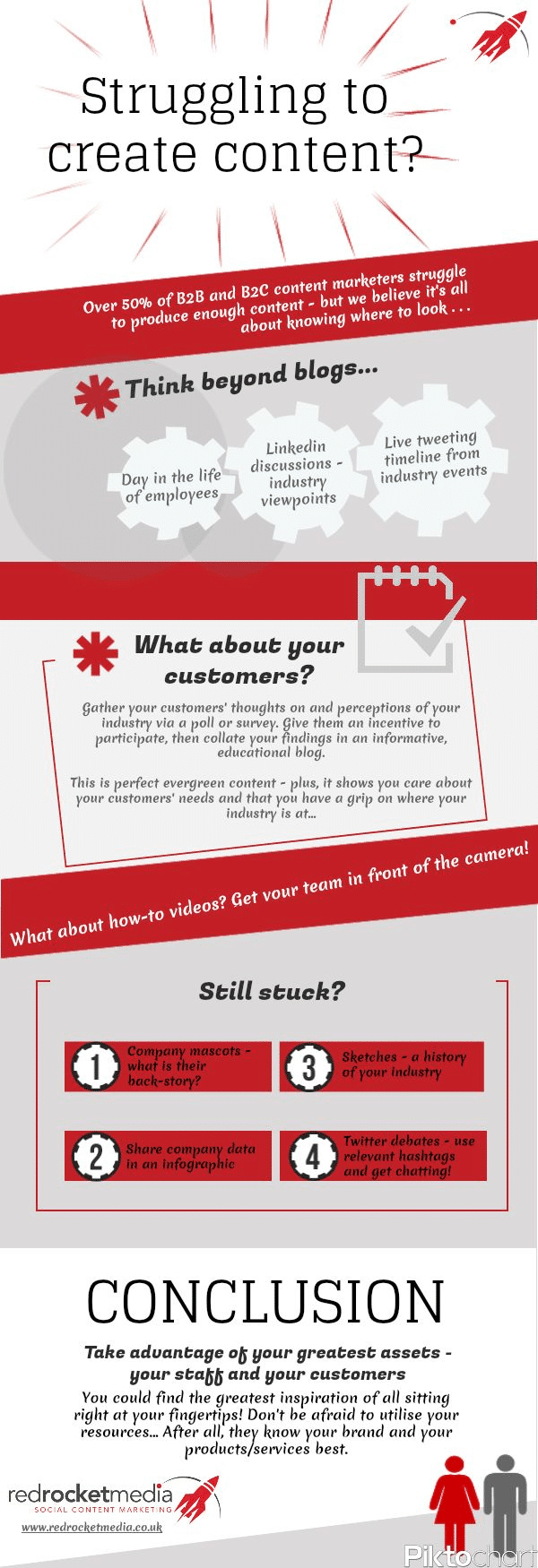
If you need some new ideas take a look at the infographic below from Red Rocket Media.
- How-To Guides and Tutorials
One of the most effective ways to provide value to your audience is by creating how-to guides and tutorials. These pieces of content offer step-by-step instructions on solving a specific problem or achieving a particular goal. Whether it’s a tutorial on using a new software, a guide to mastering a skill, or even a DIY project, how-to guides are always in demand.
When creating a how-to guide, remember to:
- Identify your target audience and their level of expertise.
- Break down the process into easy-to-follow steps.
- Use visuals like images, infographics, or videos to enhance understanding.
- Address common challenges and provide solutions.
- Encourage reader engagement by inviting questions and feedback in the comments.
- Listicles and Roundup Posts
Listicles are a popular blog format for a reason—they’re easy to consume and offer valuable information in a structured manner. Create listicles that cater to your niche and audience’s interests. For instance, if you’re a food blogger, you could write “10 Must-Try Vegetarian Recipes for Summer” or if you’re in the tech industry, consider “Top 7 Gadgets to Boost Productivity.”
Similarly, roundup posts gather valuable resources, tools, or insights from various sources and compile them into a single, comprehensive article. Readers appreciate roundup posts because they save time and provide a curated list of valuable information. For example, “The Ultimate Digital Marketing Toolset: 15 Experts Share Their Favorites.”
- Case Studies and Success Stories
People love real-life stories of success and learning from the experiences of others. Share case studies and success stories related to your niche or industry. These can be stories of personal success, your customers’ achievements, or even notable figures in your field.
When crafting case studies and success stories:
- Highlight the challenges faced and how they were overcome.
- Include data, statistics, and tangible results.
- Use storytelling techniques to make the narrative engaging.
- Emphasize the lessons learned and actionable takeaways for readers.
- Behind-the-Scenes Content
Offering a glimpse behind the scenes of your blog or business can be highly engaging for your audience. It humanizes your brand and fosters a deeper connection with your readers. You can create behind-the-scenes content in various ways:
- Share your daily routine or workspace.
- Introduce your team members or collaborators.
- Discuss your content creation process.
- Talk about your journey, including failures and successes.
- Provide sneak peeks of upcoming projects or products.
This type of content helps build transparency and trust with your audience.
- Opinion Pieces and Thought Leadership
Expressing your opinions and thoughts on industry-related topics can establish you as a thought leader in your niche. Write about trends, emerging technologies, controversies, or any subject you’re passionate about. Back your opinions with research and data to make your arguments compelling.
Opinion pieces should:
- Be well-researched and provide valuable insights.
- Encourage healthy discussions and debates.
- Consider different viewpoints and be open to constructive criticism.
- Reflect your unique perspective and expertise.
Remember to maintain a respectful and professional tone when discussing potentially contentious topics.
- Product Reviews and Recommendations
Product reviews and recommendations are a valuable resource for your audience, especially if your blog revolves around a specific niche or industry. Share your honest opinions about products, services, books, or tools that you’ve personally used and found beneficial. Be transparent about any affiliations or sponsorships to maintain credibility.
When creating product reviews:
- Highlight the features and benefits.
- Share your personal experiences and opinions.
- Provide pros and cons to give a balanced perspective.
- Include high-quality images or videos of the product in action.
Your reviews should help readers make informed decisions.
- Guest Posts and Collaborations
If you’re struggling to come up with fresh content ideas, consider inviting guest bloggers or collaborating with other content creators in your field. Guest posts not only bring new voices and perspectives to your blog but also allow you to tap into the existing audience of your guest writer.
When accepting guest posts or collaborating:
- Set clear guidelines and expectations for the content.
- Ensure the content aligns with your blog’s theme and values.
- Promote the guest author and their work to maximize exposure.
- Establish a mutually beneficial relationship for future collaborations.
Guest posts and collaborations can infuse new energy into your blog and introduce you to new audiences.
- Frequently Asked Questions (FAQs)
Your audience likely has questions about your niche or industry, and FAQs are an excellent way to address these common queries. Compile a list of frequently asked questions and provide detailed answers in a single blog post. This not only helps your readers but also saves you time from answering the same questions individually.
To create an effective FAQ post:
- Conduct keyword research to identify common questions.
- Organize the FAQs logically and categorically.
- Include clear and concise answers.
- Update the post regularly to address new questions that arise.
FAQs demonstrate your expertise and willingness to assist your audience.
- Personal Stories and Reflections
Sometimes, the most relatable and engaging content comes from your own experiences and reflections. Share personal stories, anecdotes, or lessons you’ve learned on your journey. Your readers will appreciate the authenticity and connect with you on a deeper level.
When sharing personal stories:
- Be genuine and vulnerable.
- Relate the story to a broader theme or lesson.
- Use storytelling techniques to captivate your audience.
- Encourage readers to share their own experiences in the comments.
Conclusion
Writer’s block is a common challenge for bloggers, but it doesn’t have to derail your content creation efforts. By exploring these nine types of blog content, you can keep your blog fresh and engaging even when you’ve run out of ideas. Whether you opt for how-to guides, listicles, case studies, or personal stories, remember that your unique perspective and expertise are valuable assets. Keep experimenting, stay true to your niche, and continue providing value to your audience, and writer’s block will be just a temporary setback on your blogging journey.

Author:
Mark Ford