So, you’re starting a new business, you’re sure the idea will take off, but could the area in which you are based affect your success?
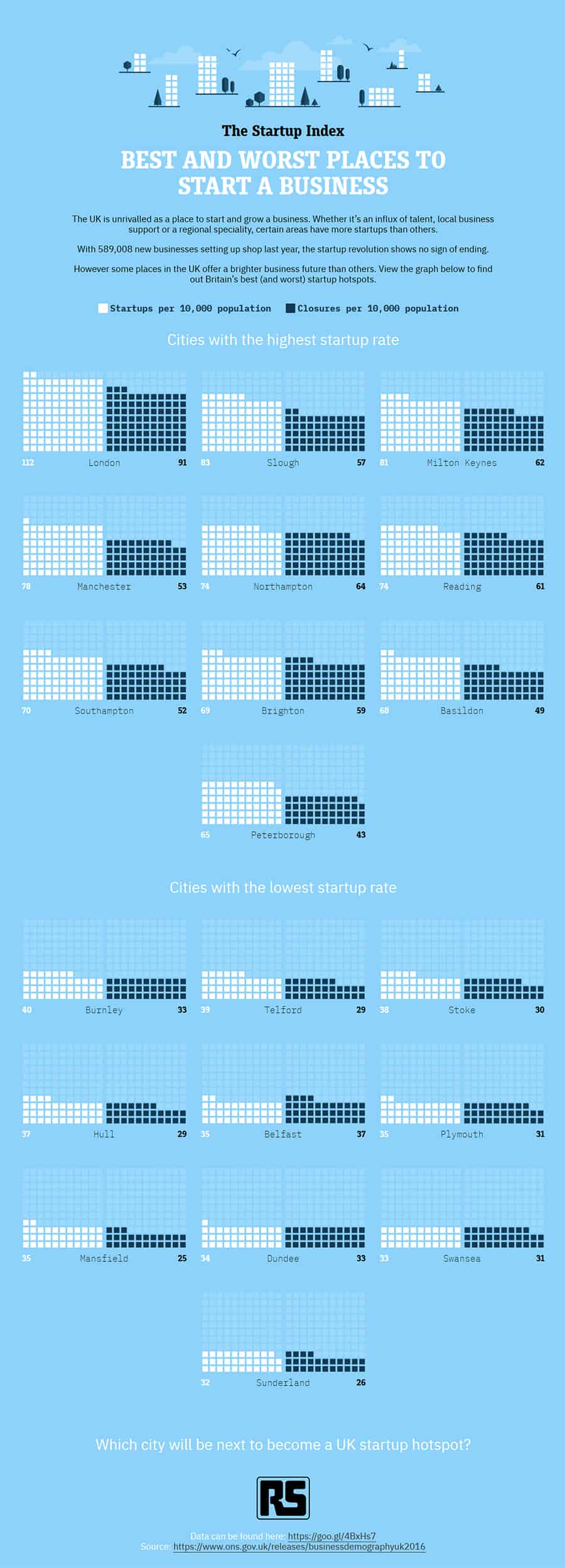
RS Online share the best and worse places to start a business in this infographic.
They break things down into the following sections:
- Cities with the highest startup rate
- Cities with the lowest startup rate
- Startups per 10,000 population
- Closures per 10,000 population
Check out the infographic to see the results.
Starting a new business is an exhilarating venture that involves careful planning, strategic decision-making, and a bit of risk-taking. One of the critical factors in determining the success of a startup is its location. The UK, with its diverse economy and vibrant entrepreneurial culture, offers numerous opportunities for new businesses. However, the choice of city can significantly impact a startup’s chances of success. This blog post will delve into the best and worst places to start a new business in the UK, based on various metrics such as startup rates, startup density per population, and business closures.
Cities with the Highest Startup Rate
The UK boasts several cities with thriving entrepreneurial ecosystems that provide fertile ground for new businesses. Let’s delve deeper into what makes these cities ideal for startups and offer practical tips and guidance for small businesses looking to capitalize on the opportunities these locations offer.
London
Overview: London is the undisputed leader in the UK for startup activity, driven by its global financial hub status, diverse population, and rich cultural landscape. The city’s vast resources, extensive networking opportunities, and access to venture capital make it an attractive destination for new businesses.
Tips for Small Businesses:
- Leverage Networking Opportunities:
- Join industry-specific meetups and events such as London Tech Week and FinTech Connect.
- Participate in networking groups like London Entrepreneurs Network and Tech London Advocates.
- Utilize Co-working Spaces:
- Consider co-working spaces like WeWork, Huckletree, and The Office Group, which provide flexible work environments and opportunities to connect with other entrepreneurs.
- Tap into Funding Resources:
- Explore funding opportunities from venture capital firms, angel investors, and crowdfunding platforms. Notable venture capital firms in London include Index Ventures and Balderton Capital.
- Take advantage of government grants and loans available through programs like Innovate UK and the Start Up Loans Company.
- Engage with Accelerators and Incubators:
- Apply to programs such as Seedcamp, Entrepreneur First, and Techstars London for mentorship, resources, and funding.
- Collaborate with Universities:
- Partner with leading institutions like Imperial College London and University College London (UCL) for research, innovation, and access to talent.
Manchester
Overview: Manchester has emerged as a significant startup hub, particularly in the tech and digital sectors. Its lower cost of living compared to London, strong transport links, and supportive business community make it an attractive location for new businesses.
Tips for Small Businesses:
- Engage with Local Networks:
- Join networks like Manchester Digital and Pro-Manchester to connect with other businesses and industry leaders.
- Participate in local events such as the Manchester Tech Festival and Business Growth Hub seminars.
- Find the Right Space:
- Utilize co-working spaces like Workplace and Rise Manchester that offer flexible terms and vibrant communities.
- Access Funding and Support:
- Look into local funding options through organizations like the Greater Manchester Combined Authority and Manchester Growth Company.
- Consider joining accelerators such as UP Ventures and the Manchester Entrepreneurs’ Network.
- Leverage Educational Institutions:
- Collaborate with the University of Manchester and Manchester Metropolitan University for research projects and access to a skilled workforce.
- Promote Your Business:
- Take advantage of the city’s strong media presence by engaging with local press and digital marketing agencies.
Birmingham
Overview: Birmingham’s central location and extensive transport network make it a strategic base for startups. The city’s economy is diverse, with strengths in manufacturing, engineering, and the service sector. Various initiatives and support programs aimed at fostering entrepreneurship further enhance its appeal.
Tips for Small Businesses:
- Join Business Support Programs:
- Take advantage of initiatives like the Greater Birmingham Chamber of Commerce and Birmingham City Council’s business support services.
- Utilize Co-working and Office Spaces:
- Explore options like Alpha Works and Innovation Birmingham Campus, which offer not only workspace but also networking opportunities and events.
- Seek Funding Opportunities:
- Look for funding through local enterprise partnerships such as the Greater Birmingham and Solihull Local Enterprise Partnership (GBSLEP).
- Explore grant opportunities and business loans offered by organizations like Finance Birmingham.
- Engage with Local Universities:
- Partner with the University of Birmingham and Aston University for research collaborations and access to skilled graduates.
- Market Locally and Nationally:
- Leverage Birmingham’s central location to market your business both locally and across the UK, taking advantage of the city’s strong transport links.
Edinburgh
Overview: Edinburgh is known for its strong financial sector and burgeoning tech industry. The city’s high startup rate is supported by a well-educated workforce and a strong academic presence. Edinburgh’s quality of life, historical charm, and vibrant festivals also make it an attractive place for entrepreneurs.
Tips for Small Businesses:
- Connect with Industry Networks:
- Engage with networks like the Edinburgh Chamber of Commerce and CodeBase, which offer events, resources, and support for startups.
- Choose Strategic Locations:
- Consider co-working spaces such as The Melting Pot and TechCube, which provide flexible working environments and opportunities for collaboration.
- Access Funding and Mentorship:
- Utilize funding sources like Scottish Enterprise and Business Gateway for grants, loans, and advisory services.
- Apply for mentorship programs and accelerators such as EIE (Engage Invest Exploit) and the Edinburgh BioQuarter.
- Collaborate with Academic Institutions:
- Work with the University of Edinburgh and Heriot-Watt University for research partnerships and access to talent.
- Leverage Edinburgh’s Festivals:
- Take advantage of the city’s numerous festivals, such as the Edinburgh Festival Fringe, to market your business and attract visitors.
Bristol
Overview: Bristol is recognized for its innovative spirit and strong creative industries. The city’s high startup rate is driven by its reputation as a hub for tech and digital media companies. Bristol’s supportive environment for startups includes numerous networking events, co-working spaces, and funding opportunities.
Tips for Small Businesses:
- Network Actively:
- Join local networks such as the Bristol Media and TechSPARK to connect with other entrepreneurs and industry experts.
- Participate in events like the Bristol Tech Festival and Creative Bath to increase visibility and network.
- Find the Right Workspace:
- Utilize co-working spaces such as Engine Shed and The Guild, which offer vibrant communities and support services.
- Seek Financial Support:
- Explore funding options through organizations like Invest Bristol & Bath and the West of England Growth Hub.
- Consider applying for grants and loans offered by local councils and business development agencies.
- Partner with Universities:
- Collaborate with the University of Bristol and the University of the West of England (UWE) for research projects and recruitment.
- Embrace Sustainability:
- Bristol’s commitment to sustainability and green initiatives can be leveraged by startups focusing on environmental impact and sustainable practices.
Final Thoughts
Starting a new business in any of these top cities offers distinct advantages, from access to funding and talent to supportive business environments and networking opportunities. However, success also depends on careful planning, leveraging available resources, and actively engaging with the local entrepreneurial ecosystem. By following the tips and guidance outlined for each city, small businesses can position themselves for growth and success in the dynamic landscape of the UK’s startup scene.
Cities with the Lowest Startup Rate
While some cities in the UK thrive with entrepreneurial activity, others face significant challenges that contribute to lower startup rates. These challenges often stem from economic downturns, limited access to funding, and fewer support structures for new businesses. However, with the right strategies and a proactive approach, small businesses can still find success in these areas. Here’s an in-depth look at the cities with the lowest startup rates and practical tips for navigating these environments.
Sunderland
Overview: Sunderland has faced substantial economic challenges, including the decline of its traditional industries. The city’s industrial past has left it with a need to diversify its economy. Despite these challenges, there are opportunities for businesses that can offer innovative solutions and capitalize on emerging sectors.
Tips for Small Businesses:
- Leverage Local Support Programs:
- Engage with the Sunderland City Council’s business support services, which offer guidance, training, and networking opportunities.
- Utilize resources from the North East Local Enterprise Partnership, which provides funding and support for new businesses.
- Focus on Emerging Sectors:
- Consider entering sectors that are poised for growth in Sunderland, such as renewable energy, digital technology, and advanced manufacturing.
- Seek Community Engagement:
- Build strong relationships with the local community and other businesses to create a supportive network.
- Participate in local business forums and networking events to increase visibility and find collaborative opportunities.
- Utilize Affordable Spaces:
- Take advantage of the lower cost of commercial property in Sunderland to secure affordable office or retail space.
- Explore co-working spaces and business incubators such as the Sunderland Software Centre.
- Apply for Grants and Funding:
- Look for grants and funding opportunities provided by regional and national programs aimed at supporting businesses in economically challenged areas.
Hull
Overview: Hull has historically been centered around manufacturing and port activities. Economic downturns and high unemployment rates have posed challenges for new businesses. However, Hull’s waterfront regeneration and cultural initiatives, such as being the UK City of Culture in 2017, present new opportunities for entrepreneurs.
Tips for Small Businesses:
- Capitalize on Regeneration Projects:
- Engage with local regeneration projects and cultural initiatives to find business opportunities in tourism, hospitality, and retail.
- Consider locations within regenerated areas like the Fruit Market and Marina, which are becoming hubs for new businesses.
- Access Local Business Support:
- Utilize the Hull & Humber Chamber of Commerce for business advice, networking, and support services.
- Participate in programs offered by the Humber Local Enterprise Partnership, which focuses on business growth and economic development.
- Explore Funding and Incentives:
- Seek out funding from the Humber Business Growth Hub, which offers grants, loans, and business development programs.
- Look for incentives for businesses that contribute to local economic development and job creation.
- Network with Local Institutions:
- Collaborate with the University of Hull for research, innovation, and access to talent through student placements and internships.
- Promote Local and Regional Connections:
- Focus on building strong relationships with local suppliers and customers to create a loyal client base.
- Explore regional markets to expand your business reach beyond Hull.
Stoke-on-Trent
Overview: Stoke-on-Trent, known for its pottery industry, has struggled to diversify its economy. The city faces challenges such as limited access to finance and a smaller talent pool. However, Stoke-on-Trent also presents opportunities for businesses that can tap into its rich industrial heritage and emerging sectors.
Tips for Small Businesses:
- Embrace Local Heritage:
- Leverage the city’s historical reputation in ceramics and pottery to create niche products and attract tourists.
- Collaborate with local museums and cultural institutions to promote your business and attract visitors.
- Utilize Business Support Services:
- Engage with the Stoke-on-Trent & Staffordshire Growth Hub, which provides business advice, funding information, and support services.
- Participate in the programs and workshops offered by the Staffordshire Chambers of Commerce.
- Explore Affordable Commercial Spaces:
- Take advantage of the lower cost of property in Stoke-on-Trent to establish your business in a cost-effective manner.
- Consider locating your business in business parks and incubators such as the Ceramic Valley Enterprise Zone.
- Seek Regional Funding:
- Look for funding opportunities from the Stoke-on-Trent and Staffordshire Local Enterprise Partnership, which supports business innovation and growth.
- Build a Strong Local Network:
- Network with other local businesses to share resources and collaborate on projects.
- Participate in local events and trade shows to increase your business visibility and connect with potential clients.
Blackpool
Overview: Blackpool’s economy is heavily reliant on tourism, which can be seasonal and volatile. This dependency impacts the city’s startup rate as there are fewer opportunities for diversification. However, Blackpool’s initiatives to revitalize its economy and promote year-round tourism can create new business opportunities.
Tips for Small Businesses:
- Diversify Business Offerings:
- Consider offering products or services that cater to both tourists and local residents to ensure year-round business.
- Explore opportunities in sectors such as health and wellness, entertainment, and retail.
- Utilize Tourism Initiatives:
- Leverage Blackpool’s tourism campaigns and events to promote your business.
- Collaborate with local tourism organizations like VisitBlackpool to increase your visibility.
- Access Business Support and Funding:
- Engage with the Blackpool Enterprise Centre and Blackpool Unlimited, which offer business support, advice, and workspace.
- Seek funding through programs like the Blackpool Investment Fund, which supports new and expanding businesses.
- Promote Off-Season Activities:
- Develop marketing strategies to attract visitors during the off-season, such as hosting events, workshops, or special promotions.
- Collaborate with other local businesses to create packages and experiences that draw visitors throughout the year.
- Engage with the Community:
- Build strong relationships with local residents to create a loyal customer base.
- Participate in community events and initiatives to increase your business’s local presence.
Middlesbrough
Overview: Middlesbrough has faced economic difficulties due to the decline of its traditional industries such as steel and chemicals. The city’s low startup rate is influenced by high unemployment, limited investment opportunities, and a lack of entrepreneurial culture. However, efforts to regenerate Middlesbrough and diversify its economy are opening new avenues for small businesses.
Tips for Small Businesses:
- Capitalize on Regeneration Efforts:
- Engage with local regeneration projects and initiatives aimed at revitalizing the city center and surrounding areas.
- Consider locating your business in regenerated areas such as the Boho Zone, which is becoming a hub for digital and creative industries.
- Utilize Local Business Support:
- Engage with the Tees Valley Business Compass, which offers funding, advice, and support for local businesses.
- Participate in programs offered by the Middlesbrough Council’s Economic Development team.
- Seek Regional Funding:
- Explore funding opportunities from the Tees Valley Combined Authority, which supports business growth and innovation.
- Look for grants and loans offered by local enterprise partnerships and development agencies.
- Collaborate with Educational Institutions:
- Partner with Teesside University for research collaborations, access to facilities, and recruitment of skilled graduates.
- Participate in university-led business support programs and events.
- Develop a Strong Local Network:
- Network with other local businesses and entrepreneurs to share resources and collaborate on projects.
- Join local business associations and attend networking events to build relationships and increase visibility.
Final Thoughts
While cities with lower startup rates present unique challenges, they also offer untapped opportunities for entrepreneurs willing to innovate and adapt. By leveraging local support programs, seeking regional funding, and engaging with the community, small businesses can overcome obstacles and thrive in these environments. Understanding the specific dynamics of each city and capitalizing on available resources can help entrepreneurs build successful ventures even in the most challenging locations.
Startups per 10,000 Population
The number of startups per 10,000 population provides an insightful measure of entrepreneurial density in various cities. A high density often indicates a vibrant startup ecosystem, availability of resources, and a supportive community for entrepreneurs. Understanding how to leverage these environments can be crucial for small business success. Here’s an in-depth exploration of cities with high startup densities and practical tips for businesses aiming to thrive in these areas.
London
Overview: Despite its large population, London maintains a high startup density due to its robust financial sector, diverse industries, and substantial investment in innovation. The city’s entrepreneurial density is fueled by its global connectivity, cultural diversity, and extensive resources.
Tips for Small Businesses:
- Tap into the Talent Pool:
- Leverage London’s diverse and highly skilled workforce by collaborating with local universities and participating in job fairs and internships programs.
- Utilize platforms like LinkedIn and local job boards to find top talent.
- Maximize Networking Opportunities:
- Attend industry-specific events, trade shows, and conferences to build connections and stay updated on market trends.
- Join business networks such as the London Chamber of Commerce and Industry to access resources and meet potential partners.
- Utilize Digital Marketing:
- Leverage social media platforms and digital marketing strategies to reach a broad audience and establish a strong online presence.
- Invest in SEO and content marketing to attract local and international customers.
- Seek Strategic Locations:
- Choose locations that align with your target market and industry. Areas like Shoreditch for tech startups or Soho for creative industries are strategic choices.
- Consider proximity to key partners, clients, and resources when selecting your business location.
- Explore Co-working Spaces:
- Co-working spaces such as WeWork, Huckletree, and The Office Group provide flexible office solutions and opportunities for collaboration and networking.
Cambridge
Overview: Cambridge, renowned for its prestigious university, boasts a high density of startups, particularly in the tech and biotech sectors. The city’s strong focus on research and development, coupled with access to academic resources, attracts many entrepreneurs.
Tips for Small Businesses:
- Leverage Academic Partnerships:
- Collaborate with the University of Cambridge for research projects, innovation, and access to cutting-edge technology.
- Participate in university-led incubators and accelerators such as Cambridge Enterprise and the Judge Business School’s Accelerate Cambridge.
- Engage with Innovation Hubs:
- Utilize innovation centers like the Cambridge Science Park and the St John’s Innovation Centre, which offer office space, networking events, and business support services.
- Seek Funding Opportunities:
- Explore funding from local venture capital firms, angel investors, and government grants aimed at supporting high-tech startups.
- Consider joining funding networks and pitching at events such as the Cambridge Capital Group and Cambridge Angels.
- Participate in Industry Events:
- Attend industry-specific conferences, workshops, and seminars to network with other professionals and stay informed about the latest trends and technologies.
- Foster a Collaborative Culture:
- Create a collaborative work environment by encouraging teamwork and knowledge sharing within your organization.
- Engage with local business groups and forums to build a supportive network of peers.
Oxford
Overview: Similar to Cambridge, Oxford benefits from its prestigious university and a strong emphasis on research and innovation. The city has a high density of startups, particularly in the tech and life sciences sectors, driven by a collaborative environment and access to world-class research facilities.
Tips for Small Businesses:
- Collaborate with Oxford University:
- Partner with the university for research collaborations, access to expertise, and use of state-of-the-art facilities.
- Engage with the Oxford University Innovation (OUI) for support in technology transfer and commercialization.
- Join Innovation Networks:
- Utilize networks like the Oxford Innovation Centre and the Oxford Science Park, which provide resources, office space, and networking opportunities.
- Participate in initiatives such as the Oxford Entrepreneurs network and the Oxfordshire Local Enterprise Partnership (OxLEP).
- Secure Funding:
- Seek funding from local venture capital firms, angel investors, and grant programs that support innovative startups.
- Attend pitch events and connect with funding networks such as Oxford Investment Opportunity Network (OION).
- Leverage Local Talent:
- Recruit talent from the University of Oxford and local colleges, offering internships and work placements to attract skilled graduates.
- Utilize local job fairs and recruitment agencies to find the right talent.
- Engage with the Community:
- Build relationships with local businesses and community groups to create a supportive network and gain local support.
- Participate in community events and initiatives to increase your business visibility.
Brighton
Overview: Brighton has a thriving creative and digital sector, contributing to its high number of startups per 10,000 population. The city’s vibrant cultural scene, coastal location, and supportive business community make it an attractive destination for entrepreneurs.
Tips for Small Businesses:
- Engage with Creative Networks:
- Join local networks such as Wired Sussex and the Brighton Chamber of Commerce to connect with other businesses and access resources.
- Participate in industry events like the Brighton Digital Festival and Brighton SEO to build connections and learn from industry leaders.
- Find the Right Workspace:
- Utilize co-working spaces such as The Skiff and Plus X Brighton, which offer flexible terms and a collaborative environment.
- Consider office locations that are accessible and within the city’s creative hubs.
- Leverage Funding and Support:
- Explore funding opportunities through the Coast to Capital Local Enterprise Partnership and other regional grants and loans.
- Participate in business support programs offered by Brighton & Hove City Council and local enterprise agencies.
- Promote Your Business Locally:
- Use local media, social media, and community events to promote your business and engage with the local community.
- Collaborate with other local businesses on joint marketing initiatives to increase visibility.
- Focus on Sustainability:
- Embrace Brighton’s commitment to sustainability by adopting eco-friendly practices and products.
- Engage with local sustainability networks and initiatives to align your business with the city’s values.
Bath
Overview: Bath’s entrepreneurial density is driven by its focus on creative industries, tourism, and wellness sectors. The city’s rich history, picturesque setting, and high quality of life attract a diverse range of startups.
Tips for Small Businesses:
- Capitalize on Tourism:
- Leverage Bath’s status as a tourist destination by offering products and services that appeal to visitors.
- Collaborate with local tourism organizations and participate in city events to promote your business.
- Engage with Local Networks:
- Join local business networks such as the Bath Chamber of Commerce and Creative Bath to access resources and connect with other entrepreneurs.
- Participate in industry events and networking sessions to build relationships and gain insights.
- Utilize Business Support Services:
- Take advantage of business support services offered by the Bath & North East Somerset Council and the West of England Growth Hub.
- Explore local incubators and accelerators such as SETsquared Bath for mentorship and resources.
- Find Suitable Office Space:
- Utilize co-working spaces like The Guild Coworking Hub and Spaces Bath, which provide flexible terms and a collaborative environment.
- Consider locations that offer high foot traffic and visibility to attract both locals and tourists.
- Focus on Quality and Heritage:
- Emphasize the quality and heritage of your products or services, aligning with Bath’s historical and cultural appeal.
- Engage with local artisans and craftspeople to create unique offerings that reflect the city’s character.
Final Thoughts
High startup densities in cities like London, Cambridge, Oxford, Brighton, and Bath indicate strong entrepreneurial ecosystems with abundant resources and support. Small businesses can thrive in these environments by leveraging local talent, engaging with supportive networks, securing funding, and participating in community activities. By understanding the unique advantages and opportunities each city offers, entrepreneurs can make informed decisions and strategically position their businesses for success.
Closures per 10,000 Population
Analyzing the rate of business closures per 10,000 population is crucial for understanding the challenges and dynamics of various markets. High closure rates can indicate economic instability, intense competition, or insufficient support for businesses. However, by identifying these risks and adopting strategies to mitigate them, small businesses can increase their chances of sustainability and growth. Here’s an in-depth look at cities with notable closure rates and practical tips for navigating these challenges.
London
Overview: Despite its vibrant economy and high startup rates, London experiences a significant number of business closures. Factors contributing to this include intense competition, high operating costs, and economic fluctuations. However, London also offers vast resources and opportunities for businesses that can navigate these challenges effectively.
Tips for Small Businesses:
- Develop a Strong Business Plan:
- Conduct thorough market research to understand your competition and identify your unique value proposition.
- Create a detailed financial plan that accounts for high operating costs and potential economic fluctuations.
- Focus on Customer Retention:
- Invest in excellent customer service and build strong relationships with your clients to foster loyalty.
- Implement loyalty programs and personalized marketing strategies to keep customers engaged.
- Manage Costs Efficiently:
- Regularly review your expenses and identify areas where you can cut costs without compromising quality.
- Consider flexible office spaces or co-working environments to reduce overhead costs.
- Adapt to Market Changes:
- Stay informed about market trends and be willing to pivot your business model if necessary.
- Diversify your product or service offerings to mitigate risks associated with market fluctuations.
- Utilize Available Resources:
- Take advantage of business support services, mentoring programs, and networking opportunities offered by organizations like the London Chamber of Commerce and Industry.
- Seek advice from experienced entrepreneurs and business advisors to navigate challenges effectively.
Birmingham
Overview: Birmingham’s business closure rate is influenced by economic challenges and competition. The city’s diverse economy, while robust, can be difficult for new businesses to navigate due to market saturation and changing economic conditions.
Tips for Small Businesses:
- Conduct Comprehensive Market Research:
- Understand the local market dynamics and identify gaps where your business can offer unique value.
- Regularly analyze market trends and adjust your business strategies accordingly.
- Build a Resilient Business Model:
- Develop a flexible business model that can adapt to changing economic conditions and customer preferences.
- Consider multiple revenue streams to reduce dependency on a single source of income.
- Strengthen Community Ties:
- Engage with the local community and build strong relationships with other businesses and residents.
- Participate in community events and initiatives to increase your visibility and build a loyal customer base.
- Invest in Marketing and Branding:
- Create a strong brand identity that resonates with your target audience and sets you apart from competitors.
- Utilize digital marketing strategies, including social media, SEO, and content marketing, to reach a broader audience.
- Leverage Local Support:
- Utilize resources and support services provided by the Greater Birmingham Chamber of Commerce and the Birmingham City Council.
- Apply for grants and funding opportunities available for small businesses in the region.
Glasgow
Overview: Glasgow has a relatively high closure rate per 10,000 population, influenced by economic challenges and competition. The city’s diverse economic landscape can present difficulties for new businesses, but also offers opportunities for those who can navigate it effectively.
Tips for Small Businesses:
- Develop a Robust Business Strategy:
- Conduct thorough market analysis to understand your target audience and competition.
- Create a detailed business plan that includes contingency strategies for economic downturns.
- Focus on Financial Management:
- Maintain a close watch on your financial health and implement strict budget controls.
- Explore funding options from local banks, government programs, and private investors.
- Enhance Customer Engagement:
- Invest in building strong relationships with your customers through personalized service and engagement.
- Utilize feedback to continuously improve your offerings and meet customer needs.
- Innovate Continuously:
- Stay ahead of industry trends and continuously innovate your products or services.
- Invest in research and development to ensure your business remains competitive.
- Network and Collaborate:
- Join local business networks and associations such as the Glasgow Chamber of Commerce.
- Collaborate with other businesses and institutions to share resources and expertise.
Liverpool
Overview: Liverpool’s business closure rate is notable, despite its vibrant cultural scene and growing startup ecosystem. Economic challenges, market competition, and access to funding are significant factors contributing to the high closure rate.
Tips for Small Businesses:
- Build a Strong Financial Foundation:
- Secure adequate funding and maintain a healthy cash flow to weather economic fluctuations.
- Explore various funding sources, including local grants, loans, and investment opportunities.
- Engage with Local Networks:
- Join local business networks such as the Liverpool Chamber of Commerce to access resources and support.
- Participate in events and forums to build connections and learn from other entrepreneurs.
- Invest in Technology and Innovation:
- Leverage technology to streamline operations, improve efficiency, and enhance customer experiences.
- Stay updated with industry trends and adopt innovative practices to stay competitive.
- Promote Your Business:
- Utilize a mix of traditional and digital marketing strategies to reach a wide audience.
- Engage with local media and influencers to increase your business’s visibility.
- Focus on Employee Development:
- Invest in training and development programs to build a skilled and motivated workforce.
- Foster a positive work environment to retain top talent and reduce turnover.
Newcastle
Overview: Newcastle’s closure rate reflects the economic difficulties faced by businesses in the region. The city’s reliance on certain industries, coupled with economic fluctuations, impacts the sustainability of new businesses. However, Newcastle offers a supportive environment for those willing to adapt and innovate.
Tips for Small Businesses:
- Diversify Your Offerings:
- Consider diversifying your products or services to reduce dependency on a single market.
- Explore new markets and customer segments to expand your business reach.
- Utilize Business Support Services:
- Engage with the North East England Chamber of Commerce and Newcastle City Council for business support and resources.
- Take advantage of mentorship programs and advisory services to gain insights and guidance.
- Focus on Customer Satisfaction:
- Prioritize customer satisfaction and loyalty by providing exceptional service and quality products.
- Implement feedback mechanisms to understand customer needs and continuously improve.
- Implement Risk Management Strategies:
- Identify potential risks to your business and develop strategies to mitigate them.
- Ensure you have contingency plans in place for economic downturns or other disruptions.
- Leverage Local Talent:
- Collaborate with local universities and colleges to access a pool of skilled graduates and interns.
- Invest in training programs to enhance the skills of your workforce.
Final Thoughts
High closure rates in cities like London, Birmingham, Glasgow, Liverpool, and Newcastle highlight the importance of resilience, adaptability, and proactive management for small businesses. By understanding the specific challenges and opportunities in these regions, entrepreneurs can develop strategies to navigate economic fluctuations, manage competition, and build sustainable businesses. Utilizing local resources, engaging with the community, and continuously innovating are key to thriving in these dynamic environments.
Conclusion
Choosing the right location for a new business is a critical decision that can significantly impact its success. While cities like London, Manchester, and Edinburgh offer high startup rates and vibrant entrepreneurial ecosystems, they also come with challenges such as competition and high operating costs. On the other hand, cities with lower startup rates, such as Sunderland and Hull, face economic difficulties that can hinder business growth but may offer untapped opportunities for the right ventures.
Analyzing metrics such as startups per 10,000 population and closures per 10,000 population provides valuable insights into the entrepreneurial density and sustainability in different cities. High startup densities in cities like Cambridge and Oxford highlight the importance of a strong academic presence and innovation culture, while high closure rates in cities like London and Birmingham emphasize the need for ongoing support and resources for businesses.
Ultimately, the best place to start a new business in the UK depends on various factors, including the industry, target market, and available resources. Entrepreneurs must carefully consider these factors and leverage the strengths of each city to maximize their chances of success. By understanding the entrepreneurial landscape across different regions, aspiring business owners can make informed decisions and navigate the challenges of starting and growing a successful business in the UK.

Author:
Mark Ford

The Four Dimensions of Market Opportunity (And How to Use Them to Grow Your Business)
Are you trying to identify new ways to grow your business by spotting untapped market opportunities? Want to learn how to recognise and leverage the four key dimensions of opportunity that drive lasting success? […]