Are you in the process of creating a new brand for your business? Want to know some of the common pitfalls you should avoid?
Creating a brand that stands out from the crowd for the right reasons isn’t an easy task, and despite your best efforts you may find you end up with something that does more harm than good. Take the time to understand the common pitfalls and take note of others success.
For some guidance take a look at this infographic from David Brier.
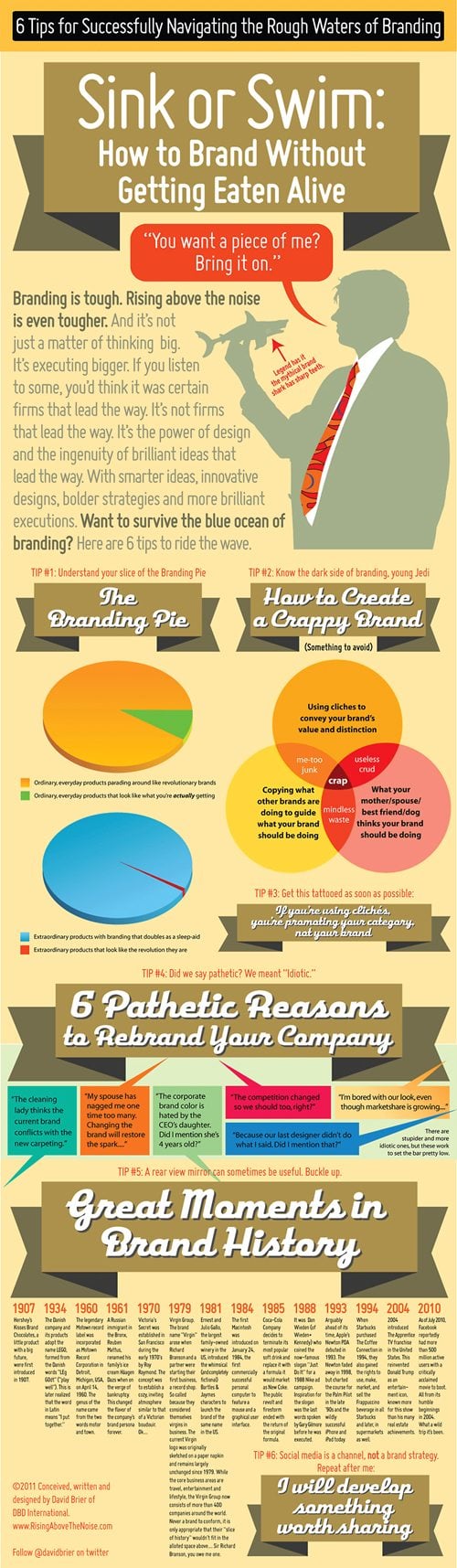
In today’s competitive business landscape, branding is more important than ever. Your brand is the face of your company, the first impression you make on potential customers, and a key driver of loyalty and trust. However, not all branding efforts are successful. In fact, there are many pitfalls that can lead to the creation of a “crappy” brand. In this blog post, we’ll explore six common mistakes businesses make in their branding efforts and how to avoid them.
1. Neglecting Research
One of the biggest mistakes businesses make when it comes to branding is neglecting thorough research. Your brand should not be based solely on your personal preferences or assumptions about your target audience. Instead, it should be rooted in solid research that includes:
- Market Research: Understand your industry, competitors, and market trends. What are your competitors doing with their branding, and what sets you apart?
- Customer Research: Who are your ideal customers? What are their needs, desires, and pain points? How does your product or service address these?
- Brand Audit: If you already have a brand, conduct a brand audit to evaluate its current perception and effectiveness. What’s working, and what isn’t?
- Trends and Insights: Stay up-to-date with industry trends and consumer insights. This will help you anticipate changes in customer preferences and stay relevant.
By neglecting research, you risk creating a brand that doesn’t resonate with your target audience or differentiate you from competitors. Take the time to gather data and insights before diving into branding.
2. Lack of Consistency
Consistency is a cornerstone of effective branding. Your brand should present a unified and cohesive image across all touchpoints, from your website and social media profiles to your marketing materials and customer interactions. Inconsistent branding sends mixed messages and can confuse potential customers.
To maintain consistency:
- Develop Brand Guidelines: Create clear brand guidelines that outline your logo usage, color palette, typography, tone of voice, and other brand elements. Share these guidelines with everyone in your organization and ensure they are followed consistently.
- Regularly Review and Update: As your business evolves, your branding may need to evolve too. Regularly review your brand guidelines and update them as necessary to ensure they reflect your current identity and goals.
- Train Your Team: Ensure that all employees are aware of and trained on your brand guidelines. From customer service representatives to marketing teams, everyone should understand how to represent your brand consistently.
Consistency builds trust and recognition. When customers see your brand consistently presented, they are more likely to remember and trust it.
3. Trying to Please Everyone
While it’s natural to want to appeal to a broad audience, trying to please everyone can be a major branding pitfall. In an effort to be all things to all people, your brand can become generic and forgettable.
Instead, focus on defining your target audience and crafting a brand that resonates with them. Understand that not everyone will be your ideal customer, and that’s okay. In fact, niching down and appealing strongly to a specific audience can often lead to greater success.
To avoid this pitfall:
- Create Buyer Personas: Develop detailed buyer personas to understand the characteristics, needs, and preferences of your ideal customers. Tailor your branding efforts to speak directly to these personas.
- Differentiate Yourself: Highlight what makes your brand unique and why it’s the best choice for your target audience. Don’t be afraid to stand out and take a bold stance in your industry.
- Don’t Water Down Your Message: Be clear about your brand’s values and mission. Don’t dilute your message in an attempt to be inoffensive to everyone. Authenticity and conviction can be powerful branding tools.
4. Ignoring Brand Storytelling
Storytelling is a powerful tool in branding. It helps create an emotional connection between your brand and your audience. Unfortunately, many businesses underestimate the importance of storytelling or fail to tell a compelling brand story.
Your brand story should answer questions like:
- Why does your business exist? Share the origin story of your company. What problem were you trying to solve, and how did it lead to the creation of your brand?
- What do you stand for? Define your brand values and principles. Explain why they matter and how they guide your business decisions.
- Who are the people behind the brand? Introduce the faces and personalities behind your company. Humanize your brand by showcasing the people who make it all happen.
- What’s the journey ahead? Give your audience a glimpse of the future. Where is your brand headed, and how can customers be a part of that journey?
By neglecting brand storytelling, you miss an opportunity to connect with your audience on a deeper level. Customers are not just buying products or services; they are buying into a story and a set of values.
5. Copying Competitors
In the pursuit of success, it can be tempting to imitate what seems to be working for your competitors. While it’s essential to stay informed about industry trends and competitive strategies, copying your competitors’ branding can lead to a lack of authenticity and differentiation.
Your brand should be a reflection of your unique identity and values. Instead of copying, focus on:
- Identifying Your Unique Selling Proposition (USP): What sets your business apart from competitors? Highlight your USP in your branding to showcase why customers should choose you.
- Staying True to Your Values: Build your brand around your core values and beliefs. Authenticity is a powerful magnet for customers who share your values.
- Innovating and Evolving: Don’t be afraid to break away from industry norms and try new approaches. Innovation can lead to a fresh and memorable brand identity.
While it’s essential to stay competitive, copying your competitors will only result in a generic brand that fails to stand out in the marketplace.
6. Neglecting Feedback and Adaptation
Finally, one of the most significant pitfalls in branding is neglecting feedback and adaptation. The world is constantly changing, and customer preferences evolve over time. If you fail to listen to your audience and adapt your brand accordingly, you risk becoming irrelevant.
Here’s how to avoid this pitfall:
- Listen to Customer Feedback: Pay attention to what your customers are saying about your brand. Their feedback can provide valuable insights into what’s working and what needs improvement.
- Monitor Industry Trends: Stay informed about industry trends and emerging technologies that may impact your brand. Don’t be afraid to adapt and embrace new approaches when necessary.
- Be Open to Change: Your brand is not set in stone. It should evolve and grow with your business. Be open to rebranding or refining your brand identity as needed.
- Test and Iterate: Experiment with different branding strategies and messages. Use A/B testing and data analysis to determine what resonates best with your audience.
In today’s fast-paced business environment, adaptability is key to long-term success. Brands that are willing to evolve and respond to changing circumstances are more likely to thrive.
Conclusion
Creating a successful brand is a complex and ongoing process that requires careful planning, research, and a commitment to authenticity. By avoiding these six common pitfalls—neglecting research, lacking consistency, trying to please everyone, ignoring brand storytelling, copying competitors, and neglecting feedback and adaptation—you can build a strong and memorable brand that resonates with your target audience and stands the test of time. Remember that your brand is not just a logo or a tagline; it’s the essence of your business and the promise you make to your customers.

Author:
Mark Ford

From Confusion to Clarity: How to Steer Your Marketing Away from These Frequent Errors
Are you struggling to make sense of your marketing strategy and wondering why your results aren’t matching your effort? Want to learn how to avoid the most common marketing mistakes and create a clear, focused plan that actually delivers results? […]

85 Game-Changing Tools for Creators, Marketers, and Entrepreneurs
Are you searching for powerful yet free tools to help you grow your brand, streamline your workflow, and boost your online presence? Want to discover game-changing platforms that every creator, marketer, and entrepreneur should be using right now? […]