

Are you just getting started with a marketing strategy for your new business? Want to create a buyer persona to ensure your campaigns hit the mark?
Domain.me share their guide to creating buyer persona in this infographic.
Here’s a quick summary:
- Determine demographics, psychographics and behaviour
- Locate them
- Connect with them
- Determine the right time to act
- Offer at the right time
Check out the infographic for more detail.
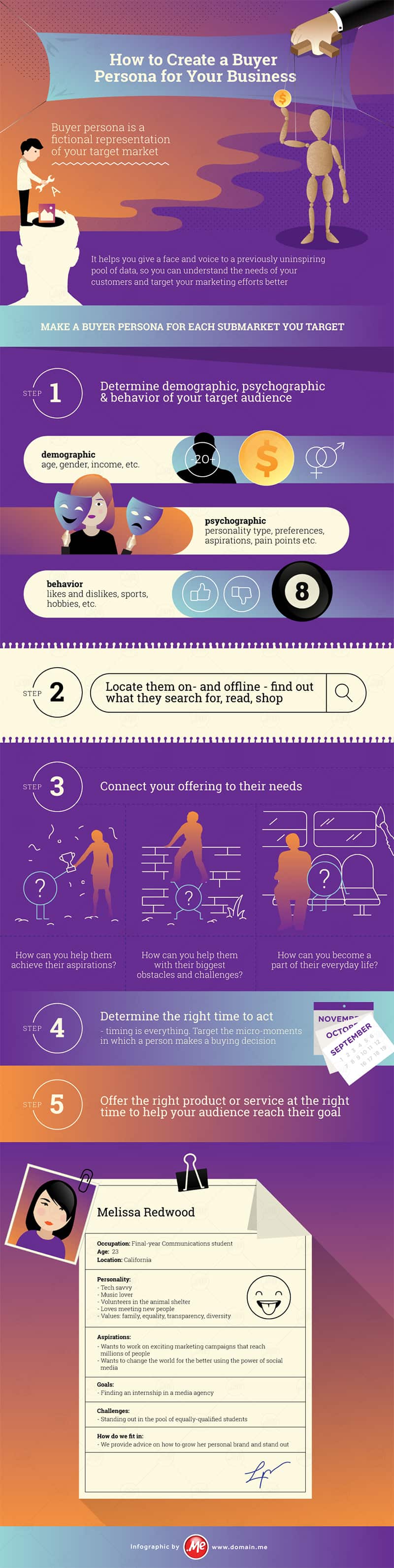
Understanding your audience is paramount to successful marketing. One of the most effective ways to achieve this is by creating a buyer persona—a semi-fictional representation of your ideal customer. A well-crafted buyer persona helps businesses tailor their marketing strategies, ensuring that messages resonate with the target audience. This post will guide you through the essential steps of creating a buyer persona, focusing on demographics, psychographics, behavior, locating your audience, connecting with them, determining the right time to act, and offering them the right products or services at the right moment.
Determine Demographics, Psychographics, and Behavior
Demographics
Creating a comprehensive buyer persona involves understanding three critical components: demographics, psychographics, and behavior. Here’s how small businesses can delve deeper into each aspect to create a well-rounded profile of their ideal customers.
- Demographics
Demographics provide essential statistical data that forms the backbone of your buyer persona. They are crucial for identifying your target audience and tailoring your marketing strategies accordingly.
In-Depth Tips:
- Age and Gender:
- Use tools like surveys or social media analytics to identify the age ranges and gender distribution of your customers.
- Tailor your marketing messages and visuals to appeal to these demographics. For example, younger audiences may respond better to vibrant, trendy designs, while older customers might prefer a more classic and sophisticated approach.
- Income Level:
- Determine the income brackets of your target audience. This information can help you decide on pricing strategies, product offerings, and promotional tactics.
- If your audience consists of higher-income individuals, consider premium pricing and exclusive offers. For lower-income segments, focus on affordability and value propositions.
- Education and Occupation:
- Understanding the education level and occupations of your target audience can guide your messaging. For instance, if your products are highly technical, you might want to create content that assumes a certain level of expertise.
- Use LinkedIn to gather information on the professions of your audience, especially if you’re targeting B2B customers.
- Location:
- Identify where your customers are located. This can inform local marketing strategies and ensure that your promotions are relevant to your audience’s geographical context.
- Utilize Google Analytics to track where your website traffic originates, helping you tailor your services or products to specific regions.
- Psychographics
Psychographics go beyond demographics by exploring the motivations, values, and lifestyles of your target audience. This information is invaluable for creating emotional connections through your marketing efforts.
In-Depth Tips:
- Interests and Hobbies:
- Conduct surveys or interviews to learn more about the interests and hobbies of your customers. This can guide your content marketing strategy and product development.
- For example, if you discover that a significant portion of your audience is passionate about sustainability, you could focus on eco-friendly products and content that highlights environmental benefits.
- Values and Beliefs:
- Understand what principles drive your audience’s decisions. Are they motivated by quality, price, innovation, or social responsibility? This knowledge can shape your brand’s messaging and positioning.
- Use storytelling to align your brand with your audience’s values. Share stories that demonstrate how your products or services contribute positively to the community or the environment.
- Lifestyle Choices:
- Analyze your audience’s lifestyles, including their daily routines, spending habits, and preferred communication channels.
- Consider creating lifestyle segments within your buyer persona. For instance, if you target busy parents, emphasize convenience in your product offerings and marketing campaigns.
- Pain Points:
- Identify common challenges or pain points your audience faces. This will allow you to tailor your products or services to solve these issues effectively.
- Engage with your audience through social media, surveys, or forums to gather insights into their frustrations. Use this information to create targeted marketing messages that speak directly to these challenges.
- Behavior
Understanding consumer behavior is essential for identifying patterns that can influence your marketing strategies. This includes their buying habits, online interactions, and how they engage with your brand.
In-Depth Tips:
- Purchase History:
- Analyze customer purchase data to identify trends in buying behavior. Look for patterns in what products are frequently bought together, which can help you develop effective cross-selling and upselling strategies.
- Use customer relationship management (CRM) tools to segment your audience based on purchase frequency and recency, enabling targeted marketing campaigns.
- Online Behavior:
- Utilize website analytics tools, such as Google Analytics, to understand how visitors interact with your site. Monitor metrics like page views, time spent on pages, and bounce rates to gauge interest levels in different content or products.
- Create heatmaps to visualize where users click on your site. This can inform website design improvements and help you optimize the customer journey.
- Feedback and Reviews:
- Actively seek customer feedback through surveys, reviews, and social media engagement. Analyzing this feedback can uncover insights into customer satisfaction, preferences, and areas for improvement.
- Monitor online reviews on platforms like Yelp or Google My Business. Responding to feedback—both positive and negative—can help build trust and show that you value customer opinions.
- Engagement Metrics:
- Track engagement metrics across your social media channels. This includes likes, shares, comments, and click-through rates. High engagement indicates that your content resonates with your audience.
- Use this data to refine your content strategy. For example, if video content receives significantly more engagement than written posts, consider incorporating more video into your marketing efforts.
Conclusion
By thoroughly understanding the demographics, psychographics, and behavior of your target audience, small businesses can create well-defined buyer personas that inform their marketing strategies. This comprehensive approach enables businesses to craft tailored messages, engage effectively with their audience, and ultimately drive better results.
Remember, buyer personas are not static; they evolve as market conditions and consumer behaviors change. Regularly revisiting and updating your personas ensures they remain relevant, helping you adapt your marketing strategies to meet the ever-changing needs of your audience.
Locate Them
Finding your target audience requires a strategic approach that combines research, analysis, and experimentation. Here are several detailed steps small businesses can take to pinpoint the locations of their ideal customers.
- Utilize Social Media Platforms
Social media is a powerful tool for locating your target audience. Each platform has unique demographics and user behaviors, allowing you to engage with different segments effectively.
In-Depth Tips:
- Identify the Right Platforms:
- Research which social media platforms your audience frequents. For example, younger audiences tend to favor platforms like TikTok and Instagram, while professionals may be more active on LinkedIn.
- Use tools like Pew Research Center’s social media demographics report to gather data on user demographics across various platforms.
- Engage in Relevant Groups:
- Join groups or forums related to your industry on platforms like Facebook or LinkedIn. Participate in discussions to understand your audience’s needs and pain points better.
- Offer valuable insights or advice within these groups to establish your expertise and build relationships.
- Leverage Social Listening Tools:
- Utilize social listening tools (e.g., Hootsuite, Brandwatch) to monitor conversations about your industry or brand. This can help identify where discussions are happening and what topics resonate with your audience.
- Track relevant hashtags to find potential customers discussing related topics. Engaging with these users can lead to increased visibility and potential conversions.
- Analyze Website Traffic
Your website can provide a wealth of information about where your audience is coming from and what content they are engaging with.
In-Depth Tips:
- Use Google Analytics:
- Set up Google Analytics to track where your website traffic originates. Look at metrics such as geographic location, referral sources, and behavior flow to understand how users interact with your site.
- Pay attention to the content that attracts the most traffic. This can indicate what topics or products resonate with your audience.
- Monitor User Behavior:
- Analyze user behavior on your website, including page views, time spent on pages, and conversion rates. High engagement with certain pages may signal that you should create more content or products related to those topics.
- Use tools like Hotjar or Crazy Egg to create heatmaps and session recordings. This visual data helps identify where users click and scroll, providing insights into their preferences.
- Conduct Surveys and Interviews
Directly asking your current customers and leads where they spend their time can yield valuable insights for locating your target audience.
In-Depth Tips:
- Create Targeted Surveys:
- Use tools like SurveyMonkey or Google Forms to create surveys asking your customers about their favorite social media platforms, websites, or communities. This data can guide your marketing efforts.
- Offer incentives for completing the survey, such as discounts or freebies, to encourage participation.
- Conduct Customer Interviews:
- Reach out to a selection of customers for one-on-one interviews. These conversations can provide deeper insights into their habits, preferences, and where they consume content.
- Ask open-ended questions to encourage detailed responses, such as “What blogs do you read regularly?” or “Where do you seek information before making a purchase?”
- Leverage Industry Research and Market Reports
Industry reports and market research can help you understand broader trends in your target audience’s behavior and preferences.
In-Depth Tips:
- Access Market Research Reports:
- Utilize resources like Statista, Nielsen, or IBISWorld for industry-specific reports that provide demographic and behavioral insights about your audience.
- Look for studies that highlight consumer behavior trends relevant to your niche. This information can guide your marketing strategy and help locate your audience.
- Subscribe to Relevant Publications:
- Follow industry blogs, journals, and newsletters that focus on your market. These sources often publish insights and data about consumer behavior that can inform your strategies.
- Engage with industry experts and thought leaders on social media to stay updated on trends and discussions that may help you locate your target audience.
- Explore Competitor Analysis
Analyzing your competitors can reveal valuable insights about where your target audience is active.
In-Depth Tips:
- Identify Competitor Channels:
- Research where your competitors are most active online. Check their social media profiles, blogs, and websites to see how they engage their audience.
- Use tools like SEMrush or SimilarWeb to analyze their website traffic sources and social media engagement.
- Evaluate Content Strategy:
- Examine the types of content that resonate with your competitors’ audiences. Look at the engagement levels on their blog posts, videos, and social media content.
- Consider adapting successful strategies that work for your competitors while adding your unique perspective.
- Use Email Marketing Analytics
If you already have an email marketing list, you can analyze your subscribers’ behavior to locate your audience more effectively.
In-Depth Tips:
- Segment Your Email List:
- Use segmentation to analyze different customer groups based on their interests, purchasing behavior, or engagement levels. This can provide insights into their preferred content and where they might be located online.
- A/B test different subject lines and content types to determine what resonates best with specific segments of your audience.
- Track Engagement Metrics:
- Monitor email open rates, click-through rates, and conversions. High engagement with specific content can indicate topics that interest your audience, helping you locate where they might spend time discussing similar themes.
- Encourage feedback from your email subscribers by asking questions or inviting them to share their preferences for future content.
Conclusion
Locating your target audience is a multifaceted process that requires a combination of research, analysis, and engagement. By leveraging social media, website analytics, surveys, market research, competitor analysis, and email marketing analytics, small businesses can effectively identify where their ideal customers spend their time. This knowledge allows for targeted marketing strategies, enhancing the potential for engagement and conversions.
Continuously monitor and adapt your approach as your audience evolves, ensuring your marketing efforts remain aligned with their preferences and behaviors. Remember, the more precisely you locate your audience, the more effectively you can connect with them and meet their needs.
Connect with Them
Building a genuine connection with your audience involves understanding their preferences and engaging with them through various channels. Below are detailed strategies small businesses can implement to establish strong connections.
- Create Authentic Content
Content is one of the most effective ways to connect with your audience. Authenticity in your messaging will resonate more deeply with potential customers.
In-Depth Tips:
- Share Your Brand Story:
- Craft a compelling narrative about your brand’s journey, values, and mission. Share this story across your website, social media, and marketing materials.
- Highlight personal anecdotes and challenges you’ve overcome. Authentic storytelling creates a connection that goes beyond products and services.
- Develop Relatable Content:
- Create content that speaks directly to your audience’s interests and pain points. This could be in the form of blog posts, videos, podcasts, or infographics.
- Use humor, empathy, or real-life scenarios to make your content relatable. For instance, if your business is in health and wellness, share customer success stories or testimonials.
- Be Transparent:
- Share behind-the-scenes content that shows your business’s human side. This could include employee stories, product development processes, or community involvement.
- Transparency fosters trust, which is vital for building long-term relationships with your audience.
- Engage on Social Media
Social media platforms are ideal for connecting with your audience in real-time and fostering a sense of community.
In-Depth Tips:
- Choose the Right Platforms:
- Identify the social media platforms your audience uses most frequently. Focus your efforts on those platforms to maximize engagement.
- Tailor your content for each platform. For example, use visually appealing images on Instagram, informative posts on LinkedIn, and interactive polls on Twitter.
- Encourage Interaction:
- Create posts that invite your audience to engage, such as asking questions, running polls, or encouraging comments.
- Respond to comments and messages promptly to show that you value their input. This interaction fosters a sense of community around your brand.
- Host Live Events:
- Utilize live streaming features on platforms like Instagram or Facebook to engage with your audience in real-time. This could include Q&A sessions, product launches, or behind-the-scenes tours.
- Promote these events in advance and encourage your audience to participate by asking them to submit questions beforehand.
- Personalize Your Communication
Personalization can significantly enhance your ability to connect with your audience. Tailoring your messages to meet individual preferences shows that you value them as unique customers.
In-Depth Tips:
- Segment Your Audience:
- Use customer data to segment your audience based on demographics, interests, and behaviors. This enables you to craft tailored messages for each segment.
- For example, if you run a clothing store, segment customers by purchase history (e.g., casual wear vs. formal wear) and send targeted promotions relevant to their preferences.
- Use Personalized Emails:
- Create personalized email campaigns that address customers by name and recommend products based on their past purchases or browsing behavior.
- Use dynamic content that adapts to the recipient’s preferences, making each email feel more relevant and engaging.
- Follow Up Meaningfully:
- After a purchase or interaction, send personalized follow-up messages thanking customers for their business or asking for feedback.
- Use customer relationship management (CRM) tools to automate these processes while maintaining a personal touch.
- Foster Community Engagement
Creating a sense of community around your brand can significantly enhance customer loyalty and connection.
In-Depth Tips:
- Build Online Communities:
- Create private groups on social media platforms where customers can connect, share experiences, and discuss topics related to your brand.
- Encourage discussions and facilitate interactions by posing questions or sharing relevant content within these groups.
- Host Local Events:
- Organize events, workshops, or meet-ups that bring your community together. This could be product launches, educational seminars, or fun social gatherings.
- Promote these events on social media and through email newsletters to maximize participation and visibility.
- Highlight User-Generated Content:
- Encourage your customers to share their experiences with your products on social media. Feature this content on your profiles to acknowledge and celebrate your community.
- Create branded hashtags that customers can use to tag their posts, helping you discover and engage with user-generated content.
- Provide Excellent Customer Service
Exceptional customer service is a critical component of connecting with your audience. It reinforces the idea that you care about their experience.
In-Depth Tips:
- Be Available:
- Make it easy for customers to reach you through multiple channels, such as phone, email, live chat, and social media. Promptly respond to inquiries to show that you value their time.
- Consider using chatbots for immediate responses, but ensure there’s a seamless transition to a human representative when necessary.
- Listen and Adapt:
- Actively listen to customer feedback and adapt your offerings based on their suggestions. This shows that you value their opinions and are committed to improving their experience.
- Use surveys and feedback forms to gather insights and identify areas for improvement.
- Go the Extra Mile:
- Surprise and delight your customers with unexpected gestures, such as personalized thank-you notes, small gifts, or exclusive discounts.
- Highlight stories of exceptional customer service on your website or social media to showcase your commitment to customer satisfaction.
- Utilize Content Marketing
Content marketing is a powerful way to establish connections with your audience by providing valuable information and insights.
In-Depth Tips:
- Educate Your Audience:
- Create educational content that addresses your audience’s questions, challenges, and interests. This could include blog posts, ebooks, webinars, or video tutorials.
- Position your brand as a thought leader in your industry by providing insightful content that helps your audience make informed decisions.
- Offer Solutions:
- Develop content that directly addresses your audience’s pain points. This can help you establish a connection by demonstrating that you understand their needs.
- Use case studies or success stories to show how your products or services have made a difference in customers’ lives.
- Encourage User Interaction:
- Incorporate interactive elements in your content, such as quizzes, polls, or comment sections, to foster engagement and connection.
- Ask open-ended questions within your content to prompt discussions and invite feedback from your audience.
Conclusion
Connecting with your target audience requires a strategic and multifaceted approach that combines authenticity, engagement, personalization, community-building, customer service, and valuable content. By implementing these strategies, small businesses can create meaningful relationships that enhance customer loyalty and drive business success.
Regularly assess the effectiveness of your connection strategies and be open to adapting your approach as your audience evolves. The more you understand and connect with your audience, the more successful your marketing efforts will be. Remember, genuine connections lead to lasting relationships and, ultimately, increased conversions and brand loyalty.
Determine the Right Time to Act
Identifying the optimal time to engage with your audience can enhance the effectiveness of your marketing efforts and improve your conversion rates. Here are several strategies to help you determine when to take action.
- Analyze Customer Behavior Patterns
Understanding your customers’ behavior patterns can provide valuable insights into when they are most likely to engage with your brand.
In-Depth Tips:
- Utilize Analytics Tools:
- Use tools like Google Analytics, social media insights, and CRM software to gather data on your audience’s online behavior. Look for trends in page views, clicks, and engagement rates.
- Pay attention to the times of day and days of the week when your audience is most active. This can help you schedule your posts, email campaigns, and promotions for maximum impact.
- Monitor Purchase Patterns:
- Analyze your sales data to identify seasonal trends, peak buying times, and popular products. This information can guide your promotional strategies and inventory management.
- For instance, if you notice that sales increase during specific months or holidays, consider launching targeted campaigns around those times.
- Conduct Customer Surveys:
- Survey your customers to gather information about their buying habits and preferences. Ask them about their preferred times for receiving promotional messages or engaging with your content.
- Use this feedback to tailor your marketing strategies to align with their preferences.
- Leverage Seasonal Trends and Events
Seasonal trends and events can create timely opportunities for your marketing efforts. Aligning your campaigns with these events can enhance relevance and engagement.
In-Depth Tips:
- Create a Marketing Calendar:
- Develop a marketing calendar that outlines key dates, holidays, and events relevant to your audience. This could include industry-specific events, local festivals, or national holidays.
- Plan campaigns and promotions around these dates, ensuring you capitalize on heightened consumer interest during these periods.
- Tap into Industry Trends:
- Stay informed about trends within your industry or niche. Participate in industry events, trade shows, and conferences to understand the timing of new product launches or market shifts.
- Use insights from industry reports and social media trends to time your marketing actions effectively.
- Seasonal Promotions:
- Create seasonal promotions that resonate with your audience. For example, if you run a retail business, consider launching summer sales or holiday-themed campaigns.
- Tailor your messaging and visuals to match the season, making your promotions feel timely and relevant.
- Monitor Competitor Activities
Keeping an eye on your competitors can help you identify the best times to act in your marketing strategy.
In-Depth Tips:
- Analyze Competitor Campaigns:
- Monitor your competitors’ marketing campaigns, promotions, and social media activity. Take note of when they launch campaigns or announce new products.
- Identify any patterns in their timing that may indicate successful strategies or missed opportunities.
- Leverage Competitive Analysis Tools:
- Use competitive analysis tools like SEMrush, SpyFu, or SimilarWeb to gather insights about your competitors’ traffic sources, keywords, and ad campaigns.
- This information can help you identify gaps in your own strategy and determine when to launch your initiatives for maximum impact.
- Identify Industry Standards:
- Research industry benchmarks to understand common practices regarding timing and promotional strategies. This can help you gauge the effectiveness of your timing compared to industry standards.
- Use Behavioral Trigger Points
Behavioral triggers are specific actions or events that prompt you to engage with your audience at critical moments in their customer journey.
In-Depth Tips:
- Implement Automated Email Campaigns:
- Set up automated email campaigns triggered by specific customer behaviors, such as cart abandonment, post-purchase follow-ups, or product recommendations.
- For example, if a customer leaves items in their cart, send a reminder email within a few hours, potentially offering a discount to encourage conversion.
- Create Targeted Retargeting Ads:
- Utilize retargeting ads to reach users who have interacted with your website or social media but have not converted. Timing these ads based on their behavior can increase conversion rates.
- For example, if a user visits a product page but doesn’t make a purchase, show them retargeting ads for that product within a few days.
- Utilize Event-Based Marketing:
- Capitalize on key events in your customers’ lives, such as birthdays, anniversaries, or significant life changes (e.g., graduating, moving).
- Send personalized messages or offers tied to these events to create timely connections and encourage purchases.
- Test and Optimize Timing Strategies
Continuous testing and optimization are crucial for refining your timing strategies. Experiment with different approaches to identify what works best for your audience.
In-Depth Tips:
- A/B Testing:
- Conduct A/B tests to evaluate the effectiveness of different timing strategies. For example, test sending emails at various times of the day or on different days of the week.
- Analyze open rates, click-through rates, and conversions to determine the optimal timing for your communications.
- Monitor Results and Adjust:
- Regularly review the performance of your marketing campaigns to assess the effectiveness of your timing. Use analytics tools to measure engagement and conversion metrics.
- If certain campaigns or promotions do not yield the expected results, be prepared to adjust your timing strategies based on the insights gathered.
- Stay Agile:
- The market is constantly evolving, and consumer behaviors can change. Stay adaptable by being open to adjusting your timing strategies as needed.
- Keep an eye on emerging trends, changes in customer preferences, and feedback to remain relevant and timely in your marketing efforts.
Conclusion
Determining the right time to act in your marketing strategy is crucial for maximizing engagement and driving conversions. By analyzing customer behavior, leveraging seasonal trends, monitoring competitors, utilizing behavioral triggers, and continuously testing your strategies, small businesses can effectively connect with their audience at the optimal moments.
Adapting to the timing of your audience’s needs and preferences will not only enhance your marketing effectiveness but also foster stronger relationships with your customers. By remaining vigilant and flexible, you can ensure that your marketing efforts resonate with your audience, leading to greater success for your business.
Offer at the Right Time
Timing your offers correctly requires a strategic approach that takes into account customer behavior, market conditions, and seasonal trends. Here are several strategies for effectively timing your offers to maximize their impact.
- Understand Your Audience’s Needs
Before making an offer, it’s crucial to have a deep understanding of your target audience’s needs and preferences. This understanding will help you create offers that resonate with them at the right time.
In-Depth Tips:
- Conduct Market Research:
- Use surveys, interviews, and focus groups to gather insights about your customers’ preferences, pain points, and buying triggers. Understand when they are most likely to be in the market for your products or services.
- Analyze customer feedback and reviews to identify common themes or issues that your products can address.
- Segment Your Audience:
- Divide your audience into segments based on demographics, behaviors, and purchase history. This will allow you to tailor your offers to specific groups at the most opportune times.
- For example, if you run a fitness business, you might target new members with a special offer during the New Year when many people are looking to start fitness resolutions.
- Create Buyer Personas:
- Develop detailed buyer personas that represent your ideal customers. These personas should include information about their motivations, challenges, and preferred shopping times.
- Use these personas to guide your offer strategies and ensure your promotions align with your audience’s needs.
- Leverage Timing Triggers
Timing triggers are specific moments or events that can prompt you to make an offer. Recognizing these triggers allows you to engage with your audience when they are most receptive.
In-Depth Tips:
- Seasonal and Holiday Offers:
- Align your offers with seasonal trends and holidays relevant to your industry. For example, retailers often offer discounts during the holiday shopping season or back-to-school promotions.
- Tailor your messaging and visuals to reflect the holiday spirit, enhancing the emotional connection with your audience.
- Customer Milestones:
- Take note of customer milestones such as anniversaries, birthdays, or loyalty program milestones. Use these occasions to send personalized offers that make customers feel valued.
- For example, if you run a subscription service, offer a special discount on a customer’s anniversary of signing up.
- Market Events:
- Stay informed about industry events, trade shows, or local happenings that might influence customer buying behavior. Use these events as opportunities to launch targeted offers.
- For example, if there’s a local festival or community event, consider offering promotions to attendees.
- Create Urgency with Time-Limited Offers
Time-limited offers can create a sense of urgency and encourage customers to act quickly. By incorporating deadlines into your promotions, you can increase the likelihood of conversions.
In-Depth Tips:
- Flash Sales:
- Implement flash sales that last for a short period, such as 24 hours or a weekend. Promote these sales through email and social media to generate buzz and excitement.
- Ensure that your messaging clearly communicates the urgency and exclusivity of the offer.
- Countdown Timers:
- Use countdown timers on your website or in your marketing emails to visually convey the time left to take advantage of an offer. This can motivate customers to act quickly.
- Highlight the benefits of acting before the timer runs out to encourage immediate action.
- Limited Stock Alerts:
- If you have limited inventory for a particular product, highlight this in your marketing messages. Use phrases like “Only 5 left!” to create urgency and encourage purchases.
- This tactic can be particularly effective for seasonal items or exclusive collections.
- Personalize Your Offers
Personalization can significantly enhance the effectiveness of your offers. By tailoring promotions to individual customers, you can create a more meaningful and relevant experience.
In-Depth Tips:
- Use Customer Data:
- Leverage customer data to create personalized offers based on previous purchases, browsing history, or engagement levels. Tailor your messaging to align with their interests.
- For example, if a customer frequently purchases fitness apparel, send them a targeted offer for a new collection.
- Dynamic Email Content:
- Implement dynamic content in your email marketing campaigns, allowing you to show different offers to different segments of your audience based on their behavior.
- This approach ensures that recipients receive offers that are most relevant to them, increasing the likelihood of conversion.
- Follow-Up Offers:
- After a customer makes a purchase, consider sending a follow-up offer related to their purchase. This could be a discount on complementary products or services.
- Following up shortly after their purchase reinforces the value of their decision and encourages additional spending.
- Analyze and Optimize Timing Strategies
Continuously analyzing the performance of your offers will help you refine your timing strategies and improve future campaigns.
In-Depth Tips:
- Track Key Metrics:
- Monitor key performance metrics such as conversion rates, click-through rates, and customer engagement levels for each offer. This data will help you evaluate the effectiveness of your timing strategies.
- Use A/B testing to compare different timing approaches and identify what resonates best with your audience.
- Gather Feedback:
- Collect feedback from customers about their experience with your offers. This could include surveys asking them about their motivations for purchasing or their impressions of the promotion.
- Use this feedback to identify areas for improvement and make adjustments to your timing strategies accordingly.
- Stay Flexible:
- Market conditions and consumer behaviors can change over time. Be prepared to adapt your timing strategies based on new insights and trends.
- Regularly review your marketing efforts and adjust your approach to ensure continued relevance and effectiveness.
Conclusion
Offering your products or services at the right time is a critical factor in maximizing engagement and driving conversions. By understanding your audience’s needs, leveraging timing triggers, creating urgency, personalizing offers, and analyzing performance, small businesses can effectively time their offers for optimal impact.
Being strategic about when and how you present your offers not only enhances the customer experience but also fosters loyalty and encourages repeat business. With a proactive approach to timing your offers, you can create compelling promotions that resonate with your audience and drive results for your business.
Conclusion
Creating a buyer persona is a crucial step in developing a successful marketing strategy. By understanding the demographics, psychographics, and behavior of your audience, you can create targeted content that resonates with them. Locating your audience, connecting with them, and determining the right time to act are all essential components of this process.
Remember that buyer personas are not static; they evolve as market trends and consumer behaviors change. Regularly revisit and update your buyer personas to ensure they remain relevant to your business goals. By following these steps, you can develop a comprehensive understanding of your target audience, ultimately leading to more effective marketing strategies and business success.

Author:
Mark Ford