In the ever-evolving landscape of digital marketing, one strategy stands out above the rest when it comes to generating buzz and reaching a massive audience: viral marketing. A viral marketing campaign has the potential to catapult your brand, product, or message into the spotlight, creating a wildfire of interest and engagement.
But how do you create a viral marketing campaign that captivates the masses? In this comprehensive guide, we’ll break down the seven essential steps to crafting a viral marketing campaign that gets people talking and sharing.
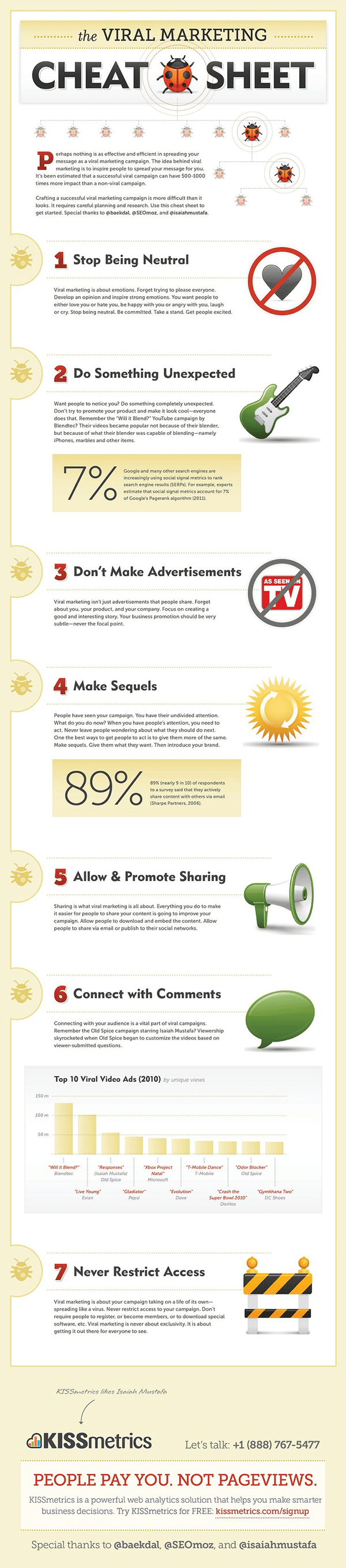
There isn’t a magic formula for going viral though (otherwise we would all be doing it), but there are certain common factors to any viral marketing campaign you can use to increase your chances. KISSmetrics have summed up 7 of these factors in the infographic below.
Step 1: Define Your Audience
Before you embark on any marketing campaign, it’s crucial to understand your target audience inside and out. A viral marketing campaign will only succeed if it resonates with your audience’s interests, values, and preferences. Start by creating detailed buyer personas that encompass demographic information, psychographic traits, and online behavior.
- Demographics: Gather data on your audience’s age, gender, location, income level, and other relevant demographics. This information will help you tailor your campaign’s messaging and content to suit their characteristics.
- Psychographics: Dive deeper into your audience’s interests, beliefs, hobbies, and lifestyle. What are their pain points, aspirations, and values? Understanding their psychographics will enable you to create content that emotionally connects with them.
- Online Behavior: Analyze where your audience spends their time online. Are they active on social media platforms like Facebook, Instagram, or TikTok? Do they frequent forums, blogs, or specific websites? Knowing their online behavior will help you choose the right channels for your campaign.
Step 2: Craft Shareable Content
The heart of any viral marketing campaign is shareable content. To inspire people to share your content, it must be remarkable, entertaining, or valuable. Here are some key elements to consider when crafting shareable content:
- Emotion: Content that evokes strong emotions, whether it’s humor, awe, anger, or inspiration, is more likely to be shared. Think about how your content can trigger emotional responses in your audience.
- Storytelling: Humans are hardwired for storytelling. Craft a compelling narrative that engages your audience from beginning to end. Consider using storytelling techniques like a hero’s journey, relatable characters, and plot twists.
- Visual Appeal: Incorporate visually appealing elements such as images, videos, infographics, and memes. Visual content tends to be more shareable and memorable.
- Surprise Factor: Incorporate an element of surprise or the unexpected into your content. It can pique curiosity and make people want to share it to surprise their friends.
- Utility: Offer practical value to your audience. Create content that solves a problem or provides useful information. People are more likely to share content that benefits others.
- User-Generated Content: Encourage your audience to participate by creating and sharing their content related to your campaign. User-generated content can amplify your reach and credibility.
Step 3: Choose the Right Platforms
Not all social media platforms are created equal when it comes to virality. Each platform has its unique user base and content format. To maximize the chances of your campaign going viral, choose the right platforms strategically:
- Facebook: Ideal for sharing longer-form content, videos, and engaging with a diverse audience. Consider using Facebook Ads to boost your campaign’s visibility.
- Instagram: Great for visual content, especially images and short videos. Utilize hashtags to increase discoverability and engagement.
- Twitter: Ideal for real-time updates, trending topics, and concise messages. Use trending hashtags to tap into ongoing conversations.
- TikTok: Perfect for short, entertaining videos and challenges. TikTok trends can quickly propel your campaign to viral status.
- YouTube: If your campaign involves in-depth tutorials, product demonstrations, or storytelling through video, YouTube is a valuable platform.
- LinkedIn: Suitable for B2B campaigns and professional content sharing. Focus on thought leadership and industry-related content.
- Reddit: Engage in relevant subreddits to share your content. Be cautious, as Reddit users are known for their discerning taste and aversion to overt marketing.
Step 4: Create a Hook
The “hook” is the element of your campaign that grabs people’s attention and makes them want to share it. A successful hook can take various forms:
- Controversy: Controversial content often sparks heated discussions and sharing. However, be careful not to cross ethical or sensitive boundaries.
- Humor: People love to laugh and share funny content. Create humorous videos, memes, or clever wordplay that aligns with your campaign’s message.
- Challenge: Design a challenge or competition that encourages participation and sharing. The ALS Ice Bucket Challenge is a classic example of this approach.
- Influencers: Collaborate with influencers in your niche to promote your campaign. Their endorsement can lend credibility and reach to your content.
- Timeliness: Tap into current events, trends, or holidays to make your content relevant and timely.
- Storytelling: Craft a compelling narrative that captivates your audience from the beginning and keeps them engaged until the end.
- Mystery: Create intrigue by teasing your audience with cryptic messages or hints about what’s to come. People love solving mysteries and sharing their discoveries.
Step 5: Leverage User Engagement
Encourage user engagement to amplify the reach of your viral marketing campaign:
- Hashtags: Create a unique and memorable hashtag associated with your campaign. Encourage your audience to use it when sharing related content.
- Comments and Discussions: Foster discussions and comments on your content. Respond to comments promptly to keep the conversation going.
- Share Buttons: Make it easy for users to share your content by including social sharing buttons on your website or within your app.
- Incentives: Offer incentives for sharing, such as discounts, exclusive access, or the chance to win prizes.
- Gamification: Turn your campaign into a game or contest, where users earn points or rewards for participation and sharing.
- Feedback and User-Generated Content: Encourage users to provide feedback, testimonials, or user-generated content related to your campaign.
Step 6: Monitor and Adjust
A viral marketing campaign is not a set-and-forget endeavor. It requires continuous monitoring and adjustment to optimize its performance:
- Analytics: Use analytics tools to track the progress of your campaign. Monitor key metrics like shares, likes, comments, and conversion rates.
- A/B Testing: Experiment with different elements of your campaign, such as headlines, visuals, and calls to action. A/B testing can help you identify what resonates best with your audience.
- Feedback: Listen to the feedback from your audience and adjust your campaign accordingly. Be open to making changes based on what your audience is saying.
- Scaling: If your campaign shows signs of going viral, be prepared to scale up your efforts to meet the increased demand. Ensure that your website, servers, and customer support can handle the influx of traffic and inquiries.
Step 7: Measure Success and Learn
Once your viral marketing campaign has run its course, it’s time to measure its success and extract valuable insights for future campaigns:
- ROI Analysis: Calculate the return on investment (ROI) of your campaign by comparing the costs incurred with the revenue generated or the increase in brand awareness.
- Audience Insights: Analyze the demographic and psychographic data of the audience that engaged with your campaign. Use this information to refine your buyer personas.
- Content Performance: Identify which pieces of content performed the best and why. What elements made them shareable and engaging?
- Feedback and Surveys: Solicit feedback from your audience through surveys or social media polls. Ask them what they liked and disliked about the campaign.
- Competitive Analysis: Study the viral campaigns of your competitors to gain insights into what works in your industry.
- Documentation: Document the key learnings from your campaign, including what worked and what didn’t. Use this knowledge to inform your future marketing strategies.
In conclusion, creating a viral marketing campaign is not an exact science, but by following these seven steps, you can significantly increase your chances of success. Remember that virality is a combination of great content, strategic promotion, and a bit of luck. By understanding your audience, crafting shareable content, choosing the right platforms, creating a compelling hook, encouraging user engagement, monitoring and adjusting, and measuring success, you can set the stage for a campaign that captures the imagination of the online world and propels your brand to new heights of recognition and success.

Author:
Mark Ford

The Essential Marketing Toolkit: 19 Tools Every Modern Marketer Should Know About
Are you looking for the most effective tools to streamline your marketing, boost creativity, and save time? Want to discover the must-have platforms that every modern marketer should be using to stay ahead of the competition? […]