
Are you worried your marketing habits might be turning potential customers away? Want to know which common mistakes could be quietly damaging your brand—and how to fix them?
You’ll find some marketing basics in this infographic.
Here’s a summary of what’s covered:
- Creating Ugly Content
- Being Boring
- Not Monitoring Social Media
- Bad Automation
- Bad Targeting
- Misleading Messages
- Copyright Infringement
- Email Spamming
- Interruptive Marketing
Check out the post below for more.
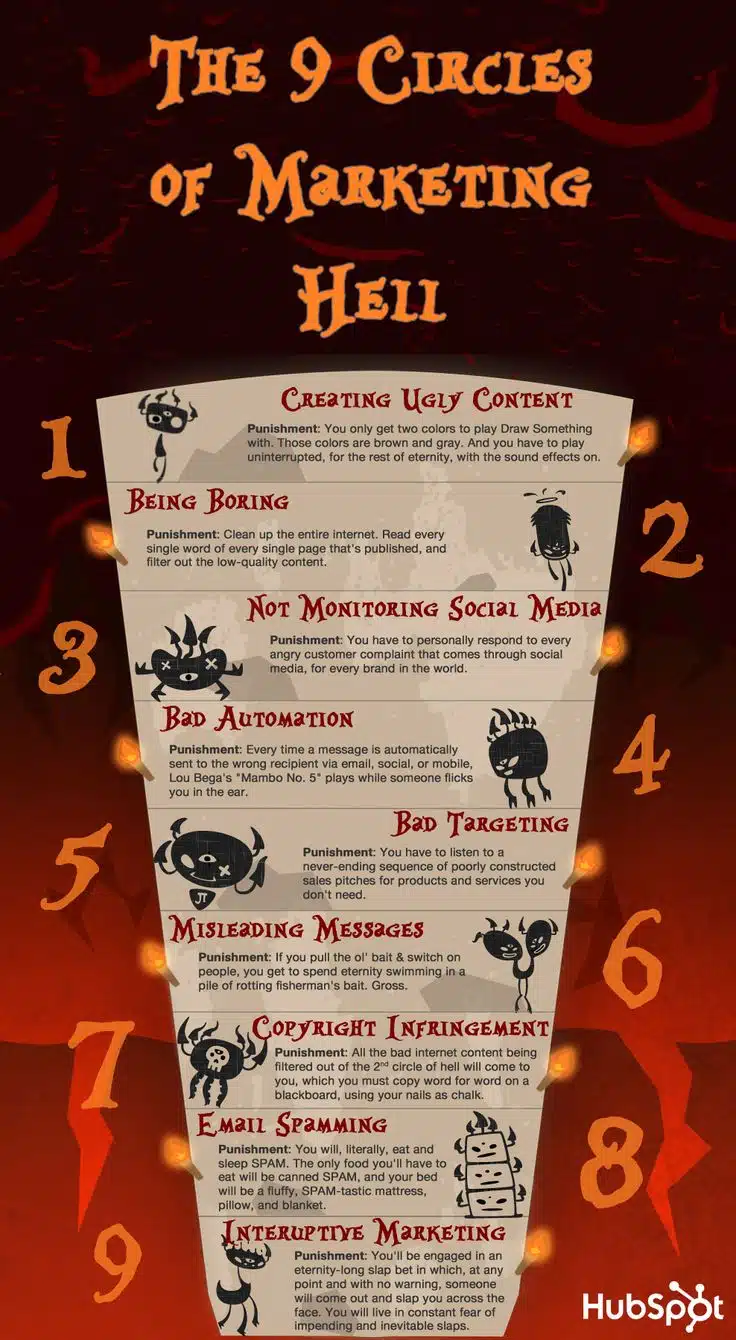
Marketing has the power to build connections, drive growth, and inspire loyalty—but only when it’s done right. Unfortunately, some marketers fall into bad habits that alienate audiences, damage reputations, and undermine everything good marketing stands for. These aren’t just minor slip-ups; they’re behaviours that can quietly kill engagement and credibility. If you’re guilty of any of the following, now is the time to stop.
Here are nine common marketing habits that do far more harm than good—and how to break them for good.
Creating Ugly Content
First impressions matter more than ever. When your visuals are cluttered, inconsistent, or hard to read, your message gets lost—no matter how good it is. Design isn’t just decoration; it’s communication. Clean, appealing, well-structured content gives your audience a reason to stay.
- Stick to a consistent colour palette and typeface for all materials.
- Prioritise white space and readability over flashy elements.
- Use high-quality images and avoid pixelated or generic stock photos.
- Invest in professional templates or design help if needed.
Being Boring
Bland content won’t win anyone’s attention. If your brand voice lacks energy, personality, or relevance, people will scroll past without a second thought. Even technical or serious topics can be delivered in a way that’s engaging and memorable. Make sure your marketing reflects the unique character of your brand.
- Use storytelling techniques to bring content to life.
- Speak directly to your audience using conversational language.
- Ask thought-provoking questions to invite engagement.
- Don’t be afraid to inject humour or personality into your copy.
Not Monitoring Social Media
Social media isn’t just a broadcast channel—it’s where people expect brands to listen and respond. Ignoring mentions, messages, or complaints sends the signal that you don’t care. It only takes one missed interaction to lose trust or damage your reputation publicly.
- Set up alerts to track brand mentions and relevant hashtags.
- Check notifications and direct messages daily, including weekends.
- Respond promptly to both positive and negative comments.
- Use a social media management tool to streamline monitoring.
Bad Automation
Automation should enhance your marketing—not sabotage it. Poorly timed emails, irrelevant messages, or repetitive sequences can irritate recipients and drive unsubscribes. To succeed with automation, you need logic, timing, and a clear understanding of user behaviour.
- Regularly audit your automation flows for accuracy and relevance.
- Personalise messages based on user behaviour and data.
- Add delay and condition rules to avoid overwhelming recipients.
- Always test sequences before going live.
Bad Targeting
Even the best content falls flat when it reaches the wrong audience. Irrelevant ads or messages lead to wasted budget, low engagement, and brand fatigue. Targeting isn’t just about demographics—it’s about understanding needs, behaviours, and intent.
- Build buyer personas that go beyond age and gender.
- Use segmentation to tailor messages to specific audience groups.
- Review performance data to refine your targeting strategy.
- Avoid assumptions—validate your audience insights regularly.
Misleading Messages
Marketing should build trust, not break it. Exaggerated claims, clickbait titles, or vague product descriptions might drive a short-term spike, but they destroy credibility over time. Transparency and clarity should be the foundation of your messaging.
- Focus on benefits, but avoid overpromising results.
- Make your calls-to-action clear and honest.
- Back up claims with evidence like testimonials or data.
- Avoid using manipulative language just to attract clicks.
Copyright Infringement
Sharing someone else’s work without permission doesn’t just risk legal trouble—it shows a lack of respect for the creative community. Whether it’s a photo, infographic, or written piece, always make sure you have the right to use it. Originality is key to building a trustworthy brand.
- Use royalty-free or licensed media from reputable sources.
- Always credit creators when required by licence terms.
- Consider creating your own visuals and graphics in-house.
- Educate your team on proper copyright practices.
Email Spamming
Sending emails too frequently or to people who didn’t ask for them is a fast track to being marked as spam. Once you’ve damaged your sender reputation, it’s hard to recover. Respect inboxes by focusing on value, not volume.
- Make sure recipients have clearly opted in.
- Allow users to easily update their preferences or unsubscribe.
- Focus on delivering helpful, timely, and relevant content.
- Space out emails and monitor engagement metrics closely.
Interruptive Marketing
Nobody likes being interrupted—especially not with irrelevant or aggressive ads. Whether it’s pop-ups, autoplay videos, or intrusive banners, these tactics annoy rather than persuade. Marketing should be seamless and respectful, not disruptive.
- Avoid full-screen pop-ups that block content immediately.
- Use exit-intent or time-delayed messages more strategically.
- Don’t autoplay sound or video without user control.
- Focus on contextual placements that add value, not clutter.
Conclusion
Being a great marketer isn’t about avoiding mistakes—it’s about learning from them and striving to do better. These nine habits are common, but that doesn’t mean they’re acceptable. By identifying where your marketing may have gone astray and taking active steps to improve, you can rebuild trust, boost engagement, and set your brand apart for all the right reasons.
Don’t be that marketer. Be the one who listens, adapts, and always aims to make things better.

Author:
Mark Ford

10 New Year’s Marketing Resolutions to Grow a Small Business Sustainably
Are you struggling to make your marketing efforts deliver steady growth instead of short bursts of activity? Wondering how to build a marketing approach that supports your small business over the long term without constant trial and error? […]
10 Marketing Trends for 2026: What Smart Businesses Will Focus On Next
Are you looking to understand how marketing is shifting in 2026 and what today’s smartest brands are prioritising? Want to know which strategic trends will shape how businesses attract, convert, and retain customers over the next year? […]
How to Build a Marketing Technology Stack That Actually Works Together
Are you trying to figure out how to connect your marketing tools so they actually support each other instead of working in isolation? Want to understand the key steps to building a marketing technology stack that runs smoothly across your entire customer journey? […]