
Are you in the process of starting an Ecommerce website? Do you fully understand the behaviour of your ideal shoppers?
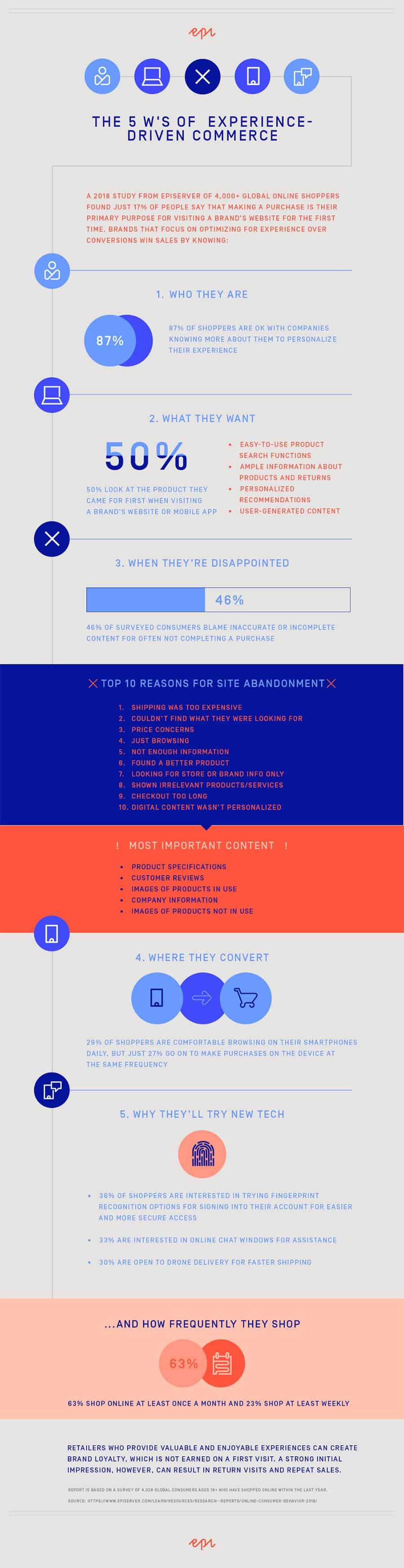
Episerver share 5 things you should know about your customers in this infographic.
Here’s a quick summary:
- Who they are
- What they want
- When they’re disappointed
- Where they convert
- Why they’ll try new tech
Check out the infographic for more detail.
Starting an online shop is an exciting venture, brimming with opportunities to reach a global audience and grow your business beyond physical boundaries. However, success in the e-commerce world hinges on a deep understanding of your customers. Before you launch, here are five crucial aspects you need to know about your customers to ensure your online shop not only attracts visitors but converts them into loyal customers.
Who They Are
Understanding who your customers are is the cornerstone of any successful online shop. Small businesses, in particular, must have a deep and nuanced understanding of their target audience to tailor their products, marketing strategies, and customer experiences effectively. Here’s an expanded guide on how small businesses can get to know their customers better.
- Demographic Analysis
Age: Different age groups have varying preferences and purchasing behaviors. Young adults might prefer trendy, cost-effective items, while older adults might prioritize quality and brand reputation. Use tools like Google Analytics, social media insights, and customer surveys to gather data on the age range of your audience.
Gender: Gender can influence buying behavior significantly. While it’s essential not to stereotype, understanding gender trends can help in product selection and marketing messaging. For instance, a fashion retailer might notice different styles or types of clothing preferred by different genders.
Income Level: Income affects purchasing power and can dictate the price range of products your audience is likely to buy. High-income customers might look for premium, luxury items, while those with lower incomes might seek out value-for-money products. Segmenting your audience based on income allows for more targeted marketing and product offerings.
Education and Occupation: These factors provide insight into the interests and lifestyle of your customers. For example, a tech gadget store might find that their customers are often in tech-related professions or have higher education levels, indicating a familiarity with and interest in technology.
Geographic Location: Knowing where your customers are located helps in tailoring your offerings to their specific needs. Climate, culture, and local trends can significantly influence purchasing decisions. For instance, a business selling winter apparel might focus more on regions with colder climates.
- Psychographic Profiling
Lifestyle: Understanding the lifestyle of your customers helps in curating products and marketing messages that resonate with them. If your target market includes fitness enthusiasts, you might focus on promoting activewear, sports equipment, and health supplements.
Values and Beliefs: Values influence purchasing decisions deeply. Customers who prioritize sustainability, for example, will appreciate eco-friendly products and ethical business practices. Aligning your brand with these values can build strong customer loyalty.
Interests and Hobbies: Identifying common interests and hobbies among your customers allows you to tailor your products and marketing efforts. A business selling cooking equipment would benefit from knowing if their customers are home chefs, food bloggers, or professional cooks.
Personality Traits: Personality traits such as being adventurous, cautious, or tech-savvy can affect how customers interact with your brand. For example, adventurous customers might be drawn to bold, new products, while cautious customers might prefer tried-and-true classics.
- Behavioral Data
Purchase History: Analyze past purchase data to identify trends and preferences. This can help in predicting future purchases and tailoring marketing efforts. For instance, if a customer frequently buys skincare products, you can recommend new skincare items or offer loyalty discounts.
Browsing Behavior: Track how customers navigate your website. Which pages do they visit most? What products do they view but not purchase? This data helps in optimizing your website layout and product recommendations to enhance user experience and increase conversions.
Engagement Levels: Measure how customers interact with your brand across different channels. High engagement on social media might indicate a strong brand affinity, while frequent email opens and clicks suggest effective email marketing. Use this information to tailor your communication strategies.
Feedback and Reviews: Customer feedback and reviews provide direct insights into their preferences and pain points. Encourage customers to leave reviews and conduct regular surveys to gather this valuable information. Addressing negative feedback promptly and effectively can also improve customer satisfaction and loyalty.
- Tools and Techniques for Gathering Customer Data
Surveys and Questionnaires: Create surveys to ask specific questions about demographics, preferences, and behaviors. Tools like SurveyMonkey and Google Forms make it easy to design and distribute surveys. Offer incentives, such as discounts or entry into a giveaway, to encourage participation.
Social Media Insights: Social media platforms provide robust analytics tools that offer insights into your followers’ demographics, interests, and engagement levels. Use these tools to understand which content resonates most with your audience and tailor your social media strategy accordingly.
Google Analytics: This free tool is essential for understanding your website traffic. It provides data on visitor demographics, behavior, and conversion paths. Use this information to optimize your website and marketing campaigns.
Customer Relationship Management (CRM) Systems: CRM systems like HubSpot, Salesforce, and Zoho help in managing customer interactions and storing valuable customer data. They enable you to track purchase history, communication, and engagement, providing a comprehensive view of each customer.
Heatmaps and Session Recordings: Tools like Hotjar and Crazy Egg provide heatmaps and session recordings, showing where users click, scroll, and spend the most time on your website. This information helps in understanding user behavior and improving website usability.
- Creating Customer Personas
Once you’ve gathered and analyzed your customer data, the next step is to create detailed customer personas. Customer personas are semi-fictional representations of your ideal customers based on real data and insights. Here’s how to create effective personas:
Name and Background: Give each persona a name and background to make them more relatable. Include details like age, occupation, income level, and location.
Demographics: Summarize the demographic data you’ve collected, such as age range, gender, education level, and marital status.
Psychographics: Detail the lifestyle, values, interests, and personality traits of the persona. Include their goals, motivations, and challenges.
Behavioral Data: Outline the persona’s purchasing habits, preferred communication channels, and engagement levels. Highlight any pain points and how your products or services can address them.
Visual Representation: Create a visual representation of each persona, including a photo and a brief description. This helps in humanizing the data and making it easier for your team to relate to and remember the personas.
- Utilizing Customer Personas
Product Development: Use your personas to guide product development and selection. Ensure that your offerings align with the needs and preferences of your target customers. For instance, if your persona values sustainability, focus on sourcing eco-friendly products.
Marketing Strategies: Tailor your marketing messages to resonate with each persona. Craft personalized email campaigns, social media posts, and advertisements that speak to their specific needs and interests. Use language and visuals that align with their values and preferences.
Customer Service: Train your customer service team to understand and cater to the different personas. Equip them with the knowledge to address common questions and concerns specific to each persona, enhancing the overall customer experience.
Website Optimization: Design your website with your personas in mind. Ensure that the user experience, product recommendations, and content cater to their preferences and behaviors. Create landing pages that speak directly to the needs of different personas.
Content Creation: Develop content that addresses the interests and pain points of your personas. Blog posts, videos, and social media content should provide value and solutions that resonate with your target audience. This not only attracts potential customers but also builds trust and loyalty.
Conclusion
For small businesses, understanding who your customers are goes beyond basic demographics. It involves a deep dive into their psychographics, behaviors, and preferences. By leveraging tools and techniques to gather and analyze customer data, creating detailed personas, and utilizing these personas in every aspect of your business, you can build a customer-centric approach that drives engagement, satisfaction, and loyalty. This comprehensive understanding of your customers forms the foundation of a successful online shop, enabling you to meet their needs effectively and stand out in a competitive market.
What They Want
Understanding what your customers want is pivotal for the success of your online shop. This knowledge enables you to tailor your product offerings, marketing messages, and overall customer experience to meet their needs and desires effectively. Here’s an expanded guide for small businesses on how to identify and respond to what your customers want.
- Identifying Customer Needs and Desires
Conduct Market Research: Market research is a fundamental step in understanding customer needs and desires. This can be done through surveys, focus groups, and interviews. Ask specific questions about what customers are looking for in your products, what problems they face, and what improvements they would like to see.
Analyze Competitors: Look at what your competitors are offering and how they are meeting customer needs. Identify gaps in their offerings that you can fill. Competitive analysis can provide insights into popular products, customer preferences, and market trends.
Leverage Customer Feedback: Encourage customers to provide feedback through reviews, ratings, and direct communication. Analyze this feedback to identify common themes and areas for improvement. Responding to feedback not only helps you understand what customers want but also shows that you value their opinions.
Use Social Listening: Monitor social media channels for mentions of your brand, products, and industry. Social listening tools can help you track conversations and identify emerging trends and customer preferences. This real-time data is invaluable for staying ahead of the curve.
- Understanding Product Preferences
Feature Prioritization: Identify the key features and qualities that customers prioritize in your products. This could be functionality, design, quality, or price. Conducting surveys and analyzing purchase data can help you understand which features are most important to your customers.
Personalization and Customization: Modern consumers appreciate personalized and customized products. Offer options that allow customers to personalize their purchases, such as custom engraving, tailored fit, or bespoke designs. This adds value and enhances customer satisfaction.
Quality vs. Price: Determine the balance between quality and price that your customers expect. Some customers might prioritize premium quality and be willing to pay more, while others might look for affordability. Segment your market accordingly and offer products that cater to both ends of the spectrum.
Trend Analysis: Stay updated with industry trends and incorporate popular elements into your product offerings. For example, if eco-friendly products are trending, consider adding sustainable options to your inventory. Trend analysis helps you stay relevant and meet evolving customer demands.
- Addressing Customer Pain Points
Streamlined Shopping Experience: A complicated shopping process can be a major pain point for customers. Simplify your website navigation, optimize the search functionality, and reduce the number of steps required to complete a purchase. A user-friendly interface enhances the overall shopping experience.
Transparent Pricing: Hidden costs, such as shipping fees and taxes, can frustrate customers and lead to abandoned carts. Be transparent about pricing from the beginning. Clearly display all costs associated with a purchase to build trust and reduce surprises at checkout.
Efficient Customer Support: Poor customer service is a common pain point. Ensure your customer support is easily accessible, responsive, and helpful. Offer multiple channels for support, such as live chat, email, and phone, and provide comprehensive FAQs to address common queries.
Fast and Reliable Shipping: Delayed or unreliable shipping can disappoint customers. Partner with reliable logistics providers and offer multiple shipping options, including expedited delivery. Provide real-time tracking information to keep customers informed about their order status.
Hassle-Free Returns: A complicated return process can deter customers from purchasing. Offer a clear and easy return policy, with options for free returns if possible. Make the return process simple and convenient to encourage customers to shop with confidence.
- Enhancing Product Offerings
Product Bundling: Offer product bundles that provide value and convenience to customers. Bundling complementary products can increase average order value and provide customers with a more comprehensive solution to their needs.
Limited Edition and Exclusive Products: Create a sense of urgency and exclusivity by offering limited edition or exclusive products. This strategy can drive demand and make customers feel special. Highlight the unique features and benefits of these exclusive offerings.
Seasonal and Thematic Collections: Introduce seasonal and thematic collections to keep your product offerings fresh and exciting. Align these collections with holidays, events, and trends to attract customers looking for timely and relevant products.
Product Variations: Provide a range of product variations, such as different sizes, colors, and styles, to cater to diverse customer preferences. Offering variety allows customers to find products that match their specific tastes and needs.
- Tailoring Marketing Messages
Personalized Marketing: Use customer data to create personalized marketing messages. Segment your audience based on their preferences, behavior, and purchase history, and send targeted emails, offers, and recommendations. Personalized marketing increases engagement and conversion rates.
Storytelling and Emotional Connection: Craft marketing messages that tell a story and create an emotional connection with your customers. Highlight the benefits and unique features of your products in a way that resonates with their values and aspirations.
User-Generated Content: Encourage customers to share their experiences with your products on social media. User-generated content, such as reviews, photos, and testimonials, provides social proof and builds trust. Feature this content on your website and marketing materials.
Influencer Partnerships: Collaborate with influencers who align with your brand values and have a following that matches your target audience. Influencers can help promote your products authentically and reach a wider audience.
Educational Content: Provide valuable and informative content that helps customers make informed decisions. This could be in the form of blog posts, how-to videos, and product guides. Educational content positions your brand as an authority and builds customer trust.
- Continuously Adapting to Customer Needs
Regularly Update Offerings: Customer needs and preferences can change over time. Regularly review and update your product offerings to ensure they remain relevant and appealing. Conduct periodic market research and customer surveys to stay informed about evolving trends and preferences.
Monitor Industry Trends: Keep an eye on industry trends and innovations. Attend trade shows, read industry publications, and follow key influencers to stay updated. Incorporate relevant trends into your product development and marketing strategies.
Flexibility and Agility: Be flexible and agile in responding to customer feedback and market changes. Implement a feedback loop where customer input is regularly reviewed and acted upon. This proactive approach helps you stay ahead of competitors and meet customer expectations effectively.
Customer Loyalty Programs: Implement loyalty programs to reward repeat customers. Offer exclusive discounts, early access to new products, and special perks to loyal customers. Loyalty programs encourage repeat purchases and foster long-term relationships.
Conclusion
Understanding what your customers want is an ongoing process that requires continuous effort and adaptation. By identifying their needs, preferences, and pain points, and tailoring your product offerings and marketing messages accordingly, you can create a customer-centric approach that drives satisfaction and loyalty. Small businesses that prioritize their customers’ desires are better positioned to succeed in the competitive e-commerce landscape. This deep understanding of customer wants not only enhances the shopping experience but also builds a strong foundation for sustainable growth and success.
When They’re Disappointed
Understanding when and why customers experience disappointment is critical for any business, especially for small businesses looking to build a loyal customer base. Addressing customer disappointment promptly and effectively can turn negative experiences into opportunities for improvement and reinforce customer trust. Here’s an in-depth guide on how small businesses can identify, address, and prevent customer disappointment.
- Identifying Points of Disappointment
During the Purchase Process:
Complicated Checkout Procedures: A complex or lengthy checkout process can frustrate customers and lead to abandoned carts. Streamline the process by minimizing the number of steps required to complete a purchase. Implement a guest checkout option to simplify the experience for new customers.
Lack of Payment Options: Offering limited payment options can be a significant turn-off. Ensure that your online shop supports various payment methods, including credit cards, digital wallets (like PayPal and Apple Pay), and even installment payment options for higher-priced items.
Hidden Costs: Unexpected costs such as shipping fees or taxes appearing late in the checkout process can lead to cart abandonment. Be transparent about all costs from the beginning to build trust and reduce surprises at checkout.
Website Navigation Issues: Difficulties in finding products or navigating the website can frustrate customers. Ensure your website is user-friendly, with a clear layout, search functionality, and intuitive navigation menus.
Post-Purchase Experience:
Shipping Delays: Delays in shipping can cause significant disappointment. Work with reliable logistics partners and communicate any potential delays upfront. Provide tracking information so customers can monitor their orders.
Poor Packaging: Damaged products due to inadequate packaging can lead to negative reviews and returns. Invest in high-quality packaging materials to ensure products arrive in excellent condition.
Product Quality Issues: If the product quality does not meet customer expectations, it can lead to returns and negative feedback. Conduct thorough quality control checks to maintain high standards and ensure consistency.
Customer Service Interactions:
Long Response Times: Customers expect prompt responses to their inquiries and issues. Ensure your customer service team is adequately staffed and trained to handle queries efficiently. Implement automated responses to acknowledge receipt of customer inquiries and provide estimated response times.
Unhelpful Support Agents: Poor customer service can exacerbate customer frustration. Train your support team to be empathetic, patient, and solution-oriented. Empower them to resolve issues promptly and effectively.
Unresolved Issues: Failing to resolve customer issues satisfactorily can result in loss of trust and business. Establish clear protocols for handling complaints and ensure follow-up to confirm resolution.
- Addressing Disappointment Proactively
Improve Website Usability:
User-Friendly Design: Invest in a user-friendly website design with intuitive navigation, fast load times, and a mobile-responsive layout. Regularly test your website to identify and fix any usability issues.
Clear Product Information: Provide detailed product descriptions, high-quality images, and customer reviews to help customers make informed decisions. Clear and accurate information reduces the risk of dissatisfaction with the purchased product.
Transparent Policies:
Shipping and Return Policies: Clearly outline your shipping and return policies on your website. Make sure customers understand the process and any associated costs before making a purchase. Offering free returns or a generous return window can enhance customer satisfaction.
Pricing Transparency: Be upfront about all costs, including shipping, taxes, and any additional fees. Display these costs early in the checkout process to avoid surprises.
Efficient Customer Support:
Multi-Channel Support: Offer multiple channels for customer support, such as email, phone, live chat, and social media. Ensure that each channel is adequately monitored and that customers receive timely responses.
Empathetic Communication: Train your customer service team to communicate empathetically and professionally. Encourage active listening and provide them with the tools and authority to resolve issues efficiently.
Follow-Up: After resolving an issue, follow up with the customer to ensure their satisfaction. A simple follow-up email or call can show that you care about their experience and are committed to improving.
Quality Control:
Regular Inspections: Implement regular quality control checks to ensure that products meet your standards. This includes inspecting inventory, reviewing supplier performance, and monitoring customer feedback.
Feedback Loops: Create a system for collecting and analyzing customer feedback on product quality. Use this information to identify trends and areas for improvement.
Logistics Management:
Reliable Shipping Partners: Partner with reliable shipping carriers known for timely and safe deliveries. Negotiate service level agreements (SLAs) to ensure accountability.
Tracking and Updates: Provide customers with tracking information and regular updates on their order status. This transparency helps manage expectations and reduce anxiety about delivery times.
- Turning Disappointment into Loyalty
Personalized Apologies: When a customer experiences disappointment, offer a personalized apology acknowledging their issue and expressing regret. A sincere apology can go a long way in rebuilding trust.
Compensation and Incentives: Offer compensation, such as discounts, refunds, or free products, to make amends for the inconvenience. Providing incentives for future purchases can help retain the customer.
Continuous Improvement:
Regular Training: Continuously train your customer service team on best practices, new products, and policies. Keeping them informed and skilled ensures they can handle any situation effectively.
Customer Feedback Integration: Regularly review and integrate customer feedback into your business processes. Use this information to make data-driven decisions and implement changes that improve customer satisfaction.
Monitor and Measure: Implement metrics to monitor customer satisfaction, such as Net Promoter Score (NPS) and Customer Satisfaction Score (CSAT). Regularly review these metrics to gauge your performance and identify areas for improvement.
Engage with Customers:
Build Relationships: Foster strong relationships with your customers by engaging with them through social media, email newsletters, and loyalty programs. Personal interactions can help humanize your brand and build loyalty.
Community Building: Create a community around your brand where customers can share their experiences, provide feedback, and connect with each other. This can be through social media groups, forums, or customer events.
- Preventing Future Disappointment
Set Realistic Expectations:
Marketing Claims: Ensure that your marketing claims are accurate and realistic. Avoid exaggerating product benefits or making promises you can’t keep. Honest and transparent marketing builds trust and sets realistic customer expectations.
Product Descriptions: Provide clear and comprehensive product descriptions, including dimensions, materials, usage instructions, and care guidelines. Accurate descriptions help customers make informed decisions and reduce the likelihood of returns.
Proactive Communication:
Order Updates: Keep customers informed about their order status, especially if there are delays or issues. Proactive communication helps manage expectations and reduces frustration.
Policy Changes: If you make changes to your policies, such as shipping fees or return procedures, communicate these changes clearly and well in advance.
Invest in Technology:
Customer Relationship Management (CRM): Implement a CRM system to manage customer interactions, track issues, and personalize communication. A CRM system helps streamline customer service and provides valuable insights into customer behavior.
Automation: Use automation tools to handle repetitive tasks, such as order confirmations, shipping updates, and follow-up emails. Automation ensures consistency and frees up your team to focus on more complex issues.
User Experience (UX) Testing:
Regular Testing: Conduct regular UX testing to identify and fix usability issues on your website. A smooth and intuitive user experience reduces frustration and enhances satisfaction.
Customer Journey Mapping: Create customer journey maps to visualize the entire experience from initial contact to post-purchase. Identifying pain points along the journey helps you address potential issues before they arise.
Conclusion
For small businesses, addressing customer disappointment proactively and effectively is crucial for building a loyal customer base and maintaining a positive reputation. By identifying points of disappointment, improving processes, and continuously engaging with customers, you can turn negative experiences into opportunities for growth and customer loyalty. Ensuring a smooth and satisfying customer experience at every touchpoint not only minimizes disappointment but also strengthens your brand’s relationship with its customers, fostering long-term success in the competitive e-commerce landscape.
Where They Convert
Understanding where your customers convert, or make the decision to purchase, is essential for optimizing your sales and marketing strategies. For small businesses, this knowledge can inform where to focus resources to maximize conversions and grow revenue. Here’s an in-depth guide on identifying and leveraging the key points of conversion for your online shop.
- Website Analytics
Utilize Google Analytics: Google Analytics is a powerful tool for understanding user behavior on your website. Set up conversion tracking to monitor key actions such as purchases, form submissions, and sign-ups. Analyze metrics such as page views, session duration, and bounce rates to identify the most effective pages and user paths.
Conversion Funnels: Create conversion funnels in Google Analytics to visualize the steps customers take before making a purchase. This helps identify drop-off points where potential customers abandon the process. Use this information to optimize these steps and reduce friction.
Heatmaps and Click Tracking: Tools like Hotjar and Crazy Egg provide heatmaps and click tracking data to show where users click, scroll, and spend the most time on your site. This helps you understand which elements capture attention and which areas may need improvement to boost engagement and conversions.
Landing Page Optimization: Analyze the performance of your landing pages, as these are often the first point of contact for potential customers. A/B test different elements such as headlines, images, and calls-to-action (CTAs) to determine what drives the highest conversion rates.
- Social Media Platforms
Identify Key Platforms: Determine which social media platforms are most popular with your target audience. Platforms like Facebook, Instagram, Twitter, and LinkedIn each have distinct user demographics and engagement patterns. Focus your efforts on the platforms where your audience is most active.
Social Media Advertising: Utilize paid advertising on social media to drive targeted traffic to your online shop. Use the targeting capabilities of these platforms to reach specific demographics, interests, and behaviors. Track the performance of your ads through metrics such as click-through rates (CTR), conversion rates, and return on ad spend (ROAS).
Social Commerce Features: Many social media platforms now offer built-in shopping features, such as Instagram Shopping and Facebook Shops. Enable these features to allow users to browse and purchase products directly within the platform, reducing friction and increasing the likelihood of conversion.
Engagement and Community Building: Foster engagement with your audience through regular posts, stories, and interactive content such as polls and Q&A sessions. Building a strong community around your brand increases trust and encourages conversions. Monitor engagement metrics to understand what content resonates most with your audience.
- Email Marketing
Segment Your Email List: Segment your email list based on customer behavior, preferences, and demographics. This allows you to send highly targeted and relevant content to each segment, increasing the likelihood of conversion.
Personalized Content: Personalization is key to effective email marketing. Use customer data to personalize email content, such as addressing recipients by name and recommending products based on their purchase history. Personalized emails have higher open and click-through rates.
Automated Campaigns: Implement automated email campaigns for key customer interactions, such as welcome emails, abandoned cart reminders, and post-purchase follow-ups. These automated messages can help nurture leads and encourage repeat purchases.
A/B Testing: Continuously test different elements of your emails, such as subject lines, images, and CTAs. A/B testing helps you identify what drives the highest engagement and conversion rates, allowing you to optimize your email campaigns over time.
- Marketplaces and Affiliate Sites
Leverage Established Marketplaces: Selling on established marketplaces like Amazon, eBay, and Etsy can provide access to a large and active customer base. Ensure your product listings are optimized with clear titles, detailed descriptions, high-quality images, and relevant keywords.
Monitor Performance: Track the performance of your products on these marketplaces through sales data, customer reviews, and conversion rates. Use this information to refine your listings and marketing strategies.
Affiliate Marketing: Partner with affiliates who can promote your products to their audience in exchange for a commission on sales. Choose affiliates whose audience aligns with your target market. Provide them with promotional materials and track their performance to ensure a positive return on investment.
- Offline to Online Conversions
In-Store Promotions: If you have a physical store, use it to drive traffic to your online shop. Offer in-store customers exclusive online discounts, or use QR codes that lead to product pages on your website.
Events and Pop-Ups: Host events or pop-up shops to engage with customers in person and encourage them to visit your online shop. Collect email addresses and social media follows to stay connected with event attendees.
Local SEO: Optimize your online shop for local search terms to attract nearby customers. Claim and update your Google My Business listing, and encourage satisfied customers to leave positive reviews. Local SEO helps drive traffic from nearby users searching for products you offer.
- Continuous Optimization
Customer Journey Mapping: Create detailed maps of the customer journey to understand the touchpoints and interactions that lead to conversions. Identify opportunities to enhance the experience at each stage, from awareness to purchase.
Feedback and Reviews: Collect and analyze customer feedback to understand their pain points and preferences. Use this information to make informed improvements to your products, website, and marketing strategies.
Stay Agile: The digital landscape is constantly evolving, and so are customer behaviors and preferences. Stay agile by regularly reviewing your conversion data, experimenting with new strategies, and adapting to changes in the market.
Conversion Rate Optimization (CRO): Invest in CRO strategies to improve the effectiveness of your website and marketing channels. This includes testing different design elements, refining your value proposition, and ensuring a seamless and enjoyable user experience.
Conclusion
For small businesses, understanding where customers convert is crucial for maximizing the effectiveness of your sales and marketing efforts. By leveraging website analytics, social media platforms, email marketing, marketplaces, and offline strategies, you can identify and optimize the key points of conversion. Continuous optimization and a customer-centric approach will help you create a seamless and satisfying experience for your customers, driving higher conversion rates and fostering long-term growth in the competitive e-commerce landscape.
Why They’ll Try New Tech
In the fast-paced digital world, staying ahead of technological trends can significantly enhance the customer experience and give your online shop a competitive edge. Small businesses need to understand why customers are willing to try new tech and how to implement these technologies effectively. Here’s an in-depth guide on why customers embrace new technology and how small businesses can leverage this willingness to innovate.
- Convenience and Efficiency
One-Click Purchasing: Technologies like one-click purchasing simplify the buying process, reducing friction and making it easier for customers to complete their transactions. This convenience is particularly appealing to customers who value speed and efficiency. Implementing one-click purchase options can lead to higher conversion rates.
Mobile Payments: Mobile payment options such as Apple Pay, Google Wallet, and Samsung Pay offer customers a quick and secure way to pay using their smartphones. Ensure your online shop is optimized for mobile transactions and supports various mobile payment methods to cater to tech-savvy customers.
Automated Customer Support: AI-powered chatbots and virtual assistants provide instant customer support, answering queries and resolving issues in real-time. This technology enhances the customer experience by offering 24/7 assistance. Implement chatbots to handle common questions and free up human agents for more complex inquiries.
Personalized Shopping Experience: Utilize machine learning and AI to offer personalized product recommendations based on customer behavior, preferences, and purchase history. Personalization makes shopping more convenient and relevant, increasing the likelihood of conversion and customer satisfaction.
- Personalization
Tailored Recommendations: AI-driven recommendation engines analyze customer data to suggest products that align with their interests and past purchases. This level of personalization makes customers feel understood and valued. Invest in recommendation algorithms to provide a customized shopping experience.
Dynamic Content: Use technology to dynamically alter website content based on individual user behavior. For example, display different homepage banners or product suggestions based on the customer’s previous interactions with your site. This creates a more engaging and relevant browsing experience.
Targeted Marketing: Leverage customer data to create highly targeted marketing campaigns. Use segmentation to send personalized emails, offers, and ads that resonate with specific customer groups. Personalized marketing increases engagement and conversion rates.
Loyalty Programs: Implement technology-driven loyalty programs that track customer purchases and reward them with personalized offers and discounts. Gamify the experience to make it more engaging, encouraging repeat purchases and brand loyalty.
- Novelty and Innovation
Augmented Reality (AR): AR technology allows customers to visualize products in their own environment. For example, furniture stores can use AR to show how a piece would look in a customer’s home. Implement AR features to provide an interactive and immersive shopping experience.
Virtual Reality (VR): VR can create a unique and engaging shopping experience by allowing customers to explore virtual stores or try products in a simulated environment. While VR may require a higher investment, it can set your brand apart as an innovator in your industry.
Voice Search: As voice-activated devices like Amazon Echo and Google Home become more popular, optimizing your online shop for voice search can improve accessibility and convenience. Ensure your product descriptions and website content are optimized for natural language queries.
Interactive Product Demos: Use videos, 3D models, and interactive demos to showcase your products’ features and benefits. Interactive content helps customers better understand and appreciate your products, leading to higher conversion rates.
- Trust and Security
Secure Payment Gateways: Implementing secure payment gateways is crucial for building trust with your customers. Technologies like SSL certificates, two-factor authentication, and encryption ensure that customer data is protected. Highlight your security measures to reassure customers and encourage them to complete their purchases.
Data Privacy: With increasing concerns about data privacy, adopting technologies that protect customer information is essential. Comply with data protection regulations such as GDPR and CCPA, and clearly communicate your privacy policies to customers.
Transparent Transactions: Blockchain technology can enhance transparency and security in transactions. While still emerging, blockchain offers the potential for secure, verifiable, and transparent transactions that build trust with customers.
Trust Badges and Certifications: Display trust badges and certifications from recognized security organizations on your website. These symbols of trust reassure customers that their data is safe and that your business adheres to high-security standards.
- Social Proof and Community
User-Generated Content: Encourage customers to share their experiences with your products on social media. Use tools to aggregate and display user-generated content, such as photos and reviews, on your website. Social proof builds trust and influences purchasing decisions.
Social Sharing Features: Implement social sharing buttons to make it easy for customers to share their purchases and experiences with their networks. Social sharing extends your reach and leverages word-of-mouth marketing.
Online Communities: Create online communities or forums where customers can discuss your products, share tips, and connect with each other. Engaged communities foster loyalty and provide valuable insights into customer preferences and needs.
Influencer Marketing: Collaborate with influencers who align with your brand and can authentically promote your products. Influencers act as trusted voices within their communities, and their endorsements can drive traffic and conversions.
- Implementing New Tech in Your Business
Assess Feasibility and ROI: Before adopting new technology, assess its feasibility and potential return on investment (ROI). Consider factors such as implementation costs, required resources, and expected benefits. Conduct a cost-benefit analysis to ensure the technology aligns with your business goals.
Start Small: Begin with small-scale implementations or pilot projects to test the effectiveness of new technologies. This allows you to gather data and make adjustments before a full-scale rollout. Starting small reduces risk and helps manage resources effectively.
Partner with Experts: Collaborate with technology experts or vendors who can provide guidance and support during the implementation process. Working with experienced partners ensures that the technology is integrated smoothly and effectively.
Train Your Team: Ensure that your team is well-trained to use new technologies. Provide comprehensive training sessions and resources to help them understand the benefits and functionalities of the technology. A knowledgeable team is essential for successful implementation and customer support.
Gather Feedback: Continuously gather feedback from customers and employees on the new technology. Use this feedback to make improvements and address any issues that arise. Customer input is invaluable for refining and optimizing the technology’s impact.
Stay Updated: Technology is constantly evolving, so stay informed about the latest trends and advancements in your industry. Attend conferences, read industry publications, and join relevant online communities to keep up with emerging technologies and best practices.
Conclusion
Embracing new technology can significantly enhance the customer experience, drive conversions, and set your online shop apart from competitors. By understanding why customers are willing to try new tech and strategically implementing innovations, small businesses can create a more convenient, personalized, and engaging shopping experience. Prioritizing trust and security, leveraging social proof, and continuously gathering feedback ensures that your technological investments deliver maximum value to both your business and your customers. Adopting a proactive and customer-centric approach to technology can pave the way for long-term success in the dynamic e-commerce landscape.
Conclusion
Starting an online shop is a multifaceted endeavor that requires a deep understanding of your customers. By knowing who they are, what they want, when they’re disappointed, where they convert, and why they’ll try new tech, you can create a customer-centric business that meets their needs and exceeds their expectations. This comprehensive understanding allows you to make informed decisions, optimize your marketing strategies, and build a loyal customer base. In the competitive world of e-commerce, the businesses that thrive are those that put their customers at the heart of everything they do.

Author:
Mark Ford