Are you looking for ways to improve the SEO of your Ecommerce website? Want to know how to craft product pages that rank well on Google?
In today’s digital age, having a strong online presence is crucial for the success of any ecommerce business. Search Engine Optimization (SEO) plays a pivotal role in driving organic traffic to your website and boosting your online visibility.
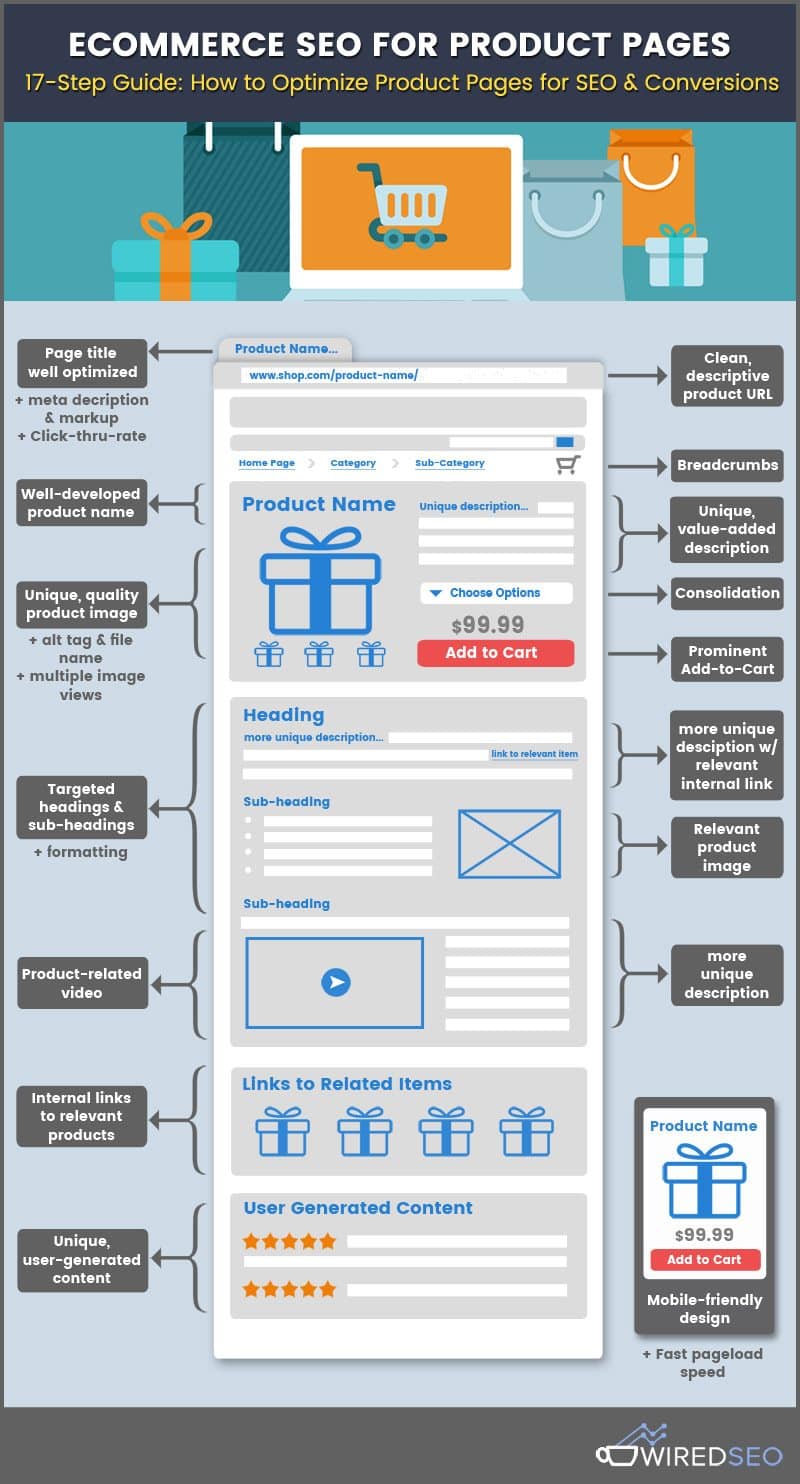
When it comes to ecommerce, optimizing your product pages for search engines is essential. In this blog post, we’ll explore 17 actionable steps to help you achieve higher rankings for your ecommerce product pages.
Wired SEO share the product page SEO tips in this infographic.
1. Keyword Research
Keyword research is the foundation of any successful SEO strategy. Start by identifying relevant keywords for your products. Tools like Google Keyword Planner and SEMrush can help you discover keywords with high search volume and low competition. Focus on long-tail keywords that are specific to your products.
2. Competitive Analysis
Analyze your competitors’ product pages to understand their SEO strategies. Identify the keywords they are targeting and the content they are using. This can provide valuable insights into gaps and opportunities in your own SEO efforts.
3. Optimize Product Titles
Craft compelling and descriptive product titles that include your target keywords. Keep them concise and informative to entice both search engines and potential customers. Avoid keyword stuffing, as it can harm your SEO efforts.
4. Write Unique Product Descriptions
Each product page should have a unique and detailed description. Highlight the features, benefits, and specifications of the product. Incorporate relevant keywords naturally into the content while ensuring readability.
5. High-Quality Images
Use high-quality images to showcase your products. Optimize images for web loading speed, and don’t forget to add alt text that includes your keywords. This helps improve the accessibility of your site and can enhance SEO.
6. User-Friendly URLs
Ensure your product page URLs are clean and user-friendly. Include the product name or relevant keywords in the URL to make it more search engine and user-friendly. Avoid using numbers or random strings.
7. Implement Schema Markup
Schema markup can provide search engines with structured data about your products. It enhances your product listings in search results with rich snippets, making them more attractive to users. Use schema markup for product reviews, ratings, and pricing information.
8. Mobile Optimization
With the increasing use of smartphones, it’s crucial to have a mobile-responsive design. Google considers mobile-friendliness as a ranking factor. Ensure that your product pages load quickly and are easily navigable on mobile devices.
9. Page Speed Optimization
Fast-loading pages are not only user-friendly but also favored by search engines. Compress images, enable browser caching, and minimize code to improve your page speed. Tools like Google PageSpeed Insights can help identify areas for improvement.
10. Internal Linking
Internal linking can improve the user experience and SEO. Link to related products or categories within your ecommerce website. This helps distribute link authority and keeps users engaged on your site for longer.
11. Create a Sitemap
Generate a sitemap for your ecommerce website and submit it to search engines like Google. This helps search engines crawl and index your product pages more efficiently.
12. Optimize Meta Tags
Craft compelling meta titles and meta descriptions for your product pages. These tags should be concise, informative, and include your target keywords. They serve as your page’s first impression in search results.
13. Customer Reviews
Encourage customers to leave reviews on your product pages. Reviews not only build trust with potential buyers but also provide fresh, user-generated content that can positively impact SEO.
14. Monitor Your SEO Progress
Regularly monitor your SEO efforts using tools like Google Analytics and Google Search Console. Track keyword rankings, organic traffic, and user behavior to identify areas for improvement.
15. Canonical Tags
Use canonical tags to prevent duplicate content issues. Ecommerce sites often have similar product pages, and canonical tags can help search engines understand which page should be considered the primary one.
16. Secure Your Website
Website security is crucial for both SEO and user trust. Implement HTTPS to encrypt data transmission and protect user information. Secure sites are more likely to rank higher in search results.
17. Social Media Integration
Integrate social media sharing buttons on your product pages. Social signals can indirectly influence SEO, as they drive traffic and increase brand visibility.
Conclusion
Optimizing your ecommerce product pages for SEO is an ongoing process that requires dedication and constant monitoring. By following these 17 steps, you can enhance your website’s visibility in search engine results, attract more organic traffic, and ultimately increase your online sales. Remember that SEO is not a one-time effort; it’s a long-term strategy that can lead to sustainable growth for your ecommerce business. Stay up-to-date with the latest SEO trends and continue to refine your strategy to stay competitive in the ever-evolving world of ecommerce.

Author:
Mark Ford