
Does your Ecommerce website suffer from a high cart abandonment rate? Want to know the steps you can take to get more visitors to checkout?
In the fast-paced world of e-commerce, shopping cart abandonment is a persistent challenge that online retailers face. It can be frustrating to see potential customers load up their carts with products only to leave without making a purchase.
However, understanding why people abandon their carts and implementing strategies to address these issues can significantly boost your conversion rates and ultimately drive more sales. In this blog post, we will delve into the reasons behind cart abandonment and provide actionable tips on how to combat it.
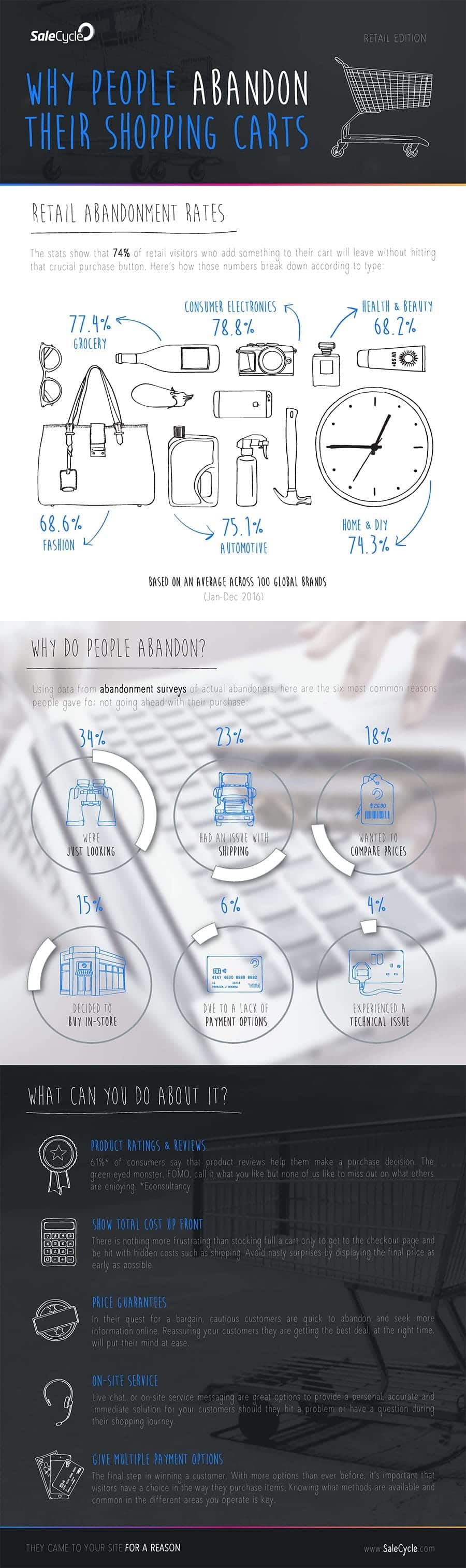
SaleCycle share their steps to Ecommerce success in this infographic.
Understanding Cart Abandonment
Before we dive into the solutions, it’s essential to grasp the reasons why online shoppers abandon their carts. These insights will help you tailor your strategies to address specific issues and reduce abandonment rates.
1. Unexpected Costs
One of the primary reasons for cart abandonment is unexpected costs at checkout. Customers might be shocked to see high shipping fees, taxes, or additional charges when they were initially attracted by the advertised product prices. To combat this issue:
- Transparent Pricing: Clearly display all costs associated with the purchase early in the shopping process. Offer shipping calculators and tax estimators to give customers a precise idea of what they will pay.
- Free Shipping Threshold: Consider offering free shipping for orders over a certain amount. This can incentivize customers to add more items to their cart to reach the threshold.
2. Complex Checkout Process
A lengthy or complicated checkout process can be a major turn-off for shoppers. If your checkout page requires too much information or has too many steps, customers may abandon their carts out of frustration. To streamline the checkout process:
- Guest Checkout: Allow customers to make a purchase without creating an account. You can always offer them the option to create an account after the transaction is complete.
- Progress Indicators: Display a progress bar or steps to completion, so customers know how much more information they need to provide.
- One-Click Checkout: Implement one-click checkout options like those offered by Amazon and Apple Pay for returning customers.
3. Trust Issues
Customers need to trust your website before making a purchase. Concerns about the security of their personal information, payment details, and the reliability of your products can lead to cart abandonment. To build trust:
- Secure Payment Methods: Use trusted payment gateways and display trust badges, such as SSL certificates and industry-standard security logos.
- Customer Reviews and Ratings: Showcase positive customer reviews and ratings to instill confidence in your products.
- Return Policy: Clearly communicate your return and refund policies to reassure customers about their purchase.
4. Price Comparison
Online shoppers are savvy and often compare prices across different platforms before making a decision. If they find a better deal elsewhere, they might abandon their cart on your site. To counter this:
- Competitive Pricing: Keep your prices competitive and consider offering price-matching guarantees.
- Price Alerts: Implement price-drop alerts so customers can be notified when the product they’re interested in goes on sale.
5. Site Performance Issues
A slow-loading website or technical glitches can be incredibly frustrating for customers. If your site is not responsive or experiences downtime, visitors are likely to abandon their carts. To ensure site performance:
- Optimize Website Speed: Compress images, use content delivery networks (CDNs), and minimize HTTP requests to improve loading times.
- Regular Maintenance: Conduct regular maintenance and testing to identify and fix technical issues promptly.
6. Lack of Payment Options
Not offering a variety of payment methods can be a significant barrier to conversion. Some customers prefer specific payment options, and if you don’t provide them, they might abandon their carts. To cater to different preferences:
- Multiple Payment Gateways: Integrate a variety of payment gateways, including credit cards, digital wallets like PayPal, and even cryptocurrencies if relevant.
- Pay Later Options: Offer installment or “buy now, pay later” solutions for customers who want more flexibility.
Strategies to Reduce Cart Abandonment
Now that we’ve identified the common reasons for cart abandonment, let’s explore actionable strategies to reduce it and increase your e-commerce success.
1. Implement an Abandoned Cart Email Sequence
One effective way to recover abandoned carts is through email marketing. Set up an automated email sequence that reminds customers about their abandoned items and encourages them to complete their purchase. Here’s a basic outline of how this sequence can work:
- Cart Reminder: Send a friendly email shortly after the abandonment, reminding customers of the items left in their cart. Include images of the products and a direct link to complete the purchase.
- Offer Incentives: Follow up with an email offering a small discount or free shipping to incentivize customers to return to their cart.
- Limited-Time Offers: Create a sense of urgency by emphasizing that the items in their cart won’t be available for long.
- Customer Support: Provide contact information and encourage customers to reach out if they have any questions or concerns.
2. Optimize Your Checkout Page
A smooth and user-friendly checkout process is crucial for reducing abandonment rates. Consider the following tips for optimizing your checkout page:
- Mobile Optimization: Ensure that your checkout page is mobile-responsive, as a significant portion of online shopping happens on mobile devices.
- Clear Call-to-Action (CTA): Use a prominent CTA button that clearly states “Checkout Now” or a similar persuasive phrase.
- Form Simplification: Minimize the amount of information customers need to enter. Use auto-fill options wherever possible.
- Progress Indicators: Display a progress bar to show customers how many steps are left in the checkout process.
- Trust Signals: Display trust badges, security icons, and logos of accepted payment methods.
3. Offer Multiple Payment Options
As mentioned earlier, providing various payment options can cater to a broader audience. Consider integrating popular payment gateways like PayPal, credit card processors, and digital wallets like Apple Pay and Google Wallet.
4. Improve Website Speed and Performance
A slow website can lead to cart abandonment. Speed up your site by:
- Compressing Images: Use image compression tools to reduce file sizes without sacrificing quality.
- Content Delivery Network (CDN): Implement a CDN to distribute website content across multiple servers, reducing loading times.
- Minimize Plugins: Limit the use of plugins and scripts that can slow down your website.
5. Build Trust with Customer Reviews and Ratings
Encourage satisfied customers to leave reviews and ratings for your products. Display these testimonials prominently on your product pages and throughout your site to build trust with potential buyers.
6. Simplify the Return Process
Make your return and refund policy easily accessible and straightforward to understand. When customers know they can return items hassle-free, they’re more likely to complete their purchases.
7. Use Remarketing and Retargeting Ads
Implement remarketing and retargeting campaigns to reach out to users who have abandoned their carts. These ads will appear on various platforms they visit, reminding them of the products they left behind.
8. Leverage Social Proof
Display the number of people who have purchased a specific product recently or show real-time notifications of visitors who have added items to their cart. This creates a sense of urgency and encourages potential buyers to follow suit.
9. Conduct A/B Testing
Regularly run A/B tests on your checkout process, product pages, and other critical areas of your e-commerce site. This will help you identify which changes have the most significant impact on reducing cart abandonment.
10. Monitor Analytics and Customer Behavior
Utilize analytics tools to monitor customer behavior on your site. Track where customers drop off in the sales funnel, and use this data to make informed changes to your website and marketing strategies.
Conclusion
Cart abandonment is a common challenge in the world of e-commerce, but it’s not insurmountable. By understanding the reasons behind cart abandonment and implementing the strategies outlined in this post, you can significantly reduce abandonment rates and boost your online store’s conversion rates. Remember that ongoing optimization and testing are essential to ensuring a seamless shopping experience for your customers, ultimately leading to increased sales and business success.

Author:
Mark Ford