Are you looking to get started with an email marketing campaign? Need to know the basics of launching and growing an email list?
Email marketing remains one of the most powerful tools in a digital marketer’s toolkit. In a world of ever-evolving digital channels and platforms, email has stood the test of time as a reliable and effective way to connect with your audience.
Whether you’re a small business owner, a blogger, or a large corporation, building and maintaining a healthy mailing list is essential for successful email marketing campaigns.
In this comprehensive guide, we’ll walk you through the basics of email marketing, including how to set up your email marketing strategy and, most importantly, how to grow your mailing list.
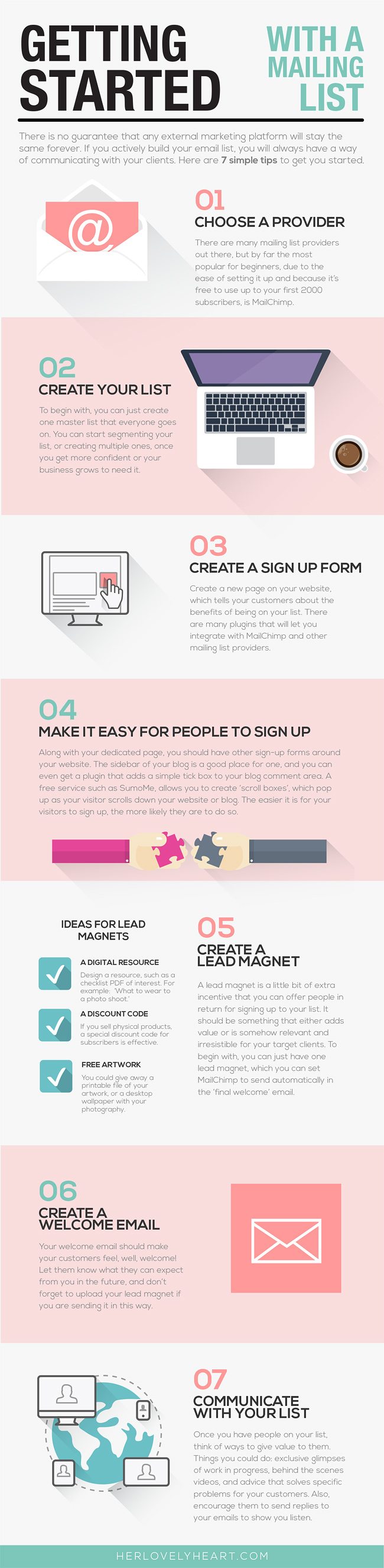
Her Lovely Heart share their tips for beginners in this infographic.
Email marketing remains one of the most powerful tools in a digital marketer’s toolkit. In a world of ever-evolving digital channels and platforms, email has stood the test of time as a reliable and effective way to connect with your audience. Whether you’re a small business owner, a blogger, or a large corporation, building and maintaining a healthy mailing list is essential for successful email marketing campaigns.
In this comprehensive guide, we’ll walk you through the basics of email marketing, including how to set up your email marketing strategy and, most importantly, how to grow your mailing list.
Understanding the Power of Email Marketing
Before we dive into the nitty-gritty of setting up and growing your mailing list, it’s crucial to understand why email marketing is so powerful.
1. Direct Communication
Email provides a direct line of communication to your audience. Unlike social media or search engine optimization, where algorithms can limit your reach, email allows you to send messages directly to your subscribers’ inboxes.
2. Personalization
Email marketing enables you to personalize your messages based on user behavior and preferences. By segmenting your list, you can send targeted content that resonates with specific groups of subscribers.
3. Cost-Effective
Compared to many other marketing channels, email marketing is highly cost-effective. You don’t need a large budget to start building and nurturing your email list.
4. High ROI
Email consistently delivers one of the highest returns on investment (ROI) in the digital marketing world. A well-executed email marketing campaign can generate substantial revenue for your business.
5. Ownership
Perhaps the most crucial advantage of email marketing is that you own your list. Unlike social media followers or search engine rankings, your email subscribers are your direct contacts, and you have control over how and when you reach out to them.
Now that you understand the power of email marketing, let’s move on to the steps to set up and grow your mailing list.
Setting Up Your Email Marketing Strategy
Before you can start growing your mailing list, you need to have a solid email marketing strategy in place. Here are the key steps to set up your strategy:
1. Define Your Goals
Begin by defining your email marketing goals. What do you want to achieve with your email campaigns? Common goals include increasing sales, driving website traffic, building brand awareness, or promoting specific products or services.
2. Choose an Email Marketing Service Provider
To effectively manage your email list and send out email campaigns, you’ll need an email marketing service provider (ESP). Popular options include Mailchimp, Constant Contact, AWeber, and ConvertKit. Research and choose the one that best fits your needs and budget.
3. Build Your Brand Identity
Consistency is key in email marketing. Create a consistent brand identity for your emails, including a recognizable logo, color scheme, and tone of voice. This helps subscribers instantly recognize your emails in their inbox.
4. Compliance with Email Laws
Ensure that you comply with email marketing laws, such as the CAN-SPAM Act in the United States and the General Data Protection Regulation (GDPR) in Europe. Familiarize yourself with these regulations and implement necessary measures to stay compliant.
5. Create a Content Plan
Develop a content plan that outlines the type of content you’ll send to your subscribers. Consider a mix of promotional emails, educational content, newsletters, and updates. Your content should provide value to your subscribers.
6. Segment Your Audience
Segmenting your email list allows you to send targeted content to specific groups of subscribers. You can segment your list based on demographics, purchase history, engagement, and other factors relevant to your business.
7. Set Up Automation
Automation is a powerful feature in email marketing. It allows you to send automated emails triggered by specific actions, such as welcome emails for new subscribers or abandoned cart reminders for e-commerce businesses.
8. Design Templates
Create visually appealing email templates that are mobile-responsive. Most ESPs offer easy-to-use drag-and-drop editors for designing your emails.
9. Test and Optimize
Regularly test different elements of your emails, including subject lines, content, and sending times. Use A/B testing to determine what resonates best with your audience and continually optimize your campaigns.
10. Monitor and Analyze
Keep a close eye on the performance of your email campaigns. Metrics like open rates, click-through rates, and conversion rates can provide valuable insights into the effectiveness of your emails.
Now that you’ve set up your email marketing strategy, let’s explore how to start building and growing your mailing list.
Growing Your Mailing List
Building a robust mailing list is an ongoing process that requires patience and dedication. Here are some effective strategies to help you grow your email list:
1. Create Compelling Sign-Up Forms
Your sign-up forms should be easy to find and visually appealing. Place them prominently on your website, blog, and social media profiles. Offer an incentive, such as a discount or a free resource, to encourage sign-ups.
2. Optimize Landing Pages
When running specific campaigns or promotions, create dedicated landing pages with clear and persuasive calls to action (CTAs). These pages should focus on convincing visitors to subscribe to your email list.
3. Host Webinars and Events
Webinars and online events are excellent opportunities to collect email addresses. Promote these events and require registration, which includes an email address, to participate.
4. Run Contests and Giveaways
Contests and giveaways can generate a buzz and attract a surge of subscribers. Make sure the prize is relevant to your target audience to attract quality leads.
5. Leverage Social Media
Use your social media platforms to promote your email list. Share the benefits of subscribing and include a link to your sign-up form in your social media bios and posts.
6. Collaborate with Influencers
Partner with influencers in your industry to promote your email list to their followers. Influencer endorsements can significantly increase your list’s visibility.
7. Guest Blogging
Write guest posts for other websites and include a CTA to subscribe to your email list in your author bio or within the content itself.
8. Use Pop-Ups Wisely
While pop-up forms can be effective, they can also be annoying if overused. Use exit-intent pop-ups or timed pop-ups strategically to capture visitors’ emails without disrupting their experience.
9. Encourage Referrals
Implement a referral program where current subscribers can refer friends and family in exchange for rewards or discounts.
10. Offer Exclusive Content
Create exclusive content or resources that are only accessible to email subscribers. People are more likely to subscribe if they feel they are getting something valuable that others can’t access.
11. Attend Trade Shows and Conferences
If applicable to your business, attend industry events and collect email addresses from attendees who express interest in your products or services.
12. Run Facebook Lead Ads
Utilize Facebook’s lead ad format, which allows users to subscribe to your email list directly from the ad without leaving Facebook.
13. Run Google Ads with Lead Forms
Similar to Facebook, Google Ads offers lead form extensions that allow users to submit their contact information without leaving the search results page.
14. Maintain Email List Hygiene
Regularly clean and maintain your email list by removing inactive subscribers and correcting invalid email addresses. A clean list improves email deliverability and engagement rates.
15. Promote Across Channels
Promote your email list across all your marketing channels, including email signatures, print materials, and even your email correspondence.
Conclusion
Email marketing is a powerful tool for businesses of all sizes. Building and growing your mailing list is a crucial step in harnessing the full potential of email marketing. With a well-defined email marketing strategy and a commitment to implementing effective growth strategies, you can develop a thriving list of engaged subscribers who eagerly anticipate your emails. Remember that email marketing is an ongoing process, and as your list grows, so will your opportunities for reaching and converting your target audience. Start today, and watch your email marketing efforts flourish.

Author:
Mark Ford