Email marketing remains a powerful tool in the digital marketer’s arsenal. According to Statista, there were 4.1 billion email users worldwide in 2021, and this number is expected to grow to 4.4 billion by 2025.
With such a vast audience, email marketing can be highly effective when done right. But with inboxes flooded with messages every day, the key to success lies in crafting a subject line that entices recipients to open your emails.
In this comprehensive guide, we will explore the art and science of creating subject lines that get your emails read.
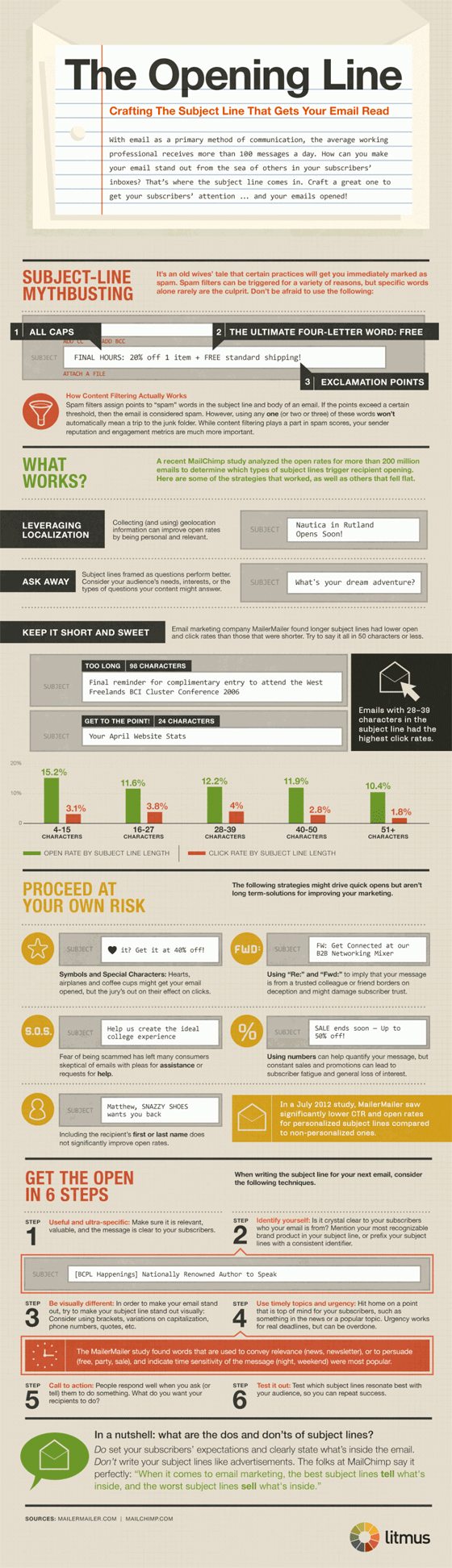
Infographic by Litmus.
The Importance of a Great Subject Line
The subject line is the first thing your recipients see when your email lands in their inbox. It’s the gatekeeper that determines whether your email gets opened, ignored, or sent to the dreaded spam folder. Here’s why crafting a compelling subject line is crucial:
1. First Impressions Matter
Just like a book is often judged by its cover, an email is often judged by its subject line. If your subject line is boring or irrelevant, your email will likely go unread.
2. Improved Open Rates
A well-crafted subject line can significantly boost your open rates. According to a study by Litmus, emails with personalized subject lines generate 50% higher open rates than those without.
3. Higher Engagement
A strong subject line piques the recipient’s interest, increasing the chances that they will read the email and take the desired action, whether it’s making a purchase, signing up for a webinar, or simply clicking a link.
4. Avoiding the Spam Folder
Email filters are becoming increasingly sophisticated. If your subject line triggers spam filters, your email may never reach the recipient’s inbox. Crafting a subject line that avoids common spam triggers is essential.
Understanding Your Audience
Before you can create a compelling subject line, you need to understand your audience. Different audiences have different preferences, behaviors, and expectations when it comes to email. Here’s how to get to know your audience better:
1. Segment Your Email List
Segmentation is the practice of dividing your email list into smaller, more targeted groups based on specific criteria, such as demographics, behavior, or purchase history. Segmenting your list allows you to send more relevant content and tailor your subject lines to each group’s preferences.
2. Analyze Email Engagement Data
Review your email analytics to gain insights into which subject lines have performed well in the past. Look for patterns and trends in open rates, click-through rates, and conversion rates to understand what resonates with your audience.
3. Conduct Surveys and Collect Feedback
Directly asking your subscribers about their preferences can provide valuable insights. Use surveys and feedback forms to gather information about what types of subject lines they find most appealing and engaging.
4. Monitor Social Media and Online Discussions
Keep an eye on social media channels and online forums where your audience hangs out. Pay attention to the language they use and the topics that interest them. This can help you create subject lines that resonate with their interests.
Crafting Irresistible Subject Lines
Now that you have a better understanding of your audience, let’s dive into the strategies and techniques for crafting subject lines that grab attention and compel recipients to open your emails.
1. Keep It Short and Sweet
Short subject lines are more likely to be fully visible on both desktop and mobile devices. Aim for 40-50 characters to ensure your subject line doesn’t get cut off. Concise subject lines also tend to be more impactful and to the point.
Examples:
- “Exclusive Offer Inside!”
- “Last Chance: 50% Off Ends Today!”
2. Use Personalization
Personalizing subject lines can significantly improve open rates. Addressing the recipient by their first name or referencing their past interactions with your brand shows that you value their individuality.
Examples:
- “Hey [First Name], We Have a Gift for You!”
- “Did You Enjoy Our Last Webinar, [Recipient]?”
3. Create a Sense of Urgency
People are more likely to open emails that convey a sense of urgency or FOMO (Fear of Missing Out). Use phrases like “Limited Time Offer,” “Act Now,” or “Ending Soon” to encourage recipients to open your email immediately.
Examples:
- “Hurry! Only 24 Hours Left to Save!”
- “Don’t Miss Out on Our Flash Sale!”
4. Pose a Question
Asking a question in your subject line engages the recipient’s curiosity and encourages them to open the email to find the answer. Make sure the question is relevant to the content of your email.
Examples:
- “Are You Ready to Boost Your Productivity?”
- “Wondering How to Get More Leads?”
5. Use Emojis Sparingly
Emojis can add visual appeal to your subject lines, but use them sparingly and ensure they are relevant to your message. Overuse of emojis can make your email appear unprofessional.
Examples:
- “🎁 Don’t Miss Our Special Gift!”
- “🚀 Ready to Take Your Business to New Heights?”
6. A/B Testing
A/B testing involves sending two different subject lines to a small sample of your email list to see which one performs better. Use A/B testing to refine your subject line strategies and identify what resonates most with your audience.
7. Avoid Spam Trigger Words
Certain words and phrases can trigger spam filters and cause your email to be flagged as spam. Be cautious about using terms like “free,” “money,” or excessive exclamation points.
8. Be Honest and Relevant
Don’t use clickbait subject lines that promise something your email doesn’t deliver. Be honest and ensure that your subject line accurately reflects the content of your email. Misleading subject lines can damage your brand’s trustworthiness.
9. Test Across Devices
Ensure that your subject lines look good and are fully visible on various devices, including desktops, smartphones, and tablets. Mobile optimization is crucial as more people check their emails on mobile devices.
Case Studies: Subject Lines That Worked
Let’s take a look at some real-world examples of effective subject lines from various industries:
1. Retail/E-commerce:
- “Don’t Miss Our 24-Hour Flash Sale!”
- “Your Exclusive 15% Off Coupon Inside!”
2. B2B:
- “Unlock the Secrets to B2B Lead Generation”
- “Join Our Webinar: Mastering the Art of Sales”
3. Nonprofit:
- “Change Lives Today: Donate to Our Cause”
- “Your Impact: How You Can Make a Difference”
4. Content Marketing:
- New Blog Post: Boost Your SEO with These Tips
- “Get Inspired: Our Latest Success Stories”
Mistakes to Avoid
While there are numerous strategies to create compelling subject lines, there are also common mistakes that can hinder your email marketing efforts. Here are some pitfalls to avoid:
1. Overcomplicating
Avoid using overly complex language or jargon in your subject lines. Your message should be clear and easy to understand at a glance.
2. Neglecting Mobile Optimization
With the majority of emails being opened on mobile devices, it’s essential to ensure your subject lines are mobile-friendly.
3. Failing to Test
Don’t assume that a subject line will work without testing it first. A/B testing is crucial for optimizing your email campaigns.
4. Ignoring Analytics
Regularly review email performance metrics to gauge the effectiveness of your subject lines and make necessary adjustments.
5. Sending Irrelevant Content
Ensure that the content of your email matches the promise of your subject line. Sending irrelevant content can lead to unsubscribes and loss of trust.
Conclusion
In the world of email marketing, a well-crafted subject line can be the difference between your email getting opened or ignored. By understanding your audience, using personalization, creating a sense of urgency, and avoiding common mistakes, you can craft subject lines that captivate recipients and drive engagement. Keep testing and refining your approach to discover what resonates most with your specific audience, and watch your email marketing efforts soar to new heights. Remember, a great subject line is the key to getting your emails read and achieving your marketing goals.

Author:
Mark Ford