In the fast-paced world of social media, Twitter stands out as a platform that thrives on brevity and immediacy.
With a limit of 280 characters per tweet, capturing your audience’s attention and delivering your message effectively can be quite challenging. But there’s a powerful tool at your disposal that can significantly boost your Twitter engagement: images.
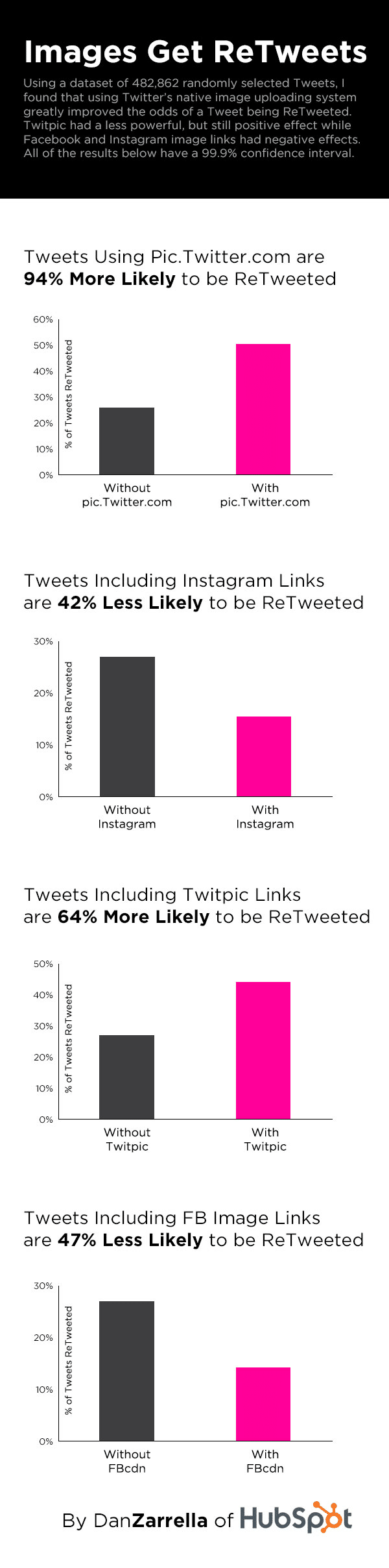
In this blog post, we’ll explore the impact of images on Twitter engagement and provide you with actionable tips on how to get 94% more retweets using images.
We’ll delve into the psychology behind visual content, best practices for image selection, and how to optimize your tweets for maximum retweets. So, let’s get started.
Infographic by HubSpot.
The Power of Visual Content
- The Science of Visual Processing
Human brains are wired to process visual information quickly and efficiently. In fact, studies show that the human brain can process images in as little as 13 milliseconds! This rapid processing of visuals makes images an ideal medium for capturing attention in a busy Twitter feed.
- Increased Engagement
Tweets with images receive significantly more engagement than text-only tweets. According to Twitter’s own data, tweets with images can receive up to 150% more retweets, 18% more clicks, and 89% more likes.
- Improved Recall
Visual content is also more memorable. People are more likely to remember information when it’s accompanied by relevant images. So, if you want your tweets to stick in your audience’s minds, images are a powerful tool.
Selecting the Right Images
Now that we understand the importance of visual content on Twitter, let’s dive into how to choose the right images for your tweets.
- Relevance
The most important factor when selecting images is relevance. Your image should align with the content of your tweet. Whether you’re sharing a funny meme, an informative infographic, or a captivating photo, make sure it enhances the message you’re trying to convey.
- Quality Over Quantity
While it’s tempting to flood your tweets with images, quality should always take precedence over quantity. A single high-quality image that resonates with your audience is more effective than a barrage of mediocre visuals.
- Originality
Original content sets you apart from the crowd. If you can create your own images or graphics, do so. Authenticity is valued on social media, and it can help you build a loyal following.
- Consistency
Maintain a consistent style in your images to reinforce your brand identity. Use the same color palette, fonts, and overall aesthetics across your visuals. Consistency helps your audience recognize your tweets instantly.
Optimizing Your Tweets with Images
Now that you’ve selected the right images, let’s explore how to optimize your tweets for maximum retweets.
- Image Dimensions
Twitter’s image dimensions are subject to change, so it’s essential to stay up to date with their latest guidelines. As of my last knowledge update, the recommended dimensions for in-stream images are 1200 x 675 pixels. Use these dimensions to ensure that your images display correctly and attractively in users’ feeds.
- Caption and Hashtags
A compelling caption can complement your image and encourage engagement. Use concise and relevant captions that add value to your tweet. Don’t forget to incorporate relevant hashtags to increase the discoverability of your tweet.
- Timing Matters
Timing plays a crucial role in the success of your tweets. Research shows that tweets published during peak engagement hours tend to perform better. Experiment with different posting times to find when your audience is most active.
- Engage with Your Audience
When users engage with your tweets by liking, retweeting, or commenting, make sure to respond promptly. Engaging with your audience not only fosters a sense of community but also increases the visibility of your tweet.
- A/B Testing
Not every tweet will perform the same way. Experiment with different images, captions, and posting times to determine what resonates best with your audience. A/B testing can help you refine your Twitter strategy over time.
Case Studies: Real-World Success Stories
To illustrate the impact of images on Twitter engagement, let’s take a look at a few real-world success stories:
- National Geographic (@NatGeo)
National Geographic is known for its stunning photography. By consistently sharing high-quality images that evoke emotion and curiosity, they have amassed over 100 million followers on Twitter. Their images transport users to far-off places and unique landscapes, making them highly shareable.
- NASA (@NASA)
NASA leverages the power of visual content to share the wonders of space exploration. They regularly post breathtaking images of planets, galaxies, and spacecraft. These visuals not only educate but also inspire awe, leading to high levels of engagement and retweets.
- Red Bull (@redbull)
Red Bull uses images to reinforce its brand identity as a high-energy, adventurous lifestyle company. They share images of extreme sports, daring stunts, and adrenaline-pumping moments. Their visuals convey a sense of excitement that resonates with their audience and encourages sharing.
Conclusion
Twitter is a platform that thrives on brevity and immediacy, making it challenging to capture your audience’s attention. However, by harnessing the power of images, you can significantly boost your Twitter engagement and get 94% more retweets.
Remember the key takeaways:
- Visual content is processed quickly and engages users effectively.
- Choose relevant, high-quality, and original images.
- Optimize your tweets with the right dimensions, captions, and timing.
- Engage with your audience and conduct A/B testing to refine your strategy.
By following these guidelines and learning from successful brands, you can harness the full potential of visual content on Twitter and watch your retweets soar. So, start creating and sharing compelling images today, and see the impact they have on your Twitter engagement.

Author:
Mark Ford