
With over 500 million active users Google Plus is a platform you cant ignore.
But like a lot of businesses you’ve probably setup your account, had a quick look around and then not done anything with it.
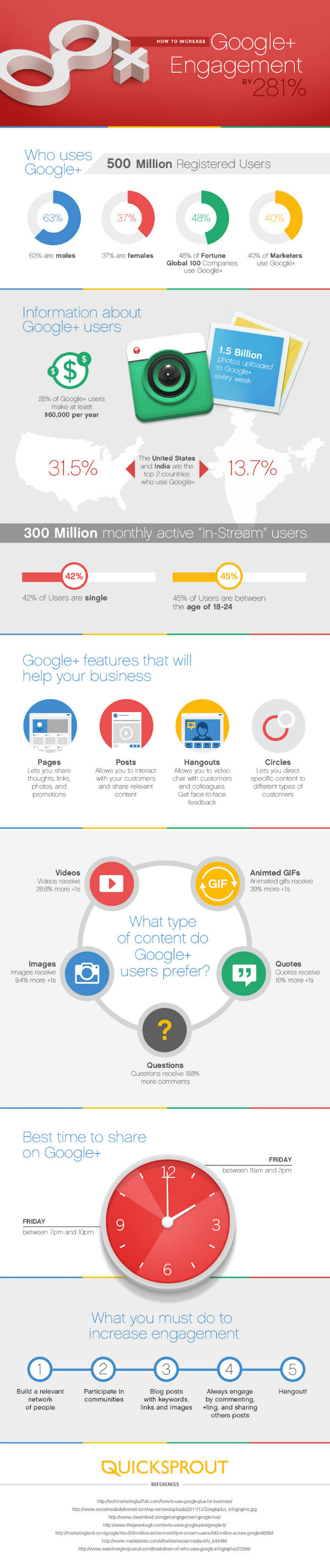
The infographic below from QuickSprout helps you out with some of the features Google Plus has to offer plus some tips on the type of content to post and the best time to post it.
In the ever-evolving landscape of social media, platforms come and go, but some manage to hold their ground. Google Plus was once one such platform, offering a unique space for networking, content sharing, and engagement. Although Google Plus was officially discontinued in April 2019, the lessons learned from its heyday can still be applied to other social media platforms, helping you boost engagement and build a stronger online presence. In this blog post, we’ll explore strategies to increase engagement on social media platforms, drawing on the lessons of Google Plus.
The Rise and Fall of Google Plus
Google Plus, or Google+, was launched in June 2011 as Google’s response to the growing popularity of social media networks like Facebook and Twitter. It offered features like Circles, Communities, and Hangouts that aimed to improve the way users connect and engage online. While it never achieved the same level of user base as Facebook, Google Plus had its loyal users and unique benefits.
However, over time, Google Plus faced various challenges. Concerns about user privacy and data security emerged, and user engagement struggled to compete with the established giants of the social media world. Ultimately, in December 2018, Google announced that it would shut down the consumer version of Google Plus due to low usage and data exposure concerns.
Despite its ultimate demise, Google Plus did offer valuable lessons in engaging an audience and building a community. By examining what worked on this platform, we can uncover strategies to increase engagement on other social media platforms today.
Lessons from Google Plus
- Building Meaningful Communities
One of the standout features of Google Plus was its Communities. These were spaces where like-minded individuals could come together to discuss topics of interest. Building and nurturing communities on social media is still relevant today, regardless of the platform.
- Identify Your Niche: Determine your target audience and what interests them. Then, create or join communities related to those interests. For example, if you run a travel blog, joining travel-related communities can help you connect with potential followers interested in your content.
- Consistent Engagement: Actively participate in these communities by posting valuable content, responding to comments, and engaging in discussions. Consistency is key to building trust and gaining followers.
- Foster Interaction: Encourage community members to interact with each other, not just with you. Facilitate discussions, ask questions, and create a welcoming atmosphere where people feel comfortable sharing their thoughts.
- Utilizing Hangouts for Live Interaction
Google Plus Hangouts allowed users to host live video sessions with their followers. Live streaming has become increasingly popular on various social media platforms, offering an excellent opportunity for real-time engagement.
- Live Q&A Sessions: Host live Q&A sessions on topics relevant to your audience. This allows you to directly interact with your followers, answer their questions, and address their concerns.
- Behind-the-Scenes: Take your audience behind the scenes of your work or life. It humanizes your brand and makes you more relatable to your followers.
- Collaborate with Influencers: Consider collaborating with influencers or experts in your niche for live sessions. This can help you tap into their audience and increase your reach.
- Segmentation with Circles
Google Plus allowed users to organize their connections into Circles, making it easier to target specific groups with relevant content. Although other social media platforms may not have the same feature, segmentation remains a powerful strategy.
- Audience Segmentation: On platforms like Facebook, Instagram, and Twitter, use features like lists or groups to segment your audience. This enables you to share content that’s tailored to the interests of specific groups within your follower base.
- Personalization: Tailor your messaging and content to each segmented group. People are more likely to engage with content that feels personalized to their interests.
- A/B Testing: Experiment with different types of content and messaging for each segmented group. Analyze the engagement metrics to determine what resonates best with each audience segment.
- Quality Over Quantity
On Google Plus, content quality was highly valued. Posts with rich media, well-researched information, and engaging visuals tended to perform better. This principle applies universally to social media platforms.
- Content Strategy: Focus on creating high-quality content that adds value to your audience. This could include informative articles, eye-catching graphics, or entertaining videos.
- Visual Appeal: Use high-resolution images and graphics to make your posts stand out. Visual content tends to get more engagement than text-only posts.
- Consistency: While quality is paramount, don’t neglect consistency. Develop a posting schedule that your audience can rely on, so they know when to expect new content from you.
- Engaging Headlines and Descriptions
Google Plus posts with attention-grabbing headlines and well-crafted descriptions tended to attract more clicks and comments. Crafting compelling headlines is a skill that applies to all social media platforms.
- Headline Formulas: Experiment with different headline formulas, such as listicles, how-tos, questions, and emotional triggers. Monitor the performance of each type to see what resonates most with your audience.
- Keyword Optimization: Incorporate relevant keywords in your headlines and descriptions. This can improve the discoverability of your content through search and hashtags.
- A/B Testing: Similar to A/B testing content, you can A/B test headlines and descriptions to see which versions generate more engagement.
- Engagement Analytics and Insights
Google Plus provided users with valuable insights into their posts’ performance, such as views, comments, and shares. Today, most social media platforms offer similar analytics tools.
- Monitor Metrics: Regularly check the analytics provided by the platform. Look for patterns and trends in engagement to understand what types of content resonate most with your audience.
- Track Conversions: If your goal is to drive specific actions (e.g., website visits, sign-ups), use tracking tools like UTM parameters to measure the effectiveness of your social media campaigns.
- Learn from Data: Use the insights gained from analytics to refine your content strategy. If certain types of posts consistently perform well, consider producing more of that content.
Modernizing Your Engagement Strategy
While Google Plus may have faded into the annals of internet history, the lessons it offered in engaging an audience and building an online community are timeless. The social media landscape continues to evolve, with platforms like Facebook, Instagram, Twitter, LinkedIn, and emerging players offering new ways to connect with your audience.
To increase engagement on these platforms, consider the following strategies:
- Leverage Stories and Fleets
Many social media platforms now offer Stories or Fleets, short-lived content that appears at the top of users’ feeds. These can be a great way to grab attention and foster engagement.
- Behind-the-Scenes: Share behind-the-scenes glimpses of your daily life or work. Stories and Fleets often feel more personal and immediate.
- Polls and Questions: Use interactive features like polls and question stickers to directly engage your audience. This encourages participation and feedback.
- Highlights: Create Story Highlights to curate and showcase your best and most relevant content for new followers to discover.
- Engage in Conversations
Social media is a two-way street. Engage in conversations with your followers, respond to comments, and actively participate in discussions related to your niche.
- Respond Promptly: Timely responses to comments and messages show that you value your audience’s input and are attentive to their needs.
- Ask Questions: Encourage discussions by asking open-ended questions in your posts. This invites followers to share their thoughts and experiences.
- Express Gratitude: Don’t forget to thank your audience for their support. Showing appreciation fosters a positive relationship with your followers.
- Use Hashtags Strategically
Hashtags can increase the discoverability of your content, especially on platforms like Instagram and Twitter.
- Research Relevant Hashtags: Find and use hashtags that are popular within your niche. Tools like Hashtagify and RiteTag can help you identify trending and relevant hashtags.
- Create Branded Hashtags: Consider creating a unique branded hashtag for your content or campaigns. This can help you build a community around your brand.
- Mix Popular and Niche Hashtags: Use a combination of popular and niche-specific hashtags to reach a broader and more targeted audience.
- Collaborate with Influencers
Partnering with influencers who align with your brand can help you tap into their existing audience and increase your engagement.
- Identify Suitable Influencers: Find influencers who cater to your target demographic and share similar values or interests.
- Build Authentic Relationships: Approach influencers authentically, and focus on building a genuine relationship before proposing collaboration.
- Co-create Content: Work with influencers to co-create content that resonates with their audience and yours.
Conclusion
Google Plus may no longer be with us, but the lessons it provided on community building and engagement strategies are still valuable in the world of social media today. Whether you’re using established platforms like Facebook and Instagram or exploring newer ones, the fundamentals of engaging your audience remain the same: build meaningful communities, create quality content, and foster genuine connections.
By applying the strategies outlined in this blog post, you can increase your engagement on social media platforms by 281% or even more. Remember, it’s not about the platform itself but the principles of effective engagement and community-building that will help you succeed in the ever-changing landscape of social media.

Author:
Mark Ford