
Are you unsure which social media platform will help you achieve your marketing goals? Want to learn how to choose the right channels to maximise your reach, engagement, and results?
You’ll find some social media basics in this infographic.
Here’s a summary of what’s covered:
- TikTok
- YouTube
Check out the post below for more.
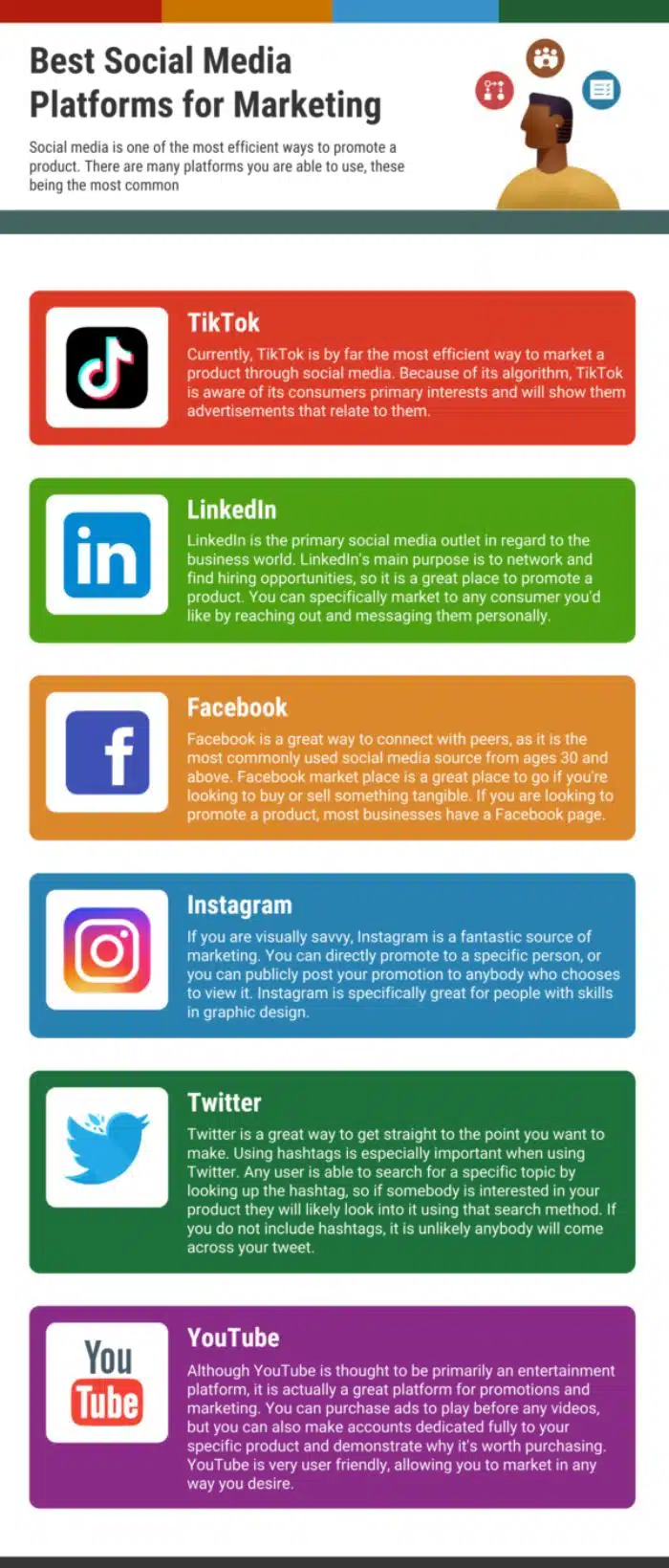
Social media has become the backbone of modern marketing, offering businesses countless ways to reach, engage, and convert their target audiences.
Yet with so many platforms available, choosing where to focus your efforts can be overwhelming. The key to success lies in aligning your marketing goals with the strengths of each social network. Whether you’re building brand awareness, generating leads, or showcasing your creativity, the right platform can amplify your message and deliver measurable results.
Below, we explore the most effective social media platforms for marketing and how each one can help you achieve specific business objectives.
TikTok
TikTok has rapidly transformed from a fun video app into one of the most powerful tools in digital marketing. Its algorithm curates content based on user preferences, meaning brands can reach highly engaged audiences through short, compelling videos. If your goal is to boost visibility, connect with younger audiences, or make your brand feel more relatable, TikTok provides the perfect playground for creativity.
- Focus on short, visually engaging videos that tell a story or spark emotion within seconds.
- Use trending sounds, challenges, and hashtags to increase your chances of appearing on users’ For You pages.
- Collaborate with influencers whose style and audience align with your brand message.
- Prioritise authenticity over polish—users respond better to genuine content than overly produced ads.
LinkedIn is the ultimate platform for professional networking and B2B marketing. Its users are typically decision-makers, entrepreneurs, and industry professionals seeking value-driven content. If your marketing goals include establishing authority, building partnerships, or attracting new clients in a business context, LinkedIn offers the credibility and audience focus to make it happen.
- Share educational posts, articles, and thought leadership content that position your brand as an expert.
- Optimise your company page with a clear value proposition and consistent posting schedule.
- Use LinkedIn Ads to target users based on job title, industry, and seniority.
- Engage with your network by commenting on relevant posts and participating in professional discussions.
Facebook remains one of the most versatile platforms, appealing to a wide demographic—particularly users aged 30 and above. It excels in community-building, customer engagement, and product promotion. If your goal is to maintain long-term relationships with customers or drive conversions through targeted advertising, Facebook provides the tools to help you do just that.
- Create a dedicated business page to share updates, offers, and engaging multimedia content.
- Use Facebook Ads Manager to target users by interests, demographics, and behaviours.
- Build a loyal following by hosting live videos, polls, or interactive Q&A sessions.
- Utilise Facebook Marketplace or Shops to sell directly to customers within the app.
Instagram is the platform of choice for visual storytelling. From lifestyle photography to branded reels, it allows businesses to showcase products and personality through aesthetics and creativity. If your marketing goals centre on brand recognition, visual engagement, or influencer partnerships, Instagram is where you can make the biggest impact.
- Maintain a cohesive brand style across all posts to strengthen recognition.
- Use Stories, Reels, and Carousels to present your content in varied, engaging formats.
- Collaborate with influencers or brand ambassadors to extend your reach organically.
- Leverage Instagram Shopping features to tag products and drive in-app purchases.
Twitter (now X) thrives on immediacy and conversation. It’s the best platform for real-time engagement, brand voice development, and quick communication with your audience. If your goals include improving customer service, sharing timely updates, or participating in trending discussions, Twitter helps your brand stay visible and relevant in the public eye.
- Keep tweets short, snappy, and value-focused to capture attention in fast-moving feeds.
- Use hashtags strategically to increase visibility and join trending topics.
- Engage directly with customers by replying to comments and mentions promptly.
- Share timely updates, announcements, or thought leadership content to establish authority.
YouTube
YouTube is much more than a video-sharing site—it’s the world’s second-largest search engine and a major player in digital marketing. For brands aiming to educate, entertain, or demonstrate products in-depth, YouTube offers the perfect long-form format. Whether your goal is to build trust, improve SEO, or tell your brand’s story visually, YouTube is an invaluable marketing channel.
- Create a branded channel with consistent visuals and keyword-optimised titles.
- Post tutorials, behind-the-scenes videos, or case studies to showcase your expertise.
- Use YouTube Ads to reach highly targeted audiences with pre-roll or in-stream promotions.
- Add clear calls to action in your videos and descriptions to guide viewers toward the next step.
How to Choose the Right Platform for Your Goals
With so many options available, it’s easy to spread yourself too thin. The most successful marketers focus their energy on platforms that align directly with their objectives. Consider what you want to achieve—brand awareness, lead generation, sales, or engagement—and match those outcomes with the strengths of each channel.
- For brand awareness and viral reach, focus on TikTok and Instagram.
- For lead generation and B2B credibility, LinkedIn and Facebook perform best.
- For customer service and quick engagement, Twitter is unmatched.
- For long-form education and storytelling, YouTube leads the way.
Setting a Strategy Across Platforms
A successful social media presence isn’t just about posting—it’s about planning. Each platform requires its own tone, content type, and engagement strategy. Align your marketing message with the platform’s user expectations, and ensure that your brand voice remains consistent across all channels.
- Create a social media calendar to manage content timing and frequency.
- Tailor content formats to each platform rather than reposting identical updates.
- Use analytics tools to monitor engagement and adjust your strategy accordingly.
- Keep your messaging consistent, but adapt the delivery style for each audience.
Measuring Success and Adjusting
To make your social media marketing truly effective, you need to measure performance and adapt continuously. Each platform provides insights into reach, engagement, and conversions, allowing you to see what works and what doesn’t. By analysing data regularly, you can fine-tune your campaigns and maximise ROI.
- Track key performance indicators (KPIs) that reflect your goals, such as engagement rate or conversion cost.
- Experiment with different content types and posting schedules to see what resonates.
- Use A/B testing for ads and calls to action to improve performance.
- Review analytics monthly to identify trends and refine your overall approach.
Integrating Platforms for Maximum Impact
Most businesses achieve the best results when combining platforms strategically. Each network serves a unique role in your marketing funnel—from awareness to conversion—and together they create a cohesive brand presence. Integrating your efforts allows your audience to encounter your brand consistently, no matter where they spend their time online.
- Use TikTok and Instagram for awareness, LinkedIn and Facebook for credibility, and YouTube for education.
- Cross-promote content by linking videos, posts, and updates between platforms.
- Maintain unified branding elements like logos, tone, and colour schemes.
- Encourage audience migration by linking social accounts within bios and descriptions.
Adapting to Trends and Algorithms
Social media evolves constantly, with new trends and algorithm changes shaping how content performs. Staying informed helps you keep your strategy relevant and effective. If your marketing goals include staying ahead of competitors, you’ll need to adapt quickly to new content formats, ad features, and user behaviours.
- Follow platform news and creator updates to stay aware of major changes.
- Embrace emerging formats such as short-form video or live streaming early.
- Test new ad tools or engagement features to stay ahead of the curve.
- Regularly review analytics to spot shifts in audience behaviour or performance.
Conclusion
Choosing the right social media platform for your marketing goals isn’t about being everywhere—it’s about being effective where it matters most.
TikTok excels in viral visibility, LinkedIn in professional networking, Facebook in community building, Instagram in visual storytelling, Twitter in real-time engagement, and YouTube in in-depth brand storytelling. When you understand each platform’s strengths and match them to your objectives, your social media marketing becomes more strategic, efficient, and impactful.
By aligning your goals, content, and audience with the right mix of platforms, you’ll not only amplify your reach but also create meaningful connections that drive long-term business growth.

Author:
Mark Ford