
Struggling to keep your social media marketing consistent across all platforms? Want a simple, repeatable system to stay organised and in control of your content?
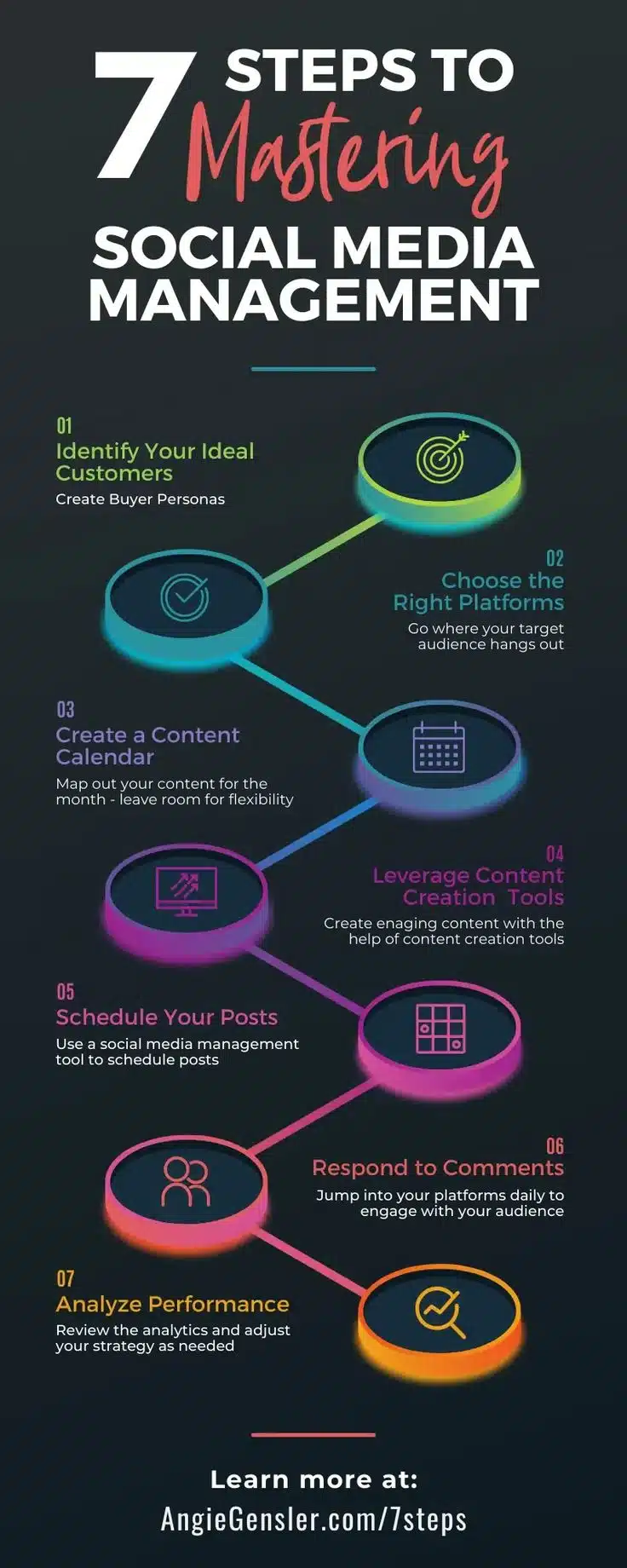
You’ll find some social media basics in this infographic.
Here’s a summary of what’s covered:
- Identify Your Ideal Customers
- Choose the Right Platforms
- Create a Content Calendar
- Leverage Content Creation Tools
- Schedule Your Posts
- Respond to Comments
- Analyse Performance
Check out the post below for more.
In today’s fast-paced digital world, consistent social media marketing isn’t just a best practice—it’s a necessity. But with multiple platforms, constant content demands, and the pressure to engage your audience daily, staying organised can feel overwhelming.
That’s where a structured, repeatable process becomes your greatest asset. This guide walks you through seven practical steps to take control of your social media and maintain a consistent presence with confidence.
Identify Your Ideal Customers
Understanding your audience is the first step in creating content that resonates. If you don’t know who you’re speaking to, your messaging will be scattered and ineffective. Defining your ideal customer helps you tailor content to their interests, needs, and pain points. This clarity saves time and makes your marketing more focused and impactful.
- Create detailed buyer personas that include demographics, behaviours, goals, and challenges.
- Use surveys, analytics, and customer feedback to understand what your audience wants.
- Segment your audience to deliver more targeted, relevant messaging across platforms.
- Revisit and refine your personas regularly as trends and behaviours evolve.
Choose the Right Platforms
Not every social network will suit your business or audience. Trying to be active everywhere spreads your resources too thin and leads to burnout. Instead, focus on the platforms where your ideal customers are already spending their time. This ensures your efforts have maximum impact without unnecessary complexity.
- Research where your audience hangs out based on age, profession, and interests.
- Analyse competitors to see which platforms drive the most engagement for them.
- Choose one or two core platforms to master before expanding further.
- Tailor your content format and tone to fit the unique culture of each platform.
Create a Content Calendar
A content calendar helps you map out what you’ll post and when, reducing last-minute stress and ensuring variety. It gives you a big-picture view of your strategy, helps maintain consistency, and allows time for creative planning. With a clear calendar in place, you can build momentum and stay ahead of schedule.
- Plan your content one month at a time, focusing on key themes or campaigns.
- Include a mix of content types: promotional, educational, entertaining, and engaging.
- Leave space for flexibility so you can react to news, trends, or events in real-time.
- Use colour coding or tags to track post types and ensure content diversity.
Leverage Content Creation Tools
Creating quality content consistently requires the right tools. Design platforms, video editors, caption generators, and stock libraries can save hours of time. These tools also elevate your brand by making your content more visually appealing and professional. With the right stack, you’ll work faster and produce better results.
- Use Canva, Adobe Express, or similar tools to create branded visuals easily.
- Try AI writing assistants to speed up captions, hooks, or post ideas.
- Organise assets in a shared drive or content library to streamline collaboration.
- Schedule regular time blocks to batch-create posts in advance.
Schedule Your Posts
Manually posting every day can quickly become unsustainable. Scheduling tools help you stay consistent by letting you plan ahead and publish content automatically. This not only saves time but also allows you to maintain your posting frequency even during busy periods or holidays.
- Use tools like Buffer, Hootsuite, or Later to plan and queue your content.
- Schedule at optimal times based on platform insights and audience activity.
- Create a weekly publishing routine to maintain consistency across platforms.
- Review your queue regularly to make room for timely or reactive content.
Respond to Comments
Social media isn’t a one-way broadcast—it’s a conversation. Engaging with your audience through comments and messages builds trust, encourages loyalty, and improves visibility. Making time to respond daily ensures your community feels heard and valued, which keeps them coming back.
- Set aside 10–15 minutes a day to check and reply to comments and messages.
- Use friendly, personal replies that reflect your brand tone and personality.
- Acknowledge feedback, answer questions, and thank users for positive interactions.
- Monitor for customer service queries and handle them quickly and professionally.
Analyse Performance
To improve, you need to measure. Regularly reviewing analytics helps you understand what’s working, what’s falling flat, and how you can refine your approach. This step is crucial for long-term consistency because it keeps your strategy aligned with actual results, not assumptions.
- Track key metrics like reach, engagement, click-throughs, and follower growth.
- Use native insights or platforms like Google Analytics and social dashboards.
- Identify your top-performing posts and repurpose similar content in the future.
- Adjust your calendar, timing, and content types based on what the data shows.
Conclusion
Consistency on social media isn’t about churning out endless posts—it’s about being intentional, organised, and audience-focused. By following these seven steps, you’ll build a system that supports your goals, simplifies your workflow, and enhances your brand presence.
From identifying your audience to analysing performance, each part plays a vital role in helping you show up with purpose. Stick to the process, stay flexible, and your social media marketing will become a powerful, manageable part of your business growth strategy.

Author:
Mark Ford