
Are you looking for proven ways to make your Ecommerce brand stronger and more memorable? Want to learn the marketing methods that will boost visibility, trust, and long-term sales?
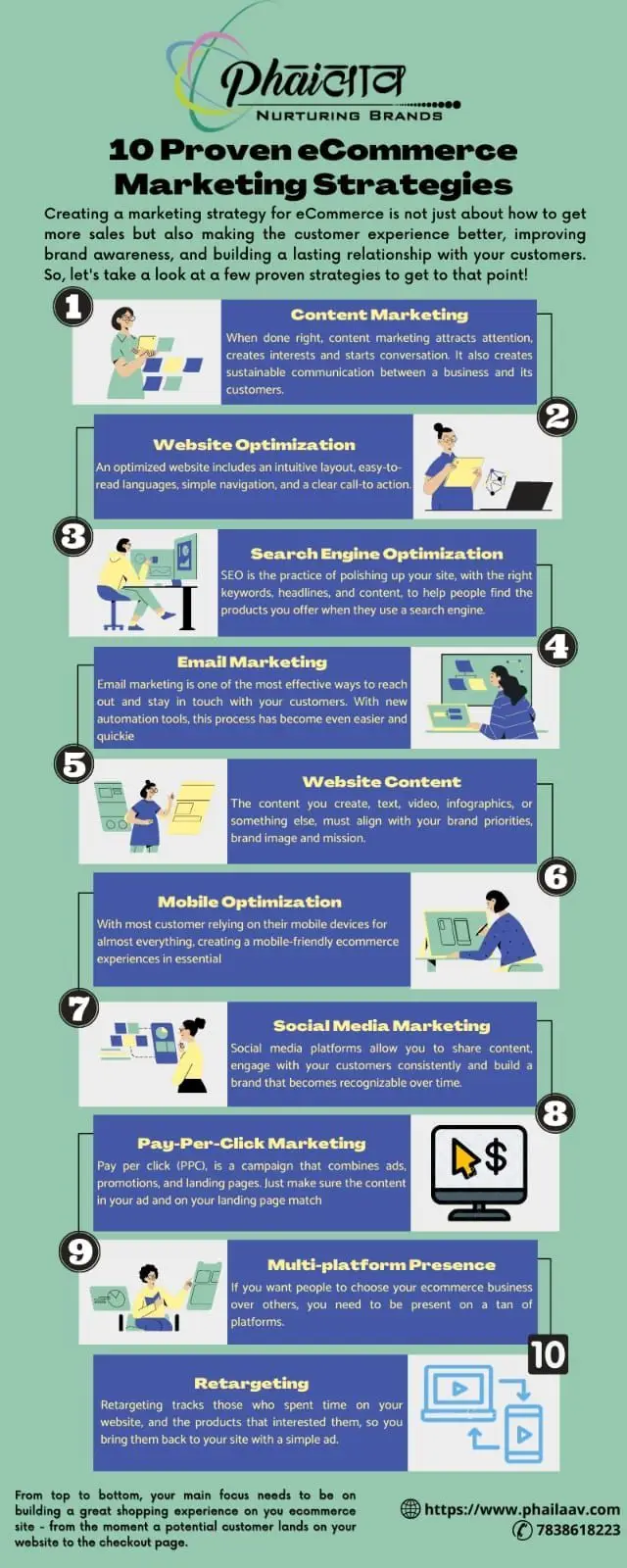
You’ll find some Ecommerce basics in this infographic.
Here’s a summary of what’s covered:
- Content Marketing
- Website Optimisation
- Search Engine Optimisation (SEO)
- Email Marketing
- Website Content
- Mobile Optimisation
- Social Media Marketing
- Pay-Per-Click Marketing (PPC)
- Multi-platform Presence
- Retargeting
Check out the post below for more.
Building a strong Ecommerce brand is about more than making quick sales. It requires strategies that improve visibility, engage customers, and create trust that leads to long-term loyalty.
Proven marketing methods can help you stand out in a crowded market while ensuring your business grows sustainably. In this guide, we’ll explore effective approaches that will give your brand the edge it needs.
Content Marketing
Content marketing plays a crucial role in strengthening your Ecommerce brand. When done properly, it not only attracts customers but also nurtures them by providing value beyond products. By sharing insights, guides, and engaging stories, you position your brand as an authority. Over time, this builds trust and keeps your business top of mind.
- Create blogs and articles that address your customers’ pain points.
- Use videos and infographics to explain product benefits clearly.
- Share user-generated content to highlight authentic customer experiences.
- Publish content consistently to build authority and brand recognition.
Website Optimisation
Your website is the foundation of your Ecommerce brand, and optimisation ensures it delivers the best possible experience. A clean design, intuitive navigation, and clear calls to action make shopping easy. Customers should find it effortless to browse, select, and purchase without confusion. The smoother the process, the stronger your brand reputation becomes.
- Simplify navigation with clear menus and product categories.
- Use high-quality images and concise product descriptions.
- Ensure checkout is quick, with minimal steps and secure payment options.
- Add strong calls-to-action that guide customers at each stage.
Search Engine Optimisation (SEO)
SEO ensures your products are visible when customers search online. By using the right keywords, headlines, and optimised content, you help shoppers discover your store naturally. A well-structured SEO strategy also builds brand authority in your niche. When your store appears at the top of search results, customers automatically view you as more credible.
- Research keywords relevant to your products and audience.
- Optimise titles, meta descriptions, and product pages with keywords.
- Create internal links to guide visitors deeper into your site.
- Use blogs to capture long-tail search traffic and boost rankings.
Email Marketing
Email marketing remains one of the most effective ways to maintain customer relationships. It gives you a direct line of communication to share offers, updates, and personalised content. When used strategically, it boosts engagement and drives repeat sales. With automation tools, the process is more efficient and impactful than ever.
- Build segmented lists to tailor messages to customer interests.
- Send personalised recommendations based on past purchases.
- Use automation for welcome emails, abandoned cart reminders, and follow-ups.
- Track open rates and click-throughs to refine future campaigns.
Website Content
The content on your website should reinforce your brand’s identity and mission. Whether it’s text, videos, or graphics, it needs to align with what your business stands for. Strong content helps visitors understand who you are and why they should choose you. This consistency builds loyalty and strengthens your brand presence.
- Write product descriptions that reflect your brand’s tone of voice.
- Add storytelling to your “About Us” page to connect emotionally.
- Use blog posts to highlight your expertise and values.
- Keep all content aligned with your brand’s mission and image.
Mobile Optimisation
With most shoppers relying on mobile devices, a mobile-friendly site is essential. Customers expect fast loading times, clear visuals, and easy navigation on smaller screens. If your store doesn’t deliver, you risk losing sales to competitors who do. A seamless mobile experience ensures your brand is accessible anytime, anywhere.
- Use responsive design that adapts to all devices.
- Test loading speeds and compress images for faster performance.
- Ensure buttons and links are easy to tap on mobile screens.
- Simplify checkout with mobile payment options like Apple Pay or Google Pay.
Social Media Marketing
Social media platforms are powerful tools for building your Ecommerce brand. They allow you to share content, engage with customers, and showcase your personality. Over time, consistent activity builds recognition and loyalty. A well-planned social media strategy keeps your brand visible and relevant.
- Share a mix of promotional, educational, and entertaining content.
- Engage with comments and messages to build community trust.
- Use paid promotions to extend your reach to targeted audiences.
- Post consistently across platforms to maintain visibility.
Pay-Per-Click Marketing (PPC)
PPC campaigns can deliver instant visibility and traffic to your store. By combining ads, promotions, and tailored landing pages, you can target the right customers effectively. To strengthen your brand, ensure ads reflect your values and lead to relevant pages. Done right, PPC increases both sales and awareness.
- Write compelling ad copy that resonates with your target audience.
- Match ads with landing pages that continue the same message.
- Monitor campaigns regularly to optimise spend and performance.
- Use retargeting PPC to bring back interested visitors.
Multi-platform Presence
Today’s customers use a variety of platforms to shop and discover new brands. If your Ecommerce business is only visible in one place, you risk being overlooked. A strong multi-platform presence expands your reach and reinforces your brand’s credibility. Customers are more likely to choose you when they see you everywhere.
- Sell across major marketplaces like Amazon, eBay, and Etsy.
- Use social shopping features on platforms like Instagram and Facebook.
- Optimise listings for consistency across all platforms.
- Track performance on each platform to focus on what works best.
Retargeting
Retargeting helps bring back customers who have shown interest but haven’t yet purchased. By reminding them of the products they viewed, you encourage them to return. This technique keeps your brand fresh in their minds and increases conversions. It’s a proven way to turn browsers into buyers.
- Use display ads to remind visitors of recently viewed products.
- Send follow-up emails to cart abandoners with incentives.
- Personalise retargeting ads based on user behaviour.
- Limit ad frequency to avoid overwhelming potential customers.
Conclusion
Strengthening your Ecommerce brand takes more than a few scattered efforts. It requires a well-rounded strategy that combines content, optimisation, engagement, and visibility. Each of the proven marketing methods we’ve covered builds a stronger connection with your audience while boosting sales and loyalty.
By focusing on these areas, you’ll not only grow your store but also establish a brand that customers trust and return to time and again.

Author:
Mark Ford