What techniques are you using to market your business? Will your current strategy enable your business to thrive in today’s online world?
For your business to achieve its full potential you need a well-rounded strategy that enables you to attract and connect with the largest number of potential customers. Just concentrating your efforts on one or two techniques could result in your business missing out.
The team at Wrike have included their five marketing pillars that should form your online strategy in the infographic below.
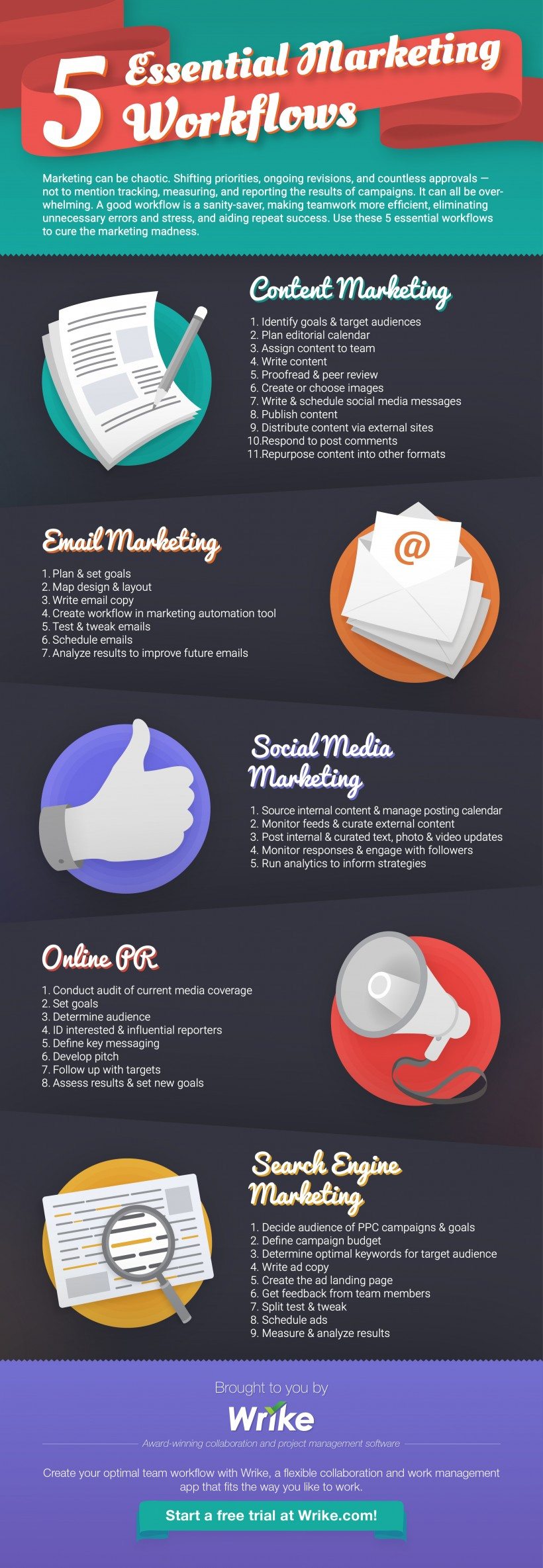
In today’s digital age, thriving online is essential for businesses of all sizes. Whether you’re a small startup or a well-established corporation, having a strong online presence can significantly impact your success. But with the ever-evolving digital landscape, how do you ensure that your business not only survives but thrives online? The answer lies in mastering essential marketing techniques. In this comprehensive guide, we’ll explore five key marketing techniques that are crucial for success in the digital realm.
1. Search Engine Optimization (SEO)
Search Engine Optimization, commonly known as SEO, is the cornerstone of online marketing. It’s the process of optimizing your website and content to rank higher in search engine results pages (SERPs). When done correctly, SEO can drive organic traffic to your website, increase brand visibility, and ultimately boost your online presence.
Keywords: The Foundation of SEO
At the heart of SEO lies keyword research. Keywords are the terms and phrases that users type into search engines when looking for information or products. To thrive online, you must identify relevant keywords in your industry and strategically incorporate them into your website’s content.
Start by using keyword research tools like Google Keyword Planner or SEMrush to discover high-volume keywords related to your business. Look for keywords with a balance between search volume and competition.
Once you’ve identified your target keywords, integrate them naturally into your website’s content, including:
- Title tags
- Meta descriptions
- Header tags (H1, H2, H3)
- Body content
- Image alt tags
But remember, keyword stuffing—overloading your content with keywords—can have a detrimental effect on your SEO. Focus on creating high-quality, informative, and engaging content that addresses users’ needs and questions while incorporating your keywords thoughtfully.
On-Page and Off-Page SEO
In addition to keyword optimization, SEO involves on-page and off-page optimization:
- On-Page SEO: This includes optimizing individual pages of your website. Ensure your pages have descriptive URLs, relevant title tags, and well-structured content. Pay attention to page load speed, mobile-friendliness, and user experience, as these factors also influence your search rankings.
- Off-Page SEO: Off-page SEO encompasses activities that occur outside your website but impact your search rankings. Building high-quality backlinks from reputable websites is a crucial off-page SEO strategy. Encourage online mentions and reviews, as they can also improve your website’s authority.
Mastering SEO is an ongoing process. Search engine algorithms evolve, and it’s essential to stay updated with the latest trends and best practices to maintain and improve your online visibility.
2. Content Marketing
Content marketing is the art of creating valuable, relevant, and consistent content to attract and engage your target audience. It goes hand-in-hand with SEO, as high-quality content not only drives organic traffic but also establishes your authority in your niche.
Types of Content
Diversify your content marketing strategy by creating various types of content, including:
- Blog Posts: Regularly publish informative blog posts that address your audience’s pain points, questions, and interests.
- Infographics: Visual content like infographics can convey complex information in a visually appealing way, making it more shareable.
- Videos: Video content, whether it’s tutorials, product demonstrations, or behind-the-scenes glimpses, is incredibly popular and can boost user engagement.
- Ebooks and Whitepapers: Offer in-depth resources like ebooks and whitepapers in exchange for user contact information, helping you build your email list.
- Social Media Posts: Create engaging posts across social media platforms to connect with your audience and share your content.
Storytelling and Brand Voice
Effective content marketing isn’t just about creating informative content; it’s also about telling your brand’s story and maintaining a consistent brand voice. Your brand’s voice should align with your target audience and reflect your company’s values and personality.
When crafting content, consider the following:
- Who is your target audience?
- What problems does your product or service solve for them?
- What unique perspective or insight can your brand offer?
By answering these questions, you can create content that resonates with your audience and fosters a sense of connection and trust.
Content Distribution
Producing great content is only half the battle. You must also effectively distribute it to reach your target audience. Utilize social media platforms, email marketing, and content syndication to get your content in front of the right eyes. Collaborate with influencers in your niche to expand your content’s reach and credibility.
3. Social Media Marketing
Social media has become an integral part of our daily lives, making it a powerful tool for online marketing. A well-executed social media strategy can help you connect with your audience, build brand loyalty, and drive traffic to your website.
Platform Selection
Choose the social media platforms that align with your target audience and business goals. Popular platforms for businesses include Facebook, Instagram, Twitter, LinkedIn, Pinterest, and TikTok. Each platform has its unique demographics and content formats, so tailor your strategy accordingly.
Consistency and Engagement
Consistency is key in social media marketing. Maintain a regular posting schedule to keep your audience engaged. Use a mix of content types, including text posts, images, videos, and stories, to keep your feed dynamic and interesting.
Engage with your audience by responding to comments, messages, and mentions promptly. Encourage user-generated content (UGC) by running contests or featuring user-submitted content on your profile.
Paid Advertising
Most social media platforms offer advertising options that allow you to reach a wider audience. Paid social media advertising can be highly targeted, ensuring your content reaches the right people. Experiment with different ad formats and targeting options to find what works best for your business.
4. Email Marketing
Email marketing remains one of the most effective marketing techniques for nurturing leads, retaining customers, and driving conversions. Building and maintaining an email list should be a priority in your online marketing strategy.
Building an Email List
Offer incentives such as discounts, free resources, or exclusive access to encourage website visitors to subscribe to your email list. Use sign-up forms strategically on your website, blog, and social media profiles.
Segment your email list based on user behavior, demographics, and interests. This allows you to send targeted and relevant content to different groups, increasing the likelihood of engagement.
Personalization and Automation
Personalization is key to successful email marketing. Use recipient’s names, tailor email content to their interests, and send personalized product recommendations based on their past interactions with your brand.
Leverage email automation to send triggered emails, such as welcome sequences, abandoned cart reminders, and post-purchase follow-ups. Automation saves time and ensures timely communication with your audience.
A/B Testing and Analytics
Continuously improve your email marketing strategy by conducting A/B tests on subject lines, content, and calls to action. Monitor email open rates, click-through rates, and conversion rates to gauge the effectiveness of your campaigns.
5. Pay-Per-Click (PPC) Advertising
Pay-Per-Click advertising, often referred to as PPC, is a powerful tool for driving immediate traffic to your website. It allows you to display ads on search engine results pages and across various online platforms, paying only when users click on your ad.
Google Ads
Google Ads is one of the most popular PPC platforms, enabling you to bid on keywords related to your business. When a user searches for those keywords, your ad can appear at the top of the search results. This targeted advertising can quickly drive traffic to your site.
Social Media Advertising
In addition to organic social media marketing, social media platforms also offer paid advertising options. These ads can appear in users’ feeds or stories, targeting specific demographics, interests, and behaviors.
Display Advertising
Display ads are banner ads that appear on websites within Google’s Display Network. They come in various formats, including images and videos. Display advertising can increase brand visibility and drive traffic to your website through visually appealing creatives.
Remarketing
Remarketing, also known as retargeting, allows you to target users who have previously visited your website but didn’t make a purchase or take the desired action. By displaying ads to these users as they browse other websites, you can re-engage them and encourage them to return to your site and convert.
Conclusion
Thriving online requires a multifaceted approach to digital marketing. By mastering these five essential marketing techniques—SEO, content marketing, social media marketing, email marketing, and PPC advertising—you can create a robust online presence, attract and engage your target audience, and drive your business towards success in the digital age. Keep in mind that the digital landscape is ever-changing, so stay updated with the latest trends and adapt your strategies accordingly to continue thriving online.

Author:
Mark Ford

10 New Year’s Marketing Resolutions to Grow a Small Business Sustainably
Are you struggling to make your marketing efforts deliver steady growth instead of short bursts of activity? Wondering how to build a marketing approach that supports your small business over the long term without constant trial and error? […]
10 Marketing Trends for 2026: What Smart Businesses Will Focus On Next
Are you looking to understand how marketing is shifting in 2026 and what today’s smartest brands are prioritising? Want to know which strategic trends will shape how businesses attract, convert, and retain customers over the next year? […]
How to Build a Marketing Technology Stack That Actually Works Together
Are you trying to figure out how to connect your marketing tools so they actually support each other instead of working in isolation? Want to understand the key steps to building a marketing technology stack that runs smoothly across your entire customer journey? […]