Are you looking for ways to improve your content marketing strategy? Want to learn how repurposing content can expand your reach and engagement?
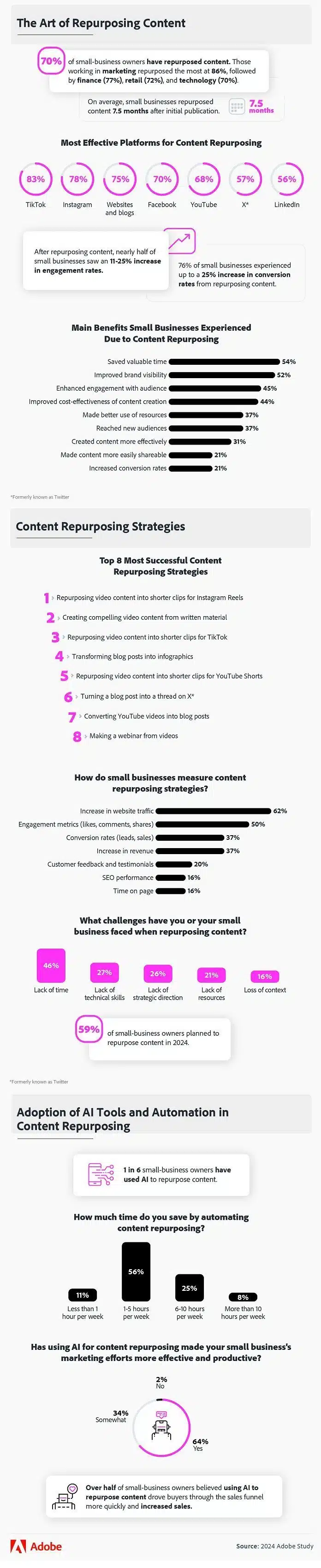
Adobe shares its guide to repurposing content in this infographic.
Here’s what they cover:
- Most effective platforms for content repurposing
- Main benefits small businesses experienced due to content repurposing
- Content repurposing strategies
- How do small businesses measure content repurposing strategies?
- What challenges have you or your small business faced when repurposing content?
Check out the infographic for more information.
Content marketing takes time, effort, and resources. But if you’re only using your content once, you’re leaving money on the table.
Repurposing content allows you to maximise its value, reach new audiences, and keep your brand visible across multiple platforms. Instead of constantly creating new material, you can extend the lifespan of existing content and drive more traffic with less effort.
So how do you repurpose content effectively, and where should you distribute it? This guide will walk you through the best strategies and platforms to help you get the most out of your content.
Why Repurpose Content?
Every piece of content you create—whether it’s a blog post, video, podcast, or infographic—has potential beyond its initial format. Repurposing takes that existing content and reshapes it for new audiences and platforms.
Here’s why repurposing is a smart strategy:
- Expands your reach – Different people consume content in different ways. Some prefer reading blogs, while others engage more with videos or social media snippets.
- Boosts engagement – Presenting content in multiple formats makes it more accessible and appealing.
- Improves SEO – Updating and republishing content can help it rank better in search engines.
- Saves time – Instead of creating something from scratch, you can rework what you already have.
- Reinforces key messages – Repeating your core ideas across different formats strengthens your brand’s authority.
Instead of letting old content sit unused, repurpose it to work harder for your business.
Where to Repurpose Content for Maximum Impact
Not all platforms are created equal when it comes to repurposing content. Here’s where you should focus your efforts.
Social Media
Social media platforms thrive on bite-sized, engaging content. Repurpose long-form content by breaking it into shorter pieces:
- Turn blog posts into Twitter threads or LinkedIn posts.
- Clip key moments from videos for Instagram Reels, TikTok, or YouTube Shorts.
- Extract quotes and insights to create shareable graphics.
The goal is to adapt content to suit the platform—short and snappy for Twitter, visually engaging for Instagram, and video-driven for TikTok.
Blogs & Websites
Your website is the hub of your content strategy. Keep it fresh by repurposing content in the following ways:
- Expand on popular social media posts to create in-depth blog articles.
- Convert video transcripts into written guides.
- Update and republish older blog posts with new insights.
Regular updates signal to search engines that your content is relevant, helping with SEO.
Email Newsletters
Email remains one of the most effective marketing channels. Repurpose content into:
- Digestible email summaries of longer blog posts.
- A multi-part email series based on a detailed guide.
- Exclusive insights derived from existing content.
Since email is direct and personal, it allows you to re-engage audiences with content they may have missed.
Podcasts & Webinars
If you’ve written a well-researched article, why not turn it into a podcast episode or webinar? Many people prefer to listen rather than read, so audio-based content is a great way to reach them.
- Convert blog topics into podcast discussions.
- Use past webinar highlights as standalone podcast episodes.
- Break down key insights from research reports into audio content.
Webinars and podcasts help humanise your brand and make your content more accessible.
Infographics & Visual Content
Not everyone wants to read a full blog post or watch a long video. Infographics make complex ideas more digestible and are highly shareable on platforms like Pinterest and LinkedIn.
- Summarise data-driven content into eye-catching visuals.
- Turn step-by-step guides into infographic checklists.
- Use charts and graphs to highlight key statistics.
Since visuals are easier to consume and share, they can increase engagement and brand awareness.
How to Repurpose Content Effectively
Break Down Long-Form Content
One blog post can become multiple social media posts, an infographic, a podcast episode, and even a short video. Extract key points and present them in different formats.
Update & Refresh Older Content
Trends change, and so does information. Instead of creating new content, revisit old posts, update them with fresh insights, and re-share them.
Use AI & Automation
AI tools can help streamline the repurposing process by summarising blog posts, generating video captions, and transcribing audio content. This saves time and makes repurposing more scalable.
Test & Measure Performance
Not all repurposed content will perform equally well on every platform. Track engagement, conversion rates, and website traffic to see what works best and adjust accordingly.
Common Challenges & How to Overcome Them
Repurposing content comes with its own set of challenges:
- Lack of time – Automate where possible and batch your repurposing efforts.
- Technical skills – Use user-friendly tools for video editing, graphic design, and automation.
- Lack of strategy – Plan your repurposing efforts alongside your content calendar to stay consistent.
The key is to integrate repurposing into your workflow rather than treating it as an afterthought.
Final Thoughts
Repurposing content is a powerful way to extend its lifespan, increase visibility, and boost engagement without constantly creating new material. By strategically adapting content for different platforms and formats, you can reach more people, reinforce key messages, and drive better results.
Instead of always creating something new, look at what you already have—and make it work harder for your business.

Author:
Mark Ford