Are you looking for ways to grow your business? Want to know how to use inbound marketing to achieve your goals?
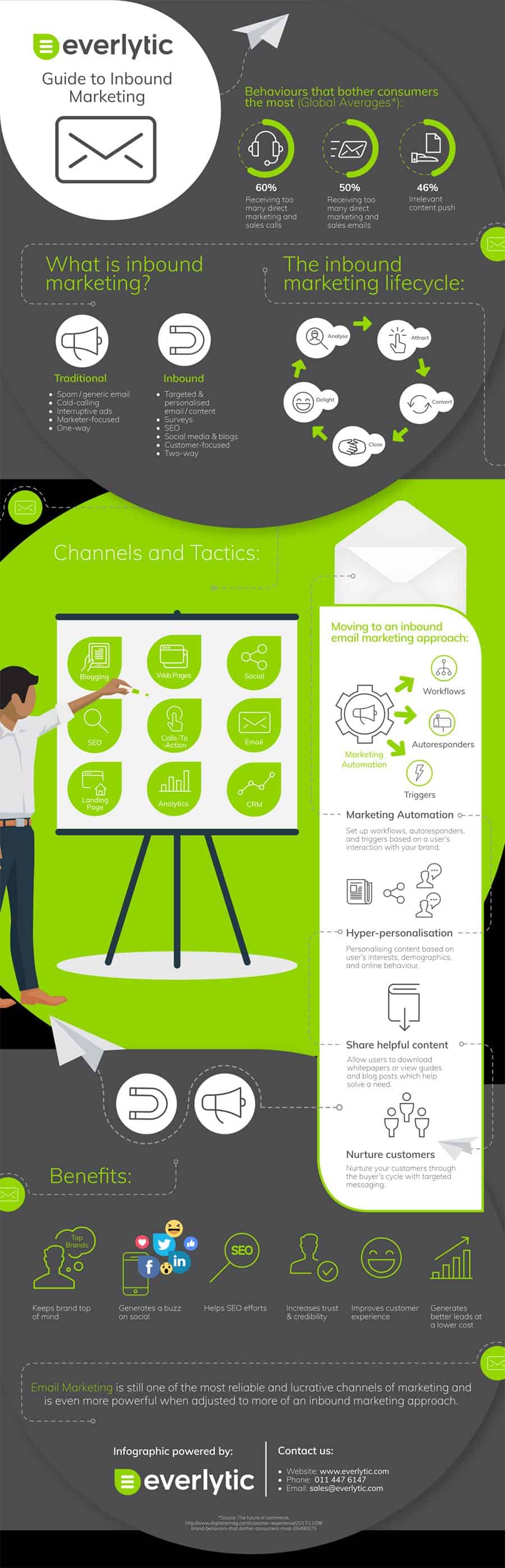
Everlytic share their inbound marketing channels and techniques for success in this infographic.
Here’s a quick summary:
- Blogging
- Website
- Social media
- SEO
- CTA’s
- Landing pages
- Analytics
- CRM
Check out their infographic for more detail.
Inbound marketing has become a cornerstone of modern digital marketing strategies, focusing on attracting customers through relevant and helpful content rather than interrupting them with traditional advertising methods. By leveraging various channels and techniques, businesses can effectively draw in qualified leads and nurture them into loyal customers. Here, we explore nine essential inbound marketing channels and techniques that can significantly contribute to your business growth.
Blogging
Blogging is not just a marketing tactic; it’s a strategic tool that can significantly boost the online presence and growth of small businesses. When done effectively, blogging allows businesses to establish authority in their niche, drive organic traffic to their website, nurture leads, and ultimately, convert them into loyal customers. Here’s a comprehensive guide on how small businesses can leverage blogging as a powerful inbound marketing channel:
- Understand Your Audience and Their Pain Points
Successful blogging starts with a deep understanding of your target audience. Take the time to research and create detailed buyer personas that represent your ideal customers. Identify their demographics, interests, challenges, and the questions they have related to your industry or products/services.
By understanding your audience’s pain points and motivations, you can create content that resonates with them on a personal level. Addressing their specific needs through your blog posts not only attracts them to your site but also positions your business as a valuable resource.
- Conduct Keyword Research
Keyword research is essential for optimizing your blog posts for search engines and attracting organic traffic. Use tools like Google Keyword Planner, SEMrush, or Ahrefs to identify relevant keywords and phrases that have a good search volume and moderate competition.
Focus on long-tail keywords (phrases containing three or more words) that are specific to your niche. These keywords often have lower competition and higher intent, meaning they are more likely to attract visitors who are ready to engage with your content.
- Develop a Content Strategy
Create a content strategy that aligns with your business goals and addresses the needs of your audience. Plan your blog topics in advance based on keyword research, industry trends, and customer feedback. Aim for a mix of evergreen content (timeless and always relevant) and topical content (current trends or news).
Outline your content calendar to ensure consistent publishing. Whether you choose to post weekly, bi-weekly, or monthly, maintain a regular schedule to build trust and keep your audience engaged.
- Create High-Quality, Valuable Content
The quality of your content is paramount. Each blog post should provide real value to your readers, whether it educates, entertains, solves a problem, or inspires action. Here are some tips for creating high-quality blog posts:
- Originality: Offer unique perspectives, insights, or experiences that differentiate your content from competitors.
- Useful Information: Provide practical tips, guides, tutorials, or case studies that help your audience achieve their goals.
- Visual Appeal: Incorporate relevant images, infographics, or videos to enhance readability and engagement.
- SEO Optimization: Integrate your target keywords naturally into your content, including in the title, headers, meta description, and throughout the body.
- Optimize for SEO
Optimizing your blog posts for search engines increases their visibility and attracts organic traffic. Beyond incorporating keywords, consider the following SEO best practices:
- Meta Tags: Write compelling meta titles and descriptions that encourage clicks from search engine results pages (SERPs).
- Headers and Subheadings: Use H1, H2, and H3 tags to structure your content logically and improve readability.
- Internal Linking: Link to other relevant blog posts or pages within your website to keep visitors engaged and improve SEO.
- External Links: Reference authoritative external sources to support your claims and demonstrate credibility.
- Promote Your Blog Content
Creating great content is only half the battle; promoting it effectively is equally important. Use social media platforms, email newsletters, and online communities to distribute your blog posts and reach a wider audience. Consider the following promotional tactics:
- Social Sharing: Share your blog posts across your business’s social media channels. Tailor your messaging to each platform and encourage followers to engage and share.
- Email Marketing: Include links to your latest blog posts in your email newsletters. Segment your email list to send relevant content to specific audience segments.
- Guest Blogging: Contribute guest posts to industry-related websites or blogs. This not only exposes your brand to a new audience but also builds backlinks to your site, which improves SEO.
- Engage with Your Audience
Encourage interaction and feedback from your readers by enabling comments on your blog posts. Respond promptly to comments and questions to foster a sense of community and build relationships with your audience.
Use analytics tools like Google Analytics to track the performance of your blog posts. Monitor metrics such as traffic sources, page views, bounce rates, and average time on page to understand what content resonates most with your audience.
- Measure Success and Adjust Your Strategy
Regularly review your blogging efforts to assess what’s working and what isn’t. Use analytics data to identify your top-performing blog posts, popular topics, and traffic trends. Adjust your content strategy based on these insights to optimize your blog for continued growth and engagement.
- Stay Consistent and Persistent
Consistency is key to building a loyal readership and gaining traction with search engines. Stick to your content calendar and maintain a steady flow of valuable blog posts over time. Rome wasn’t built in a day, and neither is a successful blogging strategy. Stay persistent and patient, as the benefits of effective blogging often compound over time.
Conclusion
Blogging remains a foundational element of successful inbound marketing strategies for small businesses. By understanding your audience, conducting thorough keyword research, creating valuable content, optimizing for SEO, promoting effectively, engaging with your audience, and measuring success, you can harness the full potential of blogging to attract, engage, and convert visitors into loyal customers. Commit to continually refining your approach based on data-driven insights to ensure your blogging efforts contribute to sustained business growth and success.
Website
Your website serves as the digital storefront for your business, making it essential for attracting and converting visitors into customers. A well-optimized website not only enhances your online presence but also supports your overall inbound marketing efforts. Here’s a comprehensive guide on how small businesses can leverage their website to maximize growth through inbound marketing:
- Design with User Experience (UX) in Mind
User experience is paramount when it comes to website design. Your website should be visually appealing, easy to navigate, and responsive across all devices (desktops, tablets, and smartphones). Consider the following tips for enhancing UX:
- Clear Navigation: Organize your website menu logically with clear categories and subcategories. Use descriptive labels that help visitors easily find what they’re looking for.
- Mobile Responsiveness: With an increasing number of users browsing on mobile devices, ensure your website is fully responsive. Test it on various devices and screen sizes to guarantee a seamless experience.
- Loading Speed: Optimize your website’s loading speed by compressing images, leveraging browser caching, and minimizing unnecessary scripts. A fast-loading website improves user satisfaction and reduces bounce rates.
- Optimize for Search Engines (SEO)
Search engine optimization (SEO) plays a crucial role in driving organic traffic to your website. Implement the following SEO best practices to improve your website’s visibility in search engine results:
- Keyword Optimization: Conduct keyword research to identify relevant keywords and incorporate them naturally into your website’s content, meta tags (title, description), headers, and URLs.
- Meta Tags: Write compelling meta titles and descriptions for each page that accurately describe its content and include targeted keywords.
- URL Structure: Use clean, descriptive URLs that include keywords related to the page’s content. Avoid lengthy URLs with unnecessary parameters.
- Internal Linking: Link relevant pages and blog posts within your website to improve navigation and distribute link equity throughout your site.
- Create Compelling Landing Pages
Landing pages are designed to convert visitors into leads or customers by focusing on a specific offer, such as a free ebook download, webinar registration, or product demo. Here’s how to create effective landing pages:
- Clear Value Proposition: Clearly communicate the benefits of your offer and what visitors will gain by taking action.
- Strong Call-to-Action (CTA): Use a prominent and compelling CTA button that encourages visitors to complete the desired action (e.g., “Download Now,” “Sign Up for Free,” “Get Started”).
- Minimal Form Fields: Keep forms short and ask for only essential information to reduce friction and increase conversion rates.
- Visual Appeal: Use engaging visuals (images, videos, infographics) that complement your offer and capture visitors’ attention.
- Implement Conversion Rate Optimization (CRO) Techniques
Conversion rate optimization (CRO) focuses on improving the percentage of website visitors who take desired actions, such as filling out a form or making a purchase. Consider the following CRO strategies:
- A/B Testing: Experiment with different elements on your website (CTAs, headlines, images, layout) to determine which variations perform better.
- Heatmaps and Click Tracking: Use tools like Hotjar or Crazy Egg to analyze how visitors interact with your website. Identify areas where users drop off or hesitate to take action.
- Optimized Forms: Streamline your forms by removing unnecessary fields and using autofill options when possible. Implement progress indicators for longer forms to keep users engaged.
- Leverage Content Management Systems (CMS)
A content management system (CMS) simplifies the process of updating and managing your website content without requiring extensive technical knowledge. Popular CMS platforms like WordPress, Joomla, or Drupal offer:
- Ease of Use: Intuitive interfaces that allow non-technical users to create, edit, and publish content easily.
- Customization: Ability to customize themes and plugins to enhance functionality and meet specific business needs.
- SEO Plugins: Integration with SEO plugins (e.g., Yoast SEO for WordPress) that provide guidance on optimizing content for search engines.
- Integrate Social Proof and Testimonials
Incorporate social proof, such as customer testimonials, reviews, case studies, and client logos, throughout your website. Social proof enhances credibility and trustworthiness, which can influence visitors’ purchasing decisions. Place testimonials strategically on landing pages, product pages, and the homepage to reassure potential customers of your value and reliability.
- Monitor and Analyze Website Performance
Regularly monitor your website’s performance using analytics tools like Google Analytics. Key metrics to track include:
- Traffic Sources: Identify which channels drive the most traffic to your website (organic search, social media, direct traffic).
- Bounce Rate: Measure the percentage of visitors who leave your website after viewing only one page. A high bounce rate may indicate issues with content relevance or user experience.
- Conversion Rates: Track the effectiveness of your CTAs and landing pages by monitoring conversion rates for different offers.
- Ensure Security and Compliance
Maintain the security of your website to protect user data and build trust with your audience. Implement HTTPS encryption, regularly update software and plugins, and use strong passwords. Ensure compliance with data protection regulations such as GDPR or CCPA if applicable to your business.
- Continuously Improve and Update Your Website
Finally, treat your website as a dynamic asset that evolves over time. Regularly audit and update content to reflect changes in your business, industry trends, and customer needs. Stay informed about new technologies and best practices in web design and SEO to keep your website competitive and effective.
Conclusion
A well-optimized website is crucial for small businesses looking to leverage inbound marketing effectively. By focusing on user experience, SEO, conversion rate optimization, and security, businesses can create a website that not only attracts visitors but also converts them into loyal customers. Commit to ongoing improvement, monitor performance metrics, and adapt your strategies based on data-driven insights to ensure your website continues to support and drive business growth over time.
Social Media
Social media has revolutionized how businesses connect with their audience, build relationships, and promote their products or services. For small businesses, leveraging social media effectively can significantly enhance brand visibility, engage with potential customers, and drive traffic to their website. Here’s a detailed guide on how small businesses can utilize social media as a powerful inbound marketing channel:
- Choose the Right Platforms
Not all social media platforms are created equal, and each caters to a different audience and content format. Determine which platforms align best with your target audience, industry, and business goals. Here are some popular platforms and their typical uses:
- Facebook: Ideal for B2C businesses and targeting a wide demographic range. Use it for brand awareness, community building, and customer service.
- Instagram: Great for visually-driven businesses such as fashion, beauty, and travel. Use it for showcasing products/services, behind-the-scenes content, and influencer partnerships.
- Twitter: Suitable for real-time updates, industry news, and engaging in conversations with customers and influencers.
- LinkedIn: Perfect for B2B businesses, networking, thought leadership, and sharing professional content such as whitepapers, case studies, and industry insights.
- Pinterest: Best for businesses with visually appealing products or services. Use it for inspiration, DIY projects, and driving traffic to your website through pins.
- Optimize Your Social Media Profiles
Ensure your social media profiles are complete, professional, and consistent with your brand identity. Here’s how to optimize your profiles:
- Profile Picture and Cover Photo: Use high-quality images that reflect your brand. Your profile picture should be recognizable, such as your logo, and your cover photo should showcase your brand’s personality or latest promotion.
- Bio and About Section: Craft a concise yet informative bio that communicates who you are, what you do, and why followers should engage with you. Include relevant keywords and hashtags.
- Contact Information: Make it easy for potential customers to contact you by providing your website URL, email address, phone number, and physical address if applicable.
- Develop a Content Strategy
Consistency and relevancy are key to successful social media marketing. Create a content strategy that aligns with your business objectives and resonates with your audience. Here’s how to develop an effective content strategy:
- Content Calendar: Plan your social media posts in advance using a content calendar. Include a mix of content types such as articles, videos, images, infographics, polls, and user-generated content.
- Educational and Informative Content: Share industry insights, tips, and how-to guides that provide value to your audience. Establish your business as a trusted authority in your niche.
- Promotional Content: Promote your products or services strategically without being overly promotional. Highlight benefits, features, customer testimonials, and limited-time offers.
- Engagement Content: Encourage interaction with your audience through questions, polls, contests, and challenges. Respond promptly to comments and messages to foster a sense of community.
- Build Relationships and Engage with Your Audience
Social media is about building relationships and fostering engagement. Actively engage with your followers by:
- Responding to Comments and Messages: Promptly respond to comments, mentions, and direct messages. Show genuine interest in your audience’s questions, feedback, and concerns.
- Initiating Conversations: Start conversations with your audience by asking open-ended questions or seeking their opinions on relevant topics.
- Acknowledging User-Generated Content: Share and acknowledge user-generated content (UGC) created by your customers. It demonstrates appreciation and builds community spirit.
- Use Visual Content Effectively
Visual content performs exceptionally well on social media and can help increase engagement and visibility. Here’s how to use visual content effectively:
- High-Quality Images and Videos: Use professional-quality images and videos that align with your brand and resonate with your audience’s interests.
- Infographics: Share informative infographics that simplify complex information or present data in a visually appealing format.
- Stories and Live Videos: Utilize stories and live videos (available on platforms like Instagram and Facebook) to offer behind-the-scenes glimpses, product demonstrations, and Q&A sessions.
- Leverage Paid Advertising
Social media advertising offers targeted options to reach specific demographics, interests, and behaviors. Consider running paid campaigns to:
- Increase Reach and Visibility: Promote your best-performing posts to a broader audience.
- Drive Traffic to Your Website: Use clickable ads with compelling CTAs to direct traffic to specific landing pages or product pages on your website.
- Generate Leads: Run lead generation campaigns to capture contact information directly from interested users.
- Analyze Performance and Adjust Strategies
Regularly monitor your social media analytics to measure the effectiveness of your efforts. Key metrics to track include:
- Reach and Impressions: Measure how many users see your posts and how often they’re displayed.
- Engagement Rate: Calculate the percentage of users who interact with your content (likes, comments, shares).
- Click-through Rate (CTR): Monitor how many users click on links in your posts or ads.
- Conversion Rate: Track the number of users who complete desired actions, such as signing up for a newsletter or making a purchase.
Use insights from analytics tools provided by each social media platform (e.g., Facebook Insights, Twitter Analytics) to refine your content strategy, optimize posting times, and allocate budget effectively.
- Foster Brand Advocacy and Loyalty
Encourage satisfied customers to become brand advocates by sharing their positive experiences with your products or services. Here’s how to foster brand advocacy:
- Customer Reviews and Testimonials: Showcase customer testimonials and reviews on your social media profiles and website.
- User-Generated Content (UGC): Feature UGC on your social media platforms to demonstrate real-life use cases and build credibility.
- Exclusive Offers for Followers: Reward loyal followers with exclusive discounts, promotions, or sneak peeks of new products/services.
- Stay Updated and Adapt to Changes
Social media platforms continually evolve with new features, algorithms, and trends. Stay informed about platform updates and industry best practices to stay ahead of the competition. Experiment with new content formats, engage with emerging trends, and adapt your strategies based on what resonates most with your audience.
Conclusion
Social media is a powerful tool for small businesses to connect with their audience, build brand awareness, and drive website traffic. By choosing the right platforms, developing a content strategy, engaging with followers, leveraging visual content, utilizing paid advertising, analyzing performance, fostering brand advocacy, and staying updated with platform changes, small businesses can effectively harness the potential of social media as a key component of their inbound marketing strategy. Commit to consistency, authenticity, and customer-centricity to maximize your social media efforts and achieve sustainable growth for your business.
SEO (Search Engine Optimization)
Search Engine Optimization (SEO) is crucial for small businesses aiming to increase their online visibility and attract qualified traffic from search engines like Google. By optimizing your website and content according to SEO best practices, you can improve your rankings in search engine results pages (SERPs) and ultimately drive more organic traffic to your website. Here’s a comprehensive guide on how small businesses can effectively leverage SEO:
- Conduct Comprehensive Keyword Research
Keyword research forms the foundation of any successful SEO strategy. It involves identifying relevant keywords and phrases that potential customers are likely to use when searching for products or services related to your business. Here’s how to conduct effective keyword research:
- Understand Search Intent: Consider the intent behind each keyword (e.g., informational, navigational, transactional). Focus on keywords that align with your business goals and target audience’s needs.
- Use Keyword Research Tools: Utilize tools such as Google Keyword Planner, SEMrush, Ahrefs, or Moz Keyword Explorer to discover relevant keywords, analyze search volume, and assess keyword difficulty.
- Long-Tail Keywords: Target long-tail keywords (phrases containing three or more words) that are more specific and have lower competition. These keywords often result in higher conversion rates as they capture more targeted traffic.
- Optimize On-Page SEO Elements
On-page SEO involves optimizing individual web pages to improve their search engine rankings and attract organic traffic. Focus on the following elements:
- Title Tags: Craft compelling and descriptive title tags (meta titles) for each page, incorporating your primary keyword naturally. Keep titles under 60 characters to ensure they display properly in search results.
- Meta Descriptions: Write persuasive meta descriptions that summarize the content of each page and encourage users to click through to your website. Include relevant keywords but prioritize readability and user engagement.
- Headers (H1, H2, H3): Use headers to organize your content hierarchically and improve readability. Include your target keywords in headers where appropriate to signal the topic of each section to search engines.
- Optimized URLs: Create SEO-friendly URLs that include relevant keywords and accurately describe the content of each page. Avoid using generic or auto-generated URLs with random strings of characters.
- Quality Content: Publish high-quality, valuable content that addresses the needs and interests of your target audience. Use your primary and related keywords naturally throughout the content while maintaining readability and relevance.
- Internal Linking: Link to other relevant pages and blog posts within your website to guide users and distribute link equity. Internal links help search engines crawl and index your site more effectively.
- Improve Website Speed and Mobile Responsiveness
Website speed and mobile responsiveness are crucial ranking factors for SEO and contribute significantly to user experience (UX). Here’s how to optimize these aspects:
- Page Loading Speed: Use tools like Google PageSpeed Insights or GTmetrix to analyze and optimize your website’s loading speed. Compress images, leverage browser caching, and minimize unnecessary scripts to improve performance.
- Mobile-Friendly Design: Ensure your website is fully responsive and displays correctly on all devices, including smartphones and tablets. Responsive design enhances user experience and satisfies Google’s mobile-first indexing.
- Build High-Quality Backlinks
Backlinks (links from other websites to yours) are a vital aspect of off-page SEO and a major ranking factor for search engines. Focus on acquiring high-quality backlinks from reputable and relevant websites. Here are effective strategies to build backlinks:
- Content Marketing: Create compelling and shareable content such as blog posts, infographics, or videos that naturally attract links from other websites.
- Guest Blogging: Contribute guest posts to authoritative websites and blogs within your industry. Include a relevant link back to your website in the author bio or within the content (where appropriate).
- Broken Link Building: Find broken links on other websites related to your industry and offer to replace them with a link to relevant content on your site.
- Local SEO: Get listed in local business directories, chambers of commerce websites, and industry associations to build local citations and backlinks.
- Utilize Schema Markup
Schema markup is a type of structured data that helps search engines understand the content of your website better. Implementing schema markup can enhance your search engine visibility and improve click-through rates by enabling rich snippets in search results. Use schema markup for:
- Business Information: Include schema markup for your business’s name, address, phone number (NAP), and operating hours.
- Product Information: Use schema markup to highlight product details such as price, availability, and reviews.
- Events: Mark up event information such as dates, times, and locations.
- Monitor and Analyze SEO Performance
Regularly monitor your SEO performance using tools like Google Analytics, Google Search Console, and third-party SEO platforms. Key metrics to track include:
- Organic Traffic: Measure the volume and trends of organic traffic to your website over time.
- Keyword Rankings: Monitor your rankings for target keywords and track changes in position.
- Click-Through Rate (CTR): Analyze the CTR of your pages in search results and optimize meta tags and descriptions to improve CTR.
- Backlink Profile: Monitor the quantity and quality of backlinks pointing to your website. Identify opportunities to acquire new backlinks and disavow toxic links if necessary.
- Stay Updated with SEO Trends and Algorithm Changes
SEO is an ever-evolving field, and search engine algorithms regularly undergo updates. Stay informed about industry trends, algorithm changes, and best practices to adapt your SEO strategy accordingly. Join SEO communities, follow reputable blogs and publications, and attend webinars or conferences to stay ahead of the curve.
- Focus on Local SEO
If your business serves a specific geographic area, prioritize local SEO to attract customers in your vicinity. Here are essential tips for local SEO:
- Google My Business: Claim and optimize your Google My Business profile with accurate business information, photos, and customer reviews.
- Local Citations: Get listed in local directories, review sites, and industry-specific platforms. Ensure NAP consistency across all citations.
- Local Content: Create content that addresses local topics, events, and customer needs. Use location-specific keywords naturally throughout your website and content.
- Continuous Improvement and Adaptation
SEO is not a one-time effort but a continuous process of improvement and adaptation. Regularly audit your website, update content, acquire new backlinks, and refine your SEO strategy based on data-driven insights and performance metrics. Experiment with new tactics and monitor results to achieve sustainable growth through organic search traffic.
Conclusion
Search Engine Optimization (SEO) is a critical component of inbound marketing strategies for small businesses seeking to increase online visibility and attract qualified traffic. By focusing on comprehensive keyword research, optimizing on-page SEO elements, improving website speed and mobile responsiveness, building high-quality backlinks, utilizing schema markup, monitoring SEO performance, staying updated with SEO trends, focusing on local SEO, and committing to continuous improvement, small businesses can effectively harness the power of SEO to drive organic growth and achieve long-term success online. Adopt a holistic approach to SEO, prioritize user experience, and adhere to best practices to maximize your website’s potential and compete effectively in search engine rankings.
Calls-to-Action (CTAs)
Calls-to-action (CTAs) are crucial elements in any inbound marketing strategy, guiding website visitors toward taking specific actions that align with your business goals. Whether your objective is to generate leads, encourage newsletter sign-ups, promote a product, or drive sales, effective CTAs can significantly impact your conversion rates. Here’s a comprehensive guide on how small businesses can optimize their CTAs to maximize engagement and conversions:
- Understand Your Audience and Goals
Before creating CTAs, it’s essential to understand your target audience and their needs. Consider where they are in the buyer’s journey and tailor your CTAs accordingly. Common goals for CTAs include:
- Lead Generation: Encouraging visitors to fill out a contact form, download a resource, or sign up for a webinar.
- Sales and Conversions: Prompting visitors to make a purchase, request a demo, or schedule a consultation.
- Engagement: Encouraging social shares, comments, or subscriptions to your blog or newsletter.
- Design Eye-Catching and Action-Oriented CTAs
The design and presentation of your CTAs play a crucial role in capturing attention and prompting action. Follow these tips for creating compelling CTAs:
- Use Contrast: Make your CTAs stand out by using contrasting colors that complement your website’s color scheme. Choose colors that evoke emotion and draw attention without clashing with your overall design.
- Clear and Concise Copy: Keep your CTA copy concise, clear, and action-oriented. Use strong verbs that compel users to act immediately (e.g., “Download Now,” “Sign Up Today,” “Get Started”).
- Create Urgency: Incorporate words or phrases that create a sense of urgency or scarcity (e.g., “Limited Time Offer,” “Act Now,” “Only X Days Left”). Urgency prompts visitors to take action quickly rather than delaying.
- Positioning: Place CTAs strategically where they are highly visible and contextually relevant. Consider placing them above the fold (visible without scrolling) on landing pages, blog posts, and product pages.
- Personalize CTAs Based on User Behavior
Personalizing CTAs based on user behavior and preferences can significantly increase engagement and conversions. Leverage data from user interactions, browsing history, and previous purchases to deliver targeted CTAs. Here’s how to personalize CTAs effectively:
- Dynamic Content: Use marketing automation tools to display personalized CTAs based on criteria such as demographics, location, past purchases, or browsing behavior.
- Segmentation: Segment your audience into distinct groups based on their interests, preferences, or stage in the buying cycle. Tailor CTAs to resonate with each segment’s specific needs and motivations.
- Test and Optimize CTAs
A/B testing (or split testing) allows you to experiment with different variations of CTAs to identify which ones perform best. Test elements such as:
- Copy: Compare different wording, calls to action, and value propositions to determine which resonates most with your audience.
- Design: Test different colors, button shapes, sizes, and placements to optimize visual appeal and usability.
- Placement: Experiment with placing CTAs in different locations on your website or within content to find the most effective positioning.
Monitor key metrics such as click-through rates (CTR), conversion rates, and bounce rates to measure the impact of each variation. Continuously optimize your CTAs based on test results to improve performance over time.
- Align CTAs with Landing Pages and Offer Value
Ensure your CTAs lead to relevant landing pages that deliver on the promise made in the CTA. The landing page should provide additional information about the offer and facilitate the conversion process seamlessly. Tips for aligning CTAs with landing pages include:
- Consistent Messaging: Maintain consistency between the CTA copy and the content on the landing page. Ensure visitors understand what they will receive or achieve by clicking on the CTA.
- Highlight Value Proposition: Clearly articulate the benefits and value of the offer on the landing page. Use persuasive copy, bullet points, testimonials, or visuals to reinforce why visitors should take action.
- Optimize Forms: Keep forms on landing pages simple and only request essential information. Minimize friction by using autofill options and clearly labeling required fields.
- Track and Measure CTA Performance
Use analytics tools such as Google Analytics, HubSpot, or Kissmetrics to track and measure the performance of your CTAs. Key metrics to monitor include:
- Click-Through Rate (CTR): Measure the percentage of visitors who click on your CTAs compared to the total number of impressions.
- Conversion Rate: Track the percentage of visitors who complete the desired action (e.g., filling out a form, making a purchase) after clicking on a CTA.
- Engagement Metrics: Analyze how users interact with CTAs, including hover rates, scroll depth, and time spent before clicking.
Use insights from analytics to identify trends, understand user behavior, and make data-driven decisions to optimize CTAs for improved engagement and conversion rates.
- Use Multiple CTAs Throughout Your Website
Incorporate CTAs strategically across different pages of your website to capture visitor interest and guide them toward conversion. Consider placing CTAs on:
- Homepage: Encourage visitors to explore your products or services or sign up for your newsletter.
- Product Pages: Prompt potential customers to make a purchase or request more information about a specific product or service.
- Blog Posts: Invite readers to subscribe to your blog, download related content, or explore relevant products or services.
- Exit-Intent Pop-ups: Display CTAs when users are about to leave your website to entice them to stay or complete an action.
- Regularly Update and Refresh CTAs
Keep your CTAs fresh and relevant by updating them regularly based on changes in your offerings, promotions, or seasonal campaigns. Avoid using outdated or expired CTAs that no longer align with your current marketing objectives.
- Learn from Competitors and Industry Leaders
Monitor the CTAs used by competitors and industry leaders to gain inspiration and insights into effective strategies. Analyze their approaches, experiment with similar tactics, and adapt them to suit your business goals and audience preferences.
Conclusion
Effective calls-to-action (CTAs) are instrumental in guiding website visitors toward taking specific actions that support your business objectives, whether it’s generating leads, driving sales, or increasing engagement. By understanding your audience, designing compelling CTAs, personalizing based on user behavior, testing and optimizing performance, aligning with landing pages, tracking metrics, using multiple CTAs strategically, updating regularly, and learning from industry trends, small businesses can maximize the impact of their CTAs and achieve higher conversion rates. Commit to continuous improvement, creativity, and responsiveness to audience needs to leverage CTAs as powerful tools in your inbound marketing arsenal.
Email Marketing
Email marketing remains a cornerstone of digital marketing strategies for small businesses, offering a direct and cost-effective way to communicate with prospects and customers. When implemented effectively, email marketing can nurture leads, build relationships, drive traffic, and ultimately increase sales. Here’s a comprehensive guide on how small businesses can leverage email marketing to achieve their business goals:
- Build and Segment Your Email List
Building a quality email list is the first step in successful email marketing. Focus on attracting subscribers who are genuinely interested in your products or services. Here’s how to build and segment your email list:
- Opt-In Forms: Place prominent opt-in forms on your website, blog, and social media channels. Offer incentives such as discounts, exclusive content, or free resources to encourage sign-ups.
- Segmentation: Divide your email list into segments based on demographics, interests, purchase history, and engagement level. Segmented email campaigns result in higher open rates, click-through rates (CTRs), and conversions.
- Personalization: Address subscribers by their name and personalize email content based on their preferences and behaviors. Use dynamic content and personalized recommendations to enhance engagement.
- Create Compelling and Relevant Content
Content is key to engaging your email subscribers and driving action. Tailor your content to provide value, solve problems, or entertain your audience. Here are types of content to include in your email marketing campaigns:
- Newsletters: Regular updates on company news, industry trends, and useful tips or resources.
- Promotions and Offers: Exclusive discounts, sales announcements, and limited-time offers to encourage purchases.
- Educational Content: How-to guides, tutorials, or industry insights that demonstrate your expertise and provide value to subscribers.
- Customer Stories and Testimonials: Showcase success stories, case studies, or customer testimonials to build trust and credibility.
- Craft Engaging Subject Lines and Preview Text
The subject line and preview text are the first things subscribers see in their inbox, influencing whether they open your email. Tips for crafting compelling subject lines and preview text include:
- Personalization: Use the subscriber’s name or reference their recent purchase or interaction with your brand.
- Clear and Concise: Keep subject lines short (around 30-50 characters) and preview text informative to entice recipients to open the email.
- Create Urgency: Use words that create a sense of urgency or curiosity (e.g., “Limited Time Offer,” “Last Chance,” “Exclusive Access”).
- Avoid Spam Triggers: Steer clear of spammy words and excessive punctuation that could trigger spam filters.
- Design Responsive and Visually Appealing Emails
Email design plays a crucial role in capturing and maintaining subscriber interest. Ensure your emails are visually appealing, easy to read, and optimized for all devices (desktops, tablets, and smartphones). Consider the following design best practices:
- Use a Clean Layout: Organize content logically with clear sections, headings, and white space to improve readability.
- Include Images and Videos: Use high-quality images, GIFs, or embedded videos to enhance visual appeal and convey your message effectively.
- Mobile Optimization: Design emails that adapt seamlessly to smaller screens. Use responsive design principles to ensure readability and functionality on mobile devices.
- Call-to-Action (CTA): Place clear and compelling CTAs prominently within your emails to encourage clicks. Use contrasting colors and concise copy that clearly communicates the action you want subscribers to take.
- Automate Email Campaigns for Efficiency
Marketing automation tools allow small businesses to streamline email marketing efforts and deliver personalized experiences at scale. Implement automated email campaigns for:
- Welcome Series: Onboard new subscribers with a series of emails introducing your brand, highlighting key products or services, and encouraging engagement.
- Drip Campaigns: Nurture leads with a series of targeted emails based on subscriber behavior, interests, or stage in the buying cycle.
- Abandoned Cart Emails: Remind customers about items left in their shopping cart and encourage them to complete their purchase.
- Birthday or Anniversary Emails: Send personalized greetings or exclusive offers to celebrate special occasions.
- Measure and Optimize Email Campaign Performance
Track key metrics to evaluate the effectiveness of your email marketing campaigns and identify areas for improvement. Key metrics to monitor include:
- Open Rate: The percentage of recipients who open your email.
- Click-Through Rate (CTR): The percentage of recipients who click on links within your email.
- Conversion Rate: The percentage of recipients who complete a desired action (e.g., make a purchase, sign up for a webinar) after clicking through from your email.
- Bounce Rate: The percentage of emails that were not delivered to recipients’ inboxes due to invalid email addresses or other issues.
- Unsubscribe Rate: The percentage of subscribers who opt out of receiving future emails from your list.
Use A/B testing to experiment with different elements of your emails (subject lines, CTAs, content, send times) and optimize based on performance data to improve engagement and conversion rates.
- Maintain Compliance with Email Marketing Regulations
Ensure compliance with email marketing regulations such as the CAN-SPAM Act (in the United States) and GDPR (in the European Union) to protect subscriber privacy and avoid legal penalties. Key compliance practices include:
- Permission-Based Marketing: Only send emails to subscribers who have explicitly opted in to receive communications from your business.
- Provide Opt-Out Options: Include a clear and easy-to-find unsubscribe link in every email. Honor unsubscribe requests promptly to maintain trust and compliance.
- Data Protection: Safeguard subscriber data and ensure secure handling of personal information in accordance with applicable data protection laws.
- Integrate Email Marketing with Other Channels
Maximize the impact of your email marketing efforts by integrating them with other digital marketing channels and campaigns. Coordinate email content and promotions with social media, content marketing, and paid advertising efforts to reinforce messaging and drive consistent brand engagement.
- Continuously Innovate and Adapt
Email marketing trends and best practices evolve over time. Stay informed about industry trends, new technologies, and consumer preferences to innovate your email marketing strategies continuously. Experiment with new content formats, personalization tactics, and automation tools to stay ahead of the competition and maintain engagement with your audience.
Conclusion
Email marketing remains a powerful tool for small businesses to engage with their audience, nurture leads, and drive conversions effectively. By focusing on building a quality email list, creating compelling content, designing responsive emails, automating campaigns, measuring performance, maintaining compliance, integrating with other channels, and continuously innovating, small businesses can leverage email marketing to achieve business growth and success. Commit to delivering value, fostering relationships, and providing personalized experiences to maximize the impact of your email marketing efforts and build long-term customer loyalty.
Landing Pages
Landing pages play a critical role in converting website visitors into leads or customers. Unlike typical web pages, landing pages are designed with a singular focus – to encourage visitors to take a specific action, such as signing up for a newsletter, downloading an ebook, requesting a demo, or making a purchase. Here’s a comprehensive guide on how small businesses can create and optimize effective landing pages to maximize conversions:
- Define Clear Goals and Objectives
Before creating a landing page, clarify its purpose and desired outcome. Determine the specific action you want visitors to take (e.g., fill out a form, make a purchase) and align the landing page content and design accordingly. Common goals for landing pages include:
- Lead Generation: Capture contact information from visitors interested in your products or services.
- Sales and Conversions: Encourage visitors to make a purchase or request a consultation.
- Event Registration: Prompt visitors to sign up for webinars, workshops, or events.
- Downloadable Content: Offer valuable resources such as ebooks, whitepapers, or guides in exchange for contact details.
- Focus on Compelling Copy and Messaging
The content on your landing page should be clear, persuasive, and focused on addressing visitor needs and motivations. Follow these tips for crafting compelling copy:
- Headline: Use a compelling and clear headline that communicates the value proposition and captures visitor attention immediately. Include relevant keywords to improve SEO and reinforce the offer.
- Subheadline: Provide additional context or benefits in a subheadline to elaborate on the headline and entice visitors to continue reading.
- Benefit-Oriented Content: Clearly outline the benefits of taking the desired action. Explain how the offer solves a problem, meets a need, or fulfills a desire for the visitor.
- Use Bullet Points: Highlight key features or benefits of your offer using bullet points for easy readability and to emphasize important information.
- Call-to-Action (CTA): Include a prominent and persuasive CTA that clearly tells visitors what action to take next (e.g., “Download Now,” “Sign Up Today,” “Get Your Free Trial”).
- Design a Clean and Conversion-Focused Layout
The design of your landing page should guide visitors toward the CTA and encourage conversions. Follow these design best practices:
- Minimalist Design: Keep the layout clean, uncluttered, and focused on the primary objective. Avoid distractions such as unnecessary navigation links or unrelated content.
- Visual Hierarchy: Use visual elements (e.g., colors, fonts, images) to create a clear hierarchy that directs attention to the headline, benefits, and CTA. Use contrasting colors for the CTA button to make it stand out.
- Whitespace: Incorporate ample whitespace around elements to improve readability and draw attention to key information.
- Mobile Optimization: Ensure your landing page is fully responsive and displays correctly on all devices, including smartphones and tablets. Test your landing page on different devices to ensure a seamless user experience.
- Include Relevant and Compelling Visuals
Visual elements such as images, videos, or graphics can enhance the appeal and effectiveness of your landing page. Use visuals that support your messaging and reinforce the value proposition of your offer:
- Hero Image or Video: Include a relevant and high-quality hero image or video that aligns with your offer and captures visitor attention.
- Product or Service Showcase: If applicable, showcase your product or service with high-resolution images or videos that highlight key features and benefits.
- Infographics or Icons: Use infographics or icons to visually represent data, statistics, or key points related to your offer.
- Customer Testimonials: Incorporate testimonials, reviews, or customer success stories with accompanying photos to build trust and credibility.
- Create a Seamless User Experience
The user experience (UX) of your landing page can significantly impact its effectiveness in converting visitors. Focus on creating a seamless and intuitive experience that guides visitors toward the CTA:
- Clear Navigation: Remove unnecessary navigation links that could distract visitors from the primary CTA. Limit navigation options to essential elements like a logo linking to your homepage or a privacy policy link.
- Form Optimization: If your landing page includes a form, optimize it for usability and conversion. Keep the form fields minimal and relevant to reduce friction. Use inline form validation to provide real-time feedback and prevent errors.
- Page Speed: Ensure your landing page loads quickly to prevent visitors from abandoning due to slow load times. Optimize images, minimize scripts, and leverage caching to improve page speed performance.
- Implement Trust Signals and Social Proof
Building trust is crucial for persuading visitors to take action on your landing page. Incorporate trust signals and social proof elements to reassure visitors of your credibility and the value of your offer:
- Customer Testimonials: Display testimonials, reviews, or quotes from satisfied customers who have benefited from your product or service.
- Trust Badges: Include trust badges or security seals (e.g., SSL certificates, payment security badges) to reassure visitors about the safety and reliability of their information.
- Case Studies: Showcase detailed case studies or success stories that demonstrate how your product or service has solved specific problems or achieved results for customers.
- Client Logos: If applicable, feature logos of reputable clients, partners, or organizations you’ve worked with to enhance credibility.
- A/B Test and Optimize for Performance
Continuous testing and optimization are essential to improving the effectiveness of your landing pages over time. Conduct A/B tests to compare different elements and variations to identify what resonates best with your audience:
- CTA Buttons: Test different colors, sizes, and text for your CTA buttons to determine which combination yields the highest conversion rates.
- Headlines and Subheadlines: Experiment with different headlines, subheadlines, or value propositions to see which messaging resonates most effectively.
- Visual Elements: Test variations of hero images, background colors, and layouts to determine which visual elements drive the most engagement.
- Form Fields: Experiment with different form lengths, field requirements, and layouts to minimize friction and increase form submissions.
- Integrate with Analytics and Tracking
Use analytics tools such as Google Analytics, Hotjar, or Crazy Egg to track visitor behavior, conversions, and other key metrics on your landing pages. Monitor metrics such as:
- Conversion Rate: Measure the percentage of visitors who complete the desired action on your landing page (e.g., form submission, purchase).
- Bounce Rate: Track the percentage of visitors who navigate away from your landing page without taking any action.
- Click-through Rate (CTR): Analyze the percentage of visitors who click on your CTA button or links within your landing page.
Use insights from analytics to identify areas for improvement, understand user behavior, and make data-driven decisions to optimize your landing pages for better performance.
- Continuously Improve and Iterate
Landing page optimization is an ongoing process that requires continuous monitoring, testing, and refinement. Stay informed about industry best practices, trends, and changes in visitor preferences to keep your landing pages effective and competitive. Regularly update your landing pages with fresh content, offers, and optimizations based on performance data and visitor feedback.
Conclusion
Effective landing pages are essential tools for small businesses to convert website visitors into leads and customers. By defining clear goals, crafting compelling copy, designing conversion-focused layouts, including relevant visuals, optimizing for seamless user experience, implementing trust signals, A/B testing, integrating with analytics, and continuously iterating based on data-driven insights, small businesses can create landing pages that drive conversions and contribute to business growth. Invest time and effort in creating high-quality landing pages that resonate with your target audience, fulfill their needs, and guide them toward taking action, ultimately leading to increased engagement and success for your business.
Analytics
Analytics play a crucial role in helping small businesses understand their audience, optimize marketing efforts, and drive growth. By collecting and analyzing data from various digital marketing channels and platforms, businesses can gain valuable insights into customer behavior, campaign performance, and overall business success. Here’s a comprehensive guide on how small businesses can effectively use analytics to make informed decisions and achieve their business objectives:
- Set Clear Goals and Key Performance Indicators (KPIs)
Before diving into analytics, it’s essential to define clear business goals and identify relevant Key Performance Indicators (KPIs) that align with those goals. Common KPIs for small businesses may include:
- Website Traffic: Measure the number of visitors to your website over a specific period.
- Conversion Rate: Track the percentage of visitors who complete a desired action (e.g., form submission, purchase).
- Revenue and Sales: Monitor revenue generated from online sales or leads generated through marketing efforts.
- Customer Acquisition Cost (CAC): Calculate the cost incurred to acquire a new customer through marketing and sales activities.
- Return on Investment (ROI): Evaluate the effectiveness of marketing campaigns by comparing the revenue generated to the cost of investment.
- Implement and Configure Analytics Tools
Choose and implement analytics tools that align with your business needs and goals. Google Analytics is a popular choice for small businesses due to its robust features and free access. Follow these steps to set up and configure your analytics tools effectively:
- Install Tracking Code: Integrate the analytics tracking code into your website to collect data on visitor behavior, traffic sources, and conversions.
- Set Up Goals and Events: Define specific goals (e.g., newsletter sign-ups, purchases) and set up corresponding goal tracking in your analytics platform. Configure event tracking for interactions like button clicks, video views, or downloads.
- E-commerce Tracking: If applicable, enable e-commerce tracking to monitor transaction data, revenue, and product performance directly within your analytics dashboard.
- Analyze Website Traffic and User Behavior
Use analytics to gain insights into how visitors interact with your website and content. Key metrics to monitor include:
- Traffic Sources: Identify which channels drive the most traffic to your website (e.g., organic search, paid search, social media, referrals).
- Audience Demographics: Understand the characteristics of your website visitors, including age, gender, location, and interests.
- Behavior Flow: Visualize the path visitors take through your website and identify pages where they enter, exit, or drop off.
- Site Content: Evaluate the performance of individual pages, blog posts, or landing pages based on metrics such as page views, bounce rate, and average time on page.
- Track and Measure Marketing Campaigns
Monitor the effectiveness of your marketing campaigns by tracking campaign performance metrics. Use analytics to assess:
- Campaign Traffic: Measure traffic driven by specific campaigns or promotional activities (e.g., email campaigns, social media ads).
- Conversion Rates: Compare conversion rates across different campaigns to identify which campaigns are most effective in driving desired actions.
- Cost Per Acquisition (CPA): Calculate the cost incurred to acquire a customer through each marketing campaign to optimize budget allocation.
- Attribution Models: Analyze the contribution of each marketing channel or touchpoint to conversions using attribution models (e.g., first-click, last-click, multi-touch).
- Use Custom Reports and Dashboards
Customize reports and dashboards in your analytics platform to visualize data relevant to your business goals and KPIs. Create custom reports for:
- Executive Summaries: Provide high-level insights and performance summaries for stakeholders and decision-makers.
- Marketing Campaign Performance: Track campaign-specific metrics and compare performance over time.
- Conversion Funnel Analysis: Analyze the steps visitors take before completing a conversion and identify areas for improvement.
- Conduct A/B Testing and Experimentation
Use analytics to conduct A/B tests and experiments to optimize website performance and marketing efforts. Test different variations of:
- Call-to-Action (CTA): Compare different CTAs, placements, and messaging to determine which drives higher conversions.
- Landing Pages: Test variations in design, content, and layout to identify elements that resonate best with your audience.
- Email Campaigns: Experiment with subject lines, content formats, and send times to improve open rates and click-through rates.
- Monitor and Improve User Experience (UX)
Analyze user behavior data to enhance the user experience on your website and digital platforms. Use analytics insights to:
- Identify Usability Issues: Discover pages with high bounce rates or low engagement and investigate potential usability issues.
- Optimize Navigation: Evaluate user flow and navigation paths to streamline the user journey and reduce friction points.
- Mobile Optimization: Ensure your website is fully responsive and optimized for mobile devices based on analytics data showing device usage and behavior.
- Stay Informed About Industry Trends and Changes
Stay updated on industry trends, changes in consumer behavior, and advancements in analytics technology. Attend webinars, read industry publications, and participate in forums to stay informed about best practices and emerging tools.
- Make Data-Driven Decisions and Iterate
Use analytics insights to make informed decisions about marketing strategies, budget allocation, and website optimizations. Continuously iterate and refine your strategies based on performance data to improve results and achieve your business objectives.
Conclusion
Analytics provide small businesses with valuable insights into customer behavior, marketing performance, and overall business success. By setting clear goals, implementing analytics tools effectively, analyzing website traffic and user behavior, tracking marketing campaigns, using custom reports and dashboards, conducting A/B testing, monitoring user experience, staying informed about industry trends, and making data-driven decisions, small businesses can leverage analytics to optimize their digital marketing efforts, drive growth, and achieve sustainable success. Invest time and resources in understanding and interpreting analytics data to gain a competitive edge and continuously improve your business strategies.
CRM (Customer Relationship Management)
Customer Relationship Management (CRM) systems are essential tools for small businesses seeking to streamline operations, improve customer relationships, and drive growth. CRM software enables businesses to centralize customer data, automate tasks, and personalize interactions, ultimately enhancing productivity and profitability. Here’s a detailed guide on how small businesses can effectively implement and leverage CRM to optimize customer interactions and achieve business success:
- Selecting the Right CRM System
Choosing the right CRM system is crucial for small businesses to effectively manage customer relationships and maximize ROI. Consider the following factors when selecting a CRM system:
- Features and Functionality: Evaluate CRM systems based on features such as contact management, sales pipeline management, marketing automation, customer service tools, and reporting capabilities.
- Integration Capabilities: Ensure the CRM integrates seamlessly with other essential business tools and platforms, such as email marketing software, accounting software, and e-commerce platforms.
- Scalability: Choose a CRM solution that can scale with your business as it grows, accommodating increasing data volumes and expanding functionalities.
- User-Friendliness: Opt for a CRM system that is intuitive and user-friendly, facilitating adoption across your team without extensive training.
- Cost and Budget: Consider the total cost of ownership, including subscription fees, implementation costs, and any additional customization or support expenses.
- Centralizing Customer Data
Centralizing customer data is a fundamental benefit of CRM systems, enabling small businesses to maintain a comprehensive view of each customer’s interactions, preferences, and history. Follow best practices to effectively centralize and manage customer data:
- Unified Database: Store all customer information, including contact details, purchase history, communication logs, and support tickets, in a centralized database accessible to authorized team members.
- Data Enrichment: Regularly update and enrich customer data with relevant information from various touchpoints, such as website interactions, social media engagements, and email communications.
- Segmentation: Use CRM data to segment customers based on demographics, purchase behavior, interests, or engagement level, allowing for targeted marketing and personalized communication strategies.
- Automating Workflows and Tasks
CRM automation streamlines repetitive tasks and workflows, freeing up time for small business teams to focus on strategic activities and customer engagement. Leverage automation features to:
- Lead Management: Automate lead capture, qualification, and assignment processes based on predefined criteria and workflows.
- Email Marketing: Schedule and send personalized email campaigns, follow-up messages, and nurture sequences triggered by customer actions or milestones.
- Sales Pipeline Management: Automate sales pipeline stages, task assignments, reminders, and notifications to ensure timely follow-ups and conversions.
- Customer Support: Implement automated ticket routing, response templates, and escalation rules to improve efficiency and responsiveness in customer service.
- Enhancing Customer Engagement and Personalization
CRM systems empower small businesses to deliver personalized customer experiences at scale, fostering stronger relationships and increasing customer loyalty. Use CRM capabilities to enhance customer engagement:
- Personalized Communication: Tailor communications based on customer preferences, behaviors, and past interactions to deliver relevant content and offers.
- Customer Journey Mapping: Map customer journeys to anticipate needs, deliver timely interventions, and guide customers through personalized experiences.
- Cross-Selling and Upselling: Identify opportunities for cross-selling and upselling based on customer purchase history and preferences, supported by CRM insights.
- Feedback and Surveys: Use CRM tools to gather customer feedback, conduct surveys, and analyze responses to improve products, services, and overall customer satisfaction.
- Analyzing Performance and Metrics
Utilize CRM analytics and reporting features to measure performance, track key metrics, and derive actionable insights that drive informed decision-making:
- Sales Analytics: Monitor sales performance, conversion rates, sales pipeline metrics, and revenue forecasts to identify trends and opportunities.
- Customer Behavior Analysis: Analyze customer engagement metrics, such as website visits, email interactions, and response rates, to understand behavior patterns and preferences.
- Campaign Effectiveness: Evaluate the impact of marketing campaigns, promotions, and customer retention efforts using CRM-generated reports on campaign ROI, CTR, and conversion rates.
- Forecasting and Planning: Use historical data and forecasting tools within the CRM to predict future sales trends, customer behaviors, and resource requirements.
- Integrating CRM with Other Business Systems
Integrate your CRM system with other essential business systems to create a unified ecosystem that enhances efficiency and data accessibility across departments:
- Marketing Integration: Sync CRM with email marketing platforms, social media management tools, and content management systems to coordinate marketing efforts and streamline lead generation.
- Sales Integration: Integrate CRM with sales tools, such as e-commerce platforms, quoting systems, and inventory management software, to automate order processing and sales operations.
- Customer Service Integration: Connect CRM with customer service platforms to ensure seamless communication and data sharing between sales, support, and account management teams.
- Ensuring Data Security and Compliance
Protect customer data and ensure compliance with data protection regulations (e.g., GDPR, CCPA) to maintain trust and safeguard sensitive information:
- Data Encryption: Implement encryption protocols to secure data both in transit and at rest within the CRM system.
- Access Controls: Define user roles and permissions to restrict access to sensitive information and ensure data confidentiality.
- Compliance Audits: Conduct regular audits and assessments to ensure adherence to data protection regulations and industry standards.
- Training and Adoption Across the Organization
Facilitate CRM adoption and maximize its benefits by providing comprehensive training and support to employees at all levels:
- Training Programs: Offer initial training sessions and ongoing education to familiarize employees with CRM functionalities, best practices, and updates.
- User Support: Provide access to help resources, FAQs, and user guides to address common issues and ensure smooth adoption.
- Feedback Mechanisms: Solicit feedback from users to identify areas for improvement, optimize workflows, and enhance user experience within the CRM system.
- Continuous Evaluation and Optimization
Continuously evaluate CRM performance, user feedback, and business goals to refine strategies, customize configurations, and adapt to evolving customer needs and market trends:
- Regular Reviews: Conduct regular reviews of CRM usage, data quality, and system performance to identify optimization opportunities and address challenges proactively.
- Benchmarking: Benchmark CRM performance against industry standards and competitor benchmarks to gauge effectiveness and identify areas for improvement.
Conclusion
CRM systems serve as invaluable tools for small businesses looking to optimize customer relationships, streamline operations, and drive sustainable growth. By selecting the right CRM system, centralizing customer data, automating workflows, enhancing customer engagement, analyzing performance metrics, integrating with other systems, ensuring data security, fostering adoption across the organization, and continuously evaluating and optimizing CRM strategies, small businesses can leverage CRM to cultivate loyal customers, increase efficiency, and achieve long-term success. Invest in CRM as a strategic asset to empower your team, deliver exceptional customer experiences, and position your business for sustained growth in a competitive marketplace.
Conclusion
Inbound marketing channels and techniques offer businesses a powerful way to attract, engage, and delight their target audience. By leveraging blogging, website optimization, social media engagement, SEO, effective CTAs, email marketing, landing pages, analytics, and CRM systems, businesses can create a cohesive inbound marketing strategy that drives sustainable growth.
As you implement these strategies, remember that consistency, relevance, and data-driven optimization are key to success. Monitor your results, adapt to changes in consumer behavior and technology, and continuously refine your approach to ensure that your inbound marketing efforts continue to yield positive results and contribute to your business’s long-term success.

Author:
Mark Ford

From Confusion to Clarity: How to Steer Your Marketing Away from These Frequent Errors
Are you struggling to make sense of your marketing strategy and wondering why your results aren’t matching your effort? Want to learn how to avoid the most common marketing mistakes and create a clear, focused plan that actually delivers results? […]

85 Game-Changing Tools for Creators, Marketers, and Entrepreneurs
Are you searching for powerful yet free tools to help you grow your brand, streamline your workflow, and boost your online presence? Want to discover game-changing platforms that every creator, marketer, and entrepreneur should be using right now? […]