Are you looking to take advantage of the growing influencer marketing trend? Want to know how to implement a successful influencer marketing strategy for your business?
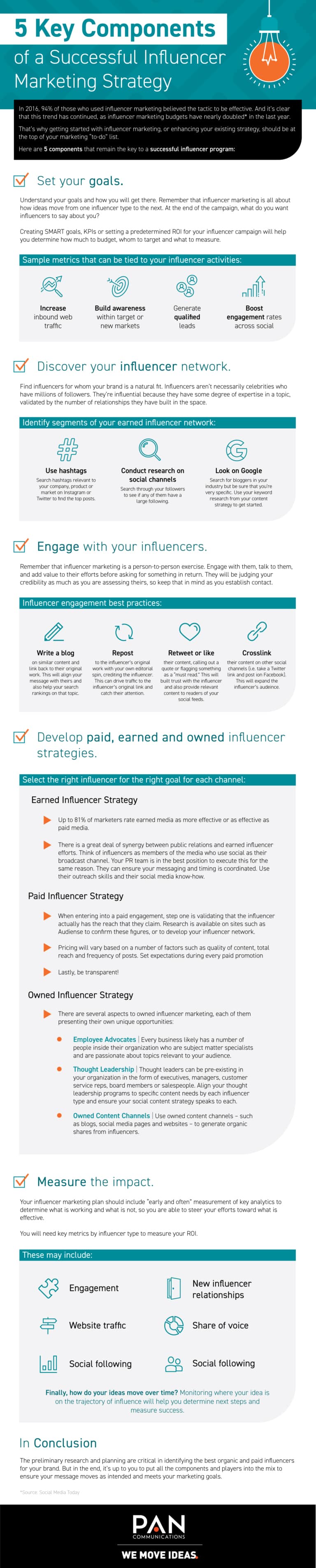
Pan Communications share their steps to success in this infographic.
Here’s a quick summary:
- Set your goals
- Discover your influencer network
- Engage your influencers
- Develop paid, earned and owned influencer strategies
- Measure the impact
Check out the infographic for more detail.
In today’s digital landscape, influencer marketing has become an invaluable tool for brands to reach and engage audiences. It’s no longer enough to simply create ads and hope for the best; consumers are increasingly influenced by the opinions and endorsements of trusted personalities. A well-crafted influencer marketing strategy can significantly amplify brand visibility, drive traffic, and increase conversions. However, for a campaign to truly succeed, it must be backed by strategic planning and execution. Here are the five key components of a successful influencer marketing strategy.
Set Your Goals
When small businesses define their goals effectively, they maximize their potential for return on investment (ROI) and make informed decisions about where and how to allocate their resources. Here’s an in-depth look at how small businesses can set achievable, impactful goals for their influencer marketing campaigns.
- Understand the Purpose Behind Influencer Marketing
Before diving into specifics, it’s crucial to understand the core purpose of using influencer marketing in your overall marketing mix. Influencer marketing can help build brand awareness, drive traffic, generate leads, boost sales, and more. For small businesses, influencer marketing is particularly valuable for building credibility and reaching targeted audiences without extensive advertising budgets. Defining a clear purpose will help you pinpoint what success looks like and identify measurable outcomes that align with your business objectives.
- Identify Specific Influencer Marketing Objectives
Here are some of the most common goals small businesses might pursue with influencer marketing, along with tips on defining each objective more precisely:
- Brand Awareness: Expanding brand visibility can be crucial, especially for newer or niche businesses. If brand awareness is your goal, determine the specific demographic or geographic areas where you want to increase visibility. For instance, a local bakery may want to collaborate with influencers in its city to target a specific area.
- Audience Engagement: Boosting engagement on your social media channels (e.g., likes, comments, shares) can deepen customer relationships. If this is your focus, set a target engagement rate and specify which platforms matter most. For example, “Increase Instagram post engagement by 25% within three months by partnering with influencers in the food industry.”
- Lead Generation: Influencers can be great at driving interest in products, often leading to increased lead generation. Small businesses can track these leads using unique referral codes or trackable links to measure the effectiveness of the influencer’s reach. For example, “Generate 200 new leads through a downloadable coupon campaign with fitness influencers.”
- Sales Conversions: A focus on direct sales through influencers requires clear call-to-action (CTA) and tracking methods, like unique discount codes or affiliate links. For example, a small business could aim to “Increase product sales by 15% over six weeks through an influencer discount code campaign.”
Each goal requires a tailored approach to identify the ideal influencer, content type, and measurement tactics that will support your objective.
- Make Your Goals SMART
The SMART framework is an effective way to ensure that each goal is actionable and measurable. Here’s how small businesses can apply it to influencer marketing goals:
- Specific: Define exactly what you want to achieve. For instance, instead of saying “Improve brand visibility,” you might specify, “Reach 10,000 people in our target demographic within 30 days.”
- Measurable: Use quantifiable metrics so you can track progress. Engagement rate, follower count, leads generated, and revenue from affiliate links are measurable indicators.
- Achievable: Set realistic goals based on your resources and capabilities. A small business might not have the budget for mega-influencers, so focus on goals that align with your scope, such as engagement-driven goals with micro-influencers.
- Relevant: Ensure that the goal is relevant to your business strategy. If your business is trying to boost local sales, an engagement goal with a local influencer will be more relevant than simply increasing followers.
- Time-Bound: Establish a clear timeline to reach each goal. Deadlines create urgency and help track campaign progress, such as “Achieve a 20% increase in online store traffic by the end of the three-month campaign.”
- Align Goals with Broader Marketing Objectives
Influencer marketing shouldn’t exist in isolation; it needs to complement your broader marketing objectives. For example, if your overall goal is to increase e-commerce sales by 30% in six months, your influencer marketing campaign could aim to contribute to a portion of that target. Similarly, if your goal is brand awareness, align it with your content marketing and social media strategies so that influencer content is repurposed effectively across platforms.
Aligning influencer goals with broader business objectives helps create a unified strategy and enhances the campaign’s impact.
- Plan for Long-Term and Short-Term Goals
For sustainable growth, small businesses should consider both short-term and long-term goals:
- Short-Term Goals: Focus on metrics that can yield immediate results, such as campaign engagement, website traffic, and social media follower growth. These help you quickly assess if your influencer is reaching the right audience and engaging them effectively.
- Long-Term Goals: Focus on brand loyalty, customer retention, and brand advocacy. For instance, a long-term goal might be to create a base of loyal customers who repeatedly purchase based on recommendations from a trusted influencer.
A balance between quick wins and long-term goals will help your small business sustain growth while adjusting strategies based on immediate feedback.
- Determine Key Performance Indicators (KPIs)
To measure progress and assess ROI, identify the specific KPIs that will reflect the success of your goals. Common influencer marketing KPIs for small businesses include:
- Engagement Rate: To assess how well the audience connects with the content, track likes, comments, shares, and overall engagement metrics.
- Website Traffic and Click-Through Rate (CTR): Track how many users are visiting your website from the influencer’s posts, stories, or links.
- Conversion Rate: Track the percentage of clicks or leads that result in actual purchases. Using unique codes or UTM links can help you trace back sales to specific influencers.
- Follower Growth: If part of your goal is to grow your social media following, measure the increase in followers during and after the influencer campaign.
- Customer Lifetime Value (CLV): For long-term campaigns, consider the lifetime value of customers gained through influencer marketing to understand if they continue to engage with and purchase from your brand.
KPIs help you refine strategies for future campaigns and focus on the most impactful influencers and platforms.
- Monitor and Adjust Your Goals Throughout the Campaign
Influencer marketing is a dynamic process, and flexibility is essential. Monitor progress regularly and adjust goals if needed. For example, if your engagement rates are much higher than expected, you might decide to focus more on brand engagement. If the campaign isn’t achieving expected results, evaluate if the influencer’s audience aligns with your brand or if the messaging needs adjustments.
Testing and iterating can help you identify what resonates best with your audience and refine future campaigns based on real-time insights.
By setting well-defined goals, small businesses can transform influencer marketing from a trendy tactic into a valuable, results-driven strategy. When you align your goals with your broader marketing objectives, apply the SMART framework, and regularly track your KPIs, your influencer marketing campaigns are more likely to yield measurable, impactful results that contribute to your business’s growth.
Discover Your Influencer Network
The right influencer can help build trust, grow your brand, and reach targeted audiences, but choosing the wrong influencer can lead to wasted resources and a poor campaign performance. Here’s a detailed guide on how small businesses can discover and evaluate the ideal influencer network for their marketing strategies.
- Understand the Types of Influencers
The first step in discovering your influencer network is to understand the different types of influencers that exist, and which type will be the best fit for your small business. Influencers generally fall into these categories based on their audience size and reach:
- Nano-influencers (1,000 to 10,000 followers): These influencers have a small but highly engaged audience. While they may not reach as many people as larger influencers, their engagement rates tend to be higher, and they have a more personal connection with their followers. Nano-influencers are ideal for small businesses looking to build trust and authenticity on a tight budget.
- Micro-influencers (10,000 to 100,000 followers): Micro-influencers are a sweet spot for small businesses because they have a moderately sized audience that is still niche and targeted. They typically maintain a strong relationship with their followers and deliver high engagement. They are especially valuable for businesses looking to expand their reach without the massive costs associated with larger influencers.
- Macro-influencers (100,000 to 1 million followers): Macro-influencers are often professional content creators or celebrities with a broad audience. While they offer a larger reach, their engagement rates can be lower compared to smaller influencers, and they are usually more expensive to work with. This type is better suited for businesses looking to expand their brand to a wider, more diverse audience.
- Mega-influencers (1 million+ followers): Mega-influencers are typically well-known celebrities or global figures. Though they have vast reach, they often come with a hefty price tag, and the relationship with their audience can be more distant. This type of influencer works best for brands with significant marketing budgets that want to increase their presence on a large scale.
Small businesses should evaluate the type of influencer that aligns with their goals, audience, and budget. For most small businesses, nano- and micro-influencers are the most cost-effective and valuable choices due to their higher engagement rates and targeted influence.
- Define Your Ideal Influencer Persona
Once you’ve understood the different types of influencers, the next step is defining your ideal influencer persona. This includes understanding what characteristics your influencer should have to resonate with your target audience. To build a persona, consider the following:
- Niche and Industry: What industry does the influencer belong to, and does it align with your business? For example, a small business that sells eco-friendly products would benefit from partnering with influencers who are passionate about sustainability and environmental issues.
- Audience Demographics: Does the influencer’s audience align with your target demographic (age, gender, location, interests, etc.)? If your business targets young professionals, you should focus on influencers whose audience is similarly young, tech-savvy, and professional.
- Content Style and Tone: What is the influencer’s content style? Are they humorous, educational, or inspirational? The influencer’s tone should complement your brand voice to maintain consistency in your messaging. For instance, a luxury brand would likely prefer working with influencers who adopt a high-end, aspirational tone.
- Engagement Level: Engagement is a key factor when choosing an influencer. Look beyond the number of followers and focus on how actively the influencer engages with their audience. Check if they respond to comments, interact with their followers, and how often they post content.
- Values and Reputation: Does the influencer’s personal brand align with your values? It’s important to collaborate with influencers who represent your business’s core principles, as any misalignment could damage your brand’s reputation.
Creating a comprehensive influencer persona helps narrow down potential candidates, ensuring that you partner with influencers who truly align with your business values and can effectively connect with your target audience.
- Use Influencer Discovery Tools
Finding influencers manually can be time-consuming, so leveraging influencer discovery tools can save you significant time and effort. These tools allow you to search for influencers based on specific criteria such as follower count, engagement rate, niche, location, and more. Here are a few popular influencer discovery tools that can help small businesses:
- BuzzSumo: BuzzSumo allows you to search for influencers in your industry, as well as analyze their content performance and engagement metrics. It provides a comprehensive list of potential influencers based on your desired keywords or topics.
- Upfluence: Upfluence offers a database of influencers that you can filter by audience demographics, engagement metrics, and even their level of expertise in specific industries. It’s a great tool for businesses looking to find influencers who specialize in particular niches.
- Followerwonk: If your business is focused on Twitter, Followerwonk helps you find influencers in your industry and analyze their social reach, engagement, and content trends. It’s particularly useful for Twitter-based influencer marketing campaigns.
- HypeAuditor: This tool provides in-depth analytics of Instagram influencers, helping you discover profiles with authentic engagement, real followers, and high-quality content. It’s a useful tool for ensuring your influencer partnerships are genuine and credible.
- Grin: A platform designed for eCommerce brands, Grin helps businesses find, manage, and track influencer campaigns all in one place. It integrates with various eCommerce platforms like Shopify, making it a seamless tool for businesses aiming to drive online sales through influencer partnerships.
By using these tools, small businesses can efficiently discover influencers who meet their specific criteria, allowing them to focus on high-quality partnerships that will yield better results.
- Evaluate Influencer Authenticity and Engagement
After identifying potential influencers, it’s important to evaluate their authenticity and engagement levels. A large following doesn’t always equate to high-quality results, so businesses must ensure that influencers have a genuine and active following.
- Engagement Rate: Evaluate an influencer’s engagement rate, which is typically calculated by dividing the total engagement (likes, comments, shares) by the total number of followers. A high engagement rate indicates that the influencer’s followers are active and genuinely interested in the content.
- Fake Followers: Some influencers may inflate their follower count with fake or inactive accounts. Tools like HypeAuditor or Social Blade can help assess the authenticity of an influencer’s followers by identifying suspicious activity, such as rapid spikes in followers or a high percentage of inactive accounts.
- Comment Quality: Look at the comments on their posts. Are the comments thoughtful and relevant, or are they generic and spammy? High-quality comments indicate that the influencer has an engaged and interested audience, which is more likely to result in successful campaigns.
- Previous Collaborations: Review the influencer’s past brand collaborations to see if their style and audience align with your brand’s values and goals. Consider their professionalism, the quality of their content, and how well their collaborations were received by their audience.
- Leverage Social Media and Content Platforms
Influencers can be found across various social media platforms, so small businesses should explore multiple channels to find the best match for their brand. Here are some strategies for discovering influencers across different platforms:
- Instagram: Instagram is the most popular platform for influencer marketing. Use Instagram’s search functionality, hashtags, and explore pages to find influencers in your niche. Searching for relevant keywords like #sustainablefashion or #veganlifestyle will reveal influencers who focus on those areas.
- YouTube: YouTube influencers often have strong authority within their niches, and video content provides an in-depth way to engage with an audience. Search for popular YouTube creators who cover topics related to your business, and evaluate their content quality and engagement.
- TikTok: TikTok has become a powerhouse for influencer marketing, especially among younger demographics. Leverage TikTok’s trending sounds and hashtags to find influencers whose style resonates with your brand. Many TikTok influencers focus on authentic, relatable content, which can be highly effective for small businesses.
- Blogs and Podcasts: Don’t overlook influencers who focus on written content or audio content, such as bloggers and podcasters. Search for well-known industry bloggers or podcast hosts who speak about topics relevant to your business.
By exploring a variety of platforms, you can discover influencers who specialize in the type of content that best suits your marketing goals, whether it’s video, written content, or podcasts.
Discovering the right influencer network for your small business is a combination of research, evaluation, and strategic selection. By understanding the different types of influencers, defining an ideal influencer persona, using discovery tools, evaluating authenticity, and leveraging multiple platforms, small businesses can identify influencers who will effectively connect with their target audience and drive meaningful results for their marketing campaigns.
Engage Your Influencers
Engaging influencers is a crucial step in the influencer marketing process. After discovering the right influencers for your small business, it’s essential to develop a strong, authentic relationship with them to ensure a successful partnership. The engagement process goes beyond just negotiating terms or paying for posts—it’s about building trust, collaboration, and clear communication. Here’s an in-depth guide for small businesses on how to effectively engage their influencers:
- Establish Clear Objectives and Expectations
The foundation of a successful influencer partnership lies in setting clear objectives and expectations from the start. Both your business and the influencer need to understand the campaign goals, deliverables, timelines, and the compensation involved.
- Define Campaign Goals: Be specific about what you want to achieve with your influencer marketing campaign. Whether it’s brand awareness, increasing sales, growing your social media following, or launching a new product, clearly communicate your objectives with the influencer.
- Set Expectations: Outline what you expect from the influencer in terms of content creation, posting frequency, and messaging. For instance, you might want them to post on specific dates, use particular hashtags, or create videos rather than static posts. Having these details in writing ensures there’s no confusion later on.
- Agree on Compensation: Be upfront about compensation (monetary or product-based) and whether there are any additional incentives like affiliate links or bonuses for reaching specific performance metrics (such as a certain number of sales). Transparency regarding compensation builds trust between both parties.
- Content Ownership: Discuss who owns the rights to the content once it’s created. Does the influencer retain ownership, or will your brand have the rights to repurpose the content for other marketing materials, such as website galleries or ads?
By aligning both your goals and expectations, you create a strong foundation for a productive partnership that benefits both your brand and the influencer.
- Communicate Regularly and Transparently
Communication is key when working with influencers. Regular, clear, and transparent communication will ensure that the influencer understands your needs and feels comfortable with the direction of the campaign. It also fosters a healthy working relationship built on trust.
- Regular Check-Ins: Schedule regular check-ins with your influencers to monitor the progress of the campaign, share feedback, and address any concerns. Whether through emails, video calls, or even a simple direct message, these check-ins provide a platform for open dialogue and create a sense of partnership.
- Be Available for Questions: Let influencers know you’re available to answer any questions or provide clarification as they create content. Their experience is a key part of the process, and it’s important to give them the freedom to ask questions that will help them do their job effectively.
- Provide Feedback Constructively: If an influencer’s content doesn’t fully align with your expectations, provide constructive feedback in a professional manner. Avoid micromanaging but guide them toward the right direction. Influencers appreciate honest and thoughtful feedback, as it helps them improve their content.
- Foster Open Dialogue: Allow influencers to voice their creative opinions and share any insights they may have about your brand, the product, or their audience’s preferences. Their expertise and connection with their audience may offer valuable ideas that could enhance the effectiveness of the campaign.
Clear communication creates a supportive working environment that encourages influencers to do their best work and ensures that both parties stay aligned throughout the campaign.
- Provide Creative Freedom and Collaboration
Influencers have built their audiences by developing their own unique style, voice, and brand. While it’s important to provide guidelines, it’s equally important to give them the creative freedom to craft content that resonates with their followers.
- Trust Their Expertise: Influencers know their audience better than anyone, so trust them to create content that speaks to their followers. While you may provide an outline or specific messaging points, allow the influencer to inject their personality into the content. Authenticity is key in influencer marketing, and overly scripted content can feel inauthentic.
- Collaborate on Ideas: Treat influencers as partners in your marketing strategy. Ask for their input on campaign ideas, creative concepts, and content formats. This collaboration strengthens the relationship and leads to more engaging, organic content that resonates with their audience.
- Allow Flexibility in Content Format: Depending on the influencer’s platform, allow them to choose the content format that best suits their style. Some may prefer Instagram stories or TikTok videos, while others might lean toward YouTube or blog posts. Letting them choose allows the content to feel more natural and engaging, rather than forced.
- Encourage Storytelling: Influencers excel at storytelling—whether through video, captions, or photos. Encourage them to incorporate their personal stories or experiences with your brand or products. Personal stories make the content more relatable and create stronger emotional connections with their audience.
When influencers feel like valued collaborators, they are more likely to produce high-quality content that performs well, which ultimately benefits your small business.
- Offer Incentives and Exclusive Benefits
Incentivizing influencers can go a long way in ensuring their continued enthusiasm and support for your brand. Providing them with exclusive offers or rewards for their efforts can help maintain long-term relationships and encourage them to go above and beyond in their promotions.
- Affiliate Programs: Set up an affiliate program where influencers earn commissions based on sales generated from their content. This performance-based incentive can motivate influencers to work harder to generate conversions, as they directly benefit from each sale.
- Exclusive Discounts or Freebies: Offer influencers exclusive discounts for their followers or free products to share with their audience. Exclusive deals are attractive to both the influencer and their followers, creating a sense of VIP access that can increase engagement and sales.
- Bonuses for Performance: If an influencer significantly exceeds expectations—such as driving a high volume of sales, engagement, or sign-ups—consider rewarding them with a performance bonus. This additional incentive can build loyalty and inspire the influencer to continue promoting your brand in the future.
- Early Access to New Products: Give influencers early access to new products or services, allowing them to become brand ambassadors and share the excitement of a new launch with their followers. This not only incentivizes influencers but also generates buzz around your business.
Offering tangible benefits to influencers helps nurture the relationship and makes them feel appreciated for their efforts, leading to more enthusiastic and engaged partnerships.
- Respect Their Autonomy and Audience
While influencers are working with you to promote your brand, it’s important to respect their autonomy and their relationship with their audience. Influencers have worked hard to cultivate trust, and your campaign must not undermine that relationship.
- Avoid Overloading with Demands: Influencers often work with multiple brands, so avoid overwhelming them with an excessive number of posts or constant content requirements. Be mindful of their time and ensure that you’re asking for a manageable workload.
- Be Sensitive to Their Audience: Remember that their followers trust them for their honesty and transparency. If your product or service doesn’t fit well with the influencer’s brand or audience, it could damage both your reputation and theirs. Never pressure an influencer into promoting something they don’t believe in.
- Allow Time for Authentic Promotion: Influencers know when their audience is being sold to, and so do their followers. Instead of pushing for immediate conversions, allow influencers to integrate your product into their content naturally and at their own pace. Authentic recommendations will be far more effective in driving engagement and sales.
- Maintain Long-Term Relationships: Influencers aren’t just collaborators for a single campaign—they can be long-term partners. Maintain relationships by following up after a campaign ends, engaging with their content, and showing appreciation for their work. This ongoing support makes influencers more likely to work with you again in the future.
Respecting influencers’ autonomy and their relationship with their audience ensures that the content remains genuine and that your campaign delivers authentic, positive results.
- Incorporate Influencer Feedback
Finally, actively listen to feedback from influencers during and after the campaign. Influencers have valuable insights into their audience and how well your brand resonates with them. Their feedback can help you refine your marketing strategies for future campaigns.
- Post-Campaign Analysis: After the campaign is over, ask for feedback from your influencers on what worked well and what could be improved. This feedback is essential for optimizing future campaigns and ensuring that your influencer partnerships continue to evolve.
- Track Performance Together: Share the campaign’s results with influencers and discuss what impact their content had on your business. This transparency helps them understand how their work contributes to the brand’s success and shows that you value their contribution.
- Continuous Improvement: Incorporating influencer feedback into future campaigns shows that you are committed to building a mutually beneficial partnership. It also helps you make informed decisions that improve the effectiveness of your influencer marketing strategy.
Engaging influencers is an ongoing process that requires transparency, communication, and respect for their expertise. By setting clear expectations, fostering collaboration, offering incentives, and maintaining strong relationships, small businesses can ensure that their influencer partnerships are successful and impactful. When influencers feel valued and trusted, they are more likely to produce high-quality content that authentically promotes your brand and resonates with their audience.
Develop Paid, Earned, and Owned Influencer Strategies
Developing paid, earned, and owned influencer strategies is a critical component of a successful influencer marketing campaign. By understanding and utilizing these three types of strategies, small businesses can maximize their return on investment (ROI), build stronger relationships with influencers, and create more diverse and effective marketing campaigns. Let’s break down each strategy and provide in-depth tips for small businesses to leverage them effectively.
- Paid Influencer Strategy
A paid influencer strategy involves compensating influencers in exchange for promoting your brand, products, or services. This is the most straightforward approach to influencer marketing and provides the most control over the messaging, reach, and content format. However, it’s important to execute this strategy carefully to ensure it aligns with your goals and resonates with your target audience.
How to Implement a Paid Influencer Strategy
- Choose the Right Type of Paid Collaboration: Influencers can be paid for various types of content, such as sponsored posts, product reviews, affiliate links, or exclusive collaborations. For small businesses, the most common types of paid influencer strategies include:
- Sponsored Posts: You pay an influencer to create content (e.g., Instagram posts, YouTube videos, or blog articles) that highlights your brand. The influencer will typically mention or feature your product in a natural way.
- Product Reviews: Influencers are given free products in exchange for honest reviews, which they post on their platform. This works well for building trust, but transparency is important.
- Affiliate Marketing: Influencers receive a commission on sales they drive through custom links or promo codes. This performance-based approach can help align influencer interests with your business goals.
- Set Clear Expectations for Content Creation: When working with influencers, it’s important to define how you want the content to be created. You may want influencers to include specific calls to action (CTA), use certain hashtags, or feature your products in particular ways. However, remember that part of the reason influencers are effective is their authenticity. Be careful not to over-script their content.
- Examples of Expectations to Define:
- Post frequency and timing
- Style and tone of the content
- Specific messaging or key points to emphasize
- Brand or product guidelines (e.g., logos, disclaimers, hashtags)
- Examples of Expectations to Define:
- Set a Realistic Budget: Budgeting for paid influencer campaigns is essential, particularly for small businesses with limited resources. To stay within your budget, it’s important to:
- Choose Influencers Within Your Budget: There’s a wide range of influencer pricing, depending on their reach, engagement rate, and platform. Micro-influencers (with smaller, but highly engaged audiences) are often more affordable than macro-influencers or celebrities.
- Negotiate Rates and Deliverables: Don’t be afraid to negotiate terms with influencers. Some influencers may offer package deals or give discounts for longer-term collaborations or bulk content creation.
Key Considerations for Paid Influencer Strategy
- Legal and Ethical Considerations: Always ensure that influencers comply with the Federal Trade Commission (FTC) guidelines regarding paid endorsements. Influencers must disclose that they are being compensated for their content (e.g., with #ad or #sponsored hashtags).
- Monitor Campaign Effectiveness: Use tracking tools and analytics to measure the effectiveness of your paid influencer campaigns. Focus on key metrics like reach, engagement, traffic, and conversions to understand ROI.
- Earned Influencer Strategy
Earned influencer strategy refers to the organic, non-paid promotion of your brand that results from your relationships with influencers. This type of strategy relies on building authentic relationships and offering influencers value, so they voluntarily share your brand with their followers. While you don’t have direct control over the content, earned strategies can be highly impactful because they are often perceived as more genuine by consumers.
How to Implement an Earned Influencer Strategy
- Create Share-Worthy Content: In order to earn influencers’ attention, your brand must offer something worth sharing. This could be:
- Unique Product Features: If your product is innovative or has a standout feature, influencers may want to talk about it.
- Inspiring Stories: Share inspiring brand stories, causes you support, or customer success stories that influencers can align with.
- Engaging Campaigns: Launch a campaign (e.g., hashtag challenges, giveaways, or social impact initiatives) that encourages influencers to get involved without being paid.
- Engage with Influencers: Build genuine relationships with influencers in your niche. Engage with their content by liking, commenting, and sharing their posts. When influencers feel recognized and appreciated by a brand, they’re more likely to create organic content or talk about your brand voluntarily.
- Personalized Outreach: When reaching out to influencers for collaboration, personalize your messages. Show that you’ve taken the time to learn about their work and explain why you think they’d be a good fit for your brand.
- Offer Value Beyond Products: Provide influencers with valuable experiences, such as exclusive event invites, behind-the-scenes access, or opportunities to be featured on your brand’s platform (e.g., interviews, guest blogs). These exclusive perks can incentivize influencers to talk about your brand without the need for payment.
- Encourage User-Generated Content (UGC): One of the most effective earned strategies is to encourage your customers and followers to create content about your brand. When influencers see their fans or peers interacting with your products, they may feel compelled to share their own experiences.
- Incentivize with Contests and Giveaways: Hosting contests or giveaways where influencers and their followers can win prizes or discounts for sharing content related to your brand can increase organic promotion.
Key Considerations for Earned Influencer Strategy
- Authenticity is Key: Because earned promotions are based on organic engagement, it’s crucial to ensure that the content remains authentic. Forcing influencers to endorse your brand without genuine interest will not resonate with their followers and could harm your brand’s reputation.
- Focus on Long-Term Relationships: Earned strategies thrive when they’re part of long-term relationships. Regularly engage with influencers, nurture these connections, and provide them with valuable content and experiences that make them want to continue promoting your brand.
- Owned Influencer Strategy
Owned influencer strategy is when your business takes a more proactive approach by using influencers to generate content that lives on your owned media channels, such as your website, social media profiles, or email newsletters. This strategy gives you full control over the content, messaging, and timing, and it can be a great way to repurpose influencer-generated content (IGC) for maximum impact.
How to Implement an Owned Influencer Strategy
- Leverage Influencer Content Across Platforms: After working with influencers, ask for permission to repurpose their content for your brand’s owned channels. For example, you might share their Instagram photos on your website, use their YouTube reviews in your email marketing, or feature them in your social media posts.
- Cross-Promote Influencer Content: Share influencer-generated content on your brand’s social media profiles or use it in your newsletters. Cross-promotion not only increases the exposure of the influencer’s content but also reinforces your campaign messaging.
- Create a Branded Landing Page: If you have multiple influencers involved in a campaign, consider creating a dedicated landing page on your website that showcases their content. This can act as a centralized hub for all campaign materials, helping you track the success of different influencers and the campaign as a whole.
- Feature Influencers on Your Owned Media: Consider creating spotlight features for influencers on your brand’s blog or website. For example, you can create interviews or behind-the-scenes content with the influencers you work with. This gives them exposure while strengthening your brand’s relationship with them.
- Host Influencer Takeovers: Influencer takeovers are when an influencer temporarily takes control of your social media account to create content. These takeovers offer an authentic experience for your audience while showcasing the influencer’s unique perspective and voice.
- Create Branded Content with Influencers: Another way to use an owned influencer strategy is by co-creating content with influencers. For instance, you can work with an influencer to develop an exclusive product or a tutorial video that will live on your website or social media channels.
- Example: Partnering with a beauty influencer to create a “how-to” makeup tutorial using your products, which you then host on your website and social media channels.
Key Considerations for Owned Influencer Strategy
- Content Rights and Usage: Make sure you discuss content ownership and usage rights up front. Influencers may not be comfortable with their content being used in perpetuity or across different platforms without additional compensation. Be sure to clarify this in your agreements.
- Repurpose for Maximum Impact: One of the main advantages of owned media is the ability to reuse content. Make the most of influencer content by repurposing it across various marketing channels, including your website, email marketing, social media, and even paid ads.
Balancing Paid, Earned, and Owned Strategies
For small businesses, integrating paid, earned, and owned influencer strategies into a cohesive influencer marketing plan allows you to maximize the impact of your campaigns across multiple touchpoints. Paid strategies can help you achieve immediate results and reach a broad audience, earned strategies build organic relationships and brand credibility, and owned strategies allow you to take full control of influencer content and repurpose it across your channels.
By creating a balanced strategy that incorporates all three, you can establish a sustainable, cost-effective influencer marketing program that drives long-term value for your brand. This multifaceted approach helps create a powerful synergy, where paid content boosts the reach of earned and owned content, and earned content reinforces the value of paid promotions.
Measure the Impact
One of the most crucial aspects of any influencer marketing campaign is measuring its impact. For small businesses, understanding the effectiveness of an influencer strategy is essential for justifying the investment, optimizing future campaigns, and achieving long-term marketing goals. Without robust measurement, it’s challenging to know what’s working, what isn’t, and how to improve. Let’s dive deeper into how to measure the impact of your influencer marketing strategy and gain valuable insights.
- Set Clear and Specific KPIs (Key Performance Indicators)
The first step in measuring the impact of your influencer marketing campaign is establishing clear and specific Key Performance Indicators (KPIs). These metrics should align with your business goals, whether that’s increasing brand awareness, driving traffic, generating leads, or boosting sales. Setting KPIs in advance ensures that you have a benchmark for success and a way to evaluate the effectiveness of your campaign.
How to Set Effective KPIs for Influencer Campaigns
- Brand Awareness: If the primary goal of your influencer campaign is to increase brand awareness, consider tracking metrics like:
- Impressions: The number of times your content is viewed. Influencers with large followings can significantly increase brand visibility.
- Reach: How many unique people have seen the content. A higher reach generally correlates with greater exposure.
- Social Mentions: The number of times your brand is mentioned or tagged across social media platforms.
- Hashtag Usage: Track branded hashtags to gauge how often influencers and their followers are talking about your brand.
- Engagement Metrics: For engagement-focused campaigns, measure:
- Likes, Shares, Comments: Engagement rate is one of the most direct indicators of how well your audience resonates with influencer content.
- Clicks: Track the number of clicks to your website, product pages, or landing pages through influencer posts.
- Video Views: If you’re working with video content, views and watch-through rates can show how engaging and compelling the content is.
- Traffic and Conversions: If your goal is to drive traffic and sales, you should track:
- Website Traffic: Use tools like Google Analytics to track the amount of referral traffic coming from influencer links and posts.
- Sales or Leads: Implement UTM tracking links or promo codes to monitor how many conversions (sales or leads) come from the influencer campaign.
- Conversion Rate: The percentage of traffic that converts into a desired action (such as a purchase or email sign-up).
- Return on Investment (ROI): To understand the financial impact of the campaign, calculate the ROI, which can be done by comparing the revenue generated from the campaign with the costs involved.
- Formula: ROI=RevenuefromInfluencerCampaign−CostofCampaignCostofCampaign×100ROI = \frac{Revenue from Influencer Campaign – Cost of Campaign}{Cost of Campaign} \times 100ROI=CostofCampaignRevenuefromInfluencerCampaign−CostofCampaign×100
- Tracking ROI helps you assess the overall effectiveness of your investment and determine if influencer marketing is a viable strategy for your business.
- Use Analytics Tools and Platforms
Tracking the right metrics is only effective if you have the tools to monitor them efficiently. Fortunately, there are several tools and platforms that can provide real-time insights into the performance of your influencer campaigns.
Recommended Tools for Measuring Influencer Impact
- Google Analytics: Google Analytics allows you to track referral traffic from influencer campaigns, monitor conversion rates, and analyze user behavior on your website.
- Set up UTM parameters (tags you add to URLs) to track specific influencer-driven traffic.
- Monitor metrics like bounce rate, average session duration, and page views to assess the quality of traffic.
- Social Media Analytics: Each social media platform has built-in analytics tools to help you track how your influencer content is performing. For example:
- Instagram Insights: For Instagram campaigns, Instagram Insights provides data on engagement, reach, impressions, and more.
- Facebook Insights: Facebook’s analytics help you track engagement, reach, clicks, and conversions for posts and ads.
- TikTok Analytics: TikTok provides data on video views, engagement, and follower demographics.
- Influencer Marketing Platforms: Tools like AspireIQ, Upfluence, and Traackr offer detailed performance tracking and provide campaign reporting that helps small businesses track influencer performance across multiple platforms. These tools can help you track real-time data and manage multiple influencer relationships in one place.
- Affiliate Tracking Platforms: If you are using affiliate marketing as part of your strategy, platforms like ShareASale or Rakuten Marketing can provide detailed insights into how many sales or leads influencers are generating through unique referral links.
- Monitor Qualitative Feedback
While quantitative metrics like engagement and sales are easy to measure, influencer campaigns also generate valuable qualitative feedback. Understanding the sentiment behind your campaign is just as important as knowing the numbers. Qualitative insights can provide a deeper understanding of how your audience perceives your brand and whether influencers’ content is resonating.
How to Monitor Qualitative Feedback
- Sentiment Analysis: Use sentiment analysis tools (like Brand24 or Hootsuite’s social listening) to track how people feel about your brand, product, or campaign. Sentiment analysis can identify whether mentions are positive, negative, or neutral, which can help you assess how well the influencer’s messaging aligns with your brand.
- Comments and Reviews: Read through the comments on influencer posts to gauge audience reactions. Positive or negative feedback can reveal how well the influencer is communicating your brand values and how engaged the audience is.
- Influencer Interaction: Pay attention to how influencers respond to comments and questions about your product. A strong, positive interaction between influencers and their followers can boost the authenticity of the campaign and increase its effectiveness.
- Track Influencer Performance Over Time
To get a holistic view of an influencer’s impact, track their performance over time, especially if you’re working with them on an ongoing basis. An influencer’s performance may fluctuate based on the campaign type, content, or timing, and tracking this over multiple campaigns can help identify long-term trends.
How to Track Influencer Performance Over Time
- Consistent Metrics Tracking: Keep track of the same KPIs across multiple campaigns to identify influencers who consistently drive results. For example, if one influencer consistently delivers high engagement and website traffic, they may be a strong candidate for long-term collaboration.
- Evaluate Engagement Quality: Assess the quality of engagement influencers generate. For instance, are their followers commenting with thoughtful responses, or are they just liking posts? Higher-quality engagement suggests that their audience is genuinely interested in your brand.
- Content Performance: Review which types of content (e.g., product reviews, unboxing videos, tutorials) performed best across all campaigns. This can help you optimize future campaigns by focusing on content formats that resonate with your target audience.
- Compare Influencer Campaigns to Other Marketing Channels
One of the most effective ways to measure the success of your influencer marketing strategy is to compare it to other marketing channels. If you’re running multiple marketing campaigns (e.g., paid ads, email marketing, organic social media), comparing results can help you understand how influencer marketing stacks up in terms of ROI.
How to Compare Influencer Campaigns with Other Marketing Channels
- Attribution Models: Use attribution models to understand how influencer marketing contributes to your overall marketing funnel. Multi-touch attribution models can help determine how much credit to assign to influencer campaigns for final conversions (sales, sign-ups, etc.).
- Benchmarking: Compare the metrics from your influencer campaigns against your other digital marketing efforts. Are your influencer campaigns driving more engagement or sales than paid ads? Are they outperforming organic content in terms of reach and traffic?
- Cross-Channel Insights: If influencers are driving traffic to your website, compare how that traffic behaves compared to traffic from other sources. Are influencer-referred visitors more likely to convert? Do they engage with more pages on your site?
- Analyze and Optimize Future Campaigns
Once you’ve gathered all the necessary data, the next step is to analyze the results and apply the learnings to optimize future influencer marketing campaigns.
How to Analyze and Optimize Campaigns
- Post-Campaign Report: Create a post-campaign report that summarizes all the key metrics (both quantitative and qualitative) and provides an overview of what worked and what didn’t. Look for patterns or correlations that can inform future strategies.
- A/B Testing: Consider running A/B tests on different influencer strategies (e.g., testing different types of content or different influencer profiles) to determine which works best for your business.
- Continuous Improvement: With every influencer campaign, continue refining your strategy. Whether it’s selecting different influencers, adjusting content, or experimenting with different platforms, always aim to improve based on past results.
Conclusion
Measuring the impact of your influencer marketing campaigns is essential for small businesses aiming to maximize ROI and achieve long-term marketing success. By setting clear KPIs, using the right tools, tracking both quantitative and qualitative metrics, and analyzing your campaigns’ performance, you can continuously refine your strategy and ensure your efforts are driving meaningful results.
By investing time in thorough measurement and tracking, small businesses can not only demonstrate the effectiveness of their influencer marketing campaigns but also build stronger relationships with influencers, optimize content, and make informed decisions that lead to sustained growth.
Conclusion
A successful influencer marketing strategy is more than just selecting an influencer with a large following. It requires thoughtful planning, genuine engagement, and continuous evaluation to ensure you’re reaching the right audience and achieving your marketing goals. By setting clear objectives, building relationships with the right influencers, creating a multi-layered strategy, and monitoring results, you can establish a powerful influencer marketing program that drives real results.

Author:
Mark Ford

Referral Marketing Made Simple: Four Strategies Any Business Can Use
Are you looking for a cost-effective way to attract new customers without constantly increasing your advertising budget? Want to turn your existing customers, professional relationships, and business contacts into a reliable source of new enquiries? […]