Are you considering investing time and money into a content marketing strategy for your business? Want to better understand the benefits and how to implement a successful strategy?
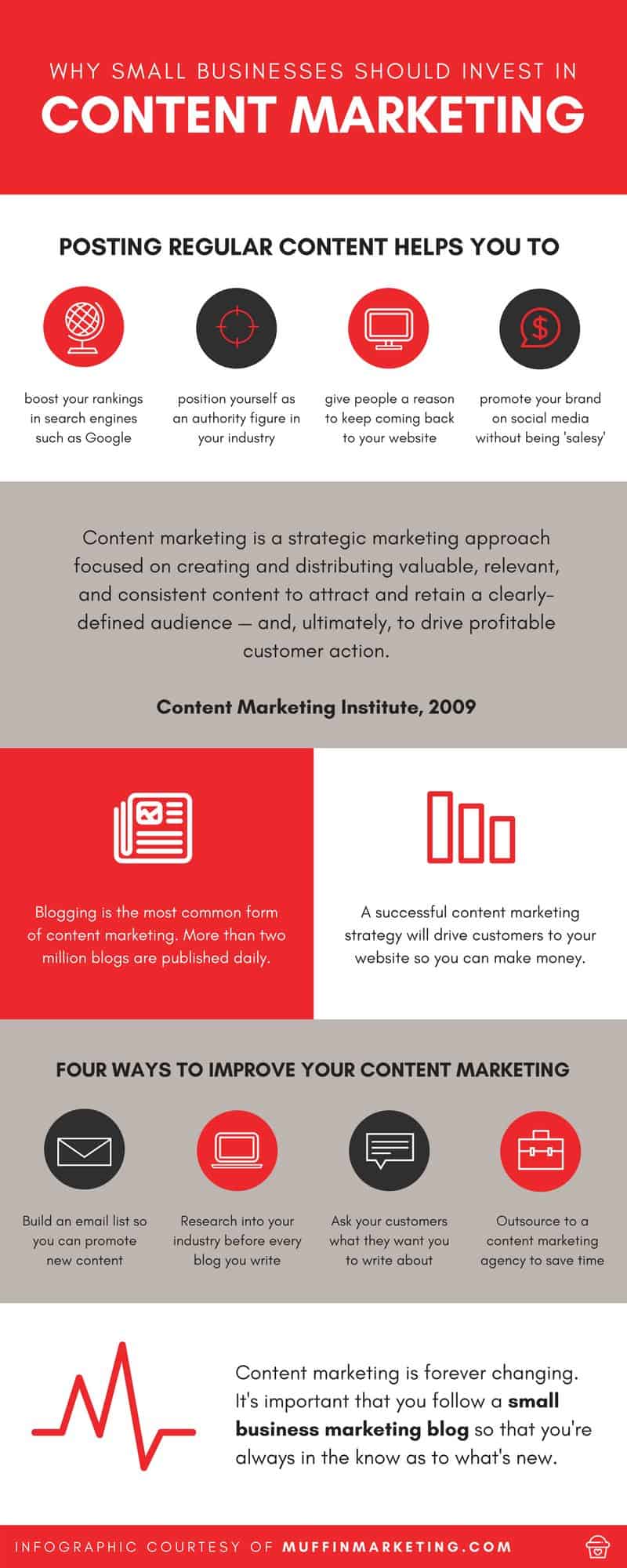
Muffin Marketing share their tips for success in these two infographics.
Here’s a summary of the benefits:
- Improve your SEO
- Position yourself as an authority
- Give people a reason to visit your site
- Promote your brand without being “salesy”
Check out the infographics for more detail.

In today’s digital landscape, content marketing has emerged as a critical component for businesses aiming to establish a robust online presence. Whether you’re a startup or a well-established company, investing in content marketing can yield significant returns. This blog post will delve into four compelling reasons to invest in content marketing and provide insights on crafting an effective strategy to maximize its benefits.
Improve Your SEO
Improving SEO through content marketing is a multi-faceted approach that involves various strategies to ensure your website ranks higher on search engine results pages (SERPs). For small businesses, leveraging content marketing effectively can make a significant difference in online visibility and traffic. Here are some in-depth tips and guidance for small businesses to enhance their SEO through content marketing:
Keyword Research and Optimization
- Identify Relevant Keywords: Start by researching keywords that are relevant to your business, industry, and target audience. Use tools like Google Keyword Planner, Ahrefs, or SEMrush to find keywords with a good balance of search volume and competition. Focus on long-tail keywords, which are more specific and less competitive, making it easier for your content to rank.
- Use Keywords Strategically: Once you have identified your keywords, use them strategically in your content. Include them in your title tags, meta descriptions, headers, and throughout the body of your content. However, avoid keyword stuffing; your content should read naturally and provide value to your audience.
- Optimize for Local SEO: For small businesses, local SEO is crucial. Include location-based keywords in your content to attract local customers. Ensure your business is listed on Google My Business and other local directories, and encourage customers to leave reviews, as positive reviews can boost your local search rankings.
Create High-Quality, Relevant Content
- Focus on Quality Over Quantity: High-quality content that provides value to your audience will always perform better than a large quantity of mediocre content. Invest time in creating well-researched, informative, and engaging content that addresses the needs and pain points of your target audience.
- Use Various Content Formats: Diversify your content formats to cater to different preferences. In addition to blog posts, create videos, infographics, podcasts, and e-books. Different formats can attract a wider audience and keep visitors engaged on your site longer, which positively impacts your SEO.
- Evergreen Content: Create evergreen content that remains relevant over time. Topics that are always in demand will continue to attract traffic long after they are published. Examples include how-to guides, tutorials, and industry best practices.
On-Page SEO Optimization
- Optimize Title Tags and Meta Descriptions: Title tags and meta descriptions are critical for SEO. Ensure each page on your website has a unique, keyword-optimized title tag and meta description that accurately describes the content and encourages users to click through.
- Use Header Tags: Organize your content using header tags (H1, H2, H3, etc.). Header tags help search engines understand the structure and hierarchy of your content, making it easier to crawl and index. They also improve readability for your audience.
- Image Optimization: Optimize images on your site by compressing them to reduce load times and using descriptive, keyword-rich file names and alt tags. Alt tags help search engines understand the content of your images, which can improve your SEO and make your site more accessible.
Build Backlinks
- Guest Blogging: Contribute guest posts to reputable websites in your industry. This strategy not only builds backlinks to your site but also establishes you as an authority in your field. Ensure the sites you guest blog for are relevant and have good domain authority.
- Create Shareable Content: Content that is valuable and shareable naturally attracts backlinks. Research topics that are trending in your industry and create comprehensive, insightful content that others will want to reference and link to.
- Reach Out for Backlinks: Proactively reach out to websites and blogs that might find your content useful. Personalize your outreach emails, explaining why your content would be valuable to their audience. Building relationships with other content creators can lead to more backlink opportunities.
Improve User Engagement
- Internal Linking: Use internal linking to guide visitors to other relevant content on your site. Internal links help keep visitors on your site longer, reduce bounce rates, and distribute page authority throughout your site. Ensure your links are relevant and add value to the reader.
- Mobile Optimization: Ensure your website is mobile-friendly, as a significant portion of web traffic comes from mobile devices. A responsive design that provides a seamless user experience across all devices is crucial for SEO. Google uses mobile-first indexing, meaning it primarily uses the mobile version of your site for ranking.
- Improve Site Speed: A fast-loading website enhances user experience and can positively impact your SEO. Use tools like Google PageSpeed Insights to analyze your site’s performance and identify areas for improvement. Optimize images, leverage browser caching, and use a Content Delivery Network (CDN) to improve site speed.
Consistent Content Publishing
- Create a Content Calendar: Develop a content calendar to plan and schedule your content in advance. Consistency is key to maintaining and improving your search rankings. A content calendar helps ensure you regularly publish fresh content and keep your audience engaged.
- Update and Repurpose Content: Regularly update your existing content to keep it relevant and accurate. Repurpose high-performing content into different formats, such as turning a blog post into a video or infographic. Updating and repurposing content can breathe new life into old posts and continue to drive traffic.
- Monitor Performance: Use analytics tools like Google Analytics and Search Console to monitor the performance of your content. Track metrics such as organic traffic, bounce rates, and conversion rates. Analyzing these metrics can help you understand what’s working and what needs improvement, allowing you to refine your strategy.
Engage with Your Audience
- Encourage Comments and Feedback: Invite your audience to leave comments and feedback on your blog posts and social media. Engaging with your audience builds a community and encourages repeat visits. Responding to comments and feedback shows that you value your audience’s input and fosters a positive relationship.
- Use Social Media: Promote your content on social media platforms to reach a wider audience. Social media can drive traffic to your site and improve your SEO through increased engagement and shares. Use platforms that are popular with your target audience and tailor your content to each platform’s unique style.
- Email Marketing: Build an email list and send regular newsletters featuring your latest content. Email marketing keeps your audience informed and engaged, driving traffic to your site. Include calls-to-action (CTAs) that encourage readers to visit your website, share your content, or leave feedback.
By implementing these strategies, small businesses can significantly improve their SEO through content marketing. The key is to focus on providing value, maintaining consistency, and continuously refining your approach based on performance data. Investing in content marketing not only boosts your search rankings but also establishes your brand as a trusted authority, driving long-term success in the digital marketplace.
Position Yourself as an Authority
Positioning yourself as an authority in your industry is crucial for gaining trust, attracting customers, and differentiating your business from competitors. For small businesses, establishing authority can lead to increased credibility and a stronger brand presence. Here are some in-depth tips and guidance on how to effectively position yourself as an authority through content marketing:
Create Educational Content
- Develop Comprehensive Guides: Create in-depth guides that cover specific topics relevant to your industry. These guides should be well-researched, thoroughly detailed, and provide valuable insights that your audience can’t easily find elsewhere. Comprehensive guides demonstrate your deep understanding of the subject matter and help establish your expertise.
- Publish How-To Articles: How-to articles and tutorials are excellent for demonstrating your knowledge and providing practical value to your audience. These articles should offer step-by-step instructions, tips, and best practices that help readers solve problems or achieve specific goals.
- Offer Free Resources: Providing free resources such as e-books, whitepapers, templates, and checklists can showcase your expertise and attract potential customers. Ensure these resources are high-quality and packed with valuable information that addresses the needs and interests of your audience.
Share Thought Leadership
- Write Thought Leadership Articles: Contribute thought leadership articles to industry publications, reputable blogs, and online platforms. These articles should offer unique perspectives, innovative ideas, and expert analysis on industry trends and developments. Thought leadership articles help position you as a forward-thinking expert in your field.
- Participate in Industry Events: Speaking at industry conferences, webinars, and panel discussions can enhance your visibility and credibility. Share your insights and expertise on relevant topics, and engage with other industry leaders and professionals. Participating in events positions you as a knowledgeable authority and helps expand your professional network.
- Conduct and Share Original Research: Conducting original research and sharing your findings can significantly boost your authority. Publish reports, case studies, and surveys that provide new data and insights relevant to your industry. Original research demonstrates your commitment to advancing knowledge in your field and positions you as a trusted source of information.
Leverage Case Studies and Success Stories
- Showcase Client Success Stories: Create detailed case studies that highlight how your products or services have helped clients achieve their goals. These stories should include specific challenges, solutions, and measurable results. Case studies provide tangible proof of your expertise and effectiveness, building credibility with potential customers.
- Collect and Share Testimonials: Gather testimonials from satisfied customers and share them on your website, social media, and marketing materials. Testimonials provide social proof and reinforce your authority by showing that others trust and value your expertise.
- Highlight Industry Recognitions and Awards: If your business has received industry awards or recognitions, prominently display them on your website and in your marketing materials. Awards and accolades validate your expertise and enhance your credibility as an authority in your field.
Engage with Industry Influencers
- Collaborate with Influencers: Partner with industry influencers to co-create content, host webinars, or participate in interviews. Collaborations with respected influencers can amplify your reach and lend credibility to your brand. Influencers can also provide valuable endorsements that enhance your authority.
- Guest Blogging: Write guest posts for reputable blogs and websites within your industry. Guest blogging allows you to reach new audiences and showcase your expertise on established platforms. Ensure your guest posts are high-quality, informative, and provide genuine value to the host site’s readers.
- Participate in Online Discussions: Engage in discussions on industry forums, social media groups, and Q&A platforms like Quora. Provide thoughtful, well-informed answers and insights that demonstrate your knowledge and expertise. Active participation in online discussions can help you build a reputation as a go-to authority in your field.
Build a Strong Online Presence
- Optimize Your Website: Ensure your website is professional, user-friendly, and optimized for search engines. Your website should clearly communicate your expertise, services, and value proposition. Include a blog where you regularly publish high-quality content that showcases your knowledge and addresses your audience’s needs.
- Leverage Social Media: Maintain an active presence on social media platforms relevant to your industry. Share valuable content, engage with your audience, and participate in industry conversations. Use social media to highlight your expertise, share your insights, and connect with other professionals in your field.
- Create a Professional LinkedIn Profile: Optimize your LinkedIn profile to reflect your expertise and authority. Include a detailed summary, highlight your accomplishments, and share articles and updates that demonstrate your knowledge. LinkedIn is a powerful platform for networking and establishing your professional credibility.
Provide Consistent Value
- Develop a Content Calendar: Create a content calendar to plan and schedule your content in advance. Consistency is key to maintaining your authority and keeping your audience engaged. Regularly publishing high-quality content ensures you stay top-of-mind and continue to provide value to your audience.
- Focus on Quality Over Quantity: Prioritize creating high-quality content that provides genuine value to your audience. While it’s important to publish consistently, the quality of your content should never be compromised. High-quality content is more likely to be shared, linked to, and recognized as authoritative.
- Offer Ongoing Education: Continuously educate your audience by sharing the latest industry trends, updates, and best practices. Hosting webinars, online courses, and workshops can provide ongoing education and further establish your authority. By being a consistent source of valuable information, you reinforce your position as an expert.
Engage and Respond to Your Audience
- Encourage Feedback and Interaction: Invite your audience to leave comments, ask questions, and provide feedback on your content. Respond to their comments and questions promptly and thoughtfully. Engaging with your audience shows that you value their input and are committed to helping them, which strengthens your authority.
- Create Interactive Content: Develop interactive content such as quizzes, surveys, and polls that engage your audience and encourage participation. Interactive content not only boosts engagement but also provides valuable insights into your audience’s preferences and needs.
- Address Audience Pain Points: Pay attention to the common challenges and pain points faced by your audience. Create content that directly addresses these issues and offers practical solutions. By providing targeted and relevant content, you demonstrate a deep understanding of your audience’s needs and position yourself as a reliable authority.
Stay Current and Adapt
- Keep Up with Industry Trends: Stay informed about the latest trends, developments, and best practices in your industry. Regularly reading industry publications, attending webinars, and participating in professional development opportunities ensures you remain current and knowledgeable.
- Adapt to Changes: The business landscape is constantly evolving. Be flexible and willing to adapt your strategies and content to stay relevant. Whether it’s embracing new technologies, addressing emerging trends, or refining your approach based on feedback, adaptability is key to maintaining your authority.
- Continuously Improve: Regularly assess the effectiveness of your content and strategies. Use analytics tools to track performance metrics and gather insights. Continuously seek ways to improve and refine your content to better serve your audience and reinforce your authority.
By implementing these strategies, small businesses can effectively position themselves as authorities in their respective industries. The key is to consistently provide value, engage with your audience, and demonstrate your expertise through high-quality content and active participation in industry conversations. Establishing authority takes time and effort, but the rewards in terms of trust, credibility, and business growth are well worth it.
Give People a Reason to Visit Your Site
Driving traffic to your website is essential for generating leads, building brand awareness, and increasing sales. For small businesses, attracting visitors can be challenging, but content marketing offers numerous strategies to give people compelling reasons to visit your site. Here are in-depth tips and guidance to help you achieve this goal:
Provide Valuable Information
- Identify Audience Needs: Understand the specific needs, pain points, and interests of your target audience. Conduct surveys, engage in social media conversations, and analyze customer feedback to gather insights. Creating content that directly addresses these needs will attract visitors seeking solutions.
- Create High-Quality Blog Posts: Regularly publish well-researched, informative, and engaging blog posts on topics relevant to your audience. Blog posts can cover how-to guides, industry news, best practices, and expert opinions. Ensure your content is valuable and offers actionable insights.
- Develop Comprehensive Resources: Offer in-depth resources such as e-books, whitepapers, and research reports that provide significant value. These resources should be available for download in exchange for an email address, helping you build your email list while providing visitors with valuable information.
Regular Updates
- Maintain a Consistent Posting Schedule: Develop a content calendar and stick to a consistent posting schedule. Regular updates keep your audience engaged and encourage repeat visits. Whether it’s daily, weekly, or bi-weekly, consistency is key to retaining your audience’s interest.
- Update Existing Content: Regularly update your existing content to ensure it remains relevant and accurate. Refreshing older posts with new information, updated statistics, and current trends can improve their performance and continue to attract visitors.
- Seasonal and Timely Content: Create content around seasonal trends, holidays, and current events relevant to your industry. Timely content can attract visitors searching for information related to specific occasions or recent developments.
Interactive Content
- Quizzes and Surveys: Develop interactive quizzes and surveys that engage visitors and provide personalized results or insights. Quizzes related to your products or industry can be particularly effective in keeping visitors on your site longer and encouraging them to share their results on social media.
- Infographics: Create visually appealing infographics that simplify complex information and make it easily digestible. Infographics are highly shareable and can attract backlinks, driving more traffic to your site.
- Interactive Tools: Offer interactive tools such as calculators, assessment tools, or planners that provide real value to your audience. For example, a financial planner might offer a budgeting tool, or a fitness website could provide a calorie calculator.
Community Building
- Encourage Comments and Discussions: Enable comments on your blog posts and actively encourage readers to share their thoughts and ask questions. Responding to comments fosters a sense of community and makes visitors feel valued, increasing the likelihood of repeat visits.
- Create Forums or Groups: Establish forums or social media groups where your audience can engage in discussions, share experiences, and seek advice. Building a community around your brand can increase loyalty and encourage regular site visits.
- Host Webinars and Live Events: Organize webinars, live Q&A sessions, and other virtual events that allow you to interact directly with your audience. Promoting these events on your site can drive traffic and provide valuable content that keeps visitors coming back.
Offer Exclusive Content
- Members-Only Content: Create exclusive content for members or subscribers. This could include premium articles, video tutorials, or access to special events. Offering something unique and valuable can incentivize visitors to sign up and regularly visit your site.
- Email Newsletters: Send regular newsletters with exclusive content, updates, and special offers. Newsletters keep your audience informed and encourage them to return to your site for more information or to take advantage of special deals.
- Special Promotions and Discounts: Offer exclusive promotions, discounts, and giveaways to your website visitors. Highlight these offers prominently on your site and through your marketing channels to attract traffic and encourage purchases.
Optimize for User Experience
- Ensure Fast Loading Times: A fast-loading website is crucial for retaining visitors. Optimize images, use a Content Delivery Network (CDN), and implement caching strategies to improve your site’s speed. Slow-loading pages can lead to high bounce rates and lost visitors.
- Mobile Optimization: Ensure your website is mobile-friendly, as a significant portion of web traffic comes from mobile devices. A responsive design that provides a seamless experience across all devices will keep mobile users engaged and encourage repeat visits.
- Easy Navigation: Design your website with user-friendly navigation. A clear, intuitive menu structure and easy-to-find information enhance user experience and encourage visitors to explore more of your site.
Leverage Social Media
- Share Your Content: Promote your content on social media platforms to reach a wider audience and drive traffic to your site. Share blog posts, videos, infographics, and other valuable content regularly, and use engaging visuals and captions to attract attention.
- Engage with Followers: Actively engage with your social media followers by responding to comments, participating in discussions, and sharing user-generated content. Building a strong social media presence can drive traffic to your site and create a loyal community.
- Use Social Media Ads: Invest in social media advertising to reach a broader audience. Platforms like Facebook, Instagram, and LinkedIn offer targeted ad options that can drive traffic to your site based on user demographics, interests, and behaviors.
Utilize SEO Strategies
- Optimize On-Page SEO: Ensure your website and content are optimized for search engines. Use relevant keywords, meta descriptions, and title tags. Include internal and external links, and ensure your site is easy for search engines to crawl.
- Create High-Quality Backlinks: Earn backlinks from reputable websites to improve your site’s authority and search rankings. High-quality content that others want to link to, guest blogging, and forming partnerships with industry influencers can help build valuable backlinks.
- Local SEO: Optimize your site for local search if your business serves a specific geographic area. Claim your Google My Business listing, include local keywords, and gather reviews to improve your visibility in local search results.
By implementing these strategies, small businesses can effectively drive traffic to their websites and keep visitors engaged. The key is to provide continuous value, engage with your audience, and optimize the user experience. By giving people compelling reasons to visit your site, you can build a loyal audience, generate leads, and achieve long-term business success.
Promote Your Brand Without Being “Salesy”
Promoting your brand effectively without coming across as overly sales-focused is crucial for building trust, fostering relationships, and maintaining a positive brand image. For small businesses, striking the right balance between promotion and value can lead to sustainable growth and customer loyalty. Here are in-depth tips and guidance on how to promote your brand subtly and effectively through content marketing:
Focus on Storytelling
- Share Your Brand Story: Craft a compelling brand story that highlights your company’s journey, mission, values, and the inspiration behind your business. A well-told brand story can create an emotional connection with your audience and make your brand more relatable and memorable.
- Highlight Customer Stories: Feature stories from your customers about how your products or services have positively impacted their lives. Customer testimonials and case studies are powerful because they provide social proof and allow potential customers to see the real-world benefits of your offerings.
- Use Narrative Techniques: Incorporate narrative techniques in your content to make it more engaging. Use a beginning, middle, and end structure to create a flow, and focus on characters (such as your customers or employees) to humanize your brand.
Provide Value-Driven Content
- Educational Content: Create content that educates your audience about your industry, products, or services without pushing for a sale. Tutorials, how-to guides, and explainer videos can help your audience understand the value of what you offer in a non-salesy way.
- Problem-Solving Articles: Identify common problems or challenges your audience faces and create content that provides practical solutions. By helping your audience solve their problems, you position your brand as a valuable resource and build trust.
- Industry Insights: Share your expertise by providing insights into industry trends, news, and best practices. Thought leadership content positions you as an authority in your field and keeps your audience informed and engaged.
Engage Through Social Media
- Build Relationships: Use social media to build relationships rather than just promote your products. Engage with your followers by responding to comments, participating in discussions, and showing genuine interest in their feedback and opinions.
- Share User-Generated Content: Encourage your customers to share their experiences with your products or services on social media. Repost user-generated content to show appreciation and highlight real-life use cases. This not only promotes your brand but also builds a sense of community.
- Provide Value Through Posts: Share content that provides value, such as tips, advice, and inspirational quotes. While occasional promotional posts are necessary, the majority of your social media content should aim to educate, entertain, or inspire your audience.
Utilize Subtle Promotion Techniques
- Soft Calls-to-Action (CTAs): Incorporate soft CTAs in your content that encourage engagement without being pushy. For example, at the end of a blog post, invite readers to sign up for your newsletter for more tips and insights, rather than directly promoting a product.
- Highlight Benefits Over Features: When discussing your products or services, focus on the benefits they provide rather than just listing features. Explain how your offerings can improve your customers’ lives or solve their problems, which feels less like a hard sell and more like offering a solution.
- Use Native Advertising: Native advertising blends seamlessly with the content on the platform where it appears, providing valuable information while subtly promoting your brand. Sponsored articles, promoted posts, and in-feed ads that match the style of the platform can effectively reach your audience without being intrusive.
Build Trust Through Transparency
- Be Honest and Authentic: Authenticity is key to building trust. Be honest about what your products or services can and cannot do. Transparency about your business practices, values, and challenges can also build credibility and foster a deeper connection with your audience.
- Share Behind-the-Scenes Content: Give your audience a glimpse behind the scenes of your business. Share stories about your team, production process, or day-to-day operations. Behind-the-scenes content humanizes your brand and builds a sense of trust and familiarity.
- Address Mistakes Openly: If your business makes a mistake, address it openly and honestly. Apologize if necessary and explain the steps you’re taking to rectify the situation. Handling mistakes transparently shows integrity and can strengthen customer trust.
Leverage Influencer Marketing
- Partner with Relevant Influencers: Collaborate with influencers who align with your brand values and have an engaged following. Influencers can create authentic content that promotes your brand in a natural and relatable way, leveraging their credibility to enhance your brand’s reputation.
- Co-Create Content: Work with influencers to co-create content that provides value to their audience. This could include tutorials, reviews, or lifestyle content that subtly integrates your products or services. Co-creating content allows for organic promotion and reaches a wider audience.
- Use Influencer Testimonials: Influencers can provide powerful testimonials about your products or services. Their endorsements can carry significant weight with their followers, promoting your brand without a direct sales pitch.
Offer Free Value
- Free Trials and Samples: Offer free trials, samples, or demos of your products or services. This allows potential customers to experience the value firsthand without any risk. Once they see the benefits, they are more likely to make a purchase.
- Free Educational Resources: Provide free educational resources such as webinars, workshops, e-books, and whitepapers. These resources should offer valuable information related to your industry and help establish your brand as a trusted authority.
- Community Support: Create and participate in community support initiatives. This could involve offering free consultations, hosting community events, or supporting local causes. Demonstrating your commitment to the community can enhance your brand’s image and foster goodwill.
Utilize Content Upgrades
- Offer Content Upgrades: Enhance your existing content with additional, more in-depth resources. For example, if you have a popular blog post, offer a downloadable PDF guide or checklist that provides further value. Visitors can access these upgrades by providing their email addresses, helping you build your email list while providing value.
- Gated Content: Create premium content that is accessible only to subscribers or members. Gated content could include in-depth reports, exclusive webinars, or advanced tutorials. This approach incentivizes visitors to engage more deeply with your brand.
- Interactive Content: Develop interactive content such as calculators, quizzes, and assessments that offer personalized insights or recommendations. Interactive content can engage visitors and provide value while subtly promoting your products or services as solutions.
Focus on Long-Term Relationships
- Nurture Leads: Use email marketing and drip campaigns to nurture leads over time. Provide valuable content, insights, and occasional promotions to keep your audience engaged and build a relationship that leads to conversions.
- Customer Loyalty Programs: Implement customer loyalty programs that reward repeat customers. Offer exclusive discounts, early access to new products, and special promotions to show appreciation and encourage ongoing engagement.
- Personalized Experiences: Personalize your content and marketing efforts based on customer preferences and behaviors. Tailored experiences can enhance customer satisfaction and loyalty, making your brand more memorable and trustworthy.
By implementing these strategies, small businesses can effectively promote their brands without coming across as overly salesy. The key is to focus on providing value, building trust, and engaging authentically with your audience. When you prioritize the needs and interests of your audience, promotional efforts naturally become more subtle and effective, leading to long-term success and customer loyalty.
Conclusion
Investing in content marketing offers numerous benefits, from improving your SEO and positioning your brand as an authority to driving traffic and promoting your brand without being salesy. By understanding your audience, creating high-quality content, and continuously measuring your performance, you can develop an effective content marketing strategy that delivers long-term results. Whether you’re a small business or a large enterprise, content marketing is a powerful tool to enhance your online presence and achieve your business objectives.

Author:
Mark Ford

The Complete Content Mix: What Every Business Should Be Publishing
Are you struggling to decide what types of content your business should be publishing to attract more traffic and engagement? Want to learn how to build the perfect content mix that keeps your audience interested and your brand growing? […]