Is your content marketing strategy failing to generate the results you hoped for? Do you need some tips to create great content that actually gets shared?
A successful content marketing strategy is the key to successful SEO and getting your site ranked for your target keywords, so creating share worthy content should be one of your primary marketing goals.
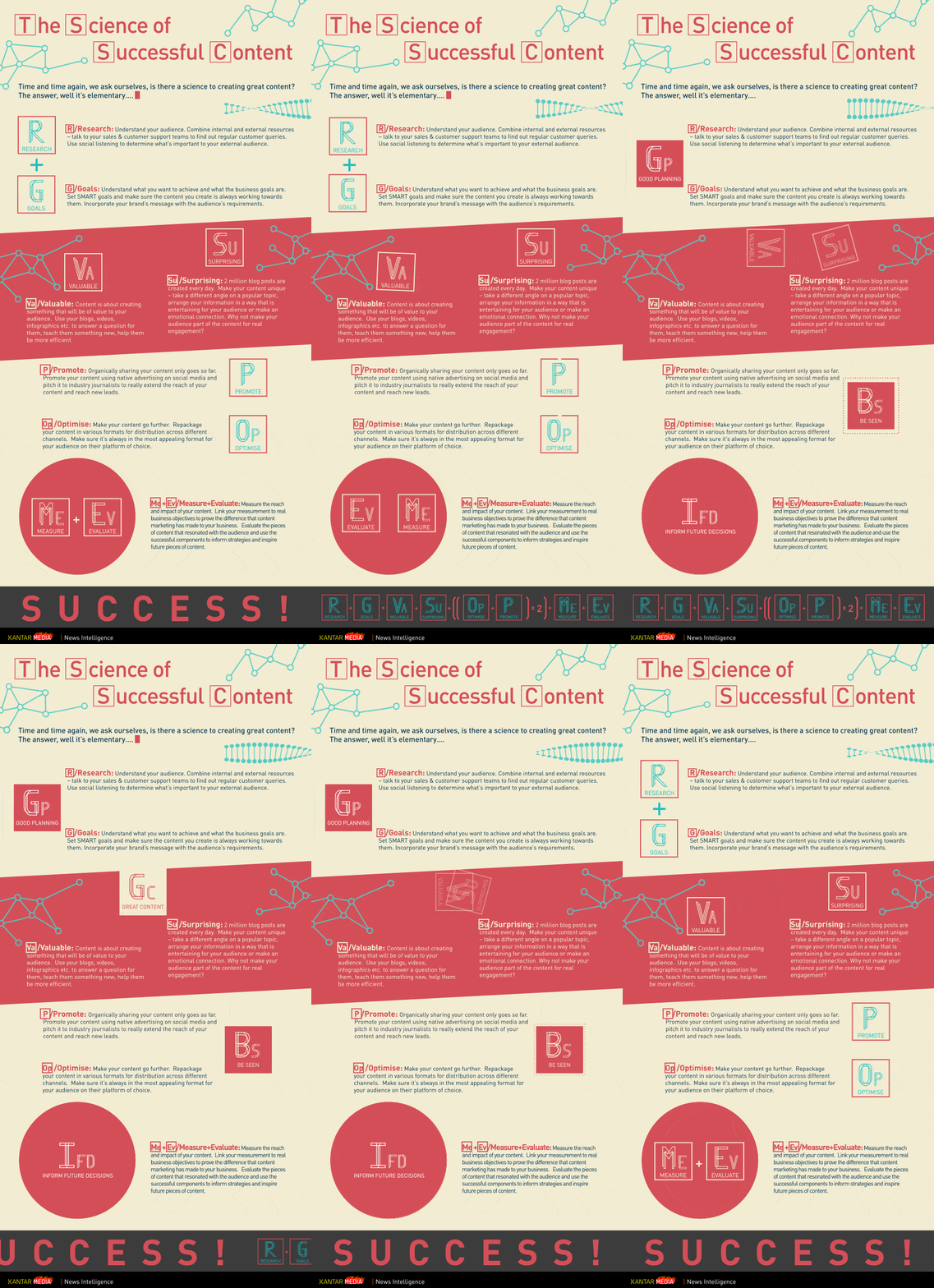
To help, the guys at Kantar Media have created this awesome animated infographic with their 8 scientific steps.
In the fast-paced digital landscape of today, content marketing has become an essential tool for businesses to connect with their audience, build brand authority, and drive conversions. However, not all content marketing strategies yield the desired results. Many businesses find themselves struggling to create meaningful content that resonates with their target audience.
If you’re questioning the effectiveness of your content marketing efforts, you’re not alone. In this blog post, we’ll delve into common reasons why content marketing strategies fail and provide you with eight actionable steps to turn your content marketing around for success.
1. Define Your Audience Clearly
One of the primary reasons content marketing strategies fail is a lack of understanding of the target audience. To create content that resonates, you must first define your audience with precision. This involves creating detailed buyer personas, which are fictional representations of your ideal customers.
Start by gathering data on your existing customers and conducting market research to identify their demographics, interests, pain points, and online behavior. Use this information to create well-rounded buyer personas that guide your content creation process.
When you have a clear understanding of your audience, you can tailor your content to their needs and preferences, making it more likely to engage and convert them.
2. Set Clear and Measurable Goals
Without clear and measurable goals, your content marketing strategy is like a ship without a captain. You need to know where you’re headed and how to measure your progress. Setting specific goals will give your content marketing efforts direction and purpose.
Your goals should be SMART: Specific, Measurable, Achievable, Relevant, and Time-bound. For example, rather than setting a vague goal like “increase website traffic,” you could set a SMART goal like “increase organic website traffic by 20% within six months.”
Having clear goals will help you focus your content creation efforts, track your progress, and make data-driven adjustments when necessary.
3. Conduct a Content Audit
Before you can improve your content marketing strategy, you need to understand what’s working and what’s not. Conducting a content audit is a crucial step in this process. A content audit involves reviewing all your existing content assets to assess their performance.
Look at metrics like page views, bounce rate, social shares, and conversion rates for each piece of content. Identify which topics and formats resonate most with your audience and which ones fall flat.
This analysis will help you identify gaps in your content strategy and guide you in deciding what type of content to create in the future. Additionally, you may find opportunities to update and repurpose existing content for better results.
4. Create High-Quality, Valuable Content
Quality is paramount in content marketing. Your content should provide real value to your audience, whether it’s through informative articles, entertaining videos, engaging infographics, or any other format. High-quality content not only attracts more readers but also keeps them engaged and encourages them to take action.
Here are some tips for creating high-quality content:
- Research Thoroughly: Ensure that your content is well-researched and factually accurate. Cite credible sources to build trust with your audience.
- Be Original: Avoid duplicating content from other sources. Offer a unique perspective or provide a fresh take on a topic to stand out.
- Use Engaging Visuals: Incorporate images, videos, and infographics to make your content visually appealing and more shareable.
- Write for Your Audience: Tailor your content to address the specific needs and pain points of your target audience.
- Keep It Clear and Concise: Avoid jargon and complex language. Make your content easy to understand and digest.
- Proofread and Edit: Typos and grammatical errors can diminish the quality of your content. Always proofread and edit before publishing.
5. Consistency is Key
A common mistake in content marketing is irregular publishing. Consistency is key to building trust and keeping your audience engaged. Create a content calendar and stick to a regular posting schedule. This not only helps you stay organized but also sets expectations for your audience.
Consistency doesn’t mean sacrificing quality for quantity. It’s better to publish high-quality content less frequently than to churn out low-quality content on a daily basis. Find a balance that works for your resources and audience.
6. Promote Your Content Effectively
Creating great content is only half the battle. To succeed in content marketing, you must also effectively promote your content to reach a wider audience. Here are some strategies for promoting your content:
- Social Media: Share your content on your social media channels and engage with your audience there. Encourage sharing and discussions.
- Email Marketing: Send your content to your email subscribers to keep them informed and engaged. Personalize your emails for better results.
- SEO: Optimize your content for search engines to increase organic traffic. Use relevant keywords, optimize meta descriptions, and build high-quality backlinks.
- Paid Advertising: Consider using paid advertising, such as Google Ads or social media ads, to promote your content to a targeted audience.
- Collaborations: Partner with influencers or other businesses in your niche to co-create and promote content.
- Content Syndication: Share your content on platforms like Medium or LinkedIn to reach a broader audience.
7. Analyze and Iterate
Successful content marketing requires continuous improvement. Regularly analyze the performance of your content and your overall strategy. Use analytics tools like Google Analytics, social media insights, and email marketing reports to track key metrics.
Pay attention to metrics such as:
- Traffic: Is your content driving more visitors to your website?
- Engagement: Are people spending time on your content and interacting with it?
- Conversions: Is your content leading to desired actions, such as sign-ups or purchases?
- ROI: Are your content marketing efforts generating a positive return on investment?
Based on your analysis, make data-driven adjustments to your content strategy. This might involve refining your targeting, experimenting with different content formats, or optimizing your promotion tactics.
8. Stay Informed and Adapt
The digital landscape is constantly evolving. What works today may not work tomorrow. To keep your content marketing strategy effective, stay informed about industry trends, algorithm updates, and changes in consumer behavior.
Subscribe to industry newsletters, follow thought leaders in your niche, and attend relevant conferences or webinars. By staying ahead of the curve, you can adapt your strategy to remain relevant and competitive in your market.
In conclusion, a failing content marketing strategy can be turned around with careful planning, consistent effort, and a commitment to delivering value to your audience. Start by defining your audience and setting clear goals. Conduct a content audit to assess your current performance, create high-quality content consistently, and promote it effectively. Analyze your results and make data-driven adjustments to stay on the path to success. Remember, content marketing is an ongoing process that requires dedication and adaptation to thrive in the digital age.

Author:
Mark Ford

The Complete Content Mix: What Every Business Should Be Publishing
Are you struggling to decide what types of content your business should be publishing to attract more traffic and engagement? Want to learn how to build the perfect content mix that keeps your audience interested and your brand growing? […]