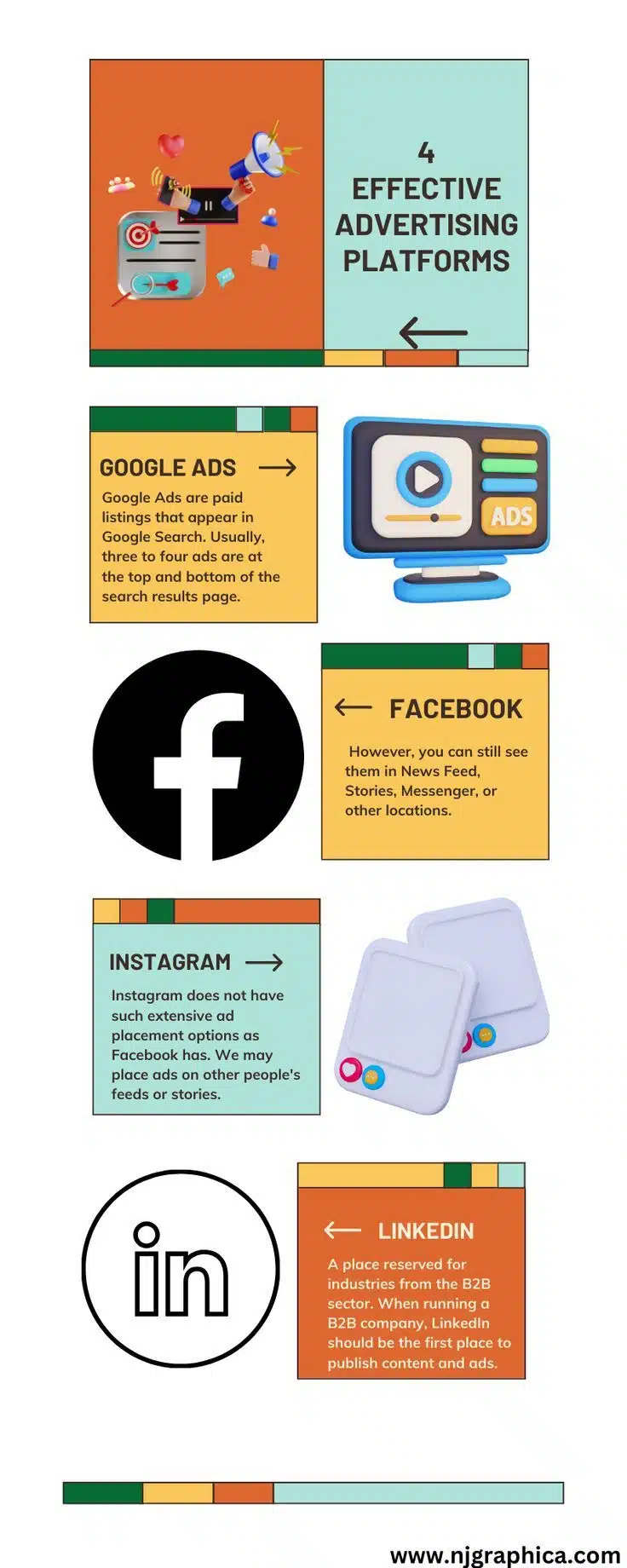
Are you trying to decide which digital ad platform will give you the best return on investment? Want to understand the strengths and weaknesses of Google, Facebook, Instagram, and LinkedIn ads?
You’ll find some PPC basics in this infographic.
Here’s a summary of what’s covered:
- Google Ads
Check out the post below for more.
Digital advertising is one of the most powerful tools in modern marketing. But with so many platforms available, how do you decide where to invest your time and budget? Google, Facebook, Instagram, and LinkedIn each offer unique advantages—and drawbacks.
In this post, we break down the key pros and cons of each platform so you can make smarter, more strategic advertising decisions.
Google Ads
Google Ads is the go-to platform for capturing intent-based traffic. When someone searches for a product or service, paid listings on Google can put your offer front and centre. It’s one of the most competitive platforms but also one of the most effective for high-intent leads. Let’s explore its strengths and weaknesses.
- Pro: High intent – Google Ads reaches people who are actively searching for what you offer, making them more likely to convert.
- Pro: Measurable ROI – With precise tracking and analytics, you can see exactly what’s working and what isn’t.
- Con: High competition – Bidding wars can drive up costs, especially for popular keywords in competitive industries.
- Con: Learning curve – Google Ads can be complex to set up and optimise, requiring ongoing testing and expertise.
Facebook advertising offers powerful audience targeting and a wide range of ad formats. It’s ideal for building brand awareness, engaging potential customers, and retargeting website visitors. However, rising costs and algorithm changes can make consistent results harder to achieve over time.
- Pro: Advanced targeting – Facebook lets you narrow your audience by interests, behaviours, location, and more.
- Pro: Versatile formats – Choose from image ads, video ads, carousel ads, and more to showcase your brand creatively.
- Con: Declining reach – Organic and paid reach have dropped over time due to algorithm updates and platform saturation.
- Con: Distraction-prone environment – Users often scroll quickly and may not be in a buying mindset when they see your ad.
As a visually driven platform, Instagram is perfect for eye-catching campaigns and creative storytelling. It works especially well for lifestyle, fashion, and eCommerce brands. While it shares Facebook’s ad system, Instagram’s placement options are more limited, and performance varies by audience.
- Pro: High engagement – Instagram users are highly active, especially with Stories, Reels, and visual content.
- Pro: Seamless shopping – Product tagging and shop features make it easy to drive direct sales within the app.
- Con: Fewer placement options – Compared to Facebook, ad placements are more restricted and less varied.
- Con: Younger audience bias – Instagram skews younger, which may not align with all target demographics.
LinkedIn is the platform of choice for B2B marketers and professional services. It allows you to reach decision-makers, executives, and professionals based on job title, industry, and company size. While highly effective in the right context, it tends to come with a higher price tag.
- Pro: Professional targeting – Reach B2B buyers and industry professionals with high-value filters.
- Pro: Content-friendly – Sponsored content, InMail, and thought leadership posts perform well here.
- Con: High CPC – Cost-per-click on LinkedIn is typically much higher than on other platforms.
- Con: Narrow use case – LinkedIn works best for B2B; it’s generally ineffective for B2C or mass-market campaigns.
Conclusion
Choosing the right advertising platform is all about aligning with your goals, audience, and budget. Google Ads excels at capturing demand, Facebook offers unmatched targeting, Instagram thrives on visual appeal, and LinkedIn dominates in the B2B space. Each platform has its own set of pros and cons, but when used strategically, they can all play a valuable role in your digital advertising toolkit.
Whether you focus on one channel or adopt a multi-platform approach, the key to success lies in understanding the strengths and limitations of each. By doing so, you can run campaigns that deliver better engagement, stronger leads, and higher ROI—no matter where your audience scrolls, clicks, or searches.

Author:
Mark Ford