Are you still resisting using visual content across your website, blog and social media accounts? Are you aware of the damage that could have on your overall marketing strategy?
More and more businesses are using visual content as part of their strategy, and for good reason. Visual content is more appealing to most consumers, so your text based strategy will become increasingly lost in the online world.
For a more detailed explanation about the power of visual content take a look at this infographic from Column Five.
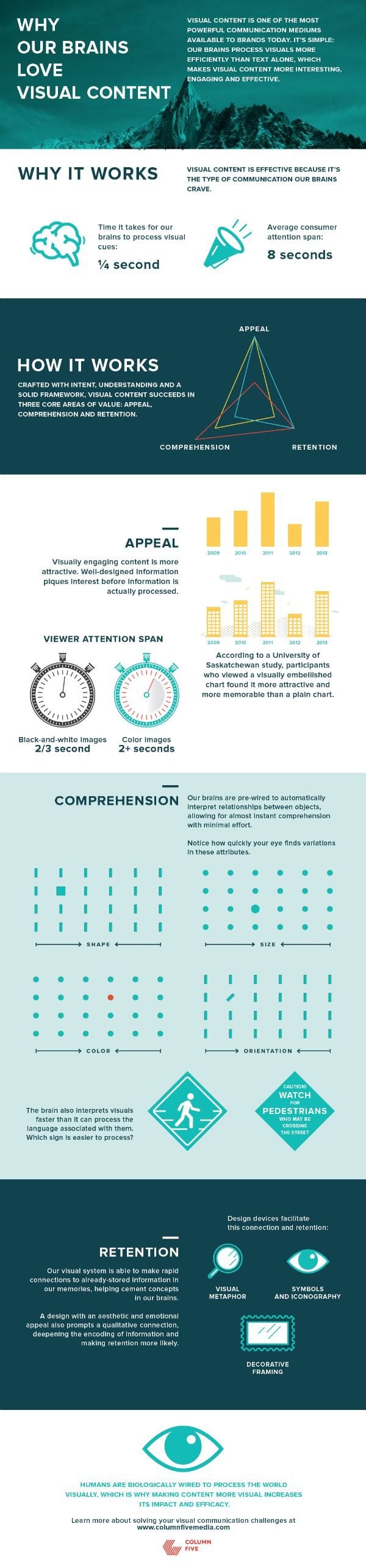
In today’s fast-paced digital landscape, marketing strategies are constantly evolving. To stay relevant and competitive, businesses must adapt to the changing preferences of their target audience. One of the most significant shifts in recent years has been the increasing importance of visual content in marketing. Whether it’s images, videos, infographics, or even memes, visual content has become a powerful tool for engaging and converting customers.
In this blog post, we will explore the reasons why visual content should be an integral part of your marketing plan. We’ll delve into the psychology behind visual content’s effectiveness, its impact on social media, and how it can boost your SEO efforts. So, if you’re still hesitating to incorporate visual content into your marketing strategy, read on to discover the compelling reasons why you should.
The Power of Visual Communication
Human beings are inherently visual creatures. Our brains are wired to process visual information more quickly and efficiently than text. This fact alone underscores the power of visual content in conveying messages and capturing attention. Here are some compelling reasons why visual content is so effective in marketing:
1. Instant Engagement
Visual content is attention-grabbing. When someone scrolls through their social media feed or visits a website, an eye-catching image or video is more likely to stop them in their tracks than a block of text. In a world where attention spans are shrinking, capturing your audience’s attention quickly is essential.
2. Improved Information Retention
Studies have shown that people remember visual content better than text. This is known as the “picture superiority effect.” When you combine relevant visuals with your marketing message, your audience is more likely to retain and recall the information you’re trying to convey.
3. Emotional Connection
Visuals have the power to evoke emotions. Whether it’s a heartwarming image, an inspiring video, or a funny meme, visual content can tap into the emotional side of your audience. Emotionally charged content is more likely to resonate with viewers and leave a lasting impression.
4. Increased Shareability
Visual content is highly shareable. People are more likely to share images and videos on social media than plain text. This sharing behavior can amplify the reach of your marketing message and help your content go viral.
Visual Content on Social Media
Social media platforms have become the epicenter of online communication, and visual content plays a crucial role in shaping the user experience on these platforms. Let’s explore how visual content can benefit your social media marketing efforts:
1. Boosting Engagement
Social media algorithms prioritize content that generates engagement. Visuals, such as images and videos, are more likely to receive likes, comments, and shares compared to text-only posts. This increased engagement signals to the platform that your content is valuable, which can improve your reach and visibility.
2. Conveying Brand Identity
Visual content allows you to showcase your brand’s personality and values effectively. Whether it’s through the use of color schemes, graphics, or visual storytelling, you can create a consistent brand identity that resonates with your target audience.
3. Storytelling
Visuals are powerful tools for storytelling. You can use images and videos to narrate your brand’s journey, showcase customer success stories, or explain complex concepts in a more digestible format. Storytelling humanizes your brand and fosters a deeper connection with your audience.
4. Staying Relevant
Social media trends often revolve around visual content. From Instagram Stories to TikTok videos, these platforms are designed to accommodate visual formats. By leveraging visual content, you can stay relevant on social media and reach a wider, younger audience.
Visual Content and SEO
Search engine optimization (SEO) is a critical aspect of digital marketing, and visual content can significantly impact your SEO efforts. Here’s how:
1. Reduced Bounce Rates
When visitors arrive at your website and are greeted with visually appealing content, they are more likely to stay longer and explore. This reduces your site’s bounce rate, which is a positive signal to search engines like Google. Lower bounce rates can lead to improved search rankings.
2. Improved Dwell Time
Dwell time, the amount of time a user spends on your website, is another important SEO metric. Visual content, such as videos and infographics, can keep users engaged for longer periods. The longer visitors stay on your site, the better it is for your SEO.
3. Increased Backlinks
High-quality visual content is more likely to be shared and linked to by other websites and blogs. These backlinks are valuable for SEO, as they signal to search engines that your content is authoritative and relevant. Additionally, visual content is more shareable on social media, increasing the chances of it being linked to from various sources.
4. Featured Snippets
Visual content can help you secure featured snippets on search engine results pages (SERPs). Google often displays image-based results, such as infographics or charts, in featured snippets. By creating informative visual content, you can increase your chances of being featured at the top of search results.
Types of Visual Content
Now that we’ve established the importance of visual content in your marketing strategy, let’s explore some popular types of visual content you can incorporate:
1. Images and Photos
High-quality images and photos can be used in blog posts, social media, and website design. They are versatile and can convey various messages, from showcasing products to telling your brand’s story.
2. Videos
Video content has exploded in popularity, thanks to platforms like YouTube and TikTok. You can create product demos, explainer videos, customer testimonials, and more to engage your audience.
3. Infographics
Infographics are excellent for presenting complex data and statistics in a visually appealing and easy-to-understand format. They are highly shareable and can help establish your authority in your niche.
4. Memes and GIFs
Memes and GIFs are perfect for injecting humor and personality into your brand. They are often shared virally on social media and can help you connect with a younger, internet-savvy audience.
5. User-Generated Content
Encourage your customers to create visual content related to your products or services. User-generated content provides authenticity and social proof, which can boost your brand’s credibility.
Best Practices for Using Visual Content
To make the most of visual content in your marketing plan, it’s essential to follow some best practices:
1. Maintain Consistency
Ensure that your visual content aligns with your brand’s identity and values. Consistency in design, colors, and tone will help build brand recognition and trust.
2. Optimize for Mobile
Given the prevalence of mobile devices, it’s crucial to create visual content that looks great and functions well on smartphones and tablets.
3. Prioritize Quality
High-quality visuals are more likely to captivate your audience. Invest in professional photography and video production when necessary to maintain a polished image.
4. Be Data-Driven
Analyze the performance of your visual content regularly. Pay attention to metrics like engagement rates, click-through rates, and conversion rates to refine your strategy.
5. Stay Creative
Don’t be afraid to experiment with different types of visual content and styles. Creativity can set you apart from your competitors and keep your audience engaged.
Conclusion
In a digital world overflowing with information, visual content has emerged as a powerful tool for marketers. Its ability to capture attention, convey messages effectively, and evoke emotions makes it an indispensable part of any marketing plan. Whether you’re looking to boost engagement on social media, improve your SEO rankings, or enhance your brand’s identity, visual content is the key.
As you plan your marketing strategy, remember that the visual content landscape is constantly evolving. Staying up-to-date with the latest trends and technologies in visual content creation will give you a competitive edge. So, if you haven’t already, it’s time to embrace the power of visual content and watch your marketing efforts soar to new heights.

Author:
Mark Ford

The Complete Content Mix: What Every Business Should Be Publishing
Are you struggling to decide what types of content your business should be publishing to attract more traffic and engagement? Want to learn how to build the perfect content mix that keeps your audience interested and your brand growing? […]